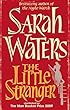
The Little Stranger by Sarah Waters: Book Review

The Little Stranger is the only book I’ve read by Sarah Waters. I saw the TV version of Tipping the Velvet and wasn’t impressed. It didn’t make me want to read any of her books. But, so many other bloggers have praised them that I was interested enough to borrow The Little Stranger when I saw it in the library. That’s the influence book bloggers have.

It begins very well – an old dilapidated house, Hundreds Hall, just after the end of the Second World War, a family struggling to come to terms with post-war life and lack of money, and the hint of something supernatural lurking in the background. The Hall has a major part in this book. This is how it is seen through the eyes of the narrator Dr Faraday, who had known it thirty years earlier when his mother had been a nursery maid there.

I remembered a long approach to the house through neat rhododendron and laurel, but the park was now so overgrown and untended, my small car had to fight its way down the drive. When I broke free of the bushes at last and found myself on a sweep of lumpy gravel with the Hall directly ahead of me, I put on the brake, and gasped in dismay. The house was smaller than in memory, of course – not quite the mansion I’d been recalling – but I’d been expecting that. What horrified me were the signs of decay. Sections of the lovely weathered edgings seemed to have fallen completely away, so that the house’s uncertain Georgian outline was even more tentative than before. Ivy had spread, then patchily died, and hung like rat’s-tail hair. The steps leading up to the broad front door were cracked, with weeds growing lushly up through the seams. (page 5)

Reminiscent of Rebecca, I thought. It’s not just the house that is decaying, the family too is cracking up. Dr Faraday remembered it in it’s prime – now there are just Mrs Ayres, Caroline her daughter and Roderick, her son left, living on their own in the house with help from one servant, a maid – Betty, a fourteen year old girl. Roderick was injured in the war, and Caroline is a plain young woman over-tall for a woman with thickish ankles and legs, but a ‘clever’ girl. Their mother still has a good figure, with a heart-shaped face and handsome dark eyes. As the book progresses she declines rapidly, overcome by events and it is soon revealed that she has never got over the death of her first child, Susan who was ‘her one true love’.

It begins with Dr Faraday called out to see Betty who tells him there is something bad in the house that makes wicked things happen. What follows is a sequence of terrible events. Dr Faraday is a very tedious character, dismissing all thoughts that things that are moved from one place to another and much worse events are in any way supernatural, believing there is either a rational or pscyhological explanation for it all.  He is reinforced in his beliefs when he talks to another doctor, Dr Seeley who says:

The subliminal mind has many dark corners, after all. Imagine something loosening itself from one of those corners. Let’s call it a – a germ. And let’s say conditions prove right for that germ to devlop – to grow like a child in the womb. What would this little stranger grow into? A sort of shadow-self, perhaps: a Caliban, a Mr Hyde. A creature motivated by all the nasty impulses and hungers the conscious mind had hoped to keep hidden away: things like envy, malice, and frustration … (page 380)

I got very tired of Dr Faraday and his persistence. It is all very drawn-out, no doubt to increase suspense but I felt that all the tension and spookiness that had initially been built up just drained away in the middle of the book. It did pick up towards the end with several dramatic scenes, but I think it would have been better if the book had been shorter. However, I did enjoy it – the descriptions of the house and park are vivid and I liked the social commentary. The post-war period is well defined, indicating the attitude of the upper classes towards the working classes, the coming introduction of the National Health Service and the breaking up of landed estates to build Council estates – new houses for the workers .

So, just what is the ‘ravenous frustrated energy’ at the heart of the matter? All the characters are built up as suspects and it was only towards the end that I realised what (or who) was responsible.

The Little Stranger has been shortlisted for the Orange Prize for Fiction. Will it win? Maybe not, there are some other very good books on the list, which I suspect may over shadow this one.

Once Upon A Time IV

On Sunday it’s the first day of spring and already there are signs here – the daffodils are now in bud and I’m hoping the trees will burst into leaf soon. Another sign of spring in the book blogging world is the Once Upon a Time Challenge run by Carl. This too begins on Sunday and runs until 20 June.

There are several options to choose from, so there is no pressure to make me shy away from this one – I can just read one book from the four categories of fantasy, or folklore, or fairy tales, or mythology or I could read at least 5 books that fit somewhere within any of these categories.

I had a quick look at my books and came up with these – all books I own and haven’t read yet, so I may read one or more of these in the next three months, or I might find something else in the library – who knows. 

  • Grimm’s Fairy Tales – I fancy re-reading these tales, which I haven’t read since I was a child.
  • The Death of King Arthur – this is a translation of the 13th century French version of the Camelot legend.
  • The Brief History of the Dead by Kevin Brockmeier – about a place between heaven and earth where everyone ends up after they die.
  • Cloud Atlas by David Mitchell – I’ve had this ages, started reading it twice and other books took precedence. It’s a mix of science fiction, thriller and historical pastiche.
  • Firmin: Adventures of a Metropolitan Lowlife by Sam Savage – the tale of a literary rat who develops the ability to read.
  • The Book of Lost Things by John Connolly – another book I’ve had for a while. Twelve-year old David takes refuge in myths and fairytales.
  • The Children of Hurin by J R R Tolkien – tales of Middle-earth  from times before The Lord of the Rings, set in the country that lay beyond the Grey Havens in the West.
  • The Last Enchantment by Mary Stewart – a tale of Merlin and King Arthur and the third book in the Merlin trilogy. I read The Crystal Cave and The Hollow Hills years ago and don’t think I’ve ever read this one.

The Careful Use of Compliments by Alexander McCall Smith

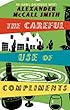
I’ve resisted reading Alexander McCall Smith’s books up to now partly because I couldn’t quite believe they would live up to my expectations and partly because I don’t like the style of the book covers. This one is quite off-putting because of its colours, which is really a trivial reason not to read a book.  I am so pleased that I overcame my resistance as I thoroughly enjoyed reading this one. I’ll be looking for more.

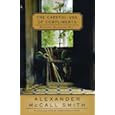
The Careful Use of Compliments  is an Isabel Dalhousie Novel, one of the Sunday Philosophy Club series. It’s number 4 in the series, but I had no problem following it as it stands well on its own. I’ve just seen the US cover – much better. My quibble with the cover is my only criticism of this book – I loved it.

Isabel has just had a baby, Charlie, and is in a relationship with his father, Jamie (14 years her junior) who is her niece’s, ex-boyfriend. Cat (her niece)  is upset and resentful and embarrassed even though she broke up her relationship with Jamie, and despite Isabel’s best efforts to bring about a reconciliation is barely speaking to her.

Cat said nothing, and Isabel realised that she was witnessing pure envy; unspoken, inexpressible. Envy makes us hate what we ourselves want, she reminded herself. We hate it because we can’t have it. (page 4)

In addition Isabel has to deal with an attempt from Professor Dove to take over her editorship of the philosophical journal,  Review of Applied Ethics. As well as coping with these two difficult situations Isabel tries to buy a painting by Andrew McInnes at auction and fails. This is a previously unknown painting by McInnes of a scene on the isle of Jura in the Inner Hebrides, where McInnes had drowned in mysterious circumstances. She thinks there is something odd about the painting and sets out to discover more about him and his paintings, becoming convinced that this one is a forgery.

But it’s not really the mystery that captivated me. It’s the philosophical questions that are always uppermost in Isabel’s mind and conversations. It’s her way of ‘interferring’ in matters which she considers ‘helping’, and her kind hearted nature (but she suffers few qualms at getting the upperhand over Dove). It’s the little gems of wisdom scattered through the book. It’s the descriptions of Scotland and Scottishness, of Edinburgh and the islands. It’s about the nuances of understanding the use of language as expressions of general goodwill, about the meaning of money and how it should or should not be used, about late motherhood and family relationships, and about morality and justice.

There are many passages I could quote. I think this one relating to the title of the book is a good one. Here Isabel is talking to Walter, who had tried to sell her McInnes’s painting:

‘Please’, she said, impulsively reaching out to lay a hand upon his sleeve. ‘Please. That came out all wrong. I’m not suggesting that you tried to sell me a forgery.’

He seemed to be puzzling something out. Now he looked up at her. ‘I suppose you thought that because I wanted to sell it quickly.’

‘I was surprised,’ she said. ‘but I thought that there must be a perfectly reasonable explanation.’ That was a lie, she knew. I am lying as a result of having made an unfair assumption. And I lied too, when I paid a compliment to that unpleasant dog of his. But I have to lie. And what would life be like if we paid one another no compliments? (pages 222-3)

The Orange Prize for Fiction Longlist

The Orange Prize for Fiction is awarded annually for the best fiction novel written by a woman. Here is this year’s longlist:

I have just two of these books – Hearts and Minds by Amanda Craig and Wolf Hall by Hilary Mantel, which won the 2009  Man Booker Prize – will it win this one? And I’ve currently borrowed The Little Stranger by Sarah Waters, which was shortlisted for the 2009 Man Booker Prize.

Will these three be on the shortlist when it is announced on 20 April?

Sunday Salon – Reading And All That …

Today is Mother’s Day and I’ll be spending some time reading my present from my son – Amos, Amas, Amat … And All That by Harry Mount. It’s been on my wishlist for some time now! And a nice change it will make from all the crime fiction I’ve been reading recently. From the back cover:

 In this delightful guided tour of Latin, which features everything from a Monty Python grammar lesson to David Beckham’s tattoos and all the best snippets of prose and poetry from 2000 years of literary history, Harry Mount wipes the dust off those boring primers and breathes life back into the greatest language of them all …

Not that the crime fiction I’ve been reading is boring – far from it. My reading has been a real treat and is way ahead of my reviews of these books:

I finished reading A Fatal Inversion by Barbara Vine at the end of last week and was so pleased after not liking her book The Birthday Present to find that this book about the discovery of the bones of a young woman and a baby in an animal burial ground was very different. There is a real air of mystery surrounding the several unlikeable characters – anyone of whom could be the guilty party.

 The Careful Use of Compliments by Alexander McCall Smith was a complete surprise to me as I had no idea when I borrowed it from the library just how much I was going to enjoy it. From a somewhat slow start I soon got used to the rhythm of his writing and was greatly intrigued by the character of Isabel Dalhousie.

Why Didn’t They Ask Evans? by Agatha Christie is a light-hearted mystery featuring Bobby Jones and Frankie (Lady FrancesDerwent) as they investigate a murder. This is a highly fantastical tale which I read at break-neck speed and thoroughly enjoyed.

Dead in the Morning by Margaret Yorke is the first book in her Patrick Grant series, first published in 1970. Set in an English village this is about an English family upset by the death of their housekeeper. All sorts of family secrets are revealed with plenty of red herrings along the way but the ending is predictable.

I’ll be writing in more detail about each one soon.

Next week my choice of reading is between these books, which I have on the go:

  • The Girl With the Dragon Tattoo by Stieg Larsson which I started a few weeks ago and put to one side.
  • Being Shelley by Ann Wroe – ongoing reading
  • Stratton’s War by Lorna Wilson. I’m not sure if I’ll finish this as I feel little inclination to pick it up at the moment.

I’m tempted to start a new one. Maybe another Agatha Christie or Ian Rankin, or The Little Stranger by Sarah Waters, which I’ve read is very good, or Maggie’s Tree by Julie Walters – her first novel, described as “dark and very funny”, which I found at the library.

Crime Fiction Alphabet: U is for Umberto Eco

This week’s letter in Kerrie’s Crime Fiction Alphabet series is  ‘U’.

I’ve chosen Umberto Eco, an Italian writer of post-modern fiction, full of allusions and references, using puzzles, playing with language, words and symbols.

I’ve read  The Name of the Rose twice, some years ago now.It is a fantastic historical crime mystery novel set in a Franciscan monastery in 14th century Italy. William of Baskerville and his assistant Adso are sent to the monastery to investigate a series of murders. I loved this book, which has so much of what I enjoy in reading – historical setting, the pursuit of truth behind the mystery and the meaning of words, symbols and ideas and a great detective story all combined with religious controversies and theories. William is an expert in deduction, and needs all his skills to work his way through the monastery’s labyrinthine library:

The library is a great labyrinth, sign of the labyrinth of the world. You enter and you do not know whether you will come out. … And in our midst someone has violated the ban, has broken the seals of the labyrinth … (pages 158 & 159)

I read Foucault’s Pendulum after reading The Name of the Rose, but struggled at first to read it. It’s immensely detailed, slow to get going and in parts it is boring. But I persevered and in the end I found it fascinating, although I do prefer The Name of the Rose. Again it’s a mystery thriller this time concerned with books and words, mixed in is a coded message about a Templar plan to tap a mystic source of power. It features the Knights Templar, the Crusades, the bloodline of Christ, the Rosy Cross etc, etc  so that when I read Dan Brown’s Da Vinci Code I immediately thought back to this book, but of course it’s nowhere near the same!

I have one other book by Eco – The Mysterious Flame of Queen Loana. I haven’t read it yet. From the back cover:

Yambo, a rare-book dealer, has suffered a bizarre form of memory loss. He can remember every book he has ever read but nothing about his own life.

In an effort to retrieve his past, he withdraws to his old family home and searches through boxes of old newspapers, comics, records, photo albums and diaries kept in the attic.

Flipping through it, it doesn’t look as difficult as Foucault’s Pendulum and there are colour illustrations of the books and newspapers etc that Yambo finds in the attic. As a book-lover this appeals to me.