First Chapter First Paragraph Tuesday Intros

Every Tuesday, Diane at Bibilophile by the Sea posts the opening paragraph (sometimes maybe a few) of a book she’s decided to read based on the opening paragraph (s). Feel free to grab the banner and play along.

I must be one of the minority who didn’t love The Time Traveler’s Wife (it irritated me), but still when I saw Her Fearful Symmetry by Audrey Niffennegger and read the opening paragraphs, I thought maybe I’d read it.

The first chapter is called The End and begins:

Elspeth died while Robert was standing in front of a vending machine watching tea shoot into a small plastic cup. Later he would remember walking down the hospital corridor with the cup of horrible tea in his hand, alone under the fluorescent lights, retracing his steps to the room where Elspeth lay surrounded by machines. She had turned her head towards the door and her eyes were open; at first Robert thought she was conscious.

In the seconds before she died, Elspeth remembered a day last spring when she and Robert had walked along a muddy path by the Thames in Kew Gardens. There was a smell of rotted leaves; it had been raining. Robert said, ‘We should have had kids,’ and Elspeth replied, ‘Don’t be silly, sweet.’ She said it out loud, in the hospital room, but Robert wasn’t there to hear.

If you’ve read this book what do you think? I’ve looked on Amazon and the verdict is split almost 50/50 between 5/4 stars and 1/2 stars!

Crime Fiction Alphabet: I is for Innes

Michael Innes is the pseudonym of John Innes Mackintosh Stewart (1906 – 1994), a British scholar and novelist, and is my choice to illustrate the letter I in Kerrie’s Crime Fiction Alphabet.

He was born near Edinburgh, the son of a Scottish professor, and attended Edinburgh Academy, then Oriel College, Oxford where he won the Matthew Arnold Memorial Prize in 1939 and honours in English. He was a Lecturer, then a Professor in English at different universities, finishing his academic career in 1973 as a Student (Fellow) at Christ Church Oxford.

He published many novels, and short stories as well as books of criticism and essays under his own name, including biographical works on Rudyard Kipling and Thomas Hardy. Writing as Michael Innes he wrote many crime novels, the first being Death at the President’s Lodging, written in 1934 during his sea voyage to Australia. It was the first of his 29 books about his Scotland Yard detective, John Appleby, published in the UK in 1936, and in the USA in 1937 as Seven Suspects, to avoid readers thinking it dealt with the US President.

In an essay written in 1964 Innes described his writing methods – during the academic year he wrote for two hours before breakfast. He thought that reading detective stories was addictive (I have to agree with that!) and that he managed to escape the compulsion to read them by writing his own mysteries (maybe I should try that). He thought in depth characterisation wasn’t right in detective stories and he avoided having real problems or feelings intrude on his characters. He regarded crime fiction solely as escapist literature.

Death at the President's Lodging 001I’m currently reading Death at the President’s Lodging – a used Penguin Books edition published in 1958, one of the green and white crime fiction books.

It’s set in a fictional English college, St Anthony’s (much like an Oxford college) where the President of the college has been murdered, his head swathed in a black academic gown, a human skull beside his body and surrounding it, little piles of human bones.

As I would expect from a professor of English, Innes’s writing is intellectual, detailed, formal and scattered with frequent literary allusions and quotations.  The plot is complex and in the nature of a puzzle. There are plenty of characters, the suspects being the dons of the college. As well as Appleby there are the local police, headed up by Inspector Dodd, who acts as a foil to Appleby’s intellectual approach to the murder. I’ll write more about the book when I’ve finished it.

For a list of Michael Innes’s work see Wikipedia.

Classics Challenge 2012 – July Prompt

This year I am taking part in A Classics Challenge hosted by Katherine of November’s Autumn. The goal is to read at least seven classics in 2012 and every month Katherine is posting a prompt to help us discuss the books we are reading. July’s prompt is about

Lasting Impressions

Choose one of the Classics you’ve read this year or are currently reading.

What is a moment, quote, or character that you feel will stay with you? Years from now, when some of the details have faded, that lasting impression the book has left you with? What is it? –or why did it fail to leave an impression?

I wondered which classic to choose for this post, but I knew the answer as soon as I read the the words ‘lasting impressions’ had to be either Pride and Prejudice or A Tale of Two Cities. Both of these are books I first read when I was a teenager, so I know the lasting impressions they have made on me, both the characters and lots of quotations. How could I ever forget Elizabeth Bennet and Mr Darcy, or Charles Darnay and the wonderful Sydney Carton? And the opening sentences of both are so memorable.

From Pride and Prejudice:

It is a truth universally acknowledged, that a single man in possession of a good fortune, must be in want of a wife.

and from A Tale of Two Cities:

It was the best of times, it was the worst of times, it was the age of wisdom, it was the age of foolishness, it was the epoch of belief, it was the epoch of incredulity, it was the season of Light, it was the season of Darkness, it was the spring of hope, it was the winter of despair, we had everything before us, we had nothing before us, we were all going direct to Heaven, we were all going direct the other way.

Whereas I’ve read  Pride and Prejudice several times I’d only ever read A Tale of Two Cities once before and my memory of it was that it was about the French Revolution and the sacrifice that Sydney Carton made to save Charles Darnay from the Guillotine, with these words, which close the book:

It is a far, far better thing that I do, than I have ever done; it is a far, far better rest that I go to than I have ever known.

Reading the book this time round the character of Sydney Carton is much clearer in my mind, with several vivid images of his slovenly appearance and drunken behaviour. He is in fact a brilliant barrister, but also an alcoholic, lacking self confidence. He is called a ‘jackal‘, who worked for his fellow barrister, Stryver, who then got the credit.

Sydney Carton, idlest and most unpromising of men, was Stryver’s great ally. What the two drank together, between Hilary Term and Michaelmas, might have floated a king’s ship. Stryver never had a case in hand, anywhere, but Carton was there, with his hands in his pockets, staring at the ceiling of the court; they went to the same Circuit, and even there they prolonged their usual orgies late into the night, and Carton was rumoured to be seen at broad day, going home stealthily and unsteadily to his lodgings, like a dissipated cat. At last, it began to get about, among such as were interested in the matter, that although Sydney Carton would never be a lion, he was an amazingly good jackal, and that he rendered suit and service to Stryver in that humble capacity.

To help him overcome his drunkenness he soaked towels in a bowl of cold water and after wringing them out folded them on his head, and whilst working continued drinking wine, brandy and rum with sugar and lemons.

Two or three times, the matter in hand became so knotty, that the jackal found it imperative on him to get up, and steep his towels anew. From these pilgrimages to the jug and basin he returned with such eccentricities of damp headgear as no words can describe; which were made the more ludicrous by his anxious gravity.

He is moody and morose, and when he falls in love with Lucie Manette, he realises he is a wastrel, a ‘drunken, poor creature‘, that she can never return his love and that he can only ever bring her to misery, sorrow and repentance, blight and disgrace her, pulling him down with himself. 

It is Carton’s resemblance to Charles Darnay that enables him to martyr himself in Darnay’s place because of his love for Lucie. It is these two images that will remain with me – that of the dissolute man, who despite his drunkenness, worked though the night with his head wrapped in damp towels, and the man as he approached his death on the Guillotine with:

… the peacefullest man’s face ever beheld there. Many added that he looked sublime and prophetic.

Six Months Summary

I saw that Jo at The Book Jotter has created a new meme, and I thought I’d join in. The idea is to celebrate the first six months of the reading year by putting six books into each of six categories. I’ve altered her categories a bit and not listed any books that disappointed me because I don’t want to draw attention to them. I’ve listed some books in more than one category and have linked the titles to my posts on the books.

I’ve already listed 10 of the best crime fiction books I’ve read this year, but I’ve also included some of them in these categories:

Six authors new to me (and the books I read):

  1. Kathryn Stockett – The Help
  2. Adrienne Dines – The Jigsaw Maker
  3. Terri Armstrong – Standing Water
  4. Vera Brittain – Testament of Youth
  5. Anne Bronte – Agnes Grey
  6. Kate Grenville – The Secret River

Six authors I have read before (and the books I read):

  1. Agatha Christie – several
  2. Jane Austen – Pride and Prejudice
  3. Daphne Du Maurier – My Cousin Rachel
  4. Rosy Thornton – Ninepins
  5. Hilary Mantel – A Place of Greater Safety and Bring Up the Bodies
  6. Charles Dickens – A Tale of Two Cities

Six books I have enjoyed the most:

  1. The Help by Kathryn Stockett
  2. Little Boy Lost by Marghanita Laski
  3. The Redeemed by M R Hall
  4. The Secret River by Kate Grenville
  5. A Quiet Life by Beryl Bainbridge
  6. A Tale of Two Cities by Charles Dickens

Six historical fiction tiles I’ve enjoyed:

  1. The Help by Kathryn Stockett
  2. The Arrow Chest by Robert Parry
  3. The Village by Marghanita Laski
  4. A Place of Greater Safety by Hilary Mantel
  5. Bring Up the Bodies by Hilary Mantel

Six authors I am looking forward to reading more of:

  1. Phil Rickman
  2. M R Hall
  3. Ann Cleeves
  4. Wilkie Collins
  5. Anne Zouroudi
  6. Beryl Bainbridge

Six series of books read or started:

  1. Dandy Gilver by Catriona McPherson – read some
  2. Hermes Diaktoros by Anne Zouroudi – read some
  3. Rose McQuinn by Alanna Knight – read the first
  4. Wycliffe by W C Burley – read some
  5. Shetland Quartet – by Ann Cleeves – read all, but another Jimmy Perez book is on the way
  6. Inspector Alleyn by Ngaio Marsh – read the first

Crime Fiction Alphabet: H is for The Hanging in the Hotel

The Crime Fiction Alphabet has reached the letter H this week and I’ve chosen Simon Brett’s The Hanging in the Hotel. I listened to the audiobook read by Simon Brett. This is the fifth book in his Fethering Mysteries series.

Synopsis from Fantastic Fiction:

A young solicitor is found hanged from his four-poster bed in a country house hotel following an all-male society dinner the night before. Jude doesn’t believe it was suicide, and with her friend Carole’s help, it would appear that The Pillars of Sussex are involved in a grand collusion. 

Jude and Carole are neighbours and they often find themselves involved in solving murders! They’re an interesting pair, Carole a retired civil servant, cautious and analytical, Jude, impulsive, an alternative healer and very inquisitive (nosey). Jude perseveres in believing the young solicitor’s death was murder, despite the police insistence that it was suicide. Her belief is reinforced when her friend Suzy Longthorne, the hotel’s owner, wants to keep things hushed up and accepts it was suicide. There are too many inconsistencies for Jude to accept that idea. The Pillars of Society are an obnoxious bunch, misogynists, who drink too much and are very fond of themselves, and they are the prime suspects.

Jude and Carole go over and over the events, discussing the whys and wherefores, talking to everyone concerned, who all seem to have impeccable alibis, and following up lots of red herrings.There was just too much speculation and introspection which slowed down the action.  The murderer could have been anyone and by the end I didn’t much care who it was.

I didn’t like this book as much as the others that I’ve read, namely The Body on the Beach, the first in the Fethering series, The Stabbing in the Stables and Murder in the Museum. It may be because I was listening, rather than reading, so I shall still read more of the Fethering books.

Best new-to-me crime fiction authors: a meme: April to June 2012

This meme about the best new-to-you crime fiction authors (or all) you’ve read in the period of April to June 2012 is hosted by Kerrie at Mysteries in Paradise.The books don’t necessarily need to be newly published.

Out of the 54 books I’ve read this year 17 are by new-to-me authors. I reported on the first 10 (2 of which were crime fiction) in April. Four of the 7 are crime fiction writers and they are:

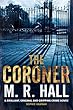
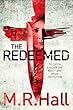
M R Hall: I read two of his books – The Coroner, the first in the Jenny Cooper series and The Redeemed, the  third in the series.

In The Coroner, Jenny Cooper, a newly appointed Coroner, divorced, and recovering from a nervous breakdown gets involved in investigating the deaths of several teenagers at local detention centres. Has her predecessor neglected some crucial information in this area? As Jenny digs deeper, she encounters a solid wall of bureaucratic resistance. But however screwed up her own life is, Jenny is not going to give up on the uphill task she’s set herself. (Synopsis adapted from Amazon)

I liked both books by M R Hall, but I preferred The Redeemed. 

Synopsis from M R Hall’s website: Coroner Jenny Cooper doesn’t just have an accusation of murder hanging over her head’¦

The discovery of a dead man lying outside a Bristol church with a sign of the cross gouged into his flesh looks to her like another grisly, routine suicide. But the unexpected arrival of an enigmatic Jesuit priest reveals deeper levels of mystery.

Father Lucas Starr is protesting the innocence of a convicted prisoner who made a doubtful confession to the murder of Eva Donaldson, a former adult-movie actress turned world-renowned anti-pornography campaigner. Persuaded by him to look at Eva’s death afresh, Jenny uncovers a sinister series of connections between her killing and the body at the church.

As her investigation links to yet another tragic death, Jenny’s suspicions turn towards a powerful new global phenomenon: the politically ambitious and intoxicatingly charismatic Mission Church of God.

Answering to no one but the dead, Jenny’s lone quest for justice takes her to the heart of the fight between good and evil, sex and the supernatural, and on a dark inner journey to confront ghosts that have haunted her for a lifetime.

 Arthur Conan Doyle:  I’m surprised that I’m including Conan Doyle in a new-to-me authors post, but it is the first time I’ve actually read one of his books. I wrote about The Sign of Four in June.

Ngaio Marsh: another well-known author whose books I’ve not read before now. A Man Lay Dead was her first crime fiction novel featuring Inspector Alleyn, in which guests at Sir Hubert Handesley’s weekend house-party play the ‘Murder Game’, in which a guest is secretly selected to commit a ‘murder’ in the dark and everyone assembles to solve the crime. This ends in a real murder for Alleyn to work out who-did-it. I wasn’t overly excited or puzzled by the mystery.

Dana Stabenow: I read her first in the Kate Shugak series, A Cold Day for Murder. Synopsis from Amazon:

Somewhere in the hinterlands of Alaska, among the millions of sprawling acres that comprise ‘The Park,’ a young National Park Ranger has gone missing. When the detective sent after him also vanishes, the Anchorage DA’s department must turn to their reluctant former investigator, Kate Shugak. Shugak knows The Park because she’s of The Park, an Aleut who left her home village of Niniltna to pursue education, a career, and the righting of wrongs. Kate’s search for the missing men will take her from self-imposed exile back to a life she’d left behind, and face-to-face with people and problems she’d hoped never to confront again.

The other books by new-to-me authors are (with links to my reviews):