Mrs McGinty's Dead by Agatha Christie

Mrs McGinty 001

I think Agatha Christie enjoyed herself writing Mrs McGinty’s Dead, especially the character of the crime novelist, Ariadne Oliver. It was first published in 1952 and written not long after the end of the Second World War, reflecting the difficulties of finding employment and the changes for the post-war impoverished middle classes.

Hercule Poirot is rather bored, missing his friend Hastings and finding that his days are revolving around his meals: ‘One can only eat three times a day. And in between there are gaps.’ Even a newspaper report about the result of the McGinty trial doesn’t interest him: ‘It had not been an interesting murder. Some wretched old woman knocked on the head for a few pounds. All part of the senseless brutality of these days.

It is only when Superintendent Spence comes to him for help, convinced of the innocence of James Bentley, convicted of the murder and under sentence of death that Poirot agrees to reinvestigate the case. And so it is that he goes to the village of Broadhinny, treating it as a ‘challenge to the little grey cells of my brain.’

He investigates in his usual way, with method and logic, first of all by considering the motive and then looking at the characters of Mrs McGinty and James Bradley. He decides that the answer is to be found in the personality of the murderer.There is a sense of urgency, as the death penalty was still in force and there is little time left before James Bentley is due to be hanged. Poirot talks to Mrs McGinty’s neighbours and the people she worked for as a charlady and eventually solves the mystery, but not without a second murder and nearly getting killed himself.

It’s a lively book, the characters and dialogue moving the plot along smoothly. There are plenty of surprises and a lot of misdirection before the killer is revealed. The clues are all there and although I did pick up on the main clue, I picked the wrong person as the murderer.

As always, for me, there is more to the book than the puzzle of the murders, and in Mrs McGinty’s Dead there are several things, including the view Agatha Christie paints of life in an English village not long after the war (usually the setting for a Miss Marple mystery), the mix of characters, working class and middle class, the very amusing picture of the dreadful Bed and Breakfast, run by Major Summerhayes and his wife, Maureen, where Poirot stays in Broadhinny, and then there is Ariadne Oliver.

In portraying Ariadne I think Agatha Christie is revealing her feelings about writing about Poirot, a character she described in her Autobiography as ‘hanging round my neck, firmly attached there like the old man of the sea.’ Ariadne’s detective is a Finn, Sven Hjerson and she has been writing about him for thirty years:

 How do I know why I ever thought of the revolting man? Why a Finn when I know nothing about Finland? Why a vegetarian? Why all the  idiotic mannerisms he’s got? …

And people even write and say how fond of him you must be. Fond of him? If I met that bony, gangling, vegetable-eating Finn in real life, I’d do a better murder than any I’ve invented. (page 201)

She also reveals her feelings about playwrights adapting her plays (and about money for her books!):

So far it’s pure agony. Why I ever let myself in for it I don’t know. My books bring me quite enough money – that is to say the bloodsuckers take most of it, and if I made more, they’d take more. But you have no idea of the agony of having your characters taken and made to say things that they never would have said, and do things that they never would have done. And if you protest, all they say is that it’s “good theatre”. (page 125)

She also wrote in her Autobiography about the ‘terrible suffering you go through with plays, owing to the alterations made in them.'(page 448). I find it reassuring that she didn’t like the way dramatisations changed her books, because I don’t either, although I do like David Suchet as Poirot and Joan Hickson as Miss Marple.

There are references to real life murder cases. On the Sunday before her death, Mrs McGinty had been reading the Sunday Comet, which had an article on women victims of tragedies from the past. Poirot looks at these in detail, concluding that one of the women might have been in Broadhinny when the murder took place.

A short while ago I wrote a guest post for Alyce’s blog At Home With Books about the best and the worst of Agatha Christie’s works. Trying to decide between her numerous novels which one is the best is an impossible task, but I think that Mrs McGinty’s Dead is up there amongst the best of them.

Best new-to-me crime fiction authors: a meme: January to March 2013

New to meKerrie at Mysteries in Paradise has set up this meme. To participate just write a post about the best new-to-you crime fiction authors (or all) you’ve read in the period of January to March 2013. After writing your post link HERE and visit the links posted by other participants to discover even more books to read.

So far this year I’ve read crime fiction books by 2 new-to-me authors, both books being the first in a series:

  •  The Redemption of Alexander Seaton by Shona MacLean  – a fantastic book, historical crime fiction, full of atmosphere and well-drawn characters. A book with the power to transport me to another time and place. I hope to read more of MacLean’s books. I found this book by accident, as it were, in my local library.
  • Death at Wentwater Court by Carola Dunn –  the first in the Daisy Dalrymple series.  It’s a quick and easy read, a mix of Agatha Christie and PG Wodehouse, set in 1923 at the Earl of Wentwater’s country mansion, Wentwater Court. I first came across the Daisy Dalrymple books in other book blogs. This is an enjoyable book, but not one to overtax the brain, but interesting enough to get me reading more in the series.

The Hobbit by J R R Tolkien

Many years ago I read Tolkien’s The Lord of the Rings and loved the story, so much so that over the years I’ve re-read the books several times. Somehow I’ve ignored The Hobbit, or There and Back Again, maybe thinking that because it’s a children’s book it was too late for me to appreciate it. So even though I’ve had a copy for years it’s only now that I’ve got round to reading it, spurred on by seeing the film this year. (I read the enhanced version on Kindle.) How wrong I was not to have read it before – The Hobbit is a book that all ages can enjoy.

It’s an adventure story of a quest set in a fantasy world, so beautifully written that it seems completely believable. Bilbo Baggins, a hobbit, is recruited through Gandalf, the wizard, to accompany a party of thirteen dwarves, led by Thorin, on their quest to recover the dwarves’ treasure stolen by Smaug the dragon and regain possession of the Lonely Mountain. Along the way Bilbo grows in confidence and becomes a hero, meeting elves, outwitting trolls, fighting goblins, and above all gaining possession of the ring from Gollum.

The enhanced version has a foreword by Christopher Tolkien, complete with illustrations including manuscript pages and unused drawings, in which he describes how and why his father came to write The Hobbit: he would stand in front of the fire in his study and tell stories to Christopher (then aged between four and five years old) and his brothers. One story, this story, he said, was a long story about a small being with furry feet, which he thought he would call a “Hobbit”. This was in about 1929. The book was eventually published in 1937, written whilst Tolkien was engrossed in writing the myths and legends told in The Silmarillion. He hadn’t intended The Hobbit to be connected to the mythology, but his tale gradually became larger and more heroic as he wrote it.

The Hobbit sold very quickly and people asked for a sequel. At first Tolkien thought that writing more details about Gandalf and the Necromancer (Sauron) would be too dark and that many parents “may be afraid that certain parts of it would be terrifying for bedtime reading.” He also wrote:

Mr Baggins began as a comic tale among conventional and inconsistent Grimm’s fairy-tale dwarves, and got drawn into the edge of it – so that even Sauron the terrible peeped over the edge. And what more can hobbits do? They can be comic, but their comedy is suburban unless it is set against things more elemental. (location 339)

Three days after writing those words he wrote:

I have written the first chapter of a new story about Hobbits – “A long expected party.”

That was the first chapter of The Lord of the Rings. (location 339)

It also includes recently discovered audio recordings of J.R.R. Tolkien reading excerpts from The Hobbit, including the dwarves’ party song, the account of their capture by the three trolls, and Bilbo Baggins’s creepy encounter with Gollum.

The Hobbit is an excellent first book for Carl’s Once Upon a Time VII.

Books Read in March 2013

After a slow start to the year I read 10 books in March, so doubling the total for the year. The books I enjoyed the most are The Hand That First Held Mine by Maggie O’Farrell and The Glass Room by Ann Cleeves.

The full list is (with links to my posts on the books):

  1. Wildwood: a Journey Through Trees by Roger Deakin (Non Fiction)
  2. The Hand That First Held Mine by Maggie O’Farrell
  3. Quiet: the Power of Introverts in a World That Can’t Stop Talking by Susan Cain (review copy) (Non Fiction)
  4. The Kashmir Shawl by Rosie Thomas
  5. The Sleeping Policeman* by Andrew Taylor (library book)
  6. Small Kindnesses by Fiona Robyn (Kindle) (from TBR books)
  7. Airs and Graces by Erica James (borrowed
  8. The Glass Room* by Ann Cleeves (library book)
  9. The Hobbit by J R R Tolkien (Kindle) (from TBR books)
  10. Mrs McGinty’s Dead* by Agatha Christie (library book)

Of the 10 books, just 3 are crime fiction (marked with *) and of these my Crime Fiction Book of the Month is The Glass Room by Ann Cleeves.

Notes on the books without reviews:

  •  The Kashmir Shawl by Rosie Thomas – romantic historical fiction set in the 1940s and the present day with a predictable ending. Mair Ellis goes to Kashmir to find more about a shawl found in her grandmother’s belongings. The story switches between Mair’s journey and that of Nerys Watkins, her grandmother, a missionary’s wife, living in India during the Second World War .
  • Small Kindnesses by Fiona Robyn – an interesting gentle book, full of reminiscences as Leonard Mutch, a widower discovers his wife had a secret she kept from him for forty years. 
  • Airs and Graces by Erica James – romantic fiction, a predictable story that doesn’t tax the brain.  Ellen, a divorcee struggles to decide who she should marry Duncan, a wealthy lawyer or Matthew an artist.

The Glass Room by Ann Cleeves

The Glass Room is the fifth book in Ann Cleeves’s Vera Stanhope series.

It’s going to be a contender for my best book of the year, because I loved it. It has everything I like in a crime fiction novel – setting, characters and a cleverly constructed plot. I didn’t guess who the murderer was but realised afterwards that all the clues had been there, skilfully woven into the narrative, hidden among the dead-ends and red herrings, so that I’d read on without realising their significance.

Set in the Northumberland countryside in an isolated country house, a number of aspiring authors are gathered at the Writers’ House, run by Miranda Barton, to work on their novels. It’s an old fortified farmhouse close to the sea, sheltered on the landward side by trees. DI Vera Stanhope’s neighbour, Joanna has gone missing and her husband, Jack is frantic to find her, so Vera, having tracked her down to the Writers’ House goes to see her, only to find that one of the visiting tutors, Professor Tony Ferdinand has been murdered in the conservatory, stabbed with a kitchen knife. And Joanna is the chief suspect.

If you’ve seen the TV series Vera, maybe you’ll have a vision of Brenda Blethyn as Vera, but that image gradually faded as I read this book. Vera is bigger, fatter, and ruder than the TV version, but above all she is a truly convincing character, exasperating and opinionated, and she can be a nightmare boss. She has no compunctions about breaking the rules, or doing things in her own way and she acknowledges that if any of the other detectives went freelance, playing the private eye, as she is doing in looking for Joanna, she’d give them ‘such a bollocking’. She cares deeply about her job and she does have a soft side, even if it is touched with cynicism:

And why had she agreed to do as Jack asked and chase around the countryside looking for Joanna? Because I’m soft as clarts. Because I like happy endings and want to bring the couple together again, like I’m some great fat Cupid in wellies. Because it would be bloody inconvenient living here without them next door. (page 10)

The interplay between the Vera and Sergeant Joe Ashworth is excellent. Joe isn’t as easily managed as Vera would want him to be and yet she likes that in him. And her relationship with the rest of her team leaves much to be desired, but she is human – and she gets results.

Alongside the mystery Ann Cleeves includes a commentary on writing and writers and on creative writing weekend retreats. This particular course shows the writing world in rather a bad light, as a place of people with huge egos, selfish and self- absorbed and with aspiring, insecure would-be-writers:

Writers were like parasites, preying on other people’s stress and misery. Objective observers like spies or detectives  (page 98)

All in all, this is a book I thoroughly enjoyed and one that kept me guessing to the end.

Once upon a Time …

“Once upon a time” – words that conjure up a world of magic and enchantment. Words that promise to bewitch and beguile and whisk you away to a fairytale world. But fairy tales don’t always end “… and they all lived happily ever after.” I remember very well being frightened by the stories in a big illustrated book of fairy tales when I was a child – maybe it was the pictures, or the words, or the combination of the two. Whatever it was, fairy tales are not always nice and comfortable, of the “are you sitting comfortably? then I’ll begin” variety. They can be scary …

It’s time once again for Carl’s Once Upon a Time Challenge VII, which began on Thursday, March 21st and continues until Friday, June 21st.

Carl writes that It’s not really a challenge, more of a reading and viewing event that encompasses four broad categories: Fairy Tale, Folklore, Fantasy and Mythology, including the seemingly countless sub-genres and blending of genres that fall within this spectrum. The entire goal is to read good books, watch good television shows and movies, and most importantly, visit old friends and make new ones.

There are several ways to participate, and I’m choosing Quest the First:Read at least 5 books that fit somewhere within the Once Upon a Time categories. They might all be fantasy, or folklore, or fairy tales, or mythology€¦or your five books might be a combination from the four genres.

Quest 1

These are the books I’m choosing from, some of which I’ve had for ages and have never got round to reading and some of which are new ones which I’ve added during the last couple of years:

  • The Death of King Arthur – this is a translation of the 13th century French version of the Camelot legend.
  • The Ingoldsby Legends by Richard Harris Barham – a collection of myths, legends, ghost stories and poetry.
  • The Brief History of the Dead by Kevin Brockmeier – about a place between heaven and earth where everyone ends up after they die.
  • The Book of Lost Things by John Connolly – Twelve-year old David takes refuge in myths and fairytales.
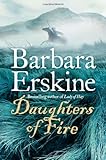
  • Daughters of Fire by Barbara Erskine – a time slip novel focussed on the legends surrounding Cartimandua, a Celtic queen.
  • Helen of Troy by Margaret George – the myth narrated from Helen’s point of view.
  • Shadowland by C M Gray –  historical fantasy set in Dark Ages Britain.
  • The Owl Killers by Karen Maitland – a tale of witchcraft and pagan superstition.
  • Dreamwalker (The Ballad of Sir Benfro) by James Oswald – fantasy fiction – Welsh mythology and folklore.
  • The first four Merrily Watkins books by Phil Rickman –  The Wine of Angels, Midwinter of the Spirit, A Crown of Lights, and The Cure of Souls –  paranormal crime thrillers with supernatural and spiritual causes.
  • The Last Enchantment by Mary Stewart – a tale of Merlin and King Arthur and the third book in the Merlin trilogy. I read The Crystal Cave and The Hollow Hills years ago and don’t think I’ve ever read this one.
  • The Children of Hurin by J R R Tolkien – Tales of Middle-earth from times before The Lord of the Rings, set in the country that lay beyond the Grey Havens in the West.
  • The Hobbit by J R R  Tolkien – even though I’ve read The Lord of the Rings trilogy several times I’ve not read this!
  • A Connecticut Yankee in King Arthur’s Court by Mark Twain – fantasy fiction in which a Yankee engineer is accidentally transported back in time to the court of King Arthur.

I know I’ve got more but this is more than enough to start with.  It’s a mixed bunch and as I like making lists and don’t like making reading plans, I haven’t decided which ones to read over the next three months. Right now, I want to start them all!