The Taxidermist’s Daughter by Kate Mosse

The Taxidermist's Daughter

Publication date: September 2015, Orion Books

Source: my own copy

Rating: 3*

The Taxidermist’s Daughter is a difficult book to review without giving away too much detail particularly about the element that almost made me stop reading and because of that I was in two minds what rating to give it. The main thing that I didn’t like is all the detail about taxidermy – and there is a lot of detail. I found its gruesome application in this book absolutely sickening. But I still read on, such is the strength of Kate Mosse’s ghoulish storytelling.

Blurb (from the back cover):

1912. A Sussex churchyard. Villagers gather on the night when the ghosts of those who will not survive the coming year are thought to walk. And in the shadows, a woman lies dead.

As the flood waters rise, Connie Gifford is marooned in a decaying house with her increasingly tormented father. He drinks to escape the past, but an accident has robbed her of her most significant childhood memories. Until the disturbance at the church awakens fragments of those vanished years . . .

Connie Gifford is the taxidermist’s daughter and she has grown up learning the art of taxidermy, taking over from her father who is a hopeless drunk. Her mother had died giving birth to her and there had been an accident when she was twelve (ten years earlier), which had almost completely wiped the first twelve years of her life from her mind.

The book began well, full of atmosphere, set in the Fishbourne Marshes and the tidal estuary in West Sussex (where Kate Mosse grew up), with Gothic overtones and hints of dark and terrible secrets and revenge. There is the mystery of the dead woman who has been garroted – who was she? What, or who haunts Connie’s father? What had happened to Connie when she was twelve, and who was the girl Connie vaguely remembers – older than her, with a love of life and a yellow ribbon in her hair? She experiences strange episodes where she feels herself falling out of time, spinning and flying through the air – episodes full of menace and threat.

But it dragged in the middle, with too many indistinct male characters and even though there is a map showing the layout of Fishbourne in 1912 I had difficulty in following the location of the action, nor could I work out how quickly they seemed to be able to travel between the various houses and Chichester.

It ends dramatically in death and destruction, with all the strands of the story coming together, one dark and stormy night. The waters rise, as the banks of the rivers, streams, the mill pond and the sluice gates break, flooding the whole area. Connie’s memories too come flooding back as the wind and rain join the thundering torrent of the flood water.

After a while though too much was foreshadowed and the story became rather predictable, which lessened the tension. Its gruesomeness however will stay with me for quite a while.

Reading Challenges: Mount TBR 2017 and R.I.P. 2017

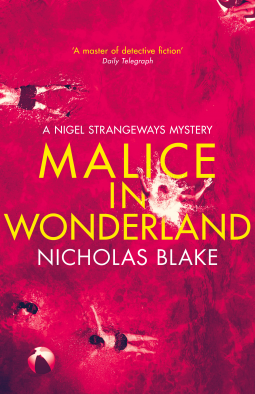
Malice in Wonderland by Nicholas Blake

A Golden Age Mystery

Published: 2017, Ipso Books. First published in 1940, Collins UK (The Crime Club)

Source: Review copy via NetGalley

My rating: 4*

I really enjoyed Malice in Wonderland by Nicholas Blake*. It’s a Golden Age mystery first published in the UK in 1940; in the US as The Summer Camp Mystery, later in 1971 as Malice with Murder; and in 1987, as Murder with Malice.

There are several allusions to Lewis Carroll’s Alice’s Adventures in Wonderland. The train to Wonderland plunges into a tunnel, just as Alice enters Wonderland through a rabbit hole. But in this case Wonderland is a holiday camp, set on a cliff top overlooking the sea. And all is not well in Wonderland as there is a prankster in the camp , the self-styled ‘Mad Hatter’, who is playing nasty and cruel practical jokes on the holiday makers. Swimmers are ducked in the sea and held down, tennis balls are coated in treacle, left with a note that refers to a part of dormouse’s story in Alice in Wonderland. Then the jokes get more dangerous. The camp’s owners are concerned not just for the guests but also for their business as they fear a rival firm with a grudge against the company is trying to ruin them.

There are hundreds of visitors at Wonderland, but the action revolves around a few characters including Paul Perry, a young man who calls himself a scientist, but who is there taking notes for the Mass Observation project, Mr and Mrs Thistlethwaite and their teenage daughter, Sally, Albert Morley, a timid little man, brothers Mortimer and Teddy Wise, the camp’s managers, their secretary Esmeralda Jones and Nigel Strangeways, a private detective.

Like other Golden Age mysteries, Malice in Wonderland presents a puzzle, plenty of suspects, clues planted along the way and a detective who solves the puzzle. It also presents a picture of life just before the Second World War, the social attitudes and in particular the beginnings of the holiday camps. By the 1930s there were several camps, including Warners and Butlins, at seaside locations. Wonderland has dining-halls presenting food cooked by London chefs, a ballroom, bars, an indoor swimming-bath, a concert hall, a gymnasium and numerous playrooms, plus a programme of entertainment with professional hosts and hostesses. It’s described as ‘the biggest, brightest and most ambitious of all the holiday camps that had sprung up over England during the last year or two.’

I loved the setting, the interesting characters, and the fiendishly difficult mystery to solve (I only solved it just before the denouement). And it’s well written with humour and style.

*Nicholas Blake was the pseudonym of Poet Laureate Cecil Day-Lewis (1904 – 1972), one of the leading British poets of the 1930s. He published his first Nigel Strangeways detective novel, A Question of Proof in 1935. Malice in Wonderland is the 6th in the series.

My thanks to the publisher for a digital ARC via NetGalley.

Amazon UK

My Week in Books: 20 September 2017

This Week in Books is a weekly round-up hosted by Lypsyy Lost & Found, about what I’ve been reading Now, Then & Next.

IMG_1384-0

A similar meme,  WWW Wednesday is run by Taking on a World of Words.

Now: I’m currently reading:

The Poisonwood Bible by Barbara Kingsolver. This is a re-read of a book I first read and loved years ago. I’ve read about half the book and I still think it’s a fantastic book. It was several years ago when I last read it and although there are some things I remember, it’s like reading it for the first time:

The Poisonwood Bible

Blurb:

Told by the wife and four daughters of Nathan Price, a fierce evangelical Baptist who takes his family and mission to the Belgian congo in 1959, The Poisonwood Bible is the story of one family’s tragic undoing and remarkable reconstruction over the course of three decades in postcolonial Africa.

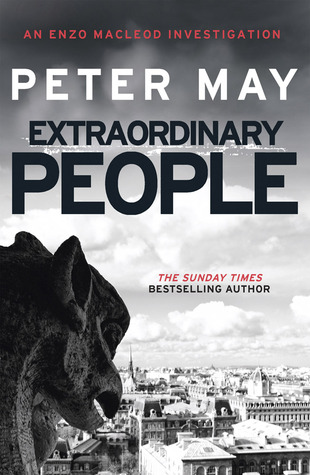
I’m also reading Extraordinary People by Peter May

Extraordinary People (The Enzo Files, #1)

Blurb:

PARIS.

An old mystery.
As midnight strikes, a man desperately seeking sanctuary flees into a church. The next day, his sudden disappearance will make him famous throughout France.

A new science.
Forensic expert Enzo Macleod takes a wager to solve the seven most notorious French murders, armed with modern technology and a total disregard for the justice system.

A fresh trail.
Deep in the catacombs below the city, he unearths dark clues deliberately set – and as he draws closer to the killer, discovers that he is to be the next victim.

Then: I’ve recently finished reading The Taxidermist’s Daughter by Kate Mosse. My review will follow soon.

The Taxidermist's Daughter

Blurb:

The clock strikes twelve. Beneath the wind and the remorseless tolling of the bell, no one can hear the scream . . .

1912. A Sussex churchyard. Villagers gather on the night when the ghosts of those who will not survive the coming year are thought to walk. And in the shadows, a woman lies dead.

As the flood waters rise, Connie Gifford is marooned in a decaying house with her increasingly tormented father. He drinks to escape the past, but an accident has robbed her of her most significant childhood memories. Until the disturbance at the church awakens fragments of those vanished years . . .

Next: I think I’ll start reading After the Fire by Henning Mankel

Blurb:

Fredrik Welin is a seventy-year-old retired doctor. Years ago he retreated to the Swedish archipelago, where he lives alone on an island. He swims in the sea every day, cutting a hole in the ice if necessary. He lives a quiet life. Until he wakes up one night to find his house on fire.

Fredrik escapes just in time, wearing two left-footed wellies, as neighbouring islanders arrive to help douse the flames. All that remains in the morning is a stinking ruin and evidence of arson. The house that has been in his family for generations and all his worldly belongings are gone. He cannot think who would do such a thing, or why. Without a suspect, the police begin to think he started the fire himself.

Tackling love, loss and loneliness, After the Fire is Henning Mankell’s compelling last novel.

Have you read any of these books?  Do any of them tempt you? And what have you been reading this week?

The One That Got Away by Annabel Kantaria

Publication Date: 21 September 2017, HQ

Source: Review copy from the publishers

My rating: 2*

Blurb:

Everyone has one. An ex you still think about. The one who makes you ask ‘what if’?

Fifteen years have passed since Stella and George last saw each other. But something makes Stella click ‘yes’ to the invite to her school reunion.

There’s still a spark between them, and although their relationship ended badly, they begin an affair.

But once someone gets you back, sometimes they’re never going to let you go again…

My view:

I can’t say I enjoyed The One That Got Away very much. Both Stella and George are unlikeable characters and rather one-dimensional. Stella is manipulative and George is weak, controlled by his need for sex and money. Both are now wealthy and successful.

It’s written from both Stella’s and George’s perspectives as they renew their relationship and things take a turn for the worse for one of them. As the story progressed I couldn’t feel much sympathy for either of them. I found it long and drawn out especially as it was remarkably easy to see what would happen next – and it’s written in the present tense (I often, but not always, find this off-putting). It’s not an easy book to rate –  I was tempted to give it just 1 star, but I liked the beginning and I did want to know how it would end, so I’ve given it 2 stars on Goodreads.

My thanks to the publishers for a review copy.

Don’t Let Go by Harlan Coben

Publication Date: 26 September 2017, Random House UK, Cornerstone

Source: Review copy via NetGalley

My rating: 4*

Blurb:

The brilliant new novel from the international bestselling author of Home and Fool Me Once. Mistaken identities, dark family secrets and mysterious conspiracies lie at the heart of this gripping new thriller.

Fifteen years ago in small-town New Jersey, a teenage boy and girl were found dead.

Most people concluded it was a tragic suicide pact. The dead boy’s brother, Nap Dumas, did not. Now Nap is a cop – but he’s a cop who plays by his own rules, and who has never made peace with his past.

And when the past comes back to haunt him, Nap discovers secrets can kill…

My view:

I enjoyed Don’t Let Go very much. It’s a fast-paced mystery that moves between the past and the present with ease, good characterisation and a plot that kept me guessing to the end.

Two stories relating to Coben’s hometown of New Jersey inspired him to write this story. One was about a mafia leader and a make-shift crematorium and the other about a Nike missile control centre behind barbed-wire fencing near the mafia leader’s house and the elementary school. The stories turned out to be true, but Don’t Let Go is Coben’s own version.

Nap has never got over his twin brother, Leo’s death and fifteen years later he is still constantly in his thoughts. Leo and his girlfriend, Diana had been found by a railway line and it looked as though they had committed suicide, but Nap can’t accept that. And he is still obsessed by his girlfriend, Maura, who had disappeared the same night that Leo died. So when another cop, Rex Canton is found dead with Maura’s fingerprints at the scene of the crime, Nap is determined to get to the truth of what exactly had happened and to find Maura.

This is a book that I just had to read quickly, trying to follow the twists and turns as Nap and Ellie, also a friend from their schooldays, uncovered the secrets and lies that had been told over the years.

I enjoyed Don’t Let Go, but it did remind me of the only other book by Coben that I’ve read – The Woods, also about the murder of two teenagers twenty years earlier. Two other teenagers had disappeared and were presumed dead. Paul Copeland, now a County Prosecutor, is asked to identify a dead body, who turns out to be one of the missing teenagers. His sister was the other missing person and she is still missing. Same story in principle but different details and I’m wondering if this is typical of Coben’s books? Are they formulaic?

My thanks to NetGalley and Random House UK, Cornerstone, the publishers for a review copy.

The Giant’s House by Elizabeth McCracken

I recently moved to a different server and there are some posts that weren’t imported. This is one of them. I first posted this review of The Giant’s House by Elizabeth McCracken, the first book I reviewed in May 2007.

I’m not sure of my reaction to The Giant’s House. It is a touching account of the relationship of Peggy Cort, an introverted librarian and James Sweatt, who she meets when he is eleven years old and who grows up to be the tallest man in the world. Peggy lives in a small world of her own; an orderly and precise world devoid of men. During the course of James’s short life he changes Peggy’s life forever. I found it to be an unlikely romance with a slightly disturbing edge to it.

As a former librarian I found the descriptions of Peggy’s library and her thoughts about librarians to be realistic, so I wasn’t surprised to read that she used to be a full-time librarian:

I am a librarian and you cannot stop me from annotating, revising, updating.

People think librarians are unromantic, unimaginative. This is not true.

A good librarian is not so different from a prospector, her whole brain a divining rod. She walks to books and stand and wonders: here? Is the answer here? The same blind faith in finding, even when hopeless. If someone caught me when in the throes of tracking something elusive, I would have told them: but it’s out there. I can feel it God wants me to find it Never jump to conclusions when trying to answer a reference question. My job was to show people – even people I liked – how to use the library, not to use it for them.

Although explaining how the library worked was satisfying, I always felt restricted as a librarian that I was not the one doing the research. However, it is good to be able to search for information, even if you’re not the one using it and it is an extremely useful skill to have.

The most poignant parts of the book are when Peggy expresses her longing to be with James. She is envious of his school friends and the times they have together listening to music, dancing and enjoying being together: ‘Some nights I could not bear all that youth and possibility: I’d hear laughter through the door and I’d turn around and leave.

She doesn’t like to be touched and comments on the dancing:

I saw through the window a boy and girl dancing – or should I say, embracing while revolving in tandem. The music was slow treacle … Other people’s happiness is always a fascinating bore. It sucks the oxygen out of the room: you’re left gasping, greedy, amazed by a deficit in yourself you hadn’t ever noticed.

The descriptions of James however, left me feeling as though I was a voyeur – from the descriptions of not only his height but also of his whole body such as the condition of his feet encased in shoes that he had quickly grown out of so that he couldn’t feel his feet, which were ‘meaty‘, with an acrid smell, and the ‘toes were the worst: the nails curled around their own toes, or knifed into their neighbors …

Similarly the account of his ‘giantism‘ left me feeling uneasy, with its emphasis on being a freak; perhaps that is Elizabeth McCracken’s skill in writing leaving me with this discomfort about mine and others’ reactions to people who are physically different. But it is not only James who is different Peggy is also a misfit: ‘Oh, I was a scandal … they talk about me in this town. I have passed into legend.’ Yet I found it easier to read about Peggy’s difficulties than about James’s.

All in all, this book gave me much to think about. The characters are well delineated, and even the minor ones, described with economy, are distinct. Peggy as the narrator gives a cool, precise account and I liked the humorous touches. The ending is a little surprising, although some of it was signalled in advance. The final chapter worked well for me in concluding the story.