Every Friday Book Beginnings on Friday is hosted by Gillion at Rose City Readerwhere you can share the first sentence (or so) of the book you are reading. You can also share from a book you want to highlight just because it caught your fancy.
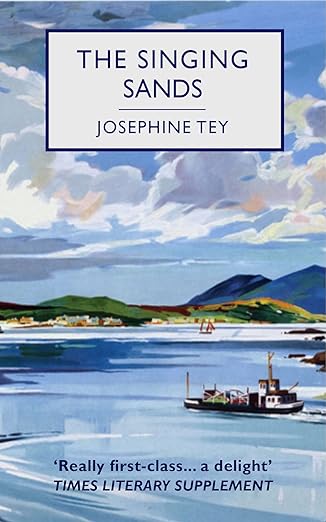
I’m featuring The Singing Sands, by Josephine Tey, an Inspector Grant mystery, one of the books I’m currently reading.
It was six o’clock of a March morning, and still dark. The long train came sidling through the scattered lights of the yard, clicking gently over the points.
Also every Friday there is The Friday 56, hosted by Freda at Freda’s Voice, but she is taking a break and Anne at My Head is Full of Books has taken on hosting duties in her absence. You grab a book and turn to page 56 (or 56% of an eBook), find one or more interesting sentences (no spoilers), and post them.
I’ve seen the lighthouse on the point there standing up in the air. Yes. halfway up in the sky. I’ve seen the hill there change shape until it looked like a great mushroom. And as for those rocks by the sea, those great pillars of stone, they can turn light and transparent and move about as if they were walkingthrough a set of the Lancers.
Description:
En route for the Outer Hebrides on sick leave, Inspector Grant literally stumbles upon the body of a young man in a train compartment that reeks of whisky. Grant firmly walks away from the corpse, determined to let nothing interfere with his holiday plans. But he absentmindedly carries a newspaper away from the scene with him, a newspaper with a cryptic poem scribbled in the margin: The beasts that talk, The streams that stand, The stones that walk The singing sand . . . That guard the way To Paradise. The memory of the unknown dead man’s face and the strange verse drive Grant into investigating, even though the police are content to call it an accidental death. What are the beasts that talk? Who wrote it? When? It isn’t long before Inspector Grant finds that his holiday is becoming more and more a busman’s holiday. Trail leads to trail: some blind alleys, some red hot. Who was the passenger in compartment B Seven? Was his death accidental or was it murder?
Josephine Tey was a pseudonym for Elizabeth Mackintosh(1896 – 1952). She was a Scottish author who wrote mainly mystery novels. I’ve read four of her books before and enjoyed them, especially The Daughter of Time, a mix of historical research and detective work. Inspector Alan Grant is in hospital and to keep his mind occupied he decides to discover whether Richard III really did murder his nephews – the Princes in the Tower.
This one is looking good, so far. What do you think? Are you tempted to read it? If you have read it would you recommend it? Do let me know.
Top 5 Tuesday was created by Shanah at Bionic Book Worm, and it is now being hosted by Meeghan at Meeghan Reads. For details of all of the latest prompts for January to March, see Meeghan’s post here.
Today the topic is Top 5 anticipated reads for Q2 2025. It’s time to talk about all the shiny new books coming out in April, May and June in 2025. What are the books you can’t wait to hold in your hands the most?
I’ve listed these books in date of publication order – four books by authors whose books I’ve read before and one by a new-to-me author.
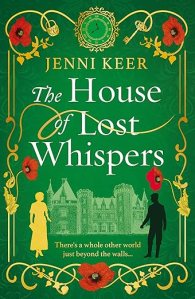
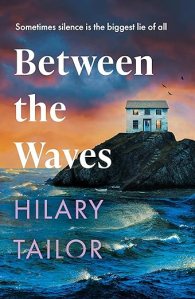
On 15th April 1912, RMS Titanic sank and Olivia’s life changed forever… but what if a world existed where it hadn’t?
When the ill-fated maiden voyage of the Titanic leaves thirteen-year-old Olivia Davenport orphaned, she’s sent to live with her guardians, the Fairchilds, in their huge Jacobean mansion – Merriford Manor. But the Fairchilds have more to worry about than a grieving young girl – with war in Europe imminent and four sons to protect.
Olivia feels alone and friendless. That is, until she hears a voice from behind the wall in her tower bedroom. A voice from a man called Seth. Convinced he’s merely a product of her grieving imagination, she learns to live with him but it’s not until after the heartbreak of the war that Olivia, now a young woman of twenty, discovers that he exists in an overlapping world that is just a shudder in time away from her own. A world where the Titanic never sank… And everything since has been just slightly… different.
All Olivia wants is to find a way into his reality. And not just to see the faces of her beloved parents once again. But also to meet Seth. Who might just be the love of her life…
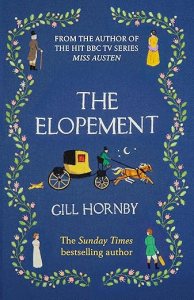
1820. Mary Dorothea Knatchbull is living under the sole charge of her widowed father, Sir Edward – a man of strict principles and high Christian values.
But when her father marries Miss Fanny Knight of Godmersham Park, Mary’s life is suddenly changed. Her new stepmother comes from a large, happy and sociable family and Fanny’s sisters become Mary’s first friends. Her aunt, Miss Cassandra Austen of Chawton, is especially kind. Her brothers are not only amusing, but handsome and charming.
And as Mary Dorothea starts to bloom into a beautiful young woman, she forms an especial bond with one Mr Knight in particular.
Soon, they are deeply in love and determined to marry. They expect no opposition. After all, each is from a good family and has known the other for some years. It promises to be the most perfect match. Who would want to stand in their way?
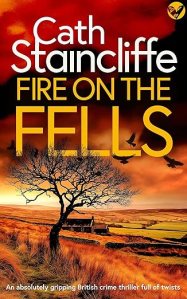
Summer can be murder, out on the sun-scorched Yorkshire Fells.
No one loves the Fells like Tyler Prasad. An eighteen-year-old dreamer who came here to join an eco-protest. But Tyler’s past followed hot on his heels. Now Tyler lies dead in a ditch. His handsome face shot to pieces in a brutal attack that baffles Detective Leo Donovan.
There’s no shortage of gunmen roving the land in search of grouse — most of them staying at luxury country-house retreat, Patefield Grange. The shooting party guests tell Detective Leo the victim’s name means nothing to them. But Leo knows a lie when he hears one.
The Grange is a hotbed of smouldering secrets. Which was worth killing for? Detective Leo and his partner Shan must solve the case before it all goes up in smoke . . .
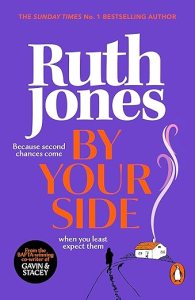
By Your Sideby Ruth Jones – 22 May, because although I haven’t read anything by her before I love the TV series Gavin and Stacey that she co-wrote with James Cordon.
Linda and Levi will never meet. But they’re going to change each other’s lives.
In her role at the council’s Unclaimed Heirs Unit, Linda Standish investigates the lives of those who’ve died alone and tracks down any living relatives. She’s been a friend to the friendless for the past thirty-three years. And now she’s looking forward to an early retirement.
But before she hangs up her lanyard, Linda takes on one last case – that of Levi Norman – a Welshman who made his home on a remote Scottish island for the past five years.
What brought Levi here? And who did he leave behind? Obliged to travel (by hearse) with her arch nemesis Fergus Murray, and helped (and hindered) by local residents, Linda searches for clues to a life now lost. And in the process unexpectedly makes new friends, and discovers things about herself she never knew.
Bursting with all the heart and humour that has made Ruth’s name as a screenwriter and author, By Your Side is about finding joy in the most unlikely connections, and the importance of holding onto friendship, love and community – especially when life gets messy.
Twenty years ago, during a family holiday on the savage and remote island of Little Auger, eleven-year-old Hazel left her bed and was never seen again. The unanswered questions surrounding Hazel’s disappearance tore three families apart and the girls left behind all experience their own terrible guilt. Roz, because she broke a promise; Catrin, because it was her idea; and Nina, who slept through it all. Their friendship never recovers and all three women go on to lead vastly different lives.
Twenty years later, they each receive a phone call from Stella Cox, a true-crime podcaster, who has unearthed new evidence about Hazel’s disappearance. There is no doubt Stella has found something important but the question is, how can the women—once best friends, now strangers—trust her, or each other?
Will their return to the island finally reveal the truth, and if it does, is it something any of them are prepared to learn?
Are you interested in reading any of these? What books are you anticipating?
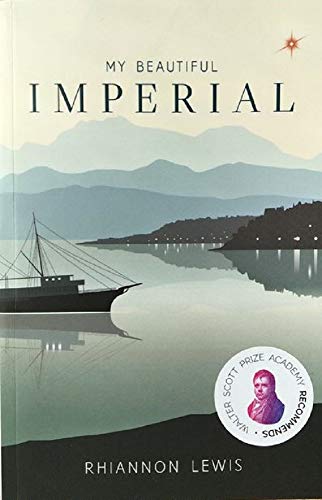
I’m cutting this fine as today is the last day of the Reading Wales Month 2025 hosted by Karen at BookerTalk. Yesterday I posted my review of Resistance by Owen Sheers. I’ve also read My Beautiful Imperial by Rhiannon Lewis, a book that was a Mother’s Day present from my son, a few years ago. It was her debut novel and was listed by the Walter Scott Prize Academy as one of its 20 recommended historical novels of 2018. Originally from Cardigan, she now lives near Abergavenny. This short post really does not do justice to this beautiful book. I can only say that to realise how excellent it is, is to read it for yourself!
Victorina Press| 2017|395 pages| e-book |5*
I loved My Beautiful Imperial. It’s historical fiction set in the 19th century in both Wales and Chile. It begins in Wales in March 1865 with Davy Davies, a young teenager who is at the age when he must decide whether to work at the mill or to be a sailor like father, the captain of the Ellen of Cardigan. Life at home for him changed for ever after his young sister, Elen, was killed when their barn caught fire and his mother wrongly blames him for Elen’s death, and so he leaves home and he sets sail on the Royal Dane. As time went by he worked his way up the ranks until he became Captain of the Imperial, a steamship transporting mail and cargo up and down the Chilean coast. Then in 1891 his life changed when civil war broke out in Chile and his ship was commandeered by the government under President Balmaceda, to carry arms and transport troops.
It captured my imagination completely. I was caught up in this story of friendship, love, war and the dangers of life at sea and during the civil war in Chile history. It’s well written, so much so, that I didn’t want to put the book down. What makes it even more enjoyable is that Davy’s story is based on the actual events of the Civil War in Chile and the experiences of the author’s ancestor, Captain David Jefferson Davies. Rhiannon Lewis spent twenty years researching his life beginning with a book of etchings and an old photograph album. She discovered new evidence and has tried to make her book as historically accurate as possible, stating in her Author’s Note that it is ‘ultimately a novel and a work of fiction.’
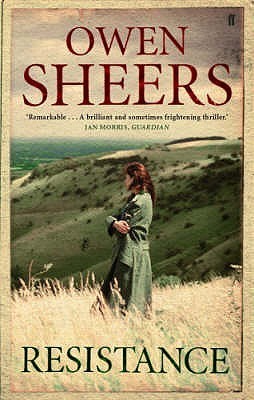
I decided to read Resistance by Owen Sheers for the Reading Wales Month 2025 hosted by Karen at BookerTalk. It’s another one of my TBRs, a paperback that I bought in 2008. It was first published in 2007 by Faber and Faber (349 pages). Resistance was his first novel.
Owen Sheers was brought up in Abergavenny. The winner of an Eric Gregory Award and the 1999 Vogue Young Writer’s Award, his first collection of poetry, The Blue Book, was shortlisted for the Welsh Book of the Year.
1944. After the fall of Russia and the failed D-Day landings, a German counter-attack lands on British soil. Within a month, half of Britain is occupied.
Sarah Lewis, a 26-year-old farmer’s wife, wakes to find her husband Tom has disappeared. She is not alone. All the other women in the isolated Welsh border valley of Olchon also wake to find their husbands gone. With this sudden and unexplained absence the women regroup as an isolated, all-female community and wait, hoping for news.
A German patrol arrives in the valley, the purpose of their mission a mystery. When a severe winter forces the two groups into co-operation, a fragile mutual dependency develops. Sarah begins a faltering acquaintance with the patrol’s commanding officer, Albrecht Wolfram. But as the pressure of the war beyond presses in on them, the valley’s delicate state of harmony is increasingly threatened, before being broken completely, with devastating consequences.
Imbued with immense imaginative breadth and confidence, Owen Sheers’ debut novel unfolds with the pace and intensity of a thriller. A hymn to the glorious landscape of the border territories and a gripping portrait of a community under siege, Resistance is a first novel of considerable grace and power.
My thoughts:
I love historical fiction, but this is different – it is alternate history. Sheers speculates upon how the course of history might have been altered if Germany had won the Second World War and invaded and occupied Great Britain, an alarming prospect. The plot centres on the inhabitants of the isolated Olchon valley in the Black Mountains of south-east Wales close to Hereford and the border between Wales and England. It’s set in 1944–45, shortly after the failure of Operation Overlord and a successful German counter-invasion of Great Britain.
I enjoyed it mainly for Sheers’ beautiful descriptions of the Welsh countryside, so vivid that I can easily imagine I was there, and the daily tasks of farming life, but this does make it slow reading. The main characters are Sarah, and the other women, Maggie, Mary, Menna and Bethan, living in the valley whose husbands had left, Albrecht, an English speaker and ex-Oxford scholar, who leads a German patrol ordered to establish an observation post in the valley, and George, a teenager, recruited by ‘Tommy Atkins’, a British Intelligence officer, to join the British Resistance movement observing the enemy troop movements.
This is a very visual book, and character driven with very little action until the second half of the book. After reading so much crime fiction and fast action novels I had to adapt my reading speed to appreciate this book and to fully enjoy it. It’s a book to read slowly absorbing the language and descriptions. I particularly liked the details about the Welsh poet, who told Sarah of the tales of King Arthur, Lancelot and Percival (knights of the Round Table) and about Welsh princes, Irish princesses and English armies. One of the stories was about a Welsh king and his army, beaten in the hills by Edward I. Beaten but not killed and not captured and never seen again.
Thousands of men swallowed within the muscles of the earth that formed Wales’ natural defences against her invaders. And they were still there. At this point the poet paused in his painting, placed his brush into a cloudy jar of water and leant closer to Sarah’s listening face. His voice dropped, so quiet she could barely hear him over the running of the streams. Yes, he’d whispered, still there in the hills, deep inside them, buried under the peat, heather, gorse, rowan, bog-cotton, stone and soil. Asleep. Not dead, asleep. An entire army and their king, ready to wake and defend the country in its hour of need. (pages 176 and 177)
Sarah wonders if that’s where their husbands have gone deep underground. She wanted to believe that it was so, that their husbands would be coming back to defend their country. This is a story I’ve come across before, but in England, a legend of a cavern beneath Alderley Edge in Cheshire, full of knights in armour awaiting a call to decide the fate of a great battle for England. There is no king named, but there is a wizard involved, who is referred to as Merlin in later versions of the legend.
Another part that struck a chord with me is when Albrecht took Sarah up into the hills, luring her through a crack in the rock in the cliff wall to a large cavity, where the Mappa Mundi was kept hidden from the SS. It’s a medieval map of the world – I’ve seen it in Hereford Cathedral. Scholars believe it was made around the year 1300 and shows the history, geography and destiny of humanity as it was understood in Christian Europe in the late thirteenth and early fourteenth centuries. In his Afterword Owen Sheers states that the Mapp Mundi was removed from Hereford Cathedral and eventually kept in a coal mine in Bradford-upon-Avon.
There is much more in this book that I’ve not described – the relationship between the women and the Germans, particularly that between Sarah and Albrecht, who eventually realised what they had in common, a love of music and literature. I haven’t described how the wider community reacted to the invasion, and the suspicion and fear that they all experienced. And, having said that there is very little action in this book there is plenty of detail and thoughts about war, occupation, death and above all about Wales. The ending is particularly poignant.
Owen Sheers’ Afterwood explains where he got the idea to write an alternative history. He had first heard of the plans for a British resistance organisation when he was working for a builder in the Llanthony valley and the builder told him how during the war some farmers in the area were given caches of arms which they’d hidden in underground bunkers in the hills. Should the orders come they were to leave their homes and wives and take to the Black Mountains to resist the German army. Later on, in 2001 he heard a radio interview on the Today programme with George Vater, who had, as a young man, been recruited into the Auxiliary Units Special Duties Section comprising local people trained to spy on an occupying German force. Sheers knew George Vater and visiting him, George had shown him cuttings, maps and photographs and told how he had been approached by a man calling himself ‘Tommy Atkins’ who invited to join his Special Duties Section. So, whilst this is a work of fiction it is based on fact, woven into Sheers’ story and he writes that only the valley is real.
I enjoyed it far more than I expected and I’d love to read more of Owen Sheers’ work.
It’s nearly the end of March when the Reading Ireland Month 2025 hosted by Cathy at 746 Books ends. I had a list of books to choose from and I read one of my TBRs, The Likeness by Tana French, a book I’ve had for eight years. It’s the second book in the Dublin Murder Squad Mysteries. I read the first book, In the Woods, in 2014.
Hodder and Stoughton| 2008| 574 pages| 4*
Description:
Still traumatised by her brush with a psychopath, Detective Cassie Maddox transfers out of the Murder squad and starts a relationship with fellow detective Sam O’Neill. When he calls her to the scene of his new case, she is shocked to find that the murdered girl is her double. What’s more, her ID shows she is Lexie Madison – the identity Cassie used, years ago, as an undercover detective. With no leads, no suspects and no clues to Lexie’s real identity, Cassie’s old boss spots the opportunity of a lifetime: send Cassie undercover in her place, to tempt the killer out of hiding to finish the job.
I loved this book. I couldn’t remember very much about In the Woods, but I had no difficulty in following The Likeness, so I think it’s a good standalone mystery. It’s a gripping fast paced book, set in Ireland, with well drawn characters, including a group of five friends living in a large house in the countryside. French portrays each of these friends in detail, and as the story progresses their backgrounds and relationships are revealed. The book begins as one of the friends, Lexie Madison is murdered.
Astonished by the fact that Lexie is her double, Detective Cassie Maddox, who played a small role in In the Woods, is persuaded to go undercover at the house, and assume the dead women’s identity, the police having told her friends she wasn’t killed, but was merely wounded. Far-fetched, yes, but it didn’t take me long before I found myself accepting this was feasible. If you find that impossible then this book is not for you, which would be a shame as it is well written, outstanding in its depiction of the Irish countryside and the interaction of the characters. It explores their feelings and emotions, their motivations and desires to such an extent that I was totally engrossed in the book, hoping, irrationally, that Lexie was not dead but had survived and all would be well. Of course, that was not possible and the ending was inevitable.
Now I am just as eager to read the next book in the series, Faithful Place, which features one of the other characters in the Murder Squad, Undercover cop Frank Mackay.
Top Ten Tuesday is a weekly meme created by The Broke and the Bookish and now hosted by Jana at That Artsy Reader Girl. For the rules see her blog.
The topic this week is Books I Did Not Finish. I rarely give up on books I’ve bought but I borrow lots of library books and often take them back before I’ve finished them. Sometimes it’s because they’re books that are due back before I’ve finished them, or because I’ve borrowed them to see if I’d like them and decide not to read them.
These are books on the library’s list of books I’ve borrowed over the last couple of years that I had to return before I’d read them:
Pianos and flowers : brief encounters of the romantic kind by Alexander McCall Smith, a short story collection
A possible life by Sebastian Faulks
Sugar money : a novel by Jane Harris
The Shrouded Path by Sarah Ward
Cuddy by Benjamin Myers
Daphne Du Maurier and her sisters : the hidden lives of Piffy, Bird and Bing by Jane Dunn


 BooksPlease