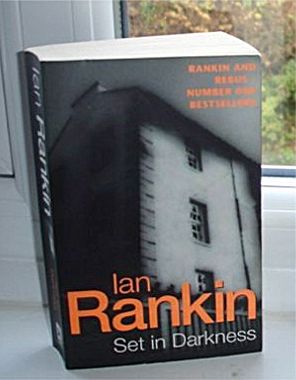
Set in Darkness was the first Inspector Rebus book I read, nearly three years ago. I’m currently reading all of them in sequence – this is the 11th in the series. I was pleased that I remembered so much about it and it didn’t spoil the tension at all, but then I hadn’t remembered all the details. I think I enjoyed it more the second time round as I knew the main characters and had seen them develop in the previous 10 books.
There are three cases Rebus and his colleagues are investigating. The first is the discovery of a corpse in one of the old fireplaces at Queensberry House, Edinburgh during the works to build the new Scottish Parliament building. The body, nicknamed Skelly by the police, had been bricked up around 1979, twenty years earlier. The second case is the murder of Roddy Grieve, a candidate for the Scottish Parliament, found in a summer house in the grounds of Queensberry House, and the third is the suicide of a tramp who had jumped off North Bridge over the deep gully that housed Waverley Station. The press nicknamed him Supertramp after a building society pass book was found in his belongings that revealed he owned £400,000. At the same time the police are investigating a rapist who is targeting singles clubs.
Rankin’s skill is in interweaving the cases. At no time does this seem contrived or forced, the links seem to unfold naturally as the investigation progresses. Rebus is out of favour with his boss, Farmer Watson, which is why he’d been seconded to the Policing of Parliament Liaison Committee to advise on security for the Scottish Parliament, but also why he was on the spot when Skelly was discovered. DS Siobhan Clarke is working on the rape case and on her way home from the singles club she witnesses Supertramp’s suicide, and is then assigned to his case. Siobhan is becoming more like Rebus, dedicated and obsessed cops, who like working on their own. The cop instinct defines them – always on the lookout, their lives not their own, but made up of other people’s lives (page 223 paraphrased).
This is a dark book; there is darkness within Rebus himself, as well as in the crimes he investigates. He doesn’t sleep at night, aand as one of the other characters says to him
‘We all come from the darkness, you have to remember that, and we sleep during the night to escape the fact. I’ll bet you have trouble sleeping at night, don’t you?’ He didn’t say anything. Her face grew less animated. ‘We’ll all return to darkness one day, when the sun burns out.’ (page 157)
He is a troubled soul, with ghosts in his life – past family and past friends who come to him as he sit sin darkness on long nights when he’s alone. He can see his career crumbling around him and ends up beaten and bloodied. He only survives with help from Big Ger Caffety, released from prison and still Edinburgh’s crime boss.
I loved this book.


 As she was writing this book at the time of her disappearance and divorce from her first husband, Archibald Christie it’s hardly surprising. It may not be her best book, but it’s still a good read. Ruth Kettering, the daughter of millionaire Rufus Van Aldin, is married to Derek, against her father’s advice. Agatha’s views on divorce are clear when Van Aldin tells Ruth she should divorce Derek, who he thinks is no good, rotten through and through and had only married her for her money, saying:
 This is the first book in Janie Bolitho’s series of mysteries featuring Rose Trevelyan, now published in an omnibus edition as
  BooksPlease