Thirteen Hours by Deon Meyer: Book Review

Thirteen Hours by Deon Meyer (translated from Afrikaans by K L Seegers) is a great book. I was engrossed in it right from the start. It’s tense, taut and utterly enthralling. Moving at a fast pace the book follows the events during the thirteen hours from 05:36 when Rachel, a young American girl is running for her life up the steep slope of Lion’s Head in Capetown.  The body of another American girl is found outside the Lutheran church in Long Street. Her throat slit had been slit. An hour or so later Alexandra Barnard, a former singing star and an alcoholic, wakes from a drunken stupor to find the dead body of her husband, a record producer, lying on the floor opposite her and his pistol lying next to her.

It’s not just the story that makes this book such a gripping read, but the characters are so well-drawn too. DI Benny Griessel is mentoring two inexperienced detectives who are investigating these crimes. I grew very fond of Benny, who is also an alcoholic and struggling to keep his marriage together. He deals with mentoring his charges very well, with patience and expertise, but also gets emotionally involved when Rachel’s father entreats him to save his daughter. There are many other memorable characters, such as Inspector Mbali Kaleni, a Zulu woman with a powerful personality who commands people’s attention, and the elderly Piet van der Lingen, who helped Rachel, looking like an ‘aged monk with his thinning grey hair around the bald spot that shone in the flourescent light.’

The two cases move along parallel to each other, keeping me desperate to know what happened next in both. The book also reflects the racial tension in the ‘new South Africa’ with its mix of white, coloured and black South Africans. There is a strong sense of location, not just from the cultural aspect but also geographical because although I know nothing about Capetown I had no difficulty in visualising the scenes from Meyer’s descriptions.

Without doubt this has to be one of the best books I’ve read this year, one that had me eager to get back to it each time I had to stop reading.

Seeking Whom He May Devour by Fred Vargas

It took me some time to ‘get into’ Seeking Whom He May Devour, mainly because of the somewhat stilted style, which may be a result of the translation from French, but as this is the first book by Fred Vargas I’ve nothing to compare it with. Looking at the reviews on Amazon, it seems as though it is the translation. Anyway, it’s a rather quirky crime fiction novel with touches of humour that appealed to me.

On the back cover it describes the book as ‘frightening and surprising’, but I didn’t find it at all frightening – surprising, yes, particularly the ending which I hadn’t expected at all. It’s set in the French mountains. Johnstone, a Canadian is living there whilst he films a documentary about wolves. The problems start when more and more sheep are found with their throats torn out. The vet says it is the work of a very large wolf and after Suzanne Rosselin told Johnstone she believed it was a werewolf, the hunt is on, despite Johnstone’s wish to leave the wolves in peace. Then Suzanne is also found dead, killed in the same way, When Massart, who worked at the slaughterhouse and lived on his own high up on Mont Vence, disappears suspicion falls on him as the werewolf.

Soliman, Suzanne’s adopted son and Watchee her shepherd persuade Camille,  a plumber/musician, who is Johnstone’s girlfriend to go with them as they try to track down Massart. They are an odd combination of characters – Soliman, a young black man who loves telling African folk stories and giving definitions of words he ‘s learnt from a dictionary, Watchee, an old man more comfortable with his sheep than people and Camille, who is writing a music soap opera and reads the A to Z of Tools for Trade and Craft for relaxation.

Soliman and Watchee enlist Camille’s help in tracking down Massart, because she can drive and they can’t. Johnstone, a man who’s not good with words, doesn’t like the idea and every now and then pops up as they travel through the French countryside on narrow hairpin tracks in a smelly old sheep wagon. I felt this section of the book was over-long but I did like their philosophising and story-telling. I also liked the little touches of humour, such as the episode where Watchee phones a friend who puts his mobile in Watchee’s leading ewe’s ear so he can talk to her, to keep her spirits up whilst he is away.

With the help of Commissaire Jean- Baptiste Adamsberg the killer is finally tracked down. Adamsberg is another eccentric character, a policeman who is being stalked by a girl who is obsessed with the idea of killing him. He has his own way of working things out:

Adamsberg put one thing in another, or turned them upside down, or scattered what had been brought together and threw it up in the air to see where it would fall. And despite his amazingly slow pace, he would in the end, extract truth from that chaos. (page 109)

By the end of this book I was really enjoying it. It isn’t a scary book, but neither is it a ‘cozy’ mystery. It’s different from any other crime fiction that I’ve read and I want to read more by Fred Vargas. This is the second in her Chief Inspector Adamsberg series but it reads fine as a stand-alone book.

Book Beginnings on Friday

Book Beginnings on Friday is a meme hosted by Becky at Page Turners. Anyone can participate; just share the opening sentence of your current read, making sure that you include the title and author so others know what you’re reading. If you like, share with everyone why you do, or do not, like the sentence.

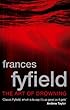
My opening sentence this week is from The Art of Drowning by Frances Fyfield:

Someone wants to kill me.

Nice and short and dramatic, leading me to wonder who is writing, who wants to kill him/her.

Teaser Tuesday – 4.50 from Paddington

Teaser Tuesdays is a weekly bookish meme, hosted by MizB of Should Be Reading.

Share a couple or more sentences from the book you’re currently reading. You also need to share the title of the book that you’re getting your ‘teaser’ from €¦ that way people can have some great book recommendations if they like the teaser you’ve given!


This week one of the books I’m reading is 4.50 from Paddington by Agatha Christie, in which a woman is killed on a train and then her body can’t be found. Miss Marple gets involved. As she is by now a frail old lady told by her doctor to take things easy she enlists the help of Lucy Eyelesbarrow in finding out what actually happened. This works out very well, mainly because of Lucy’s thoroughness and Miss Marple’s powers of deduction.  This is how she thinks about it:

Of course, I am somewhat handicapped by not actually being on the spot. It is so helpful, I always feel, when people remind you of other people – because types are alike everywhere and that is such a valuable guide.

One is inclined to guess – and guessing would be very wrong when it is a question of anything as serious as murder. All one can do is to observe the people concerned – or who might have been concerned – and see of whom  they remind you. (page 121)

Book Beginnings on Friday

Book Beginnings on Friday is a meme hosted by Becky at Page Turners. Anyone can participate; just share the opening sentence of your current read, making sure that you include the title and author so others know what you’re reading. If you like, share with everyone why you do, or do not, like the sentence.

I’m just about to start reading 4.50 From Paddington by Agatha Christie. The first sentence is:

Mrs McGillicuddy panted along the platform in the wake of the porter carrying her suitcase.

I like this sentence because it paints a picture and I know immediately that Mrs McGillicuddy is not a young or a fit woman, as she’s out of breath, or she’s running late for the train. The next few sentences pad out the picture of a woman who is short and stout, carrying a large quantity of parcels as a result of Christmas shopping. So I also know that it is most likely to be December and as she has been shopping she is most likely to be going home and she’s probably tired out.

As this is an Agatha Christie book I know there’ll be a murder and I also know from the blurb that she is about to witness the murder on a passing train through the train window. Now I just need to get reading.

Fleshmarket Close by Ian Rankin: Book Review

The latest Rebus book I’ve read is Fleshmarket Close. As usual with Ian Rankin’s books this is a complex novel, based around the issues of asylum seekers, illegal immigrants and racial prejudice. Rebus, himself is tolerant, pointing out that his grandfather was Polish and an immigrant. But Rebus hasn’t mellowed at all. He is still a loner and now an outsider, shipped out of his old office, St Leonard’s to Gayfield Square where there is no office or even desk space for him. He’s impatient with his superiors, realising they think it’s time for him to retire.

There is plenty going on in this book, a lot of characters and sub-plots, so it needs concentrated reading. There’s the murder of an unknown immigrant found dead in Knoxland, high-rise blocks of flats, the discovery of two skeletons under the concrete floor in the cellar of the Warlock pub in Fleshmarket Close, the disappearance of Ishbel Jardine, whose sister, a rape victim, had committed suicide, and the murder of the convicted rapist, Donny Cruickshank. 

Rebus is relentless in his pursuit of the truth, despite his drinking problems and his difficulties in maintaining any meaningful relationships. DS Siobhan Clarke is also feeling more and more as though she is turning into Rebus, with her late-night lone drinking and methods of working,and there are signs that she and Rebus are drawing closer.  How all the cases connect, or indeed if they do connect, is not clear until near the end of the book, when Big Ger Cafferty makes a brief appearance. Although Rebus can’t prove it he knows that Cafferty was behind the scenes using, abusing, conning and manipulating people.