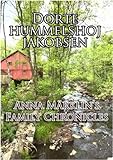
Anna Märklin's Family Chronicles by Dorte Hummelshoj Jakobsen

This is the second book by Dorte Hummelshoj Jakobsen that I’ve read. I liked the first one The Cosy Knave, but I liked her latest book, Anna Märklin’s Family Chronicles even more. The Cosy Knave, as the title suggests, is humorous and rather quirky, whereas Anna Märklin’s Family Chronicles is a psychological mystery and not at all cosy.

Set in Denmark in the present day with flashbacks to Sweden (where her father’s family came from) during the early part of at the beginning of the twentieth century, Anna Storm finds herself with beset with problems. Her father is seriously ill and strangely secretive about his family background:

There were so many things her father did not want to talk about. Illness and death, war and accidents. Things did not change for the better because you talked about them  he claimed.

Anna longs to know more and when she finds her grandmother’s journal she is enthralled. But digging into the past can reveal secrets that you might not want to know.

At the same time she is concerned about Karin, her best friend and neighbour, whose life is under threat for reasons Karin doesn’t divulge. When Anna can’t contact Karin, either by phone or at home, she eventually uses Karin’s spare key to enter her flat and finds her lying dead on the kitchen floor. it looks as though she slipped and hit her head – but was it really an accident?

Anna Märklin’s Family Chronicles has depth both in mystery and in characterisation and the setting is superb. I was transported in time and place as I read and fearful for Anna’s safety as she dug deeper into the mysteries surrounding her. I really enjoyed this book and hope that Dorte Jakobsen will write more in this vein.

  • Format: Kindle Edition
  • File Size: 439 KB
  • Publisher: Candied Crime (18 Dec 2012)
  • Sold by: Amazon Media EU S.à r.l.
  • Language: English
  • ASIN: B00AQIGSVQ
  • Source: my copy supplied by the author
  • My Rating: 4/5

Dorte Hummelshoj Jakobsen is a teacher from Denmark, teaching English at upper secondary level. In her spare time she reads and writes crime fiction in English and Danish, and in 2010 she sold her first flash stories to American magazines or publishers. One story appeared in Discount Noir (edited by Ste Weddle & Patricia Abbott).

Since then she has published two collections of flash fiction, “Candied Crime” (humour) and “Liquorice Twists” (a bit darker). Her bestsellers are the romantic ghost story “Heather Farm” (suspense plus romance in the Dunes near the Danish west coast) and the cosy novel “The Cosy Knave” (European title: “Murder deLight”).

For an interview with Dorte see Linda Rae Blair’s website.

Best Crime Fiction 2012

Kerrie of Mysteries in Paradise is collecting our best crime fiction reading for 2012.The titles can have been published any time, but must be crime fiction.

I read 61 crime fiction books in 2012 – see the full list here.

My top ten are as follows. (Inevitably this post includes six of the books I’ve already identified as my ‘best’ books read in 2012.)

Books with 5 stars:

  1. After the Funeral by Agatha Christie, first published in 1963. Poirot investigates the death of Cora Abernethie, who had announced at the funeral of her brother Richard that he had been murdered.
  2. The Crimson Rooms by Katherine McMahon, published in 2010 – historical crime fiction set in London in 1924, with Britain still coming to terms with the aftermath of the First World War. Evelyn Gifford, one of the few pioneer female lawyers takes on two cases, one child custody case and the other a murder case.
  3. Fatherland by Robert Harris, published in 2009,  a fast-paced thriller set in Germany in 1964, a murder mystery, beginning with the discovery of the naked body of an old man, lying half in the Havel, a lake on the outskirts of Berlin. The homicide investigator is Xavier March of the Kriminalpolizei (the Kripo) and the victim is Josef Buhler, one of the former leading members of the Nazi Party who had been instrumental in devising €˜the final solution’.
  4. Silent Voices by Ann Cleeves, published in 2011, a Vera Stanhope mystery, set in Northumbria. It begins with Vera’s discovery of a dead woman in the sauna of her local gym.

Books with 4.5 stars:

  1. The Chalk Circle Man by Fred Vargas, published in 2010, a very cleverly constructed and quirky murder mystery set in Paris  where strange blue chalk circles start appearing on the pavements. Only Commisaire Adamsberg takes them €“ and the increasingly bizarre objects found within them €“ seriously. 
  2. Hickory Dickory Dock by Agatha Christie, a Poirot mystery, first published in 1955, set in a London students’ lodging house where death strikes. There are plenty of suspects and red herrings and some interesting reflections on crime and the psychology of behaviour.
  3. The Girl on the Stairs by Louise Welsh, published in 2012. It’s set in Germany, a dark, psychological thriller, full of atmosphere and claustrophobic tension.
  4. One, Two, Buckle My Shoe by Agatha Christie, first published in 1940, in which Hercule Poirot and Inspector Japp investigate the apparent suicide of Mr Morley, Poirot’s Harley Street dentist, who was found dead in his surgery, shot through the head and with a pistol in his hand.
  5. The Redeemed by M R Hall, published in 2011. Coroner Jenny Cooper investigates the death of a man found lying outside a Bristol church with a sign of the cross gouged into his flesh, It looks to her like another grisly, routine suicide, but the unexpected arrival of an enigmatic Jesuit priest reveals deeper levels of mystery.
  6. The Sixth Lamentation by William Brodrick, published in 2010, it looks back  to the Second World War in occupied France, telling a dramatic tale of love and betrayal, full of suspense, and interwoven stories.

Agatha Christie Reading Challenge

My progress in 2012:

The Agatha Christie Reading Challenge is run by Kerrie at Mysteries in Paradise. I don’t think of it as a Challenge – it’s really a reading project, as it is quite simply to read Agatha Christie’s books. I’m not reading them in order of publication but as I come across them.

The full list of the 45 novels that I’ve read is on my Agatha Christie Reading Challenge page.

My favourite this year is One, Two, Buckle My Shoe, but with the exception of Postern of Fate I thought they all made fascinating reading.

This year I’ve read 11 books, which I’ve listed below in the order of publication:

  1. 1923 The Murder on the Links – this is the third book she wrote and the second featuring Hercule Poirot. Agatha Christie had the idea for the book after reading newspaper reports of a murder in France, in which masked men had broken into a house, killed the owner and left his wife bound and gagged. From these facts she then invented her plot, setting the book in the fictional French town of Merlinville.
  2. 1933 Lord Edgware Dies – this is the eighth Poirot book and is narrated by Captain Hastings. Poirot is at his best, relying on his knowledge of psychology, the ‘˜employment of the little grey cells‘˜, which gives him such mental pleasure.
  3. 1936 Murder in Mesopotamia (I haven’t written a post on this book). In 1936 Agatha Christie was with her husband Max Malloran at his archaeological dig in the Middle East and this book is the first she wrote set in that part of the world – in this case in that part of Iraq formerly known as Mesopotamia. The murder victim is the wife of the archaeologist!
  4. 1940 One, Two, Buckle My Shoewritten in 1939, this book reflects the economic and political conditions of the time, with a definite pre-war atmosphere of a world on the brink of war.  Hercule Poirot and Inspector Japp investigate the apparent suicide of Mr Morley, Poirot’s Harley Street dentist.  Each chapter is entitled after a line of the nursery rhyme and the first line contains an important clue.
  5. 1947 The Labours of Hercules. This is a collection of 12 short stories featuring Hercule Poirot, first published in 1947. Poirot is thinking of retiring, but before he does he wants to solve 12 more cases and not just any cases. These have to correspond to the Twelve Labours of Hercules, specially selected problems that personally appeal to him.
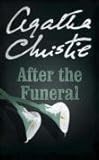
  6. 1953 After the Funeral, another Poirot book, full of red herrings, complicated family relationships and one where the motive for the crime is skilfully concealed.
  7. 1955 Hickory Dickory Dock brings the first appearance of Miss Lemon, Poirot’s secretary, in a full length novel. Set in a crowded London house, owned by Mrs Nicolstis, a Greek, with a mixed group of young people from a variety of backgrounds and cultures, where one of the students commits suicide ‘“ or is it murder?
  8. 1965 At Bertram’s Hotel, where Miss Marple stays for a week as a gift from her nephew and his wife. There’s a long build up to any crime being committed and It’s only towards the end of the book that a murder occurs. Miss Marple’s presence is vital to solving the mystery.
  9. 1967 Endless Night this is a psychological study with a suffocating air of menace throughout the book, and more than one twist at the end.
  10. 1973 Postern of Fate the fourth of the Tommy and Tuppence Beresford mysteries. It begins with the ageing couple, now retired and living in a new home. They investigate the fate of Mary Jordan who had lived there many years earlier. Not one of Agatha Christie’s better books.
  11. 1976 (but written in the 1940s) Sleeping Murder Agatha Christie had written this book during the Second World War. Miss Marple’s last case in which she investigates a murder that had happened 18 years earlier.

I have been trying to fill in the gaps and still have some of her earlier books to find (I haven’t listed her short stories):

  1. 1925 – The Secret of Chimneys
  2. 1927 – The Big Four
  3. 1930 – The Murder at the Vicarage
  4. 1931 – The Sittaford Mystery
  5. 1935 – Three Act Tragedy
  6. 1936 – Cards on the Table
  7. 1938 – Appointment with Death
  8. 1939 – Ten Little Niggers
  9. 1940 – Sad Cypress
  10. 1941 – N or M?*
  11. 1942 – Five Little Pigs
  12. 1942 – The Moving Finger*
  13. 1944 – Towards Zero
  14. 1944 – Death Comes as the End
  15. 1945 – Sparkling Cyanide
  16. 1950 – A Murder is Announced*
  17. 1952 – Mrs McGinty’s Dead
  18. 1952 – They Do It With Mirrors*
  19. 1954 – Destination Unknown
  20. 1958 – Ordeal by Innocence
  21. 1959 – Cat Among the Pigeons*
  22. 1966 – Third Girl*
  23. 1971 – Nemesis*

* books I own

After the Funeral by Agatha Christie

I thoroughly enjoyed Agatha Christie’s After the Funeral, first published in 1953.

Synopsis (from the official Agatha Christie website):

‘When Cora is savagely murdered, the extraordinary remark she made the previous day at her brother’s funeral takes on a chilling significance. At the reading of Richard’s will, Cora was clearly heard to say, “It’s been hushed up very nicely, hasn’t it…But he was murdered, wasn’t he?”  In desperation, the family solicitor turns to Hercule Poirot to unravel what happened next …

Published in 1953, and appearing in the United States under the title Funerals are Fatal, Christie dedicated the novel to her nephew, James Watt III “in memory of happy days at Abney”, her sister’s family home. The novel  formed the basis for MGM’˜s Murder at the Gallop, although they chose to swap Poirot for Margaret Rutherford’s Miss Marple and took ‘˜artistic licence’ with the book’s plot!  It was broadcast in 2006 with David Suchet as Poirot.’

My view:

I read it quickly and consequently had little idea who had killed Cora. I did spend some time looking at the family tree at the beginning of the book, working out the family relationships and who was present at Richard Abernethie’s funeral and their reaction to Cora’s question. It seemed to me that any of the family could have done it – Agatha Christie goes through the actions and thoughts of each character and there’s cause for suspicion for each one.

None of them had had any close ties and consequently they didn’t feel any deep grief. His brother expected he would inherit as Richard’s only son had died six months before his father. Instead Richard had distributed his property equably between his brother and his nephews and nieces – everyone is disappointed.

Apart from trying to solve the mystery I was interested in the glimpses into life in post-war Britain, where jobs are scarce, servants even more scarce and there are complaints about the economic situation, with high taxation and the prospect of properties such as the Abernethie house being turned into a hotel, or institute, or even worse being pulled down and the whole estate built over.

  • Paperback: 378 pages
  • Publisher: HarperCollins; Masterpiece edition edition (6 May 2008)
  • Language: English
  • ISBN-10: 0007119364
  • ISBN-13: 978-0007119363
  • Source: I bought the book
  • Rating: 5/5

Silent Voices by Ann Cleeves

Ann Cleeves has become one of my favourite writers this year and Silent Voices is one of the best crime fiction books I’ve read recently. Although it’s the fourth in her Vera Stanhope series it’s the first that I’ve read. I did watch some of the TV versions of Vera earlier this year but I missed this one, so the plot was completely new to me.

Synopsis (taken from the back cover):

When DI Vera Stanhope finds the body of a woman in the sauna room of her local gym, she wonders briefly if, for once in her life, it’s a death from natural causes. But closer inspection reveals ligature marks around the victim’s throat…

Doing what she does best, Vera pulls her team together and sets them interviewing staff and those connected to the victim, while she and colleague Sergeant Joe Ashworth work to find a motive. While Joe struggles to reconcile his home life with the demands of the job, Vera revels being back in charge of an investigation. Death has never made her feel so alive.

And when they discover that the victim had worked in social services – and was involved in a shocking case involving a young child – it seems the two are somehow connected.

But things are rarely as they seem . . .

My view:

When I began reading I could visualise and hear Brenda Blethyn as Vera, but gradually that impression faded away and the character of Vera began to take shape in my mind from the words in this book alone. Vera is a truly eccentric individual, intelligent, single minded and dedicated to her job, single and with no family responsibilities. She finds it difficult to delegate and is exhilarated by her job. In the following extract she has phoned Joe late at night:

Her voice was loud. She’d never really got the hang of mobiles, yelled into them. She sounded as if she’d just woken up after a good night’s sleep. Murders took her that way, invigorated her as much as they excited the pensioners he’d spent all afternoon interviewing. Once, after too many glasses of Famous Grouse, she’d said that was what she’d been put on the Earth for. (page 67)

The other characters are equally as well- defined. As well as creating memorable and individual characters Ann Cleeves conveys a strong sense of place bringing the Northumbrian countryside, towns and villages to life as I read. The plot is nicely complicated and although I had an inkling about the killer I was wrong, but looking back I could see where I’d been misled. Silent Voices is an excellent book, one that kept me turning the pages and exercising my brain.

  • Paperback: 400 pages
  • Publisher: Pan (16 Sep 2011)
  • Language: English
  • ISBN-10: 0330512692
  • ISBN-13: 978-0330512695
  • Source: Library book
  • My Rating: 5/5

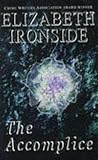
The Accomplice by Elizabeth Ironside: Book Notes

I first came across Elizabeth Ironside on Bev’s blog My Reader’s Block during the Crime Fiction Alphabet meme. I liked the sound of her books, so when I saw The Accomplice in my local library I immediately borrowed it.

Elizabeth Ironside is the pseudonym of Lady Catherine Manning, wife of Sir David Manning the former British Ambassador to the United States (from 2003-2007). Her first novel A Very Private Enterprise won the Crime Writers’ Association (CWA) John Creasey Award for Best First Mystery of 1985, and Death in the Garden was shortlisted for the CWA Gold Dagger for Best Mystery of 1995. The Accomplice is her third novel, published in 1996.

This is one of the most fascinating mysteries I’ve read for a while. It’s historical crime fiction, moving back in time to Latvia before and during the Second World War and present day Russia and Britain.

Summary (from the back cover):

‘Zita Dauncey’s tragic past and difficult present seem firmly under control. Until a child’s skeleton is dug up in her friend Jean’s rose bed, and (Xenia) a mysterious young woman arrives from Russia.

Jean’s English ordinariness hides her original identity as Yevgenia Chornoroukya: a woman whose history includes two lovers, two exiles and all the desperate compromises she makes to escape the horrors of eastern Europe in 1945. And quite possibly, the murder of a child.’

My view:

I liked the way Ironside wove together the past and the present, although at first I thought there was too much about Jean’s background, but it grew on me as I became fascinated with her history and life in Russia during the war years.

This is a complex book, with plenty of interesting characters, all of whom are well-rounded characters who came to life as I read, some with their annoying ways, like Xenia and others, like Zita, who I came to like a lot – for example, Zita’s son, Tom has cerebral palsy and Xenia’s view is that “physical disability shows moral distortion“, quoting Stalin’s withered arm, Richard III, Attila the Hun (club foot) “And Hitler, you only have to look at him to see he was unsafe and insane.“(pages 99 – 100)

Xenia is a scheming, manipulative character. She claimed to be related to Jean but actually she had no idea whether they were or not.  Jean’s reaction to her seemed to indicate she had something to hide or fear – and just what that was gradually surfaces.

Along with that strand of the book there are the questions about the identity of the child’s skeleton found buried in the rose garden, how long ago it was buried and the implications for Jean who claimed to know nothing about it.

This is a well paced book building gradually to a climax, a book that I wanted to finish but was sad when it came to the end, leaving me with some questions still unanswered. I enjoyed it very much and I hope to read more of Elizabeth Ironside’s books.

A Very Private EnterpriseDeath in the GardenThe AccompliceThe Art of Deception
A Good Death
 List and images from Fantastic Fiction.