Two Novellas for Novellas in November The Library Cat & the Ghost Cat by Alex Howard

Novellas in November, is a challenge hosted by Cathy at 746 books and Rebecca at Bookish Beck, books under 200 pages long.

Here are two novellas by Alex Howard that I really enjoyed reading.
Rating: 4 out of 5.

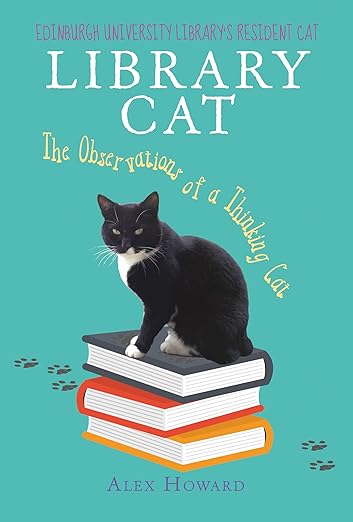
Library Cat The Observations of a Thinking Cat by Alex Howard (161 pages Black & White Publishing 2016) Winner of the People’s Book Prize 2017 Beryl Bainbridge Award for Best First Time Author.

Library Cat, the resident cat of the University of Edinburgh’s Main Library, is not like other cats. He is a thinking cat. You can tell by the canny glint in his eye, his disdainful whiskers and his unrelenting interest in books and piles of paper.

This is a book for cat lovers as well as library lovers – that’s me for one, so although I thought the beginning of this book was rather slight I was soon captivated by the Library Cat. He is black and white, with one ‘white paw and one black paw with a white tip that makes it look like it has been dipped into a churn of fresh milk.’

This is a story about Library Cat’s thoughts and his own search for completeness in this fractured world. It is a funny, witty and irreverent look at the world, seen through the unusually observant eyes of Edinburgh University Library’s resident cat. The chapters are quite short to start off with, getting longer towards the end, as he thinks about life, muses on the strange behaviour of humans, particularly of students and ponders the work of Nietzsche. At the end of each chapter there’s a list of Recommended Reading, notes on the food he ate, his Mood, and he Discovers about Humans.

I enjoyed this light, yet philosophical little book complete with the Library Cat’s Bibliography, listing all the recommended books.
Rating: 5 out of 5.

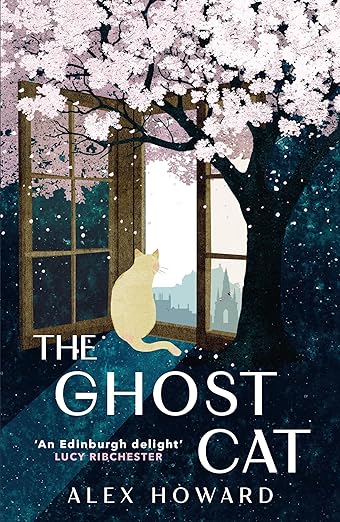
The Ghost Cat by Alex Howard ( 192 pages & White Publishing 2023}

I preferred this one as it is more developed, following Grimalkin’s life after his mother abandoned him as a kitten, in 1887, through his nine lives in Edinburgh. He was found, near to death in an icy stable, by Eilidh, a maid servant to Mr Calvert who lived at 7/7 Marchmont Crescent.

A cat has nine lives. For three he plays, for three he strays and for the last three he stays. ~ English proverb.

His death came in 1902 as he lay sleeping in front of the fire and ‘as the rising flames beat their warmth upon his fur, the twist of his thoughts fell silent for the last time ever in this life.’ (page 14)

From then on the story follows Grimalkin as he experiences the rest of his nine lives and witnesses the changes of the next 120 years, prowling unseen among the inhabitants of an Edinburgh tenement, while unearthing some startling revelations about the mystery of existence, the unstoppable march of time and the true meaning of feline companionship.

He found himself in another world and with a new existence and meets the Cat-sith,* a huge cat that walks on its hind legs. The Cat-sith has missed his death, thus depriving him of his nine lives. The only way he can make amends is to give Grimalkin a choice of passing over to oblivion immediately or to return to earth and spend his remaining eight lives observing its future. However, although this would prevent him from experiencing physical pain it wouldn’t guard him against a great many painful emotions, albeit with many more positive ones. All these live and 2022s will take place in the supernatural realm. He becomes a Ghost Cat.

This is history as seen through the eyes of a cat from 1902 to 2022. I’m not going to go into detail about his remaining lives, other than to say he witnessed events in 1909, 1935, 1942, 1969, 1997, 2008 and 2022. As well as the main story there are Grimalkin’s observations and notes explaining various events and technological changes that had taken place in each period.

I was fascinated and just loved it, such a novel experience, informative and full of emotion right to the end. I shall certainly look out for more of Alex Howard books – the next book is The Ship’s Cat, described as an epic new adventure for feline fans. The Ship’s Cat is the Odyssey with cats – a heroic yet feel-good tale of unlikely friendship on the high seas.

*According to Wikipedia the Cat-sith is a fairy or spirit creature from Celtic mythology, said to resemble a large black cat with a white spot on its chest that walks on its hind legs. Legend has it that the spectral cat haunts the Scottish Highlands.

Alex Howard is an author, editor and theatre professional from Edinburgh. His TikTok page, Housedoctoralex, has nearly 300,000 followers and his been featured on television and in the national press.

A doctoral graduate of English literature, Alex wrote his first book Library Cat (B&W Publishing) while completing his PhD. It won the People’s Book Prize in 2017, and has been translated into French, Korean and Italian. He also writes poetry, which has been published in New Writing Scotland, Gutter and The London Magazine, among others, and his academic book Larkin’s Travelling Spirit was published in 2021 by Palgrave McMillan.

Alex works at Capital Theatres as a creative engagement coordinator and editor while renovating his Edinburgh tenement flat at weekends, with his cat Tabitha, son Sasha and wife, Ellie.
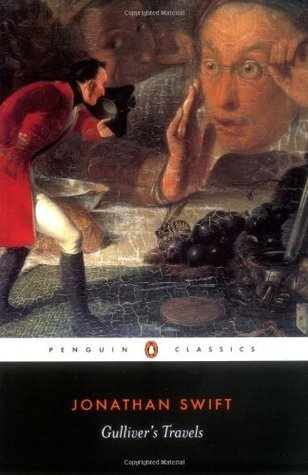
Gulliver’s Travels by Jonathan Swift

The summary on Goodreads:

A wickedly clever satire uses comic inversions to offer telling insights into the nature of man and society. Nominated as one of America’s best-loved novels by PBS’s The Great American Read.

Gulliver’s Travels describes the four voyages of Lemuel Gulliver, a ship’s surgeon. In Lilliput he discovers a world in miniature; towering over the people and their city, he is able to view their society from the viewpoint of a god. However, in Brobdingnag, a land of giants, tiny Gulliver himself comes under observation, exhibited as a curiosity at markets and fairs. In Laputa, a flying island, he encounters a society of speculators and projectors who have lost all grip on everyday reality; while they plan and calculate, their country lies in ruins. Gulliver’s final voyage takes him to the land of the Houyhnhnms, gentle horses whom he quickly comes to admire – in contrast to the Yahoos, filthy bestial creatures who bear a disturbing resemblance to humans.

I think Gulliver’s Travels is such a strange book, definitely not a children’s book as I had thought. There are very many editions of this book. The edition I read is the e-book edition based on the text of Swift’s 1726 original, with the 1899 illustrations of Arthur Rackham. It’s a satire on human nature and the imaginary travellers’ tale literary subgenre about Lemuel Gulliver, a ship’s surgeon who travels to four strange and distant lands.

This is one of those books that I’ve known of since childhood and have known bits of the story, but have never read. I did see a TV cartoon version several years ago and I’ve been meaning to read it for years. It’s a book, which operates on several levels, as the Introduction in one of my copies (an Odhams Press Limited publication) states:

An embittered, middle-aged man sat down to write a book that would scourge the vices and follies of mankind. That book, with its sting mellowed during the passage of two hundred years, has become – of all things – a children’s classic. ‘Gulliver’s Travels’ was the splenetic outburst of a passionate mind, whose genius gave immortality to so transient a thing as satire; but that immortality had a permanent basis – a child-like delight in marvels, a freshness of invention, a limpid style and a selective perception that created images of giants, dwarfs and fabled races with a vivid pulsating life of their own.

I don’t think I’d have liked it very much if I’d read it as a child as there are many passages that would have bored me stiff and which even now I found tedious and heavy going in parts. It satirises the political situation during Swift’s lifetime, and is full of political and social allusions, a lot of which, interesting as it is, passed over my head.

But it is a fantastical fantasy set in such different places, the ones I found most interesting are Lilliput inhabited by tiny people Brobdignag, the land of giants, and the country of the Houyhnhms, where a race of talking horses, rule the Yahoos, strange, filthy humanoid animals that Gulliver viewed with contempt and disgust. Gulliver became a part of one of the horse’s households and grew to admire and wanted to emulate the Houyhnhms’ way of life, which left him horrified with humanity. Less interesting is his visit to Laputa, a flying island and it’s rebellious cities.

It was not really what I expected, and whilst I think a lot of it is absurd and amusing, it’s certainly not a book I can say that I enjoyed, I think it was worth reading and I’m glad I finally got round to reading it.

Spell the Month in Books July 2025

Spell the Month in Books is a linkup hosted by Jana on Reviews From the Stacks on the first Saturday of each month. The goal is to spell the current month with the first letter of book titles, excluding articles such as ‘the’ and ‘a’ as needed. That’s all there is to it! Some months there are optional theme challenges, such as “books with an orange cover” or books of a particular genre, but for the most part, any book you want to use is fair game!

The optional theme this month is “set in a fantasy world or fictional place”. I thought this would be difficult but I managed to find books I’ve read for all the letters in JULY for this theme except for Y!

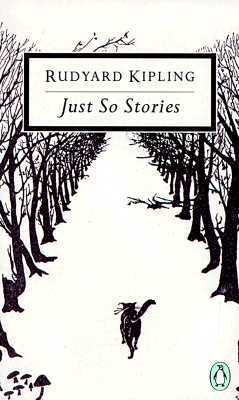
J is for Just So Stories for Little Children written and illustrated by Rudyard Kipling

This book contains Rudyard Kipling’s 1902 collection of short stories, Just So Stories. They are stories he told his daughter, Effie (Josephine) as bedtime stories – fantastic accounts of how various features of animals came to be. Kipling explained: ‘in the evening there were stories meant to put Effie to sleep, and you were not allowed to alter those by one single little word. They had to be told just so; or Effie would wake up and put back the missing sentence.’

My favourite is The Cat That Walked by Himself about when the tame animals were all wild. The wildest of all was the Cat and this is Kipling’s explanation of how the cat came to use humans for its own comfort but remained independent, walking in the Wet Wild Woods, ‘waving his tail and walking by his wild lone.’ Kipling’s illustrations in this book are perfect.

It also includes: ‘How the Whale got His Throat’, ‘How the Camel Got His Hump’, ‘How the Rhinoceros Got His Skin’, ‘How the Leopard Got His Spots’, ‘The Elephant’s Child’, ‘The Sing-Song of Old Man Kangaroo’, ‘The Beginning of the Armadillos’, ‘How the First Letter was Written’, and more. 

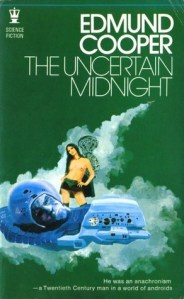
U is for The Uncertain Midnight by Edmund Cooper

The author wrote that he had written this book before the Space Age, before the development of lasers, before it was possible to give a man a new heart.

I like it because of that; it’s low on technology and high on philosophy. It’s not set in outer space, but firmly on Earth  – but Earth in the 22nd century, a world run by machines, androids, who have taken over the burdens of work and responsibility, a world where the humans are required to spend their lives in leisure pursuits, but are subject to ‘Analysis’ (brain-washing) if the androids think they are maladjusted .

John Markham emerges in 2113 after spending 146 years in suspended animation, frozen deep under ground after an atomic holocaust had devastated his world. In 2113 not all humans were happy to leave everything to the androids. Known as Runners these humans believed in ‘human dignity, freedom of action and the right to work’. Markham struggles to adapt and this raises the question of whether the androids could be said to be alive – leading to discussions about the definition of life, the difference between determinism and free will, and eventually leading to war between the androids and the Runners.

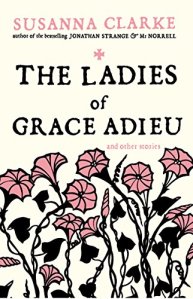
L is for The Ladies of Grace Adieu and other Stories by Susanna Clarke

As a child I read all the fairytale books I could find and The Ladies collection takes me back to the magical world of those stories. They are full of deep dark woods, paths leading to houses that seemingly move locations, ladies who are never what they appear to be, princesses, owls, and above all fairies, including the Raven King.

The stories are all captivating and strange and set up echoes in my mind of such fairytales, as Rumpelstiltskin (in On Lickerish Hill). My favourite stories are The Ladies of Grace AdieuMrs Mabb, and The Duke of Wellington Misplaces His HorseThe Ladies explains why Jonathan Strange prevented his clergyman brother-in-law from an engagement with Cassandra Parbringer as Strange discovers that his magic is no match for Cassandra and her two friends, the three bewitching ladies of Grace Adieu.

The story I enjoyed the most was The Duke of Wellington Misplaces His Horse. I have not read any of Neil Gaiman’s books, but I think I really should. The story of the Duke’s horse is set in Wall, a village in the world created by Neil Gaiman and Charles Vess, where there is an actual wall dividing our world and the world of Faerie, guarded by burly villagers with cudgels. The proud Duke, the Nation’s Hero, passes unchallenged by the intimidated villagers into Faerie, in pursuit of his horse. His fate is then seemingly set in stitches in a magnificent piece of embroidery in exquisite pictures. The Duke’s fate depends on whether he can alter the future shown in the embroidery. The ending has a satisfying twist.

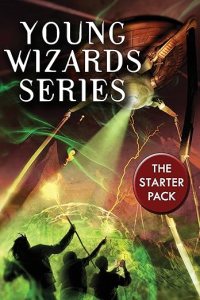
Y is for Young Wizards Series: The First Three Books  by Diane Duane. I haven’t read these books. If you have please let me know what you think about them.

Nita is just looking for an escape from her bullies when she stumbles upon an odd book in thelibrary: “So You Want to Be a Wizard.” Nita at first thinks it s a joke. But once she reads the mysterious book, an alternate universe of Manhattan reveals itself to Nita and her friend Kit. The pair embark on a terrifying adventure where real life and magic intertwine and they find themselves entrenched in a battle between good and evil.

Join Nita and Kit on their magical adventures in the Young Wizards starter pack dive deep into the ocean of Deep Wizardry where whales are wizards and ancient rituals are performed by sharks and dolphins. From the sea to the sky, join the dynamic duo on their third and most frightening challenge yet: Nita s little sister, Dairine. Not only is she too smart for a ten-year-old, but she just became a wizard with almost limitless power. Kit and Nita end up chasing her across the galaxy before she gets into trouble so deep no one can rescue her.

For fans of magic with a thirst for adventure, dive right in with the Young Wizards starter pack, which contains three books: “So You Want to Be a Wizard, Deep Wizardry, “and “High Wizardry. “”

The next link up will be on August 2, 2025 when the optional theme will be Written by your favorite author(s)

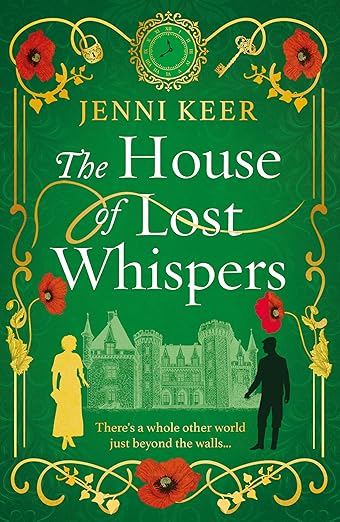
The House of Lost Whispers by Jenni Keer

Boldwood Books|25 April 2025| 378 pages| e-book| Review book| 3*

Summary:

What if another world existed… where the Titanic had never sunk?

When the ill-fated maiden voyage of the Titanic leaves Olivia Davenport orphaned, she’s sent to live with her guardians, the Fairchilds, in their huge Jacobean mansion. But the Fairchilds have more to worry about than a grieving young girl – with war in Europe imminent and four sons to protect.

Olivia feels alone and friendless. Until she hears a voice from behind the wall in her tower bedroom. A voice from a man called Seth. Convinced he’s merely a product of her grieving imagination, it’s not until after the heartbreak of war that Olivia discovers that he exists in an overlapping world, just a shudder in time away from her own. A world where the Titanic never sank… Where everything since has been just slightly… different.

All Olivia wants is to find a way into his reality. And not just to see the faces of her beloved parents once again. But also to meet Seth. Who might just be the love of her life…

I enjoyed reading Jenni Keer’s debut novel, The Hopes and Dreams of Lucy Baker several years ago and thought I’d like to read more of her books. This one is her eighth book, so I missed the books in between. I don’t often read romance or fantasy novels but The House of Lost Whispers has both elements and it’s also historical fiction set before, during and after the First World War. I preferred the historical element, especially the middle section about the War. But I also enjoyed reading the fantasy element about the anomaly in the magnetic field surrounding the earth causing vibrations, disrupting the fabric of space and time. This resulted in the formation of a duplicate earth, one parallel with our world, in which the Titanic did not sink on 12th April 1912.

I think this is a very interesting and possibly original idea, exploring what life would have been like for Olivia and her family if the Titanic had not been sunk. The book also explores loss and grief, family life, friendship and romantic relationships, as well as the devastating and horrific events of the First World War. As described in the blurb Olivia in the ‘real’ world and Seth in the parallel world can hear each other through the wall in her tower bedroom (the whispers), but despite their efforts they cannot break through to meet.

It’s beautifully descriptive, bringing the settings to life and there is also a murder mystery to solve. My only criticisms are that at times I did get a bit confused about Seth’s character and his parallel in the ‘real’ world, and I could have done without the love scenes (too descriptive in places). As I read on I was wondering how it would end and maybe Jenni Keer wondered too because the conclusion seemed rushed and rather neatly sown up. I was a bit disappointed, although I can’t imagine how else it could have ended. But overall it kept me reading, wanting to know what would happen next.

Many thanks to the publishers for a review copy via NetGalley.

Top 5:non-human characters

Top 5 Tuesday was created by Shanah at Bionic Book Worm, and it is now being hosted by Meeghan at Meeghan Reads. For details of all of the latest prompts for October to December, see Meeghan’s post here.

It’s time to talk about books with non-human characters  animals or supernatural creatures… maybe even a park bench. Who are your favourite non-human characters?

This is a selection of some of the books with non-human characters that I’ve read and enjoyed. I’ve read all these books, so the links in the titles take you to my reviews.

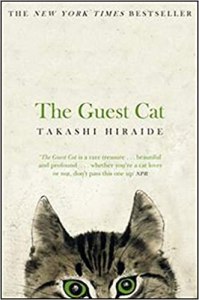
The Guest Cat by Takashi Hiraide. The main character in this book is a stray cat, Chibi, who made herself at home with a couple in their thirties who lived in a small rented house in a quiet part of Tokyo. At first the cat was cautious and just peeked inside their little house but eventually Chibi spent a lot of time with the couple coming and going as she pleased.

The Toymakers by Robert Dinsdale –  a wonderful book about Papa Jack’s Emporium in London, a toyshop extraordinaire. The toys it sells aren’t ordinary toys – they seem alive, from patchwork dogs, to flying pegasi, Russian dolls that climb out of one another, runnerless rocking horses, whales that devour ships, fire-breathing dragons and many others to the toy soldiers that wage war on each other.

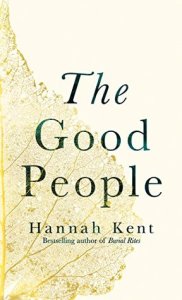
The Good People by Hannah Kent is set in 1825/6, a long gone world of people living in an isolated community, a place where superstition and a belief in fairies held sway. People talk of others being ‘fairy-swept’ or ‘away with the fairies’, and kept with the music and lights, dancing under the fairy hill.This is not a fairy story, but one in which their existence is terrifyingly real to the people of the valley. The villagers believe that the fairies live in Piper’s Grave, ‘the lurking fairy fort’, at the end of the valley, a place where few people went, a neglected and wild place. People see lights there, glowing near a crooked whitethorn tree that stood in a circle of stone. Nóra is completely unable to cope with Micheál, her four-year old grandson. There is talk that he is ‘fairy-struck’.

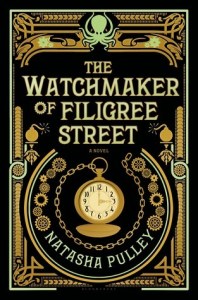
The Watchmaker of Filigree Street by Natasha Pulley, described as ‘steampunk’, this is a mixture of historical fact and fantasy set in Victorian times, both in London and Japan. The main characters are Thaniel Stapleton, who works in the telegraphy department of the Home Office in London, Keita Mori, watchmaker extraordinaire and an inventor of amazing clockwork creations and Grace Carrow, an Oxford physicist who sneaks into an Oxford library dressed as a man, desperate to prove the existence of the luminiferous ether. I loved Katsu, the clockwork octopus, which was made by Mori.

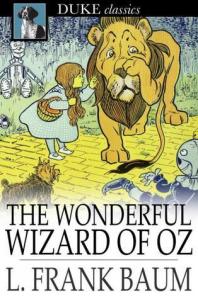
The Wonderful Wizard of Oz by L Frank Baum. I enjoyed this entertaining story, pure escapism, which I would have loved as a child, following Dorothy’s adventures in the Land of Oz after the cyclone whisked her house high in the air out of Kansas and set it down on top of the Wicked Witch of the East, thus killing her. Dorothy and her little dog, Toto, are very anxious to get back home to Kansas and they set out on the yellow brick road leading to the Emerald City to ask the Wizard of Oz to help them. On the way she meets the Scarecrow, the Tin Man and the Cowardly Lion, who go with her as they want the Wizard to give them brains, a heart and courage respectively.

Their journey is interrupted in various places and by a variety of creatures, some very dangerous indeed; as in most fairy tales, there is a fair amount of violence in the book, as Dorothy and her friends combat the Wicked Witch of the East.

Top Ten Tuesday: Fantasy Novels

Top Ten Tuesday is a weekly meme created by The Broke and the Bookish and now hosted by Jana at That Artsy Reader Girl. For the rules see her blog.

The topic this week is a Genre Freebie and I’ve chosen the following ten fantasy novels, all of which I’ve read. There are many more I could have included – these are just the ones that came to my mind at the moment, not necessarily the top ten, but ten that I have enjoyed.

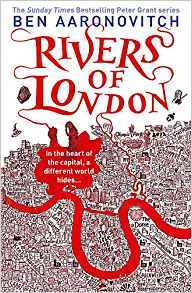
  • Rivers of London – urban fantasy set in the real world of London. It’s a mix of reality and the supernatural, a magical reading experience, and a fast-paced police procedural of a very different kind. 
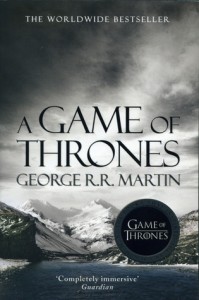
  • A Game of Thrones (A Song of Ice and Fire,1) by George R R Martin, an epic fantasy novel  set in a grim and violent world full of tragedy, betrayals and battles; a tale of good versus evil in which family, duty, and honour are in conflict.
  • The Ladies of Grace and Adieu and Other Stories by Susanna Clarke as fantastical as Jonathan Strange and Mr Norrell, a collection full of fantasy stories of deep dark woods, paths leading to houses that seemingly move locations, ladies who are never what they appear to be, princesses, owls, and above all fairies, including the Raven King.
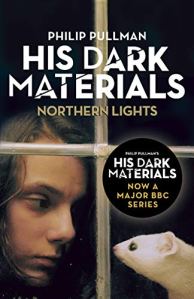
  • Northern Lights by Philip Pullman, the first book in his trilogy His Dark Materials, set in a universe similar to ours, but different. It’s all so beautifully described that you are convinced of the reality of this universe. 
  • The Library of the Dead by T L Huchu set in a future or alternative Edinburgh, with a wealth of dark secrets in its underground. 
  • Movalwar by Benjamin Cornelius who is my friend’s great-nephew (aged 11 when he wrote his book). It’s about two eleven year-old boys, Alfie and Ben and their exciting and dangerous journey to save the fate of two worlds.
  • The Toymakers by Robert Dinsdale, an extraordinary, magical and wonderful book that captivated me, a book set mainly in 1917 whilst the First World War was taking its toll of humanity, leaving despair and tragedy in its wake. It’s a blend of historical fiction and magic realism.
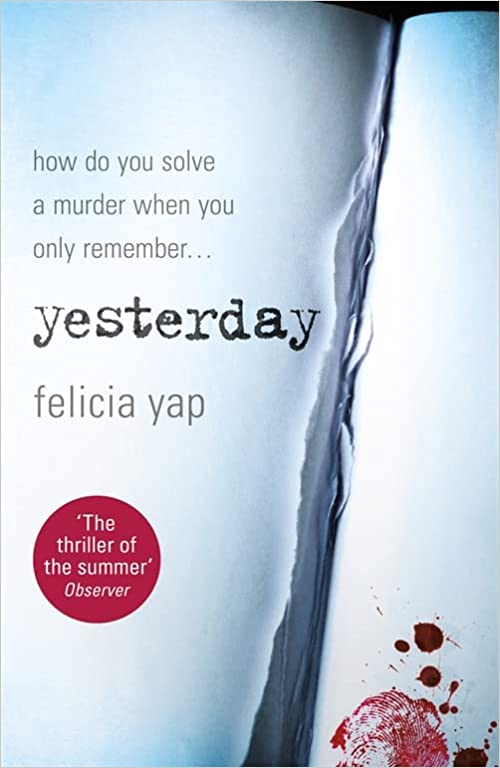
  • Yesterday by Felicity Yap about a world where memory for everyone over the age of eighteen is limited for 70% of people to just one day (the Monos) whilst the rest (the Duos) have two days of memory. Each day everyone has to write down their actions, thoughts and feelings in their iDiaries and then memorise the ‘facts’. But are these ‘facts’ reliable?
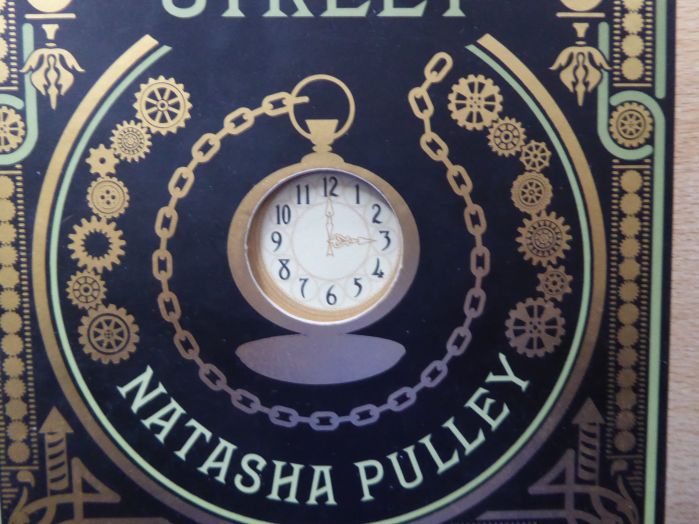
  • The Watchmaker of Filigree Street by Natasha Pulley, that blends historical events with flights of fancy to plunge readers into a strange and magical past, where time, destiny, genius ‘and a clockwork octopus’ collide.
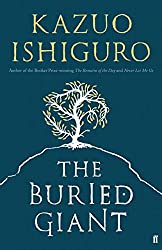
  • The Buried Giant by Kazuo Ishiguro. There are ogres, deadly pixies,  evil monks who keep a dreadful beast underground, Saxons – Wistan, a warrior and a young boy, and Sir Gawain entrusted by King Arthur to slay Querig, a she-dragon roaming the land, who by her breath has spread the mist of forgetfulness.