Once Upon a River by Diane Setterfield

An intriguing and mystifying book by Diane Setterfield – Once Upon a River – without doubt one of the best books I read last year – I was entranced from the beginning to the end. It’s a mystery beginning in the Swan Inn at Radcot, an ancient inn, well-known for its storytelling, on the banks of the Thames. A badly injured stranger enters carrying the drowned corpse of a little girl. It’s mystifying as hours later the dead child, miraculously it seems, takes a breath, and returns to life. The mystery is enhanced by folklore, by science that appears to be magic, and by romance and superstition.

The story has a timeless feel to it but it is set somewhere towards the end of the nineteenth century. There are numerous strands and characters to the story and Diane Setterfield drew me slowly into the book with a leisurely description of the characters and their situations. Just as the river, a character in its own right, takes many twists and turns and has many tributaries, it becomes apparent that the little girl could belong to a number of different families all with links to the river. As the story progresses these individual families each claim the child as theirs and I was never really certain which of them – if any – were telling the truth. Much is hidden and much eventually is revealed.

It’s a multi-layered book that you need time to digest, richly atmospheric and told from multiple viewpoints. I loved all the detail – about the river itself, about photography as Henry Daunt (based on Henry Taunt, the real-life photographer of the Thames and surrounding areas) travelled along the river in a houseboat with its own darkroom, about the body’s metabolism and the treatment of injuries and diseases of the late Victorian period and about belief in the afterlife. Various people refer to Quietly, the ferryman who featured in the stories people told – he appeared when you were in trouble on the water, gliding in his punt, either guiding you to the safety of the bank, or if it is your time he takes you to another shore ‘on the other side of the river.

Once Upon a River is a beautifully and lyrically told story, and cleverly plotted so that I was not completely sure at times what it was that I was reading. It’s historical fiction with a touch of magic that completely beguiled me with its mysteries and fascinating characters. I enjoyed reading her first book, The Thirteenth Tale, years ago before I began my blog, but I loved this one so much more!

My thanks to the publishers, Transworld Digital, for my review copy via NetGalley.

  • Format: Kindle Edition
  • File Size: 2336 KB
  • Print Length: 419 pages
  • Page Numbers Source ISBN: 0857525662
  • Publisher: Transworld Digital (4 Dec. 2018)
  • Source: Review copy
  • My Rating: 5*

The Division Bell Mystery by Ellen Wilkinson

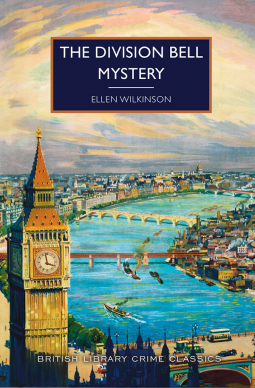
Poisoned Pen Press|4 December 2018 |227 pages|e-book |Review copy|5* This edition, published in association with the British Library, has a preface by Rachel Reeves, Member of Parliament for Leeds West and an introduction by Martin Edwards. It was first published in 1932 by George G Harrap & Co. I thoroughly enjoyed reading The Division Bell Mystery – it’s entertaining on several levels both from the mystery ‘locked room’ aspect and historically, socially and culturally with its insight into how Parliament worked in the 1930s and the status of women in Parliament in the inter-war years. In fact political commentary runs throughout the novel. It was a period of great social injustice, people were still struggling in the aftermath of the Great War – a period of mass unemployment with demands for both political and social change. Ellen Wilkinson was one of the first women Labour MPs. I’ve come across her before as a fiery politician, known as ‘Red Ellen’ both for her red hair and her left-wing politics. She supported the men from Jarrow in Tyneside in 1936 as they marched from their home town to London to present a petition against the mass unemployment and extreme poverty in the north-east of England. She marched with them for part of the way and handed in their petition to the House of Commons. She was a keen murder mystery fan and The Division Bell Mystery is her one entry into the Golden Age Detective fiction. The classic mystery was popular in the interwar years as people entertained themselves with puzzles such as the ‘locked room’ mysteries as in this book. The main character is the Home Secretary’s Parliamentary Private Secretary, young Robert West. As a Parliamentary Private Secretary herself, Ellen Wilkinson portrays his role and political intrigue with convincing detail. There’s a financial crisis and the Home Secretary is negotiating with the American financier Georges Oissel for a loan. The Division Bell rings – a signal to MPs to cast their votes – and West is shocked to hear a gunshot as he is making his way down the corridor leading to Room J, where the Home Secretary and Oissel had been dining. On entering the room he finds the Home Secretary has left to vote and Oissel is slumped on the floor, his shirt front stained with blood and a revolver lying beside him. No one else was in the room, no one had been seen entering or leaving the room and there is no evidence of who had killed him. It falls to West to work with the police investigating his death. It is a nicely complicated mystery but for me it is the setting and the characters that makes this book so interesting. West is the main character but I particularly liked Grace Richards, a young female MP, based on Ellen Wilkinson herself – in her preface Rachel Reeves points out the similarities between Ellen and Grace. Once I started to read The Division Bell Mystery I didn’t want to put it down – definitely a 5* read for me! My thanks to the publishers, Poisoned Pen Press, for my review copy via NetGalley.

The Big Book of Christmas Mysteries

The Big Book of Christmas Mysteries: The Most Complete Collection of Yuletide Whodunits Ever Assembled

The Big Book of Christmas Mysteries:The Most Complete Collection of Yuletide Whodunits Ever Assembled edited by Otto Penzler is just the book to read at this time of year if, like me, you enjoy mystery fiction with a Christmas theme. It is a big book of 647 pages – so I have an e-book version and dip into into it each Christmas.

It contains stories by a variety of authors including Agatha Christie, Colin Dexter, Ellis Peters, Arthur Conan Doyle, Ellery Queen, Edgar Wallace, Peter Lovesey, Peter Robinson, Ed McBain, Sarah Paretsky, Mary Higgins Clark, Ngaio Marsh, Isaac Asimov, G K Chesterton, H R F Keating, Robert Louis Stevenson and more.

Rumpole and the Spirit of Christmas by  John Mortimer is one of the stories in the section ‘A Funny Little Christmas’. In it Rumpole is at the Old Bailey defending Edward Timson, the youngest member of the huge south London family of criminals, charged with wilful murder. It’s Christmas and Eddie tells Rumpole his mum wants him hone for Christmas – but Rumpole wonders ‘which Christmas?

Will he make it? The evidence against him is strong. It all began when a war broke out between the Timsons and the O’Dowds when Bridget O’Dowd was chosen to play the role of Mary in the school nativity play and Eddie said she was ‘a spotty little tart unsuited to play any role of which the most notable characteristic was virginity‘. The resulting battle ended with the death of Kevin O’Dowd.

Rumpole is his usual grumpy self, getting drunk on wine in Pommeroy’s Wine Bar with the prosecuting barrister, Wrigglesworth, instead of hurrying home to his wife, Hilda (She Who Must be Obeyed) who has made him rissoles and frozen peas for his dinner. As I read it I could easily imagine the scenes, with Leo McKern playing the role of Rumpole.

Agatha Christie has two stories in the collection – the first is The Adventure of the Christmas Pudding in which Hercule Poirot investigates the theft of a priceless ruby stolen from a Far Eastern prince. The Christmas Pudding in question is a ‘large football of a pudding, a piece of holly stuck in it and glorious flames of blue and red rising round it’  and the second A Christmas Tragedy, a little puzzle of a mystery. Miss Marple tells the story of the death of Mrs Sanders and how it it had been made to look an accident when it was really a cold-blooded murder. I can’t see any connection in this story to Christmas, but it is definitely a tragedy and for a short story it is very complicated.

There are no stories by Charles Dickens in this collection but Morse’s Greatest Mystery by Colin Dexter begins with a quotation from A Christmas Carol, when Lewis knocks on the door of Morse’s North Oxford flat and Morse greets him whilst shouting down the phone to his bank manager. Like Scrooge Morse doesn’t like Christmas! This story is about the theft of a donation of £400 pounds to a charity for Mentally Handicapped Children the patrons of the George pub. Morse has to follow a series of clues to solve the mystery – and by the end he becomes more like the Christmas Scrooge …

~~~

As this is my last post before Christmas I wish you all a Merry Christmas and Happy Reading! 

WWW Wednesday: 19 December 2018

IMG_1384-0

WWW Wednesday is run by Taking on a World of Words.

The Three Ws are:

What are you currently reading?
What did you recently finish reading?
What do you think you’ll read next?

It’s been over a month since I last wrote a WWW post so I thought it was time for another one.

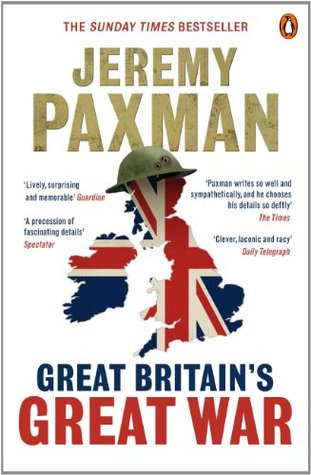
I’m currently reading: just one book – Great Britain’s Great War by Jeremy Paxman. I began it in November because it was the 100th  anniversary of the end of the First World War and I wanted to know more about it.

Great Britain's Great War

So far I’ve read just over half the book – now just starting to read about 1916 and the situation in Ireland. It’s written chronologically, analysing the causes of the war and why people at the time believed it to be unavoidable and even necessary. Paxman writes clearly and goes into detail which means it’s not a quick read and I’m taking it slowly. He writes about the people involved – the men who enlisted and those who were conscripted, the conditions they experienced from the trenches to the French brothels they frequented. It’s also about life back in Britain and the changes the war brought about. It is fascinating.

This morning I finished:

The Division Bell Mystery

Qnother fascinating book – The The Division Bell Mystery first published in 1932 by Ellen Wilkinson, a 1930s politician, about a murder in the House of Commons.  One of the reasons I enjoyed this so much is the setting in the House of Commons and the details it gives of not only the procedures and traditions, but a look behind the scenes and what it was like for the early women MPs. It’s a good murder mystery too!

My next book could be:

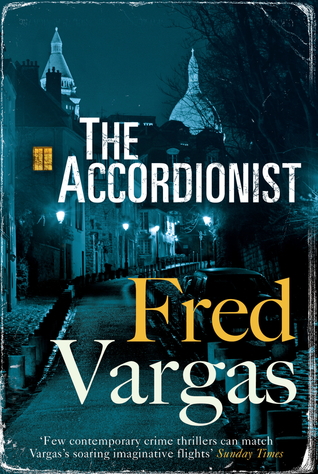
It’s time to start another novel but I am torn, as usual, and am trying to decide what to read next. It will probably be The Accordionist by Fred Vargas as it is a library book dues back at the beginning of January.

The Accordionist (Three Evangelists 3)

It’s the final novel in the Three Evangelists Trilogy – I’ve read the first two. This one has the same characters – three thirty-something historians, Mathias, Marc and Lucien, all specialists in three different periods of history, who live in a rambling house in Paris.

I love Fred Vargas’s quirky crime fiction, with eccentric characters and intricate plots that I find so difficult to solve. This one is about the murder of two Parisian women killed in their homes. The police suspect young accordionist Clément Vauquer and it seems like an open-and-shut case.

Have you read any of these books?  Do any of them tempt you? 

Tombland by C J Sansom

Tombland (Matthew Shardlake, #7)

5*

It’s been a few weeks now since I finished reading Tombland, the seventh novel in C. J. Sansom’s Shardlake series. I wrote a Friday post, quoting the first paragraph and a teaser from page 56 and have been wondering what to write about the book as a whole. It is very long, is based on primary and secondary sources with notes and a bibliography. ‘Tombland‘ is an area within the city of Norwich and there’s a street plan on the endpapers of my hardback edition, showing the layout of Norwich and the position of Mousehole Heath in 1549. It is a most impressive book full of detail with a large cast of characters, and whatever I write will not do justice to it.

It’s 1549, Edward VI is king, a minor and England is ruled by the Duke of Somerset as Lord Protector. Rebellion is spreading in protest against the landowners’ enclosures of the common land. Edward’s sister, the Lady Elizabeth has asked Matthew Shardlake to make discrete investigations into the murder of Edith Boleyn, the wife of John Boleyn – a distant Norfolk relation of Elizabeth’s mother, Anne Boleyn. John Boleyn has been arrested and will be on trial at the Norfolk Assizes.

The murder mystery, however, is not the main focus of Tombland. Shardlake and his assistant, Nicholas Overton leave London for Norwich, begin their investigation, but as they leave Norwich they get caught up in a rebellion as thousands of peasants led by Robert Kett march on Norwich and establish a vast camp on Mousehole Heath on the land overlooking the city.

I knew about the early enclosures of common land, but hadn’t heard of Kett’s Rebellion before. A large part of the book follows the sequence of events that made up the Rebellion (with more detail given in the Historical Essay at the end of the book). Shardlake is forced to join the rebels. He then has little control over events in the rebel camp and has to search his conscience to decide whether to help them and where his loyalties actually lie. His sympathies lie with the common people ousted from the land they had previously used and so, when Robert Kett asks for his advice at the trials held at the ancient oak, they called the ‘Oak of Reformation’ to ensure that the proper legal procedures are followed he agrees.

Meanwhile Shardlake has not forgotten about Edith’s murder and as the rebels take over the city of Norwich for a while he is allowed to visit John Boleyn, held a prisoner in Norwich Castle, and convinced of John’s innocence he is determined to discover who really had murdered her. Surprisingly, he finds the key to the mystery back at the rebel camp.

Of course, it is far more complicated than I have outlined. Sansom’s research is thorough, so much so that reading his book takes you back in time evoking the sights, smells and atmosphere of the mid 16th century. The characters become real people, with their place in society clearly defined, and the changes in their economic conditions explained as a new ‘rural’ gentry class came into existence and the enclosures deprived the common people of the land they had traditionally used. It’s not just economic changes but also religious changes as the new Book of Common Prayer has been introduced and people are upset by the changes and religious intolerance. It’s a time of great unrest:

Our misery is a laughing stock to those proud insolent men! We are like slaves, and farm our land only at the pleasure and will of the lords. For as soon as any man offends any of these gentlemen he is put out! The common pastures which have been our predecessors’ time out of mind are taken away; they are ditched and hedged in, the pastures enclosed …

We can no longer bear such great and cruel injury! We will rather take up arms than endure it! (page 394)

There is so much more to this book, skilfully written combining the historical facts and fiction. But it works well as a standalone book as enough information is given to understand the relationships of the characters from the earlier books. I was rather sad to see that Guy Malton (previously a monk and now licensed as a doctor), one of my favourite characters is now old and ill, but I was pleased to learn more about Jack Barak, Shardlake’s former assistant, and his on-off relationship with his wife Tamsin. Shardlake’s former servant, Josephine lives in Norwich and he is pleased to meet  up with her, her husband and young baby.

Tombland is a book with an emphasis on the people of the Tudor period – not just about royalty and national events. Protector Somerset is waging war against Scotland but that is only mentioned, Edward VI doesn’t appear, Mary, his sister is referred to, and Elizabeth, his other sister has a cameo role at her household in Hatfield Palace in Hertfordshire. With so much detail it has a slower pace than other books I’ve read recently but I loved the attention to detail and the descriptive writing which placed me precisely at the scenes.

  • Hardcover: 880 pages
  • Publisher: Mantle; Main Market edition (18 Oct. 2018)
  • Language: English
  • ISBN-10: 1447284488
  • ISBN-13: 978-1447284482
  • Source: I bought the book
  • My rating: 5*


Foreign Bodies (British Library Crime Classics) edited by Martin Edwards

Poisoned Pen Press|6 March  2018 |288 pages|e-book |Review copy|3*

This edition, published in association with the British Library, has an introduction by Martin Edwards.

There are fifteen stories in this collection of vintage crime fiction in translation,  written by authors from Hungary, Japan, Denmark, India, Germany, Mexico, Belgium, the Netherlands, Russia and France. Some are detective stories in the same tradition of  Conan Doyle’s Sherlock Holmes stories, or in the same style as Agatha Christie; there are ‘locked room’ mysteries and stories mixing mystery and horror. Martin Edwards has prefaced each one with a brief biographical note, which I found useful as, unsurprisingly, the authors were all new to me, with the exception of Anton Chekhov (although I haven’t read any of his works).

Edwards presents the stories in approximately the chronological order of their publication from 1883 to 1960 and notes that these authors were writing in the same styles at much the same time as Agatha Christie and other Golden Age crime fiction writers.

When I began reading I was disappointed as I didn’t enjoy the first few stories. Short story collections are often a mixed bag and some stories are better than others, so after putting the book aside for a while I carried on reading. Some are very short and are predictable and really easy to see where they will end, but others are much more satisfying.

The ones that appealed to me the most are (in the order I read them):

The Spider (1930) by Koga Saburo who founded the Mystery Writers of Japan in 1947. His work was very popular in Japan and he wrote in the traditionalist style, favouring the puzzle element of a mystery. Edwards writes that it ‘is a pleasing fusion of macabre fiction and the classic detective puzzle‘, which explains why I like it. It’s set in a bizarre laboratory in a nine metre high round tower in which a professor is carrying out research on spiders. One night another professor visited him and fell to his death from the tower having been bitten by a poisonous spider. The circumstances of his death, however are not at all straightforward and are most ingenious. Probably my favourite story.

Murder a la Carte (1931) by Jean-Toussaint Samat, born in the Camargue, a journalist and writer of crime and adventure novels. This story is about a case of poisoning, but poisoning with a difference. A guest at a dinner party explains how to get away with murder – by using a non-poisonous substance. It’s one of the shorter stories that I did find satisfying.

The Venom of the Tarantula (1933) by Sharadindu Bandyopadhya from Bengal, educated in Calcutta, whose crime writing is similar to that of Arthur Conan Doyle. A writer called Ajit  and detective Byomkesh Bakshi join forces to investigate what is an apparently ‘impossible crime’ featuring an ingenious poisoning.  Nandadulalbabu is a hypochondriac who is writing fiction using black and red ink. He is addicted to venomous ‘spider juice’, extracted from tarantulas. His family have prevented him from getting the juice but somehow he is able to trick them and is still  getting his fix. Although I was able to work out the solution it’s still a satisfying and interesting story.

The Mystery of the Green Room (1936) by Pierre Véry from France. This story is dedicated to the memory of Gaston Leroux, and plays on the events in his story, The Mystery of the Yellow Room (1907), which I haven’t readanother ‘locked room’ whodunnit.  I enjoyed this one , particularly where the private investigator points out to the detective the similarities between the yellow room mystery to this one, the green room mystery – this is an ‘open-room’ mystery as opposed to a ‘locked-room’ puzzle.

John Flanders, born in Ghent was one of the pen-names of Jean-Raymond-Marie De Kremer. He wrote imaginative and fantastical stories and Kippers, originally written in Flemish is one of his many short stories. It’s one of the shortest stories in the book and entertained me in a very different way – it is not a puzzle or even really a mystery story, but is focused on one of Flanders’ fictional preoccupations with food and drink and as the title indicates it is a story about

Kippers, delectable, salmony kippers, smoky as a chimney, dripping with fat, one for each of us, of course, the real thing.

Even Bertie the cabin boy got one.

A sinister tale about a shipwrecked crew on a desert island that ends in horror.

My thanks to the publishers, Poisoned Pen Press, for my review copy via NetGalley.