Sunday Salon – Crime Fiction

Today I’ve been dipping into The Rough Guide to Crime Fiction by Barry Forshaw, published in 2007. This is an excellent little book giving “a selection of the best in crime writing over the last century or so, organized by subject (or sub-genre)”.  There are succinct book reviews, ‘top five’ lists for writers such as Agatha Christie, notes on screen adaptations and profiles of writers.

I suppose all guides are subjective and not everyone will agree on the selection, but for me this works, with information on writers whose books I know and those I don’t. I could wish it had a section on ‘cozy mysteries’ but it doesn’t!

There are sections on

  • The origins of crime novels, including Edgar Allan Poe, Wilkie Collins and Arthur Conan Doyle
  • The Golden Age, classic mysteries from authors I know, such as Christie, Allingham and Tey and from ones I don’t such as Christianna Brand and Edmund Crispin.
  • Hardboiled and pulp – a hazardous world of carnality and danger, violent and brutal. Not really my cup of tea, but there are some classics here too – Raymond Chandler and The Big Sleep.
  • Private eyes, sleuths and gumshoes – in this section are Kate Atkinson, Michael Connelly and Alexander McCall Smith to name but a few.
  • Cops – police procedurals and mavericks. This includes the maverick cops, those loose canons at daggers drawn with their superiors, like Ian Rankin’s Rebus. It’s a long section covering authors both known and unknown to me – too many to list here, but including Jon Cleary, Colin Dexter and Ed McBain.
  • Professionals – lawyers, doctors, forensics etc. So, John Grisham, Val McDermid and Scott Turow et al feature here.
  • Amateurs – journalists and innocent bystanders. These are books that don’t fit easily into other genres, exploring the human psyche by for example authors as varied as Christopher Brookmyre and G K Chesterton, Dick Francis and Michael Ridpath.
  • All in the Mind – psychological matters. This chapter includes books that ‘foreground the psychology of their characters in extremis’, such as Iain Banks ‘The Wasp Factory’ and Strangers on a Train by Patricia Highsmith.
  • Serial killers – Thomas Harris (Hannibal Lector) and Karen Slaughter (Faithless) – not a genre that I’m comfortable with, one for me to skip over maybe.
  • Criminal protagonists taking the reader into the heads of criminals. I haven’t read any of the books in this section, books like Maura’s Game by Martina Cole and Night and the City by Gerald Kersh.
  • Organized Crime – the world of the godfather and gangs. Another new-to-me genre, more familiar to me from films, such as The Gangs of New York – I didn’t know it was based on Herbert Asbury’s series of books on 19th century crime.
  • Crime and Society – key issues such as class, race and politics, from writers such as P D James in Britain and Michael Crichton in the US.
  • Espionage – John Le Carre, Len Deighton and Ian Fleming to name but a few.
  • Historical crime – one of my favourite genres from Ancient Rome (Lindsay Davis and Steven Saylor), Medieval murder (Michael Jecks) and World War thrillers from Robert Ryan and Robert Harris. Here is one of my favourites – C J Sansom (Shardlake) and new-to me Jane Jakeman who wrote In the Kingdom of the Mists, which appeals to me with the Impressionist painter, Monet at the centre of the mysteries – I must find this one.
  • Crime in Translation – some of these are familiar, like Umberto Eco, Andre Camilleri, and Henning Mankell. No Stieg Larsson, though. It maybe that his books came out too late for this guide, I don’t know.

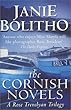
Snapped in Cornwall by Janie Bolitho

Snapped in Cornwall by Janie Bolitho is a quick, light read in the ‘cozy mystery’ category. I had high hopes that this was going to be a really good book because the start sets the scene so well, but it didn’t quite meet my expectations and tailed off towards the end. Gabrielle Milton has recently moved to Gwithian in Cornwall, whilst Dennis, her husband spends his working week in a London flat. She employs Rose Trevelyan to photograph her house for her personalised Christmas cards. Rose, a photographer and artist is a widow in her forties, still recovering from the death of her husband four years earlier. When Gabrielle invites her to a party for old friends from London and the new people she’s met in Cornwall, even though the anniversary of her husband’s death is approaching Rose decides to go.

Dennis has been having an affair with Maggie. He wants to end the relationship but she doesn’t. The Cornwall house belongs to his wife and he is in danger of losing his job – his life is at a crossroads. He’s not pleased when Maggie turns up at the party. Also at the party are Paul, their son and his fiancee, Anna.  All in all, there’s an uncomfortable atmosphere, made worse as Paul and Anna are in the middle of an argument. Rose retreats into the garden where she finds Gabrielle’s body beneath the bedroom balcony. Why would anyone want to kill her? Was it her husband or his mistress?  Maybe it was her son or his fiancée who thought they would inherit the house, or maybe  it was Eileen Penrose, a local woman who thought her husband was having an affair with Gabrielle.

Rose finds herself drawn into the investigations, which brings her into contact with DI Jack Pearce. Inevitably relationships and secrets in the Milton family and the locals are gradually brought into the open, but the ending was rather predictable and straight forward. Nor was it surprising that Rose and Jack found themselves attracted to each other. Nevertheless the descriptions of Cornwall are good and it was the right book for a quick, easy read.

 This is the first book in Janie Bolitho’s series of mysteries featuring Rose Trevelyan, now published in an omnibus edition as The Cornish Novels.
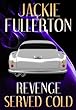
Revenge Served Cold by Jackie Fullerton

Revenge Served Cold by Jackie Fullerton was kindly sent to me by the publishers, Thomas House Publishing. It’s her second book featuring Anne Marshall, a part-time court reporter and law student. I think it slots into the “cozy mystery” category, with the crime being solved by amateur sleuths rather than the police, who are always one step behind. If  there is a category for “paranormal crime fiction” that applies too. In some respects it reminded me of that TV series – Randall and Hopkirk (Deceased), a remake with Vic Reeves of a 60s TV series about private detectives, one of whom was dead and appearing in a white suit could only be seen by his partner.

Anne’s father died three years earlier, and his ghost appears to her, helping her to solve crimes. She is the only person who can see him, although others can smell his pipe tobacco. The book begins with the death of Professor Elliot Spence, Anne’s law lecturer and her father’s former colleague, when a car apparently driven by Kathy, Elliot’s wife runs him down.

Kathy’s friend Shirley, who works with Anne at the law courts, convinces her of Kathy’s innocence and Anne together with her fellow law students start looking for evidence to prove it. Her father also helps, which really means that you have to suspend your disbelief in following everything that happens. As a ghost he is able to be at police interviews unseen, and report back to Anne thus giving her information she wouldn’t otherwise have and also send text messages on her phone. One thing  that made me pause for thought is that at one point he breathed a sigh – ghosts can’t breathe as far as can tell, but if I can accept his presence in the story I also have to accept that he can breathe and smoke and chat to Anne.

I found this a light and entertaining book and although I found the style stilted in parts, with too many short sentences and repetitive, it moves along at a rapid pace. Even though it was obvious early on who killed Elliot Spence there were enough plot twists and turns to hold my interest in the story to its dramatic ending.

Agatha Raisin and the Haunted House

I’ve not been around much on my blog this week, time out for looking after grandchildren in Scotland for one thing. I have still been reading, though I didn’t take Wolf Hall away with me as I knew I wouldn’t be able to concentrate much on reading and Wolf Hall deserves that.

I read a much less substantial book – Agatha Raisin and the Haunted House by M C Beaton. I’ve only read one of her books before, Death of a Gossip, which I thought was awful. I decided to give her books another go as I know other people enjoy the Agatha Raisin series. I’m sorry to say that I wasn’t enthralled by this book. It’s number 14 in the series, but I know a bit about the earlier books from an article in newbooks Crime Supplement, so it wasn’t difficult to follow. It’s definitely a ‘cozy’ mystery with three deaths for Agatha to resolve. An old woman reports that her house is haunted and is later found murdered. More deaths follow.

Agatha Raisin is an amateur sleuth and a very amateur one indeed. She blunders around and every now and then lands on something relevant. But this book is all rather silly and Agatha herself is a silly woman. It’s like reading an Enid Blyton book for not so very grown up adolescents, as she goes ga-ga over her new neighbour, Paul a married man, repeatedly changing her clothes and renewing her make-up to  catch his eye. Then there is the haunted house and a secret passage, reminding me of the Famous Five etc. For example she and Paul hide behind a hedge at dead of night keeping watch, stumble around in the garden trying to find the entrance to the secret passage and even worse, Agatha dressed up in a bright red wig and a long droopy tea-dress goes out at two in the morning to push a note through the police station door. I could go on … and  …. on.

So, a second book by M C Beaton hasn’t made me want to read any more.

Library Loot

I hadn’t intended to borrow any more library books for a while, at least until I’ve read at least half of the ones I’ve got out at present. But on Thursday I was watering the hanging basket at the front door and glancing down the road saw a mobile library van. We moved here in December and this was the first time I’d seen it. Needless to say I went across the road to have a look and came away with four books. It comes here every three weeks! So now I have three libraries locally that I can use – I’m spoilt for choice.

One of the books I borrowed is a great source of writers: Myers’ Literary Guide The North East. This includes not just writers born in the North East, which includes the counties of Northumberland, Tyne and Wear, Durham, and Cleveland, but also writers with important links to the area. These include such people as Wordsworth, Shakespeare, Coleridge, Auden and Larkin. This area of Britain boasts the first known writer of English prose – Bede (673 – 735) who was also known as ‘The Father of English History’ – and the first Christian English poet, Caedmon (fl. 670 – 680), a servant at the monastery in Whitby. The only drawback is that it concentrates on historical rather than modern writers.

I also borrowed:

  • Agatha Raisin and the Haunted House by M C Beaton. This was quite opportune because I’d read an article about Agatha in newbooks Crime Fiction Supplement the other day. The victim of the haunting is an old lady nobody likes. Then she is murdered. This looks as if it sits in the Cozy Mystery genre.
  • Indiscretion by Jude Morgan, who was also mentioned in the Supplement, so maybe that’s why one of his books stood out for me. This one is historical fiction set in Regency England.
  • The Cruellest Month: an Inspector Gamache Crime Novel by Louise Perry. I keep seeing her books mentioned on book blogs but haven’t read any of them yet. This is a Canadian whodunit about a seance in an old abandoned house that has gone wrong. Another Cozy Mystery?

Take My Breath Away by Martin Edwards

Take My Breath Away by Martin Edwards is a legal mystery, featuring Nic Gabriel, a lawyer turned writer, who is investigating the death of his friend Dylan Rees. Nic is transfixed by the sight of Ella, a woman who had apparently died five years earlier, walking up to Dylan at a party and stabbing him. Dylan had already intrigued him with stories about ‘strange and sudden deaths’ and had promised to tell him the details after the party:

This was all Dylan’s fault. Dylan who had seduced him with all that talk about dead lawyers. Dylan the yarn-spinner; the myth-maker, the Celtic bard in an Armani suit. Of course he’d known that Nic could never resist a story about strange and sudden deaths.

The rich man who burned in Paradise. The giant who chopped himself in half. (page 15)

 I kept turning back to this passage in the first chapter as Nic delved into the mystery, and also this one:

There was a connection, Dylan had insisted on the phone, and not just because the dead men were lawyers in the same firm. Forget about suicide or accident. Think murder for pleasure.

‘As for the boy who died of shock’, Dylan said dreamily, ‘the real culprit wasn’t the guilty creature who killed him. Trust me.’ (page 15)

At the same time Roxanne Wake begins her new job with Creed, a firm of lawyers specialising in human rights law. She’s nervous and it’s not just the new job, because she has something to hide, something she’s not told Creed, something terrible. However, someone knows her secret and it seems she’ll go to any lengths to prevent it becoming known. Eventually the two strands of the book coincide in a dramatic conclusion.  There are many twists and turns and it kept me guessing to the end.

Like all good murder mysteries this is a complex book about good and evil, about power and manipulation, about secrets, lies and deception. It’s a stand-alone book, but I hope that some time Martin will write another book about Nic as I’d love to know his back story and what really happened to his parents.

For more details about Martin’s books see his website. He also writes an entertaining blog – Do you Write Under Your Own Name?