Best Crime Fiction Reads so far this year

Kerrie asks: ‘What are the best crime fiction titles you’ve read in 2011?

So far this year I’ve read 31 crime fiction titles. The following books have my highest ratings:

  1. Exit Lines by Reginald Hill 5/5
  2. Drawing Conclusions by Donna Leon 5/5
  3. Rebus’s Scotland by Ian Rankin 5/5
  4. The Stabbing in the Stables by Simon Brett 4.5/5
  5. Gently Does It by Alan Hunter 4.5/5
  6. Cop Hater by Ed McBain 4.5/5
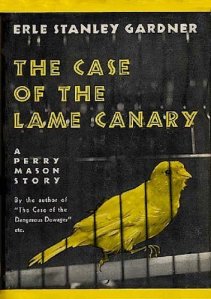
  7. The Case of the Lame Canary by Erle Stanley Gardner 4.5/5
  8. Intimate Kill by Margaret Yorke 4.5/5 (see review next week)
  9. Wycliffe and the Last Rites by W J Burley 4.5/5
  10. The Silent World of Nicholas Quinn by Colin Dexter 4.5/5
  11. The Art of Drowning by Frances Fyfield 4.5/5

Crime Fiction Alphabet: X

Kerrie’s Crime Fiction Alphabet has now reached, for me at least, the most difficult letter of the alphabet. Last year I wrote about Qiu Xiaolong’s  A Loyal Character Dancer and I had intended to read another of his books for the letter X – Death of a Red Heroine. But time and inclination overtook me and I haven’t read it yet.

So, I was going to pass on this letter until I came across X, Y, Z: a Story Told by a Detective (1883) by Anna Katherine Green, a short mystery free on Kindle. It’s only 97 pages and didn’t take long to read.
I hadn’t heard of Anna Katherine Green (1846 – 1935), but according to Wikipedia she was an American poet and novelist and was one of the first American authors to write detective fiction. She published about 40 novels and her first book, The Leavenworth Case was a bestseller, praised by Wilkie Collins. Looking at Amazon, I think most of her books are available free as e-books.

The narrator, an un-named detective has been assigned to investigate a gang of counterfeiters and being told of a number of suspicious-looking letters addressed to X, Y, Z, Brandon, Mass., discovers a completely different crime. (We’re told at the end that the counterfeiters were discovered but not by the narrator.) After waiting to see who collects these letters the detective follows the trail to the house of the wealthy and secretive Benson family where a fancy dress ball is to take place that evening. When  Mr Benson is found dead it is up to the detective to unmask the guilty person.

It wasn’t difficult to work out who the culprit was. Its greatest attraction for me is that it is an example of crime fiction written before the ‘Golden Age’, a forerunner of detective fiction. It’s written in a somewhat formal and stilted style, and is melodramatic as this extract describing Mr Benson’s death shows:

Mr Benson at once turned the key, but no sooner had he done so than he staggered back. For an instant or two of horror he stood oscillatiing from side to side, then his frame succombed, and the terrified eyes of his children beheld his white head lying low, all movement and appearance of life gone from the form that but a moment before towered so proudly above them.

With a shriek, the daughter threw herself down at his side, and even the cheek of Hartley Benson grew white as he leaned over his father’s already inanimate body.

“He is dead!” came a wild cry from her lips. “See! he does not breathe. Oh! Hartley, what could have happened? Do you think that Joe -”

“Hush!” he exclaimed, with a furtive glance around him.

But it moves swiftly along, with clearly defined characters and a well-described setting and it interested me enough to want to investigate more of Green’s novels.

Agatha Christie Blog Carnival – June edition

The June 2011 edition of the Agatha Christie Blog Carnival has just been posted.
As ever there is plenty of variety: 16 contributors have posted 22 items.

The number of contributors is slowly growing, although not everybody is able to contribute each month. Some are reading Agatha Christie titles in order, while others (like me) are reading books as they locate them.

This month’s contributions range from reviews of books about Christie, reviews of Christie titles, to novel/film comparisons, book covers over the years, and recipes for cakes and drinks mentioned in Christie books. Something for everybody!

Find out more about the Agatha Christie Reading Challenge and the accompanying Blog Carnival here.

Agatha Christie Reading Challenge Update

The Agatha Christie Reading Challenge is run by Kerrie at Mysteries in Paradise. It’s an open-ended challenge to read all of Agatha Christie’s books. I’m not attempting to read them in order (as Kerrie is doing) but reading them as I find them. So far I have read her Autobiography, 25 of her full length books and 2 of the collections of her short stories:

Progress in publication date order (the links are to my posts on the books):

  1. 1920 The Mysterious Affair At Styles
  2. 1922 The Secret Adversary
  3. 1924 The Man in the Brown Suit
  4. 1926 The Murder of Roger Ackroyd
  5. 1928 The Mystery of the Blue Train
  6. 1929 The Seven Dials Mystery
  7. 1932 Peril At End House
  8. 1934 Why Didn’t They Ask Evans? (Aka The Boomerang Clue)
  9. 1936 The A.B.C. Murders
  10. 1937 Death on the Nile
  11. 1938 Hercule Poirot’s Christmas
  12. 1939 Murder is Easy
  13. 1941 The Body in the Library
  14. 1946 The Hollow
  15. 1949 Crooked House
  16. 1953 A Pocket Full of Rye
  17. 1956 Dead Man’s Folly
  18. 1957 4.50 from Paddington
  19. 1961 The Pale Horse
  20. 1962 The Mirror Crack’d from Side to Side
  21. 1964 A Caribbean Mystery
  22. 1968 By the Pricking of My Thumbs
  23. 1970 Passenger to Frankfurt
  24. 1972 Elephants Can Remember
  25. 1975 Curtain: Poirot’s Last Case (written in the 1940s)

Short Stories:

  1. 1932 The Thirteen Problems
  2. 1933 The Hound of Death

Autobiography/Biography

Agatha Christie: An Autobiography

I own a few more of her books, which I’ll be reading next:

  • Murder on the Orient Express (1934)
  • Dumb Witness (1937)
  • The Moving Finger (1942)
  • Taken at the Flood (1948)
  • They Do It With Mirrors (1952)
  • A Murder is Announced (1950)
  • They Came to Baghdad (1951)
  • The Golden Ball and Other Stories (1971)
  • Nemesis (1971)

I also have:

  • The Complete Parker Pyne: Private Eye,  which brings together the 14 stories featuring Mr Parker Pyne.
  • Miss Marple and Mystery: the Complete Short Stories.

Crime Fiction Alphabet: W is for Dan Waddell

I’m not sure whether  The Blood Detective by Dan Waddell is historical crime fiction or genealogical crime fiction. One thing is certain it is crime fiction and one that I was thoroughly immersed in. If I gave books stars on this blog I would have given it 5 stars, if only the ending wasn’t so graphic. It’s the sort of scene that if I was watching it on TV it would have had me peeping through my fingers or even covering my eyes completely until it was over. There are bits of graphic violence earlier in the book, which I could just about cope with, but the grisly stuff at the end was a step too far for me.

That said it’s a fascinating fast-paced book linking the crimes of the past – the events of 1879 – to a series of murders in the present. DCI Grant Foster enlists the help of genealogist Nigel Barnes to track down the killer who has left cryptic clues carved into his victims’ bodies.

I used to work with archives, much of it helping people track down their family histories and so was very familiar with the sources Nigel uses to discover the original killer. I loved the way Waddell wove this into his story. Nigel Barnes is a convincing character and manages to solve both the modern day murders and the historical ones too, not only through family history but also through working out the topography of London through the years.  I loved that part of the book.

Dan Waddell as well as writing crime novels is the author of Who Do You think You Are?, the accompanying book of the TV series – one of my favourites, so it’s no surprise that The Blood Detective is so good on genealogy. He has his own website and also writes regularly on the Murder is Everywhere blog. His next book featuring Nigel Barnes is Blood Atonement and despite my phobia about graphic violence I’m planning to read that one too.

The Blood Detective

  • Paperback: 416 pages
  • Publisher: Penguin (7 Aug 2008)
  • Language English
  • ISBN-10: 9780141025650
  • ISBN-13: 978-0141025650
  • ASIN: 0141025654
  • Source: library book

The Crime Fiction Alphabet is hosted by Kerrie at Mysteries in Paradise. All you have to do is write a post relating to the letter of the week – either the first letter of the book title or of the author’s first or second name.

The Case of the Lame Canary by Erle Stanley Gardner

The Case of the Lame Canary was originally published in 1937. My copy is a Penguin green and white reprint of 1961. At that date Erle Stanley Gardner was in his sixties and was one of the world’s best-selling mystery writers. He had given up his career as a lawyer in California in 1935 and had taken a log cabin in the mountains to write his books full-time.

Perry Mason specialises in murder cases so when Rita Swaine arrives at his office with a tale of her sister’s matrimonial problems he isn’t interested. However, he is interested in the caged canary she has carried into his office, because it has a lame foot and he wants to know why it’s lame and why she brought it with her.

Rita tells him a complicated tale, which persuades Perry to represent her sister. Her sister Rosalind is married to Walter Prescott, but is still in love with Jimmy Driscoll, Walter had found out and threatened to kill her and so Rosalind had left and then asked her to get her things and the canary. Walter is later found murdered and the story gets even more complicated, especially as Rita just doesn’t tell Perry the truth. It appears that all three – Rita, Rosalind and Jimmy could have killed Walter.

Perry enlists Paul Drake’s help and together they ferret out yet more information – at times it felt like information overload and no clear way through to discover who killed Walter and why. And yet there is more because towards the end Perry says to his secretary, Della Street

… a solution of any crime which doesn’t account for all of the various factors involved is no solution at all. No, I’ve paid too much attention to the people the district attorney’s office suspect, and not enough to the victim. In the long run, Della, the essence of all successful detective work lies in reconstructing the life of the victim. That gives motivation, and motivation makes murders. (page 185)

There was no way I was able to work it all out, until almost the end and yet all the clues are there just so cleverly concealed within the text – and the lame canary does have a part to play!

Perry Mason acts more as a detective than a lawyer and works independently of the police to protect his clients, but he also has a very human side. Della, is anxious that he has a holiday and has planned a long trip around the world for the two of them. She’s booked their tickets and as the case gets more and more complicated she continues to urge him to start packing his things. In the end they just make it on board and they sail away. The book ends on a romantic scene as the other passengers watch:

… the tall, distinguished man, accompanied by the capable, good-looking young woman, parading around the deck, as though it were a ceremonial march, and, as they walked, whistling Hawaiian Paradise. (page 224)

A satisfying read and one I might read again, if only to see how it was all put together.