February’s Books: Little Boy Lost

February was a good reading month. I read 9 books. The full list is on my Books Read in 2012 page (see the tab above).

My Book of the Month is Little Boy Lost by Marghanita Laski. It is a beautiful book. Once I started reading I didn’t want to put it down; I just had to know what happened. It’s the story of Hilary Wainwright, who is searching for his son, lost five years earlier in the Second World War. Hilary had left France just after his wife, Lisa, had given birth to John. Lisa, unable to leave France, worked for the Resistance, but was killed by the Gestapo and her son disappeared.
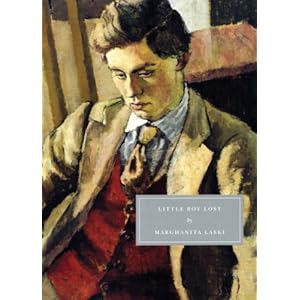
After the war ended Hilary is contacted by Pierre, a friend of Lisa’s, who told him he may have found the boy, living in an orphanage in rural France and Hilary sets out to discover if the boy is really his son.

It’s written in such clear, straightforward language and yet at the same time it is emotional, heart-wrenching and nerve-wracking, full of tension, but never sentimental. The depiction of post-war France is chilling conveying the deprivations, suspicion and bitterness of the times. Hilary is a solitary person, a poet and an intellectual, who has difficulty with relationships. This makes it difficult for him to accept that the little boy is his without an instinctive feeling or conclusive evidence – looks, mannerisms or the child’s own recollections. Whilst he is longing to find his son, after he Lisa had died and he had lost the boy, he had closed himself off from feelings:

I couldn’t endure being hurt again: I’d sooner feel nothing. I don’t like children as such; they bore me. I used to think that a child of my own would make me happy, but I know that isn’t true any more. I’ve got nothing to offer a child … I just want to be left alone so that I can’t be hurt again. (page 75)

It’s not only the little boy who is lost, it is also his father.

He goes through mental agonies once he meets the child, unsure that he is his son, and in several minds about what he should do. The boy is adorable and by the end of the book I began to think it didn’t matter whether he was his son or not, I just wanted them to be happy together.

My rating: 5/5

  • Paperback: 240 pages
  • Publisher: Persephone Books Ltd (23 Oct 2008)
  • Language English
  • ISBN-10: 1906462054
  • ISBN-13: 978-1906462055
  • Source: I bought my copy

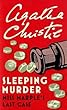
Kerrie at Mysteries in Paradise is collecting crime fiction ‘picks of the month’. During February I read 4 crime fiction and my Crime Fiction Pick of the Month is Sleeping Murder by Agatha Christie – Miss Marple’s last case.
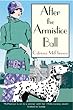
After the Armistice Ball by Catriona McPherson

After the Armistice Ball is the first book in the Dandy Gilver series. I’ve read a couple of the later books in the series and had to read this one in order to find out how Dandy (short for Dandelion) first became an amateur detective, or Society Sleuth, as she is called on the book cover.

It all began when there is an alleged theft of Lena Duffy’s jewels at Daisy Esslemont’s annual Armistice Ball in 1922 and Daisy asks Dandy to find out what really happened. Dandy is a bored wife, whose husband, Hugh is the ‘hunting, shooting and fishing’ type. The theft of the jewels is rapidly pushed to the sidelines after the death of Lena’s daughter, Cara in a lonely beach cottage in Galloway. Accompanied by Cara’s jilted fiancé, Alec Osborne, Dandy is faced with the puzzle of Cara’s death. Was she killed, or did she commit suicide? She had died in a fire, whilst on her own in the cottage – why was the cottage always kept so hot, so hot that the coal that was supposed to last all winter had been finished in one week?

The setting in the 1920s is convincing, the sense of dislocation after the First World War, the class divide and the contrast between the idle rich and the poor. The locations are beautifully described, and the characters are lively and come to life, particularly Dandy, although Hugh does seem to be a cardboard cut-out, but the book dragged in the middle as Dandy and Alec went over and over, and over the events and theorised about what had happened and why.

I too puzzled over the mystery and I did find the ending rather confusing, so much so that I had to re-read parts of the book to sort out what I thought had happened. I’m still not sure, but I think I know. Having said all that, I did enjoy the book, and apart from the middle section I raced through it and that’s probably where I missed some salient points.

My Rating: 3/5

I borrowed the book from my local library

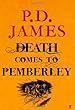
Death Comes To Pemberley by P D James

I read Death Comes to Pemberley over the weekend and although I thought it was OK I was disappointed. I love Jane Austen’s Pride and Prejudice and I like PD James’s books, so this book should have been just right for me. But maybe it was just the wrong book for me because I have yet to read a sequel/spin-off by a different author that I have enjoyed. They never live up to the original and if this had been written by anyone except P D James I probably wouldn’t even have looked at it.

The book is set in 1803, when Elizabeth and Darcy have been married for six years. It begins with a rather lengthy Prologue in which P D James summarises the events told in Pride and Prejudice and tells what has happened in the intervening years. Eventually the mystery is revealed when Lydia arrives at Pemberley and shrieking hysterically tells how Wickham and Captain Denny had disappeared into the Pemberley woods, shots were fired and she is sure Wickham is dead. In fact it is Denny who is dead and a drunk, and distraught Wickham babbles that he has killed him.

It should have been good, but the characters were flat. Six years of marriage had changed Elizabeth beyond recognition, Darcy was a pale, ineffectual figure and Colonel Fitzwilliam was no longer the likeable character he is in Pride and Prejudice. It’s plodding and repetitive. P D James has done her research into the early 19th century murder investigations but it’s clumsily written as exchanges of conversation between the characters – for example would Darcy, a magistrate really need to be told how the system worked? As for the murder mystery, it just fizzled out with a less than convincing result.

On the plus side there are some good descriptive passages, mainly of the Pemberley Estate and a vignette where Mr Bennet is found by Darcy in his library reading the Edinburgh Review.

My rating: 2/5

I borrowed the book from my local library.

As a result of reading this I’ve now started a re-read of Pride and Prejudice and the first chapter convinces me that my recollection of Jane Austen’s sparkling writing is accurate. I shall never read another spin-off again. It was worth reading Death comes to Pemberley to be reminded of Jane Austen’s brilliance.

Sleeping Murder by Agatha Christie: a Book Review

Sleeping Murder is Miss Marple’s last case, published posthumously in 1976, although Agatha Christie had written it during the Second World War. Miss Marple investigates a murder that had happened 18 years ago.

 As I began to read I thought it seemed familiar and then I realised I’d watched the TV version a few years ago, with Geraldine McEwan as Miss Marple and after a couple of chapters I remembered who the murderer was. This didn’t spoil my enjoyment as I was able to see the clues as they cropped up.

Newly married Gwenda has bought a house in Devon. She had only recently returned to England from New Zealand where she had been brought up by an aunt after the death of her parents when she was a small child. She immediately felt at home in the house, but then began to have strange premonitions and whilst she was at the theatre watching The Duchess of Malfi  she had a vision of a murder at the house she had just bought. She heard the words:

‘Cover her face. Mine eyes dazzle, she died young …’

Gwenda screamed.

She sprang up from her seat, pushed blindly past the others out into the aisle, through the exit and up the stairs and so to the street. She did not stop, even then, but half walked, half ran, in a blind panic up the Haymarket (Page 27)

She is convinced that she is going mad, but she is helped by Miss Marple, whose nephew, Raymond West is a distant cousin of Gwenda’s husband, Giles. It’s a most baffling ‘˜cold case’, because first of all they have to discover who, if anyone, had been killed, where, when and why. It does all rather depend on a number of coincidences, beginning with the fact that Gwenda has bought the house that she had lived in as a very young child, but as Miss Marple explains to Gwenda:

‘˜It’s not impossible, my dear. It’s just a very remarkable coincidence – and remarkable coincidences do happen. You wanted a house on the south coast, you were looking for one, and you passed a house that stirred memories and attracted you. It was the right size and a reasonable price, so you bought it. No, it’s not too wildly improbable. Had the house been merely what it is called (perhaps rightly) a haunted house, you would have reacted differently, I think. But you had no feeling of violence or revulsion except, so you have told me, at one very definite moment, and that was when you were just starting to come down the staircase and looking down into the hall. (Pages 33-4)

That moment, as it turned out was very significant, indeed.

Sleeping Murder is a satisfying puzzle and I liked this last view of Miss Marple, compassionate and shrewd and this description of her appearance:

Miss Marple was an attractive old lady, tall and thin, with pink cheeks and blue eyes, and a gentle, rather fussy manner. Her blue eyes often had a little twinkle in them. (page 26)

  • My rating: 4/5
  • Paperback: 304 pages
  • Publisher: HarperCollins; Masterpiece edition (Reissue) edition (2 Jun 2008)
  • Language English
  • ISBN-10: 0007121067
  • ISBN-13: 978-0007121069
  • Source: I bought the book

Book Beginnings on Friday: The Inspector’s Daughter

How to participate: Share the first line (or two) of the book you are currently reading. Book Beginnings is hosted by Katy at A Few More Pages every Friday.

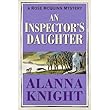
I found The Inspector’s Daughter by Alanna Knight in my local library recently. I’d never come across this author before but see from the book cover that she has written more than 40 novels, 4 non-fiction books, numerous short stories and 2 plays!

With some many books to her name I thought I’d once again jumped into a series of books, but I was lucky because The Inspector’s Daughter is the first in the Rose McQuinn Mysteries. In this book set in 1895 Rose has returned home to Edinburgh from the American Wild West and it’s not long before she steps into her father’s shoes by agreeing to investigate the strange behaviour of her friend’s husband.

The book begins:

Soon I would be safe.

The journey from nightmare was almost ended. Every turn of the train’s wheels, every drifting smoke wreath closed the door more firmly on the past.

Beyond the hills, the blue glimpse of the sea, Edinburgh was fast approaching, epilogue to ten years in America, so-called land of opportunity but for me a land of tragedy and loss.

So, this opening shows that Rose has had a bad time – ‘a nightmare’, and  a ‘tragedy’ in America, but raises questions, such as – what happened? What was the loss? And why did she go to America and what is she coming home to? I haven’t read much further so I don’t know the answers yet – but this opening does make me want to read on to find out.

I’ve borrowed this book from the library but I see on Amazon that a Kindle edition is available. Alanna Knight has a website, where I see she not only writes but also paints!

The Woman in White by Wilkie Collins: a Book Review

I read The Woman in White (TWIW) by Wilkie Collins in January and have been wondering how to do justice to it in a post, because it’s a real chunkster of over 700 pages. (For a summary of the plot, with spoilers see the article on the book on Wikipedia.)

It’s one of the first if not the first ‘sensation novel‘. A ‘sensation novel‘ is one with Gothic elements  – murder, mystery, horror and suspense – within a domestic setting. Since reading TWIW I’ve read The Sensation Novel by Lyn Pykett, which describes such novels as a ‘minor subgenre of British fiction that flourished in the 1860s only to die out a decade or two earlier.’ They have complicated plots, are set in modern times, and are reliant on coincidences, with plots hinging on murder, madness and bigamy. They exploited the fear that respectable Victorian families had of hidden, dark secrets and explored the woman’s role in the family. There is a pre-occupation with the law – wills, inheritance, divorce and women’s rights over property and child custody. They are emotional dramas about obsessive and disturbed mental states, with villains hiding behind respectable fronts, and bold assertive women, as well as passive, powerless and compliant women.

These issues and more are present in TWIW. It has several first person narrators, who are each not in possession of the whole story. Their accounts from letters, diaries and formal statements are limited to what each one knew or had experienced, and are not always reliable. It begins with Walter Hartright’s meeting with the mysterious Woman in White, as he is on his way to take up the position of drawing master to Marian Halcombe and Laura Fairlie at Limmeridge House, in Cumberland.

 There, in the middle of the broad bright high-road – there, as if it had that moment sprung out of the earth or dropped from heaven – stood the figure of a solitary Woman, dressed from head to foot in white garments, her face bent in grave inquiry on mine, her hand pointing to the dark cloud over London as I faced her.

Just who she is only becomes clear much later on the story. During their conversation she reveals that she knows Limmeridge House and its occupants. Walter helps her, but then is filled with guilt when he is told that she had escaped from an asylum.

Laura and Marian are half-sisters, living with their uncle, Frederick Fairlie, a weak, effeminate invalid. Walter is immediately struck by the beauty of Marian’s figure, but astonished when he saw her face:

The lady is ugly! …

The lady’s complexion was almost swarthy, and the dark down on her upper lip was almost a moustache. She had a large, firm, masculine mouth and jaw; prominent, piercing, resolute brown eyes; and thick coal-black hair, growing unusually low down on her forehead.

Marian, clever and assertive is in complete contrast in both appearance and character to the lovely Laura. Walter falls in love with Laura, but she is pledged to marry Sir Percy Glyde, a marriage arranged by her dead father. Matters are complicated by the fact that Laura and the Woman in White look remarkably alike, which is central to the plot. Sir Percy attempts to gain total control of Laura’s money and property, aided by the villainous Count Fosco.

I found it a book of two halves – slow to get going, full of descriptive writing and I was beginning to wonder when something was actually going to happen. Then in the second half the pace increased, the action was fast and complicated, with plenty of tension and melodrama. I enjoyed it, although I do prefer The Moonstone.

I read this book as part of November’s Autumn Classics Challenge and The Book Garden’s Tea and Books Challenge (reading books of over 700 pages).