Guilty Consciences: a Crime Writers’ Association Anthology

I’ve taken my time reading this collection of short stories Guilty Consciences: a Crime Writers’ Association Anthology, edited by Martin Edwards, who has also contributed one of the stories. I read them one or two at a time, which for me is the best way.

The contributors are Robert Barnard, Ann Cleeves, Bernie Crosthwaite, Judith Cutler, Carol Anne Davis, Martin Edwards, Jane Finnis, Peter James, Alanna Knight, Susan Moody, Sarah Rayne, Claire Seeber, L.C.Tyler, Dan Waddell and Yvonne Walus, and there is an introduction from the current Chair of the CWA, Peter James.

I haven’t been too keen on short stories in the past but I enjoyed this collection and think it’s one of the best I’ve read. As Peter James writes in his introduction:

I believe the short story is long overdue for a renaissance, and the ideal literary form for our increasingly busy, time-poor modern lives. What better for a quick read between tube station stops, or using your e-reader to turn a tedious airport security queue into fifteen minutes of surprises and delight?

Or as I found the ideal length to read at breakfast.

As the title suggests the stories all reveal various aspects of a guilty conscience. I find it hard to write about short stories without giving away the plot, so here are just a few notes on some. There are many I could pick out but these particularly stand out in my memory, now that I’ve read the book:

  • Hector’s Other Woman by Ann Cleeves – an intriguing insight into Vera Stanhope’s past and her motivation for joining the police, as Vera recollects her visit to Holy Island with her father whilst she was in the middle of her A-level year.
  • Squeaky by Martin Edwards – about a couple who both have something to hide and how their marriage began to fall apart when Squeaky came into their lives.
  • Deck the Hall with Poison Ivy by Susan Moody – a cautionary story about Christmas and a family’s arrangements.
  • The Train by Dan Waddell – as a husband anxiously waits for the return of his estranged wife he remembers their lives together and vows it will be different this time.

All the contributions were written specially for this collection with the exception of The Visitor by H R F Keating, who died in 2011, a story that had previously been included in a Penguin India collection, featuring Inspector Ghote. Ghote’s visitor is consumed with guilt about something that he had done in the past – but had he?

An excellent collection.

Crime Fiction Alphabet: M is for …

… M R Hall

Biography summarised from M R Hall’s website:

Matthew Hall was born in London in 1967, he was educated at Hereford Cathedral School and Worcester College, Oxford,where he graduated in law. He lives and works in the Wye valley in South Wales. He spends much of his spare time looking after his sixteen acres of woodland and working for the conservation of the countryside.

After working as a barrister, mostly in the field of criminal law he then went on to become a screen writer and producer, including writing episodes of such dramas as  Kavanagh QC starring John Thaw and Dalziel and Pascoe. His first season of writing the Channel 5 series, Wing And A Prayer earned him a BAFTA nomination in the best series category.

Novels:
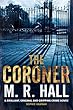
I’ve read his debut novel, The Coroner, which was published in 2009 and was nominated for the Crime Writer’s Association Gold Dagger in the best novel category. In this book Jenny Cooper, a newly appointed Coroner, divorced, and recovering from a nervous breakdown gets involved in investigating the deaths of several teenagers at local detention centres. Has her predecessor neglected some crucial information in this area? As Jenny digs deeper, she encounters a solid wall of bureaucratic resistance. But Jenny just won’t give in until she gets to the truth.
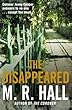
The second novel in the Jenny Cooper series, The Disappeared, was published in the USA by Simon and Schuster on December 1st 2009 and in the UK by Pan Macmillan in January 2010. I’ve yet to read this book in which Jenny investigates the disappearance of a British student, Nazim Jamal. She is beginning to settle into her role as Coroner for the Severn Valley. But as the inquest gets under way, a code of silence is imposed on the inquest and events begin to spiral out of all control, pushing Jenny to breaking point.
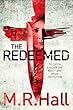
I thoroughly enjoyed the third novel in the same series, The Redeemed, which was published in April 2011 in the UK and May 2011 in the USA. With an accusation of murder hanging over Jenny’s head her lone quest for justice takes her to the heart of the fight between good and evil, sex and the supernatural, and on a dark inner journey to confront ghosts that have haunted her for a lifetime.
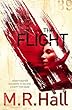
The fourth in the series, The Flight was published in the UK on 2 February 2012. I’ve recently read this one and have to say that I don’t think it’s as good as the other two I’ve read.

Flight 189 has plunged into the Severn Estuary, an area outside Jenny Cooper’s jurisdiction, but she is handling the cases of a sailor, washed up on her side of the river and that of a 10 year old girl, who was a passenger on the flight. Jenny is never one to back away from handling sensitive issues and when the authorities want her cases to be dealt with by Sir James Kendall, a recently retired High Court judge,the coroner for the inquest into the crash, she resists and insists she carries out her own investigations. Each time they try to halt her inquest she finds ways of carrying on.

My problem with this book wasn’t Jenny’s role.  I like the way Jenny perseveres, her sympathies for the bereaved parents, her own fragile psychological make-up and how she deals with her problems with her father. These elements are in the other books too, but in The Flight I thought they were overwhelmed by all the technical details of the aircraft and how it came to crash. I prefer the smaller scale inquests, rather than this ‘disaster film’ genre – but, I think, it would make a good disaster film.

If you’re nervous about flying, (which I’m not, although I did feel glad I’m not booked on a flight soon as I was reading it) it is definitely a scary book, even though M R Hall in his Author’s Note at the end of the book says this about the safety of flying:

Next time you fly – or perhaps you are in a plane right now? – remember that a short drive through town remains statistically far more dangerous than your flight by a factor of many thousands to one. The most perilous parts of your journey are the ones to and from the airport. I am reliably informed that you are precisely eighty-seven times more likely to choke on the ice cube in your gin and tonic than to perish in a crash. So sit back and enjoy the movie – the numbers say it’ll never happen to you.

Mmm – do I really find that comforting?

A Crime Fiction Alphabet post for the letter M. For more posts see Kerrie’s blog Mysteries in Paradise.

Opening Lines: A Room Full of Bones

First chapterDiane at Bibliophile By the Sea hosts this weekly meme. The idea is that you post the opening paragraph (sometimes maybe a few ) of a book you decided to read based on the opening paragraph (s).

I’d have read A Room Full of Bones anyway as it’s the latest Elly Griffiths’s latest Ruth Galloway Investigation and I’ve read and loved the earlier books, but the opening lines certainly set the scene and make me want to read more:

 The coffin is definitely a health and safety hazard. It fills the entrance hall, impeding the view of the stuffed Auk, a map of King’s Lynn in the 1800s and a rather dirty oil painting of Percival, Lord Smith, the founder of the museum. The coffin’s wooden sides are swollen and rotten and look likely to disgorge their contents in a singularly gruesome manner.

 Elly Griffiths’s website has more information.

Crime Fiction Alphabet: L is for …

Lord Edgware Dies by Agatha Christie. This was first published in the UK in 1933 and later the same year in the USA as Thirteen for Dinner. It’s the eighth book featuring Hercule Poirot, narrated by Captain Hastings. Agatha Christie had written it in the autumn of 1931 at her house in Ninevah, whilst with her husband, Max Malloran on his expedition in the Middle East sponsored by the British Museum.

Lord Edgware Dies is set far from Ninevah, in London’s West End. Poirot is having supper at the Savoy with Hastings after they had been to the theatre to see the celebrated American impressionist, Carlotta Adams. At the next table is Jane Wilkinson, Lady Edgware, also a celebrated actress, who Carlotta had impersonated during her show. Jane implores Poirot to help her to ‘get rid of her husband’ – to convince him to agree to a divorce. Poirot agrees to go and see Lord Edgware. Much to Poirot’s surprise, Lord Edgware readily agrees to a divorce, but as Poirot and Hastings leave the house, Hastings is surprised to see an astonishing change in Lord Edgware’s face:

That suave smiling face was transformed. The lips were drawn back from the teeth in a snarl, the eyes were alive with fury and an almost insane rage. (page 33 0f my copy)

The next morning Lord Edgware was found dead, stabbed in the back of the neck. Jane was seen at the house the night before, but there are witnesses who can testify that she was at a dinner party with twelve other guests.  Could Jane have been in two places at once and killed him? She had boasted to her friends that if Poirot couldn’t help her that she would

‘have to call a taxi to go round and bump him off myself. (page 17)

Or was it Carlotta Adams impersonating Jane?

It’s not a simple mystery and there is a second murder which complicates matters. Poirot is at his best, relying on his knowledge of psychology, the ‘employment of the little grey cells‘, which gives him such mental pleasure. There are small personal touches such as this where Poirot compares his moustache to that of Hastings in this conversation between the two of them:

‘You have made a hit, Poirot. The fair Lady Edgware can hardly take her eyes off you.’

‘Doubtless she had been informed of my identity’, said Poirot, trying to look modest and failing.

‘I think it is the famous moustaches’, I said. ‘She is carried away by their beauty.’

Poirot caressed them surreptitiously.

‘It is true that they are unique,’ he admitted. ‘Oh, my friend, the ‘tooth-brush’ as you call it, that you wear – it is a horror – an atrocity – a wilful stunting of the bounties of nature. Abandon it, my friend, I pray of you.’ (pages 12-13)

Yet again, another baffling case solved by Hercule Poirot – a very entertaining book.

The Crime Fiction Alphabet 2012 is a meme hosted by Kerrie at Mysteries in Paradise.

July’s Books and Crime Fiction Pick of the Month

In July I read 8 books, 6 of them crime fiction. They are (in the order I read them):

The other two books I read are:

  • A Mercy by Toni Morrison – review to follow in a later post
  • The Glass Guardian by Linda Gillard

And my Crime Fiction Pick of the Month is The Crimson Rooms by Katharine McMahon.

Kerrie has a round-up post of bloggers’ book choices for the month, so for more recommendations, go to Mysteries in Paradise.

Crime Fiction Alphabet: K is for The Crimson Rooms by Katharine McMahon

Kerrie at Mysteries in Paradise hosts the Crime Fiction Alphabet each week. It has now reached the letter K and my choice is Katharine McMahon’s book The Crimson Rooms.

I bought The Crimson Rooms a couple of years ago because I’d enjoyed reading Katharine McMahon’s The Rose of Sebastopol, which I read in 2008. It’s been sitting with the other to-be-reads on my bookshelves since then and I hadn’t realised that this is not only historical fiction, but also historical crime fiction.

It’s set in London in 1924, with Britain still coming to terms with the aftermath of the First World War. Evelyn Gifford, one of the few pioneer female lawyers, lives at home with her mother, aunt and grandmother, still mourning the death of her brother James in the trenches. Evelyn is woken in the early hours one morning to find Meredith and her child, Edmund, aged 6 on the doorstep, claiming that Edmund is James’s son. Evelyn and the other women are thrown into confusion as Meredith upsets their memories of James.

Meanwhile Evelyn carries on with her work, taking on the case of Leah Marchant, who wants to get back her children who had been taken into care. She was accused of trying to kidnap her own baby. It’s early days for women to be accepted as lawyers and Evelyn struggles to defend Leah who distrusts her and wants Daniel Breen, Evelyn’s boss to defend her.

She is also involved in defending Stephen Wheeler, an old schoolfriend of Daniel’s. Stephen is accused of murdering Stella, his young wife of a fortnight. It’s obvious to Evelyn and Daniel that Stephen is innocent, but at first he refuses to talk and defend himself. After a humiliating experience in court, barrister Nicholas Thorne offers to help Evelyn much to her dislike. But she finds herself drawn to him and wonders how much she can trust him.

I was thoroughly engrossed in this book. It was not just the court cases, I was fascinated by the account of early women lawyers, represented by Evelyn, the central character. It clearly shows the prejudice these women had to overcome just to qualify as lawyers, never mind the difficulties of persuading law firms to employ them and clients to accept them. Katherine McMahon has included a Chronology of Women in Law from 1875 to 1950 at the back of the book and an analysis of why it took so long for women to be accepted. Evelyn is based on Carrie Morrison, who was the first British woman to be become a solicitor.

It’s not just about crime and the court cases, it’s also a novel about the way people’s lives were affected by the War, how men were unable to resume their old lives, some damaged by shell-shock and the horrors they had taken part in, or witnessed during the war. Women, too, had their lives completely changed, so many had their marriage prospects destroyed, and were replaced by work, becoming career women.

Katherine McMahon has done extensive research of the period but it all sits easily within the narrative. It’s beautifully written, full of imagery that creates a vivid picture of the setting and the characters. For example, she describes the moon:

… an extraordinary crescent moon which had, in the last few minutes, risen above the river, with the old moon burdening its lap like a fat round cushion.

and I like this description of one of the characters as she walked from the garden towards the house,

… the trailing hem of her robe a pool of ivory, her hair a swathe of black silk. (page 207)

Katharine McMahon’s other books are:

  • The Alchemist’s Daughter
  • A Way through the Woods
  • Footsteps
  • Confinement
  • After Mary
  • The Season of Light

More details are on her website.