Books Read in March 2013

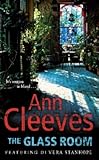
After a slow start to the year I read 10 books in March, so doubling the total for the year. The books I enjoyed the most are The Hand That First Held Mine by Maggie O’Farrell and The Glass Room by Ann Cleeves.

The full list is (with links to my posts on the books):

  1. Wildwood: a Journey Through Trees by Roger Deakin (Non Fiction)
  2. The Hand That First Held Mine by Maggie O’Farrell
  3. Quiet: the Power of Introverts in a World That Can’t Stop Talking by Susan Cain (review copy) (Non Fiction)
  4. The Kashmir Shawl by Rosie Thomas
  5. The Sleeping Policeman* by Andrew Taylor (library book)
  6. Small Kindnesses by Fiona Robyn (Kindle) (from TBR books)
  7. Airs and Graces by Erica James (borrowed
  8. The Glass Room* by Ann Cleeves (library book)
  9. The Hobbit by J R R Tolkien (Kindle) (from TBR books)
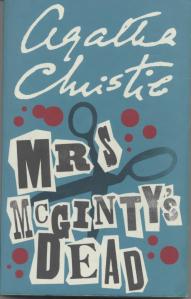
  10. Mrs McGinty’s Dead* by Agatha Christie (library book)

Of the 10 books, just 3 are crime fiction (marked with *) and of these my Crime Fiction Book of the Month is The Glass Room by Ann Cleeves.

Notes on the books without reviews:

  •  The Kashmir Shawl by Rosie Thomas – romantic historical fiction set in the 1940s and the present day with a predictable ending. Mair Ellis goes to Kashmir to find more about a shawl found in her grandmother’s belongings. The story switches between Mair’s journey and that of Nerys Watkins, her grandmother, a missionary’s wife, living in India during the Second World War .
  • Small Kindnesses by Fiona Robyn – an interesting gentle book, full of reminiscences as Leonard Mutch, a widower discovers his wife had a secret she kept from him for forty years. 
  • Airs and Graces by Erica James – romantic fiction, a predictable story that doesn’t tax the brain.  Ellen, a divorcee struggles to decide who she should marry Duncan, a wealthy lawyer or Matthew an artist.

The Glass Room by Ann Cleeves

The Glass Room is the fifth book in Ann Cleeves’s Vera Stanhope series.

It’s going to be a contender for my best book of the year, because I loved it. It has everything I like in a crime fiction novel – setting, characters and a cleverly constructed plot. I didn’t guess who the murderer was but realised afterwards that all the clues had been there, skilfully woven into the narrative, hidden among the dead-ends and red herrings, so that I’d read on without realising their significance.

Set in the Northumberland countryside in an isolated country house, a number of aspiring authors are gathered at the Writers’ House, run by Miranda Barton, to work on their novels. It’s an old fortified farmhouse close to the sea, sheltered on the landward side by trees. DI Vera Stanhope’s neighbour, Joanna has gone missing and her husband, Jack is frantic to find her, so Vera, having tracked her down to the Writers’ House goes to see her, only to find that one of the visiting tutors, Professor Tony Ferdinand has been murdered in the conservatory, stabbed with a kitchen knife. And Joanna is the chief suspect.

If you’ve seen the TV series Vera, maybe you’ll have a vision of Brenda Blethyn as Vera, but that image gradually faded as I read this book. Vera is bigger, fatter, and ruder than the TV version, but above all she is a truly convincing character, exasperating and opinionated, and she can be a nightmare boss. She has no compunctions about breaking the rules, or doing things in her own way and she acknowledges that if any of the other detectives went freelance, playing the private eye, as she is doing in looking for Joanna, she’d give them ‘such a bollocking’. She cares deeply about her job and she does have a soft side, even if it is touched with cynicism:

And why had she agreed to do as Jack asked and chase around the countryside looking for Joanna? Because I’m soft as clarts. Because I like happy endings and want to bring the couple together again, like I’m some great fat Cupid in wellies. Because it would be bloody inconvenient living here without them next door. (page 10)

The interplay between the Vera and Sergeant Joe Ashworth is excellent. Joe isn’t as easily managed as Vera would want him to be and yet she likes that in him. And her relationship with the rest of her team leaves much to be desired, but she is human – and she gets results.

Alongside the mystery Ann Cleeves includes a commentary on writing and writers and on creative writing weekend retreats. This particular course shows the writing world in rather a bad light, as a place of people with huge egos, selfish and self- absorbed and with aspiring, insecure would-be-writers:

Writers were like parasites, preying on other people’s stress and misery. Objective observers like spies or detectives  (page 98)

All in all, this is a book I thoroughly enjoyed and one that kept me guessing to the end.

The Sleeping Policeman by Andrew Taylor

Tragedy is a word that has come to have several meanings. By most definitions, the Hanslope case had elements of tragedy. Afterwards, Dougal remembered that tragedy derives from two Greek words which can be translated as goat song.

And that was appropriate too, because in one sense of the word Graham Hanslope was undoubtedly a goat. Hanslope’s goat song ended in discord on the southbound platform of the Bakerloo Line at Paddington Station. It ended with the arrival of a tube train at a few minutes after ten o’clock on the morning of Saturday 16 February. It ended, as tragedies so often end, with death and the destruction of hope. (page 1)

I borrowed The Sleeping Policeman from my local library because I’ve read and liked some of Andrew Taylor’s other books. This book is the seventh novel in the William Dougal series. I haven’t read any of the earlier books, but I don’t think it made any difference; William Dougal, himself, has just a small, but important part in the book. (The sleeping policeman in question is not a police officer – it’s a speed bump!)

Dougal, a private investigator, is hired by Hanslope, a GP, to discover who is blackmailing him after had started an affair with one of his patients. But that isn’t the whole story because Hanslope has omitted to tell Dougal all the facts and has lied to him. What follows is a tense, taut mystery, resulting in a murder, which Dougal eventually solves.

None of the characters are very likeable, in fact some of them are downright nasty, but each one of them is a well-drawn cameo. There’s a reckless hit and run, corruption in the police ranks, a series of petty thefts, hostility between two families whose teenage daughters are too friendly for their parents’ liking and a journalist whose garden is filled with gnomes. I liked it immensely and am looking out for the other William Dougal books:

(Details copied from Fantastic Fiction)
Caroline MinusculeWaiting for the End of the WorldOur Fathers' LiesAn Old School Tie
Freelance DeathBlood RelationThe Sleeping PolicemanOdd Man Out

Cat Among the Pigeons by Agatha Christie

I’ve read about half of Agatha Christie’s books ranging from her first books in the 1920s to the later ones in the 1970s and the quality of her writing does change, with some of the later books being rather loosely plotted and meandering. Cat Among the Pigeons is one of her later books, first published in 1959 and it’s one of the best of these later novels.

It’s set mainly in an exclusive and expensive girls’ school, Meadowbank, in England, said to be based on her daughter Rosalind’s school. The summer term has just started and there are some new members of staff as well as some new pupils, including Princess Shaista from Ramat, a small and rich Arab state in the Middle East, which has just suffered a revolution. Her fiancé Prince Ali Yusuf the Hereditary Sheik, has been murdered and his family jewels have disappeared.

The success of the school is down to Miss Bulstrode, the headmistress and founder of Meadowbank, but she is thinking of retiring. Miss Chadwick, who had helped Miss Bulstrode to found Meadowbank would like to be her successor, but Miss Bulstrode has other ideas. Will it be Miss Vansittart, who is her second in command, or one of the other teachers who would be able to develop the school in line with modern educational thinking? Miss Bulstrode is not sure. She is busy greeting one of the parents when her attention is distracted by one of the mothers approaching clearly in a state of advanced intoxication, so she misses something else that could very well be important. And although she feels uneasy:

There was nothing to tell her that within a few weeks Meadowbank would be plunged into a sea of trouble; that disorder, confusion and murder would reign there, that already certain events had been set in motion … (page 27)

The new staff members are not all fitting in very well. There is Miss Springer, the new Games Mistress, who is not popular with the girls and asks too many personal questions, Mlle Angele Blanche, the new French teacher, whose teaching leaves much to be desired, Ann Shapland, Miss Bulstrode’s new and efficient secretary, and last but not least Adam Goodman, the handsome young new gardener, who is good at his job and has other talents too.

As well as Princess Shaista, Jennifer Sutcliffe is new to the school this term. She’s an uncomplicated character who lives mainly for tennis. She makes friends with Julia Upjohn, who is a much more thoughtful, observant character. So when Miss Springer is found shot dead in the new Sports Pavilion, followed not long after by the murder of Miss Vansittart, it’s Julia who decides to contact Hercules Poirot.

There are several possible motives and suspects and Agatha Christie combines the murder stories with a thriller element by introducing Colonel Pikeaway, who it is hinted is in charge of British Intelligence – ‘We know all about things here. That’s what we’re for.‘ (page 46) and the mysterious Mr Robinson, who is most decidedly not an Englishman although his voice was English with no trace of an accent.

Poirot, of course, although arriving very late in the investigations, works it all out and explains what had happened. But Julia also has worked it out and without giving too much away I’m quoting this passage where she is writing an essay on the contrasting attitudes of Macbeth and Lady Macbeth to murder:

Macbeth, Julia had written, liked the idea of murder and had been thinking of it a lot, but he needed a push to get him started. Once he got started he enjoyed murdering people and had no more qualms or fears. Lady Macbeth was just greedy and ambitious. She thought she didn’t mind what she did to get what she wanted. But once she’d done it, she found she didn’t like it after all. (page 239)

There in a nutshell are the motives for the murder – a ruthless disregard of the value of life and greed and ambition.

Books Read in February 2013

I enjoyed all the books I finished reading in February and my Pick of the Month goes to two excellent books – Dead Water (Shetland series 5) by Ann Cleeves and The Redemption of Alexander Seaton by Shona MacLean, both books being crime fiction.

Dead Water & Alex Seaton

The other books I read are also fiction, although Memoirs of a Fox-Hunting Man by Siegfried Sassoon is fictionalised autobiography. Two of the books are from my stock of unread books bought before January 2013, two are books from my local library and one is an e-book borrowed from the Kindle Owners’ Lending Library.

The links are to my posts on the books – I have yet to write my thoughts about Agatha Christie’s Cat Among the Pigeons.

  1. The Lacuna by Barbara Kingsolver (from TBR books). This novel tells the story of Harrison Shepherd, the son of a Mexican mother and an American father. It’s told through his diaries and letters together with genuine newspaper articles, although whether they reported truth or lies is questionable.
  2. Dead Water by Ann Cleeves, crime fiction continuing the Shetland series featuring Inspector Jimmy Perez. I thoroughly enjoyed reading this –  a mixture of mystery and the creation of totally believable characters, set in Shetland Mainland.
  3. Memoirs of a Fox-Hunting Man by Siegfried Sasson (library book). Sassoon was born in 1886 and in this book he relives his childhood, youth and experiences as an officer during the First World War. He comes across as a likeable young man, shy, reserved, and modest, happy-go-lucky but aware of his own shortcomings. But all this changed with the onset of the First World War.
  4. The Redemption of Alexander Seaton by Shona MacLean (library book)  I think this is one of the best novels I’ve read recently. It’s historical crime fiction set in Scotland in the 1620s, mainly in the town of Banff, where on a stormy night Patrick Davidson, the local apothecary’s assistant collapses in the street. The next morning he is found dead.
  5. Death at Wentwater Court by Carola Dunn (Kindle) – this is crime fiction, the first in the Daisy Dalrymple series and it’s a quick and easy read, a mix of Agatha Christie and PG Wodehouse, set in 1923
  6. Cat Among the Pigeons by Agatha Christie (Poirot)

I’ve also been reading two non-fiction books in February and am still reading them –  Quiet: the power of introverts in a world that can’t stop talking by Susan Cain and Wildwood: a Journey Through Trees by Roger Deakin. It takes me longer to read non-fiction than fiction as I read it more slowly, especially these two books that are packed with facts and ideas. But I’m nearing the end of both of them.

After that I’m planning to finish reading The Hand That First Held Mine by Maggie O’Farrell, which I first started reading last year and put to one side. I’ve had to start reading it again!

Other books waiting to be read, if not in March then later in the year are Memoirs of an Infantry Officer by Siegfried Sassoon, which I’ve borrowed from my local library. This is the next book in his fictionalised autobiography  I’ll also be reading (because it’s my book group choice for March) The Kashmir Shawl by Rosie Thomas, a story of wartime, family secrets and forbidden love, set against in the 1940s in Kashmir.

I’ve got a pile of other books from the library which I’m itching to read soon – I think I’ll do a separate post on these books. I’m always tempted to borrow more books than I can possible read in the loan period, but that’s me! As if I don’t have enough of my own unread books to keep me going all year and beyond.

Death at Wentwater Court by Carola Dunn

I first came across Carola Dunn’s Daisy Dalrymple books on Geranium Cat‘s blog and on Read Warbler‘s blog a couple of years ago and have been meaning to read them ever since.

Death at Wentwater Court is the first in the series. It’s a quick and easy read, a mix of Agatha Christie and PG Wodehouse, set in 1923 at the Earl of Wentwater’s country mansion, Wentwater Court. The Honourable Daisy Dalrymple, keen to be independent and earn her own living, is on her first writing assignment for Town and Country magazine, writing about country houses. It’s Christmas and the family and guests at Wentwater Court are enjoying the snow and in particular skating on the frozen lake.

But all is not well. One of the guests, Lord Stephen Astwick is found dead in the lake and it appears he has had a skating accident. However, Daisy’s photos suggest that the hole in the ice had not occurred naturally – there were signs that someone had cut a hole and not that the ice had simply weakened. Enter Detective Chief Inspector Alec Fletcher of Scotland Yard, who is also investigating a jewel robbery at Lord Flatford’s house nearby.

This is a typical country house murder mystery, with plenty of suspects. Daisy is a likeable, lively character and it looks as though her relationship with Alec could become more personal by the end of the book. An enjoyable book, but not one to overtax the brain. I hope it’s not too long before I read the next one in the series – The Winter Garden Mystery.

Note: Carola Dunn is a prolific author, with 21 books in the Daisy Dalrymple series alone – see Fantastic Fiction for her bibliography.