Books Read in February 2013

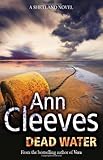
I enjoyed all the books I finished reading in February and my Pick of the Month goes to two excellent books – Dead Water (Shetland series 5) by Ann Cleeves and The Redemption of Alexander Seaton by Shona MacLean, both books being crime fiction.

Dead Water & Alex Seaton

The other books I read are also fiction, although Memoirs of a Fox-Hunting Man by Siegfried Sassoon is fictionalised autobiography. Two of the books are from my stock of unread books bought before January 2013, two are books from my local library and one is an e-book borrowed from the Kindle Owners’ Lending Library.

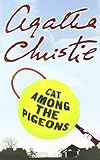
The links are to my posts on the books – I have yet to write my thoughts about Agatha Christie’s Cat Among the Pigeons.

  1. The Lacuna by Barbara Kingsolver (from TBR books). This novel tells the story of Harrison Shepherd, the son of a Mexican mother and an American father. It’s told through his diaries and letters together with genuine newspaper articles, although whether they reported truth or lies is questionable.
  2. Dead Water by Ann Cleeves, crime fiction continuing the Shetland series featuring Inspector Jimmy Perez. I thoroughly enjoyed reading this –  a mixture of mystery and the creation of totally believable characters, set in Shetland Mainland.
  3. Memoirs of a Fox-Hunting Man by Siegfried Sasson (library book). Sassoon was born in 1886 and in this book he relives his childhood, youth and experiences as an officer during the First World War. He comes across as a likeable young man, shy, reserved, and modest, happy-go-lucky but aware of his own shortcomings. But all this changed with the onset of the First World War.
  4. The Redemption of Alexander Seaton by Shona MacLean (library book)  I think this is one of the best novels I’ve read recently. It’s historical crime fiction set in Scotland in the 1620s, mainly in the town of Banff, where on a stormy night Patrick Davidson, the local apothecary’s assistant collapses in the street. The next morning he is found dead.
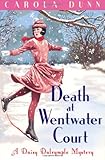
  5. Death at Wentwater Court by Carola Dunn (Kindle) – this is crime fiction, the first in the Daisy Dalrymple series and it’s a quick and easy read, a mix of Agatha Christie and PG Wodehouse, set in 1923
  6. Cat Among the Pigeons by Agatha Christie (Poirot)

I’ve also been reading two non-fiction books in February and am still reading them –  Quiet: the power of introverts in a world that can’t stop talking by Susan Cain and Wildwood: a Journey Through Trees by Roger Deakin. It takes me longer to read non-fiction than fiction as I read it more slowly, especially these two books that are packed with facts and ideas. But I’m nearing the end of both of them.

After that I’m planning to finish reading The Hand That First Held Mine by Maggie O’Farrell, which I first started reading last year and put to one side. I’ve had to start reading it again!

Other books waiting to be read, if not in March then later in the year are Memoirs of an Infantry Officer by Siegfried Sassoon, which I’ve borrowed from my local library. This is the next book in his fictionalised autobiography  I’ll also be reading (because it’s my book group choice for March) The Kashmir Shawl by Rosie Thomas, a story of wartime, family secrets and forbidden love, set against in the 1940s in Kashmir.

I’ve got a pile of other books from the library which I’m itching to read soon – I think I’ll do a separate post on these books. I’m always tempted to borrow more books than I can possible read in the loan period, but that’s me! As if I don’t have enough of my own unread books to keep me going all year and beyond.

Death at Wentwater Court by Carola Dunn

I first came across Carola Dunn’s Daisy Dalrymple books on Geranium Cat‘s blog and on Read Warbler‘s blog a couple of years ago and have been meaning to read them ever since.
Death at Wentwater Court is the first in the series. It’s a quick and easy read, a mix of Agatha Christie and PG Wodehouse, set in 1923 at the Earl of Wentwater’s country mansion, Wentwater Court. The Honourable Daisy Dalrymple, keen to be independent and earn her own living, is on her first writing assignment for Town and Country magazine, writing about country houses. It’s Christmas and the family and guests at Wentwater Court are enjoying the snow and in particular skating on the frozen lake.

But all is not well. One of the guests, Lord Stephen Astwick is found dead in the lake and it appears he has had a skating accident. However, Daisy’s photos suggest that the hole in the ice had not occurred naturally – there were signs that someone had cut a hole and not that the ice had simply weakened. Enter Detective Chief Inspector Alec Fletcher of Scotland Yard, who is also investigating a jewel robbery at Lord Flatford’s house nearby.

This is a typical country house murder mystery, with plenty of suspects. Daisy is a likeable, lively character and it looks as though her relationship with Alec could become more personal by the end of the book. An enjoyable book, but not one to overtax the brain. I hope it’s not too long before I read the next one in the series – The Winter Garden Mystery.

Note: Carola Dunn is a prolific author, with 21 books in the Daisy Dalrymple series alone – see Fantastic Fiction for her bibliography.

Ann Cleeves and Dead Water

I loved Ann Cleeves’s Shetland QuartetRaven Black, White Nights, Red Bones and Blue Lightning, so I was delighted to read her latest book, Dead Water, which takes the Quartet one step further. Actually, it’s the first book in a new Shetland Quartet, in which each book will be named after the four elements –  earth, air, fire and water. Each of the Shetland books reads well as stand-alones, but I think it’s better to read them in order as you can then follow the development of the main characters. And Dark Water does refer to events in earlier books.

In Dead Water Rhona Laing, the Fiscal, finds journalist Jerry Markham lying dead, drifting in a yoal, a traditional Shetland boat in Aith marina. Markham, a Shetlander visiting his parents, was apparently working on a story for a national newspaper – maybe about the development of renewable energy proposed for Shetland, or maybe his reason was more personal? Detective Inspector Jimmy Perez is not the man he once was, since the death of his fiancée and at first he takes a back seat in the investigations, led by Detective Inspector Willow Reeves (originally from the Hebrides) who is drafted in from the Inverness team to head up the investigation. But eventually his natural curiosity takes over and he decides to help the inquiry, and his knowledge of the local community is vital in catching the killer.

I really enjoyed Dead Water, a mixture of mystery and the creation of  totally believable characters, set in Shetland Mainland.  The book is well paced, with the tension steadily building and Ann Cleeves writes with clarity, so that you can easily picture the people and the places she describes. She gives just the right amount of detail for the reader to feel immersed not only in the story but also in the life of the islands – the history and traditions, and the changes brought about the development of sustainable energy.

Last Tuesday evening D and I went to Main Street Trading bookshop where Ann Cleeves gave a talk about how she first went to Shetland and came to know and love the islands. She also talked about her decision to write crime fiction based in Shetland, and how she first pictured a scene in the snow  which eventually became the first book, Raven Black, after hearing stories of the islands from an old Shetlander.

She also spoke about the new BBC TV Shetland series, which she told us is being broadcast in March, beginning with an adaptation of Red Bones. Admittedly Douglas Henshall, playing the part of Perez, is not her vision of Jimmy Perez, after all, Perez has long dark hair with Spanish ancestry in his blood, whereas Douglas Henshall is  redheaded Scot, but she is happy both with him in the role and with the alterations that have been made. As she explained, once she has finished writing a book it passes out of her hands and each reader has their own individual interpretation. She cannot see what is in the minds of readers, but she can see the director’s interpretation in the TV version of her book! I’ve seen the trailer and it does look good.

Ann Cleeves is an excellent speaker, just as she is an excellent writer. On her website you read about her books and the forthcoming series and also download a leaflet Discover the Mystery of Shetland which has a map, beautiful colour photos and a commentary from Ann about the real and fictitious locations in her books. It’s very good – I was given a copy last Tuesday.

The Redemption of Alexander Seaton by Shona MacLean

There are some books that have the power to transport me to another time and place and The Redemption of Alexander Seaton is one such book. I think it’s one of the best novels I’ve read recently. It’s quite long and detailed but each time I put it down I wanted to get back to it as quickly as possible. It’s a fantastic book, historical crime fiction, full of atmosphere and well-drawn characters.

It’s set in 17th century Scotland, mainly in the town of Banff, where on a stormy night Patrick Davidson, the local apothecary’s assistant collapses in the street. The next morning he is found dead in the school house of Alexander Seaton, a failed minister, now a schoolteacher. Davidson was poisoned and when Charles Thom, one of Alexander’s few friends in the town is arrested for the murder, he sets out to prove his innocence. It’s not an easy task, and Alexander finds himself embroiled in an apparent Spanish Catholic plot to invade Scotland, and bigoted prejudices that result in a witch hunt.

As the story unfolds details of Alexander’s history are gradually revealed, his family background, friends and education and the disgrace that prevented him from becoming a minister. The religious conflict between Catholics and Protestants during the reign of Charles I is slotted into the plot seamlessly, explaining the beliefs and prejudices that struck fear into many hearts. It’s a story of murder and cruelty, but also of love and the power of good over evil. For Alexander it’s a trial that eventually sees him beginning to regain his faith in God.

I found the book totally absorbing, convinced I was back in Scotland in the 17th century, eager to find out who the murderer was and the motivation for killing Patrick Davidson. Alexander Seaton is an engaging character and I’m keen to read more about him as there are other books in the series.

The author originally wrote under her name – Shona Maclean, but now her books are published under the truncated name, S G MacLean. She explained in an interview in Shots magazine that ‘the thinking was that my name was too soft and feminine and men wouldn’t buy my books.’ She has an M.A. and Ph.D. in History from the University of Aberdeen. Her Alexander Seaton books are:

1. The Redemption of Alexander Seaton (2008)
2. A Game of Sorrows (2010)
3. Crucible of Secrets (2011)
4. The Devil’s Recruit (2013)

Note: The cover shown above is from the 2009 paperback edition published by Quercus, which I borrowed from my local library.

First Chapter First Paragraph

First chapterEvery Tuesday Diane at Bibliophile By the Sea hosts First Chapter First Paragraph Tuesday Intros, where she shares the first paragraph or (2) of a book she is reading or thinking about reading soon. Here’s my contribution this week:

This is the opening of The Redemption of Alexander Seaton by Shona MacLean, from the Prologue:

Banff, 26 March 1626, 10 o’clock

The younger of the two whores rifled the man’s pockets with expert fingers. she cursed softly. Nothing.

‘Leave off, then,’ said her sister. The baillie will be here any minute.’

Mary Dawson rolled the man back over onto his face. He groaned, then retched, and she cursed once more as he vomited bile over her foot. ‘Pig’, she said, and kicked him. The wind sent a barrel careering past them down the brae to smash into a wall below. Somewhere a dog took up a demented howling.

What do you think ? — Would you keep reading? I haven’t read much further on, but I will do.

I came across this book whilst reading blogs a few weeks ago and can’t remember which one referred to this author. I was interested firstly because I like historical mysteries,and secondly because this one is set in Banff on the Moray coast where Shona Maclean lives, and where some of my husband’s family came from. It’s a place I’d like to visit one day.

January's Books

If you look at how many books I read in January it doesn’t look as though I did much reading with just 4 books completed. I usually average about 8 books a month! But that statistic is misleading because I’ve read just as much if not more than usual because of the length of the books.

Jaunary 2013

I began reading Wild Swans:Three Daughters of China by Jung Chang last year but by January I’d only read less than a quarter of it, so I began January by reading the rest of the book, which took me up to the middle of the month. Wild Swans is an amazing book (720 pages). I wrote about it in this post.It’s a harrowing book to read, but it’s also an eye-opener (for me at any rate) about what happened in China under Mao. It’s a personal story, reflecting the twentieth century history of China. A remarkable book, full of courage and spirit.

I read just one crime fiction – The Case of the Curious Bride by Erle Stanley Gardner (from TBR books). I was disappointed really with this Perry Mason book and didn’t think it was as good as other books by him that I’ve read.

Next was Deaf Sentence by David Lodge, which I liked but didn’t love. Unlike the reviewer in the Literary Review (quoted on the back cover) I didn’t find it had ‘many laugh-out-loud moments‘, just a few amusing bits that made me smile. But is it a moving and at times melancholy book.

In a much lighter vein, although sad in parts is Paw Tracks at Owl Cottage by Denis O’Connor, which I read on my Kindle. It chronicles O’Connor’s experiences with four more cats, all Maine Coons, at his Northumberland cottage.

So, not a large number of books but a lot of reading, because I’ve also been reading Barbara Kingsolver’s The Lacuna, another long book which I’ve finished this morning. I suppose that goes under February’s books!