The Blackhouse by Peter May

I first became aware of Peter May’s books when I saw The Lewis Man in a bookshop when we were on holiday in Glencoe last September. I was drawn to it because of its title and its historical reference – a man found buried in a peat bog on the Isle of Lewis. But when I realised that it was the second in a trilogy I decided to read the first book first and it’s only been in these last few weeks that I’ve borrowed The Blackhouse from the library and read it.
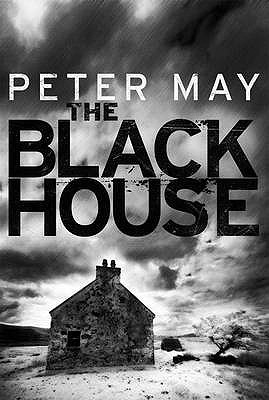
The Blackhouse (Lewis Trilogy, #1)

As I was reading The Blackhouse I wasn’t sure how to categorise it. There’s a murder and a mystery, an investigation by the police, but most of the book is not really a detective story, or a police procedural. It’s very slow reading and I had to lower my expectations of getting to grips with solving the murder mystery, because that is not the main element of this book and actually it’s not too difficult to work out who the murderer is.

I liked it very much, although I nearly stopped reading when I got to the description of the post mortem – I don’t like gruesome! It was a particularly brutal killing. But I’m glad I carried on and settled into the rhythm of the book. I loved the dramatic setting on the Isle of Lewis in the Outer Hebrides and wished this book had a map as the geography of the island plays an important part in the story (I see the last book in the trilogy, The Chessmen, does have a map!). But Peter May’s descriptions convey the atmosphere and bring the scenes to life beautifully and vividly.

Detective Fin Macleod is seconded from the Edinburgh police force to help with the investigation into the murder in the village of Crobost on Lewis because it bears a resemblance to a similar murder in Edinburgh and Fin was born and brought up on Lewis, so he knows the people and speaks Gaelic. As the story unfolds, the narrative splits in two – one, set in the present day, follows the murder investigation (told in the third person) and the other, (told in the first person) as Fin recalls the events of his childhood and remembers his friends – some of whom are still living on Lewis. These include his best friend, Artair, his first girlfriend, Marsaili and the school bully (and murder victim) Angus Macritichie, known as Angel.

Fin’s memories are not all happy ones and include the time he took part in the traditional annual two week trip to An Sgeir, the rock fifty miles north-north-east of Lewis to harvest the guga, or young gannets. Twelve men from Crobost still carried on the four hundred year tradition, living rough on the rock, clambering over the cliffs to snare and kill the young birds. It’s in passages like these, that are vital to the plot and yet seemingly buried in Fin’s mind, that May excels.

The book gathers pace as it reaches its conclusion, in comparison to the almost leisurely story-telling of the earlier sections, as the drama and tension increase. Fin not only uncovers the identity of the murderer but also discovers things about himself either that he hadn’t known before or had buried deep within his mind. Things that turn his world upside down for ever.

I liked it so much that almost immediately I began The Lewis Man, which so far is equally as good.

The Blackhouse by Peter May

I’ve had The Lewis Man, Peter May’s second book in his Lewis Trilogy since last year, but I haven’t read it yet as I’ve been meaning to read the trilogy in order. I’ve borrowed the first book, The Blackhouse, from the library and as I’ve just realised that it is due back next week – I thought I’d better start it.


It begins:

Prologue

They are just kids. Sixteen years old. Emboldened by alcohol, and hastened by the approaching Sabbath, they embrace the dark in search of love, and find only death.

A chilling beginning!

There is a murder, on the beautiful and desolate Isle of Lewis. Detective Inspector Fin MacLeod is sent to investigate. And there is a secret, something sinister lurking in the close-knit community. This is a mystery set in a place where ‘the past is ever near the surface, and life blurs into myth and history.’

It all looks very promising I think.

Book Beginnings ButtonBook Beginnings on Friday is hosted by  Gilion @ Rose City Reader.

New Rebus book out in November

Ian Rankin has announced the title of his new Rebus novel – Saints of the Shadow Bible, with Rebus back on the force.

It had to happen …

Malcolm Fox is investigating an old case from 30 years ago – one that Rebus worked on in a team that called itself ‘The Saints’ and swore a bond on something called a ‘Shadow Bible’.

We’ll have to wait until 7 November to find out if Rebus was a ‘Saint or a Sinner’.

Mrs McGinty's Dead by Agatha Christie

Mrs McGinty 001

I think Agatha Christie enjoyed herself writing Mrs McGinty’s Dead, especially the character of the crime novelist, Ariadne Oliver. It was first published in 1952 and written not long after the end of the Second World War, reflecting the difficulties of finding employment and the changes for the post-war impoverished middle classes.

Hercule Poirot is rather bored, missing his friend Hastings and finding that his days are revolving around his meals: ‘One can only eat three times a day. And in between there are gaps.’ Even a newspaper report about the result of the McGinty trial doesn’t interest him: ‘It had not been an interesting murder. Some wretched old woman knocked on the head for a few pounds. All part of the senseless brutality of these days.

It is only when Superintendent Spence comes to him for help, convinced of the innocence of James Bentley, convicted of the murder and under sentence of death that Poirot agrees to reinvestigate the case. And so it is that he goes to the village of Broadhinny, treating it as a ‘challenge to the little grey cells of my brain.’

He investigates in his usual way, with method and logic, first of all by considering the motive and then looking at the characters of Mrs McGinty and James Bradley. He decides that the answer is to be found in the personality of the murderer.There is a sense of urgency, as the death penalty was still in force and there is little time left before James Bentley is due to be hanged. Poirot talks to Mrs McGinty’s neighbours and the people she worked for as a charlady and eventually solves the mystery, but not without a second murder and nearly getting killed himself.

It’s a lively book, the characters and dialogue moving the plot along smoothly. There are plenty of surprises and a lot of misdirection before the killer is revealed. The clues are all there and although I did pick up on the main clue, I picked the wrong person as the murderer.

As always, for me, there is more to the book than the puzzle of the murders, and in Mrs McGinty’s Dead there are several things, including the view Agatha Christie paints of life in an English village not long after the war (usually the setting for a Miss Marple mystery), the mix of characters, working class and middle class, the very amusing picture of the dreadful Bed and Breakfast, run by Major Summerhayes and his wife, Maureen, where Poirot stays in Broadhinny, and then there is Ariadne Oliver.

In portraying Ariadne I think Agatha Christie is revealing her feelings about writing about Poirot, a character she described in her Autobiography as ‘hanging round my neck, firmly attached there like the old man of the sea.’ Ariadne’s detective is a Finn, Sven Hjerson and she has been writing about him for thirty years:

 How do I know why I ever thought of the revolting man? Why a Finn when I know nothing about Finland? Why a vegetarian? Why all the  idiotic mannerisms he’s got? …

And people even write and say how fond of him you must be. Fond of him? If I met that bony, gangling, vegetable-eating Finn in real life, I’d do a better murder than any I’ve invented. (page 201)

She also reveals her feelings about playwrights adapting her plays (and about money for her books!):

So far it’s pure agony. Why I ever let myself in for it I don’t know. My books bring me quite enough money – that is to say the bloodsuckers take most of it, and if I made more, they’d take more. But you have no idea of the agony of having your characters taken and made to say things that they never would have said, and do things that they never would have done. And if you protest, all they say is that it’s “good theatre”. (page 125)

She also wrote in her Autobiography about the ‘terrible suffering you go through with plays, owing to the alterations made in them.'(page 448). I find it reassuring that she didn’t like the way dramatisations changed her books, because I don’t either, although I do like David Suchet as Poirot and Joan Hickson as Miss Marple.

There are references to real life murder cases. On the Sunday before her death, Mrs McGinty had been reading the Sunday Comet, which had an article on women victims of tragedies from the past. Poirot looks at these in detail, concluding that one of the women might have been in Broadhinny when the murder took place.

A short while ago I wrote a guest post for Alyce’s blog At Home With Books about the best and the worst of Agatha Christie’s works. Trying to decide between her numerous novels which one is the best is an impossible task, but I think that Mrs McGinty’s Dead is up there amongst the best of them.

Best new-to-me crime fiction authors: a meme: January to March 2013

New to meKerrie at Mysteries in Paradise has set up this meme. To participate just write a post about the best new-to-you crime fiction authors (or all) you’ve read in the period of January to March 2013. After writing your post link HERE and visit the links posted by other participants to discover even more books to read.

So far this year I’ve read crime fiction books by 2 new-to-me authors, both books being the first in a series:

  •  The Redemption of Alexander Seaton by Shona MacLean  – a fantastic book, historical crime fiction, full of atmosphere and well-drawn characters. A book with the power to transport me to another time and place. I hope to read more of MacLean’s books. I found this book by accident, as it were, in my local library.
  • Death at Wentwater Court by Carola Dunn –  the first in the Daisy Dalrymple series.  It’s a quick and easy read, a mix of Agatha Christie and PG Wodehouse, set in 1923 at the Earl of Wentwater’s country mansion, Wentwater Court. I first came across the Daisy Dalrymple books in other book blogs. This is an enjoyable book, but not one to overtax the brain, but interesting enough to get me reading more in the series.

Books Read in March 2013

After a slow start to the year I read 10 books in March, so doubling the total for the year. The books I enjoyed the most are The Hand That First Held Mine by Maggie O’Farrell and The Glass Room by Ann Cleeves.

The full list is (with links to my posts on the books):

  1. Wildwood: a Journey Through Trees by Roger Deakin (Non Fiction)
  2. The Hand That First Held Mine by Maggie O’Farrell
  3. Quiet: the Power of Introverts in a World That Can’t Stop Talking by Susan Cain (review copy) (Non Fiction)
  4. The Kashmir Shawl by Rosie Thomas
  5. The Sleeping Policeman* by Andrew Taylor (library book)
  6. Small Kindnesses by Fiona Robyn (Kindle) (from TBR books)
  7. Airs and Graces by Erica James (borrowed
  8. The Glass Room* by Ann Cleeves (library book)
  9. The Hobbit by J R R Tolkien (Kindle) (from TBR books)
  10. Mrs McGinty’s Dead* by Agatha Christie (library book)

Of the 10 books, just 3 are crime fiction (marked with *) and of these my Crime Fiction Book of the Month is The Glass Room by Ann Cleeves.

Notes on the books without reviews:

  •  The Kashmir Shawl by Rosie Thomas – romantic historical fiction set in the 1940s and the present day with a predictable ending. Mair Ellis goes to Kashmir to find more about a shawl found in her grandmother’s belongings. The story switches between Mair’s journey and that of Nerys Watkins, her grandmother, a missionary’s wife, living in India during the Second World War .
  • Small Kindnesses by Fiona Robyn – an interesting gentle book, full of reminiscences as Leonard Mutch, a widower discovers his wife had a secret she kept from him for forty years. 
  • Airs and Graces by Erica James – romantic fiction, a predictable story that doesn’t tax the brain.  Ellen, a divorcee struggles to decide who she should marry Duncan, a wealthy lawyer or Matthew an artist.