Crime Fiction Alphabet: Letter Y

There are just two letters left in Kerrie’s Crime Fiction Alphabet series. This week it is the letter Y and I’ve chosen Dead in the Morning which was first published in 1970 and is the first of Margaret Yorke’s Patrick Grant mysteries.

Set in Fennersham, an English village this is about a family dominated by old Mrs Ludlow. When Mrs Mackenzie, the housekeeper is found dead it seems that she was killed by mistake and the intended victim was in fact Mrs Ludlow.

Dr Patrick Grant, Fellow and Dean of St Mark’s College Oxford and lecturer in English  is staying in the same village with his sister Jane. Patrick is writing a book about unsolved mysteries from the past and as his sister says he

… is the most inquistive man ever to be born. … He looks for mysteries where there are none and is always poking his nose into other people’s business. (page 42)

He knows Timothy Ludlow, Mrs Ludlow’s grandson, who is a student at St Mark’s, so when he sees Phyllis Medhurst, Mrs Ludlow’s daughter in the chemist collecting her mother’s medicine his interest in the family is aroused. Jane tells him that Mrs Ludlow is a 

… regular tartar, from all accounts. … She’s  paralysed, or something, spends her days in a wheel chair and leads them all the devil of a dance, according to gossip. (pages 26-7)

The rest of the family comprise Cathy, Mrs Ludlow’s granddaughter, Gerald, Cathy’s father and his new wife Helen (Cathy’s mother died ten years earlier when Cathy was 8), and his brother Derek, his wife Betty and two sons, Timothy and Martin.

Mrs Ludlow, tired after the family get together to meet Helen, has her meal in bed, chicken fricassee and lemon meringue pie, but doesn’t eat the pie. The next morning Mrs Mackenzie is found dead in her room and the coroner’s verdict is that she died as a result of eating the portion of lemon meringue pie that Mrs Ludlow had left. It had been laced with barbiturates.

Cathy and Jane are friends and so Patrick manages to work his way into the family and discovers all sorts of family secrets. He thinks it is a question of character and wonders whether it is a crime of passion or of greed.

There are plenty of red herrings along the way but I’d worked it out before the end, which is predictable. Nevertheless I wanted to read on to find out the why rather than the who and that wasn’t so predicitable. All in all, an enjoyable book.

Crime Fiction Alphabet – X is for A Loyal Character Dancer by Qiu Xiaolong

Qiu Xiaolong was born in Shanghai and was a member of the Chinese Writers’ Association, publishing poetry, translations and criticism in China. Since 1989 he has lived in the United States, his work being published in many literary magazines and anthologies. His first crime novel, Death of Red Heroine, won the Anthony Award for Best First Crime Novel. A Loyal Character Dancer is his second book featuring Chief Inspector Chen Cao, of the Shanghai Police Bureau.

Like Qiu Xiaolong, Chen is a member of the Chinese Writers’ association and he writes poetry (reminding me of PD James’s Adam Dalgleish). It was not his desire to become a policeman. He is also a gourmet and the book contains many tantalising descriptions of Chinese food – for example:

He ordered a South Sea bird’s nest soup with tree ears, oysters fried in spiced egg batter, a duck stuffed with a mixture of sticky rice, dates, and lotus seed, a fish steamed live with fresh ginger, green onions, and dried pepper, … (page 120-121).

In this book he has two crimes to deal with – the murder of an unknown man found in Bund Park, a park celebrated for “its promenade of multi-colored flagstones, a long curved walkway raised above the shimmering expans of water which joined the Huangpu and Suzhou rivers.” The man was in his forties, dressed in silk pajamas and he had been hacked more than a dozen times with a sharp, heavy weapon.

His second case is to investigate the disappearance of Wen Liping, the wife of Feng Dexiang, a crucial witness in an illegal immigrant case in Washington. The American and Chinese governments have agreed to a joint investigation to find Wen and Chen is assigned to work with Inspector Catherine Rohn, of the US Marshall’s Office.

I loved this book. There is a lot in it about life in China, the impact of the Cultural Revolution and the country itself. There is a very strong sense of place and this had me reaching for my sister’s books on China (she visited a few years ago before she died) to see photos of the locations and read more about life in China.

Having to explain things to Catherine made it easy for Qiu to pack in lots of information that otherwise could have seemed intrusive. For example as well as quoting poetry he also quotes from Confucius and explains literary references. Wen was a beautiful young woman, forced to leave her home to be “re-educated” when she was only sixteen during the Cultural Revolution. She had become a Red Guard cadre and a member of the song-and-dance ensemble, dancing the loyal character dance (hence the title of the book). Chen explains to Catherine that although dancing was not then allowed in China, this was particular form of dancing was allowed :

…  dancing with a paper-cut out of the Chinese character of Loyalty or with a red paper heart bearing the character, while making every imaginable gesture of loyalty to Chairman Mao. (page 84)

Chen is an enigmatic man, skilled at working the system. As a chief inspector he is also responsible for preserving Shanghai’s image. Keeping and saving face is very important. His boss, Li, the Party Secretary is more concerned with making sure that Catherine has a satisfactory stay in China, seeing only the good things than with carrying out the investigation into Wen’s disappearance. He does not like it when Chen and Catherine discuss the living conditions of the poor, China’s birth control policy and the question of illegal immigrants to the US. However, Chen and Catherine make a good partnership and with the help of Chen’s assistant, Dectective Yu get to the bottom of the mysteries of the murder and Wen’s disappearance, despite the activity of rival triad gangs.

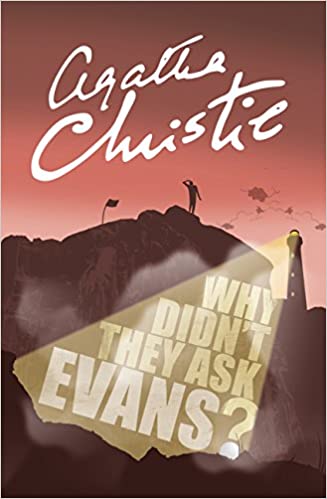
Crime Fiction Alphabet W is for Why Didn’t They Ask Evans?

I’m returning to Agatha Christie to illustrate the letter W in Kerrie’s Crime Fiction Alphabet series, with Why Didn’t They Ask Evans? The copy I read is one of the Collected Works series with the original illustrations by Patrick Couratin and Sylvia Dausset. Why Didn’t They Ask Evans? was first published in 1934.

Why didn't they ask evans

The book begins with Bobby Jones playing golf with Dr Thomas on a golf course on a misty day by the sea. They find a dying man, who had fallen off a cliff. He has no identification on him, just a photo of a young woman that Bobby finds in his pocket. At the inquest Mrs Cayman said it was a photograph of her and that she was the dead man’s sister.

Bobby tells Mr and Mrs Cayman her brother’s last words, which apparently are meaningless and of no importance.Then Bobby is drugged with enough morphia to kill him (he survives) and he realises that the photo in the dead man’s pocket was not Mrs Cayman.  Frankie, (aka Lady Frances Derwent), his aristocratic friend decides that the dead man must have been pushed over the cliff and the killer is determined to kill Bobby too. She and Bobby then set out to discover the dead man’s true identity.

Neither Poirot, nor Miss Marple feature in this book. Bobby and Frankie solve the mystery with a little help from the police in the form of Inspector Williams. The novel as a whole is light-hearted with staged accidents, as Bobby and Frankie, a self-confident and rather bossy young woman relish the adventure of it all, despite being bound and gagged by the villain. There are disguises and subterfuges throughout, drug addicts, an American heiress, a sinister doctor with a questionable sanitorium, suicides and a charming  “ne’er-do-weel”. Bobby says:

You can’t mix up too many different sorts of crimes. (page 59)

But Agatha Christie manages it admirably.

Crime Fiction Alphabet: V is for A Fatal Inversion by Barbara Vine

Kerrie’s Crime Fiction Alphabet series moves towards the end of the alphabet and has now reached the letter ‘V’.

A Fatal Inversion was first published in 1987 and was reissued in 2009 by Penguin Books.

Although about a group of not very likeable characters I was drawn into the world of this mystery. In 1976 Adam, a university student of 19 inherited Wyvis Hall from his great-uncle. He stayed there for a while that hot summer with a group of young people. Something tragic and terrible happened which led to them leaving the house and eventually Adam sold it. Then ten years later the current owners, whilst burying their pet dog in the animal cemetery in the woods, find the bones of a young woman and a baby. The police are seeking previous owners of the Hall to identify the bodies.

It’s a complicated plot told in flashbacks, seen from mainly three of the characters’ viewpoints – Adam, his friend, Rufus, a medical student, and Shiva, a British Indian. Shiva and his friend Vivian had thought they were joining a commune whereas with no money Adam was just keen to get others to contribute. They are reduced to selling his uncle’s silver for food and drugs and after Zosie’s arrival to stealing to support themselves. I thought the characterisation was good and the setting excellent – a grand old house, out in the Suffolk countryside surrounded by dark, dense and menacing pine woods, ‘the kind of place you saw in story-book illustrations or even in your dreams and out of which things were liable to come creeping.’

I wasn’t sure at first who the victims were, but the killer soon becomes obvious. I thought it a clever book, with clues dropped casually, so that I had to read it carefully. The plot covers a number of issues – family relationships, friendship, loyalty, race and class discrimination, the consequences of our actions and above all the nature of evil and guilt.  The ending is most satisfying, such a neat inversion, I thought.

Crime Fiction Alphabet: U is for Umberto Eco

This week’s letter in Kerrie’s Crime Fiction Alphabet series is  ‘U’.

I’ve chosen Umberto Eco, an Italian writer of post-modern fiction, full of allusions and references, using puzzles, playing with language, words and symbols.

I’ve read  The Name of the Rose twice, some years ago now.It is a fantastic historical crime mystery novel set in a Franciscan monastery in 14th century Italy. William of Baskerville and his assistant Adso are sent to the monastery to investigate a series of murders. I loved this book, which has so much of what I enjoy in reading – historical setting, the pursuit of truth behind the mystery and the meaning of words, symbols and ideas and a great detective story all combined with religious controversies and theories. William is an expert in deduction, and needs all his skills to work his way through the monastery’s labyrinthine library:

The library is a great labyrinth, sign of the labyrinth of the world. You enter and you do not know whether you will come out. … And in our midst someone has violated the ban, has broken the seals of the labyrinth … (pages 158 & 159)

I read Foucault’s Pendulum after reading The Name of the Rose, but struggled at first to read it. It’s immensely detailed, slow to get going and in parts it is boring. But I persevered and in the end I found it fascinating, although I do prefer The Name of the Rose. Again it’s a mystery thriller this time concerned with books and words, mixed in is a coded message about a Templar plan to tap a mystic source of power. It features the Knights Templar, the Crusades, the bloodline of Christ, the Rosy Cross etc, etc  so that when I read Dan Brown’s Da Vinci Code I immediately thought back to this book, but of course it’s nowhere near the same!

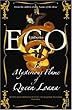
I have one other book by Eco – The Mysterious Flame of Queen Loana. I haven’t read it yet. From the back cover:

Yambo, a rare-book dealer, has suffered a bizarre form of memory loss. He can remember every book he has ever read but nothing about his own life.

In an effort to retrieve his past, he withdraws to his old family home and searches through boxes of old newspapers, comics, records, photo albums and diaries kept in the attic.

Flipping through it, it doesn’t look as difficult as Foucault’s Pendulum and there are colour illustrations of the books and newspapers etc that Yambo finds in the attic. As a book-lover this appeals to me.

Crime Fiction Alphabet: T is for The Franchise Affair by Josephine Tey

I’ve read two books by Josephine Tey – The Daughter of Time and now The Franchise Affair. Josephine Tey was a pseudonym for Elizabeth Mackintosh(1896 – 1952). She was a Scottish author who wrote mainly mystery novels.

I read The Daughter of Time a few years ago and thought it was an excellent book, a mix of historical research and detective work. Inspector Alan Grant is in hospital and to keep his mind occupied he decides to discover whether Richard III really did murder his nephews – the Princes in the Tower.

Franchise Affair001When I saw this hardback secondhand copy of The Franchise Affair on sale last year (on a hospital book sale trolley, for £1) I had to buy it and have been going to read it ever since. So as Kerrie’s Crime Fiction Alphabet series has reached the letter T I thought now was the right time to read it.

It is also an excellent book, one I devoured and enjoyed immensely. It was first published in 1948 and it’s set in a post Second World War England reflecting the social attitudes of its time. It’s actually based on a real case from the 18th century of a girl who went missing and later claimed she had been kidnapped.

The Franchise is a “flat white house“, isolated on a road out of the town of Milford, surrounded by a “high solid wall of brick, with a large double gate, of wall height” – “the iron lace of the original gates had been lined, in some Victorian desire for privacy, by flat sheets of iron, and the wall was too high for anything inside to be visible”, except for a distant view of roof and chimneys“. It’s where Marion Sharpe and her mother live.

DI Grant is just a minor character in this story, the main investigator is local solicitor, Robert Blair, of Blair, Hayward and Bennet. He doesn’t normally deal with criminal cases but Marion appeals to him for help because she and her mother are accused of kidnapping Betty Kane, a girl of fifteen, of holding her prisoner for a month in their attic, and of beating her unless she agreed to work for them.  She’d escaped one night and arrived back home, covered in bruises.

Even though Betty Kane is able to describe them,  their house and its contents accurately the Sharpes completely deny her story. Reluctantly Robert agrees to give legal advice and is then drawn into investigating what had happened to Betty during the time she claimed she had been held captive, becoming convinced of their innocence. His life is completely changed. The problem is that it is possible to believe Betty’s story and also to find it a complete invention from beginning to end.

Betty is described as an innocent with baby blue eyes, intelligent and truthful – how could she have invented such a story? Marion and Mrs Sharpe on the other hand are a bit odd, a bit eccentric, keeping themselves to themselves and distrusted by the locals. Mrs Sharpe is intimidating – Robert thinks  she is “capable of beating seven different people between breakfast and lunch any day of the week“, but he rather likes Marion’s “habit of mockery“. In fact he is rather smitten by Marion.

Then the press get hold of the story and public opinion is outraged at the tale of Betty’s ordeal. The case goes to trial as the Sharpes are vilified and their house attacked. The letters to the newspaper shock Robert with their contents:

… he marvelled all over again at the venom that these unknown women had aroused in the writers’ minds. Rage and hatred spilled over on to the paper; malice ran unchecked through the largely illiterate sentences. It was an amazing exhibition. And one of the oddities of it was that the dearest wish of so many of these indignant protestors against violence was to flog the said women within an inch of their lives. (page 103)

But worse is to come as the trial comes to an end and hatred results in actions. I found it an irresistable book. I just had to know what happens, all the time convinced of the Sharpes’ innocence but somehow wondering if they really were guilty. I liked Tey’s style of writing, straight forward, with touches of irony. Her characters are believable, well developed and unforgettable. The locations are well described, although as I used to live near some of them I may be biased there.

Now I want to read more of Josephine Tey’s books. She didn’t write many, but I hope to read at least some of these (list copied from Wikipedia):

  • The Man in the Queue also known as Killer in the Crowd (1929)
  •  A Shilling for Candles (1936) (the basis of Hitchcock’s 1937 movie Young and Innocent)
  • Miss Pym Disposes (1946)
  • Brat Farrar [or Come and Kill Me] (1949)
  • To Love and Be Wise (1950)
  • The Singing Sands (1952)
  • Kif: An Unvarnished History (1929) (writing as Gordon Daviot)
  • The Expensive Halo (1931)
  • The Privateer (1952)
  • Claverhouse (1937) (writing as Gordon Daviot) (a life of the 17th-century cavalry leader John Graham, 1st Viscount of Dundee)