The Classics Club Spin Result

The spin number in The Classics Club Spin is number …

20

which for me is The Invisible Man by H G Wells. The rules of the Spin are that this is the book for me to read by 3rd March 2024
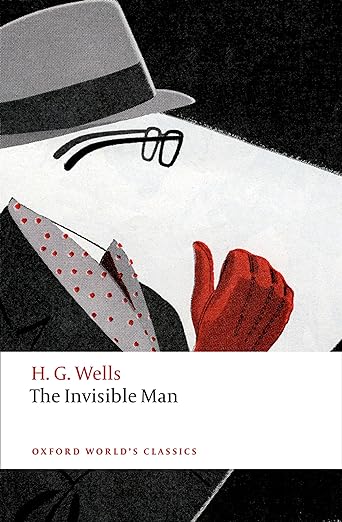
Synopsis from Amazon

‘The man’s become inhuman … He has cut himself off from his kind. His blood be upon his own head.’

One night in the depths of winter, a bizarre and sinister stranger wrapped in bandages and eccentric clothing arrives in a remote English village. His peculiar, secretive activities in the room he rents spook the locals. Speculation about his identity becomes horror and disbelief when the villagers discover that, beneath his disguise, he is invisible.

Griffin, as the man is called, is an embittered scientist who is determined to exploit his extraordinary gifts, developed in the course of brutal self-experimentation, in order to conduct a Reign of Terror on the sleepy inhabitants of England. As the police close in on him, he becomes ever more desperate and violent.

In this pioneering novella, subtitled ‘A Grotesque Romance’, Wells combines comedy, both farcical and satirical, and tragedy – to superbly unsettling effect. Since its publication in 1897, The Invisible Man has haunted not only popular culture (in particular cinema) but also the greatest and most experimental novels of the twentieth century.

I was hoping I’d get one of the shorter books on my list – this one is just that at 192 pages. I’m looking forward to reading it.

Did you take part in the Classics Spin? What will you be reading?
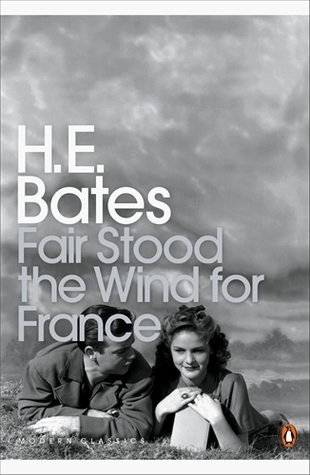
Fair Stood the Wind for France by H E Bates

Synopsis

When John Franklin brings his plane down into Occupied France at the height of the Second World war, there are two things in his mind – the safety of his crew and his own badly injured arm. It is a stroke of unbelievable luck when the family of a French farmer risk their lives to offer the airmen protection. During the hot summer weeks that follow, the English officer and the daughter of the house are drawn inexorably to each other…

My thoughts:

I bought Fair Stood the Wind for France by H E Bates in October 2018 when it caught my eye in Barter Books in Alnwick, mainly because of the title, which appealed to me. I knew nothing about it, but as it’s one of Penguins Modern Classics I added it to my Classics Club booklist. It’s my Classics Club Spin book for December, which is why I’ve read it recently.

I’m in two minds about this book. It begins really well and I was totally gripped by the first part of the book describing Franklin’s flight, with his crew of four sergeants, over France then the Alps and on to Italy. On his return flight when they were over France, they began to dive, rapidly losing height and he knew that the port engine had gone. The air screw (that’s a propeller) had broken, meaning they wouldn’t make it back to England and they crash landed somewhere in the countryside. They thought they were about west-north-west of the Vosges. From then onwards the story covers the period when Franklin whose arm had been very badly injured was cared for by Francoise and her family, hidden in their farmhouse. He falls in love with Francoise and she agrees to help him escape and marry him when they reach England.

But from then on as they made their way through Vichy France and eventually to Marseilles I felt the story dragged and I lost much of the interest I had had in the first part. Even though they encountered much danger and the tension rose, the action slowed down too much. I was relieved to finish the book.

As it was written and initially serialized weekly in the Saturday Evening Post from March 18 to May 6, 1944, and in Woman’s Journal (May-July 1944), it does give a contemporaneous account of the war portraying all dangers and the hardships they endured. It is really an extended short story, a love story, but one that didn’t particularly convince me. However, it does contain some beautiful descriptions of the French countryside and I loved the drama of the first part of the book.

  • Published by Penguin in paperback it’s also available as an e-book, published in 2005.
  • My Rating: 3.5 stars

The Classics Club Spin Result

The spin number in The Classics Club Spin is number …

2

which for me is Fair Stood the Wind for France by H E Bates. The rules of the Spin are that this is the book for me to read by Sunday the 3rd December 2023.

Synopsis from Amazon

When John Franklin brings his plane down into Occupied France at the height of the Second World war, there are two things in his mind – the safety of his crew and his own badly injured arm. It is a stroke of unbelievable luck when the family of a French farmer risk their lives to offer the airmen protection. During the hot summer weeks that follow, the English officer and the daughter of the house are drawn inexorably to each other.

I’m looking forward to reading it.

Did you take part in the Classics Spin? What will you be reading?
The Classics Club Spin Result

The spin number in The Classics Club Spin is number …

18

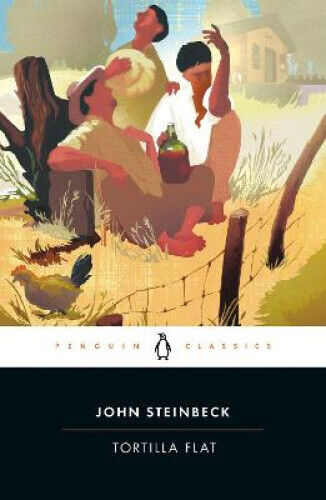
which for me is Tortilla Flat by John Steinbeck. The rules of the Spin are that this is the book for me to read by 30 April 2023.

Synopsis from Amazon

Steinbeck’s first major critical and commercial success, TORTILLA FLAT is also his funniest novel. Danny is a paisano, descended from the original Spanish settlers who arrived in Monterey, California, centuries before. He values friendship above money and possessions, so that when he suddenly inherits two houses, Danny is quick to offer shelter to his fellow gentlemen of the road. Their love of freedom and scorn for material things draw them into daring and often hilarious adventures. Until Danny, tiring of his new responsibilities, suddenly disappears…

I’m pleased about this result as I’ve enjoyed reading other books by John Steinbeck – my favourite is Cannery Row. So I’m expecting this to be good – and hope I won’t be disappointed.

Did you take part in the Classics Spin? What will you be reading?
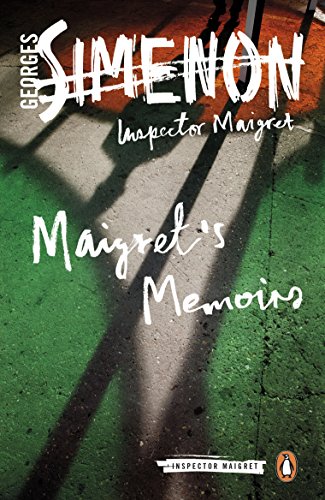
Maigret’s Memoirs by Georges Simenon Translated by Howard Curtis

Week 2 in Novellas in November is Novellas in translation and a Maigret book is an obvious choice for me. But Maigret’s Memoirs is not your usual Maigret mystery. This a memoir written by Simenon writing as his fictional character, Maigret.

Penguin Classics| 2016| 160 pages| My Own Copy| 4*

I can still see Simenon coming into my office the next day, pleased with himself, displaying even more self-confidence, if possible, than before, but nevertheless with a touch of anxiety in his eyes.’

Maigret sets the record straight and tells the story of his own life, giving a rare glimpse into the mind of the great inspector – and the writer who would immortalise him.

‘One of the greatest writers of the twentieth century . . . Simenon was unequalled at making us look inside, though the ability was masked by his brilliance at absorbing us obsessively in his stories’ Guardian

‘A supreme writer . . . unforgettable vividness’ Independent

The original French version of Maigret’s MemoirsLes Mémoires de Maigret, was first published in 1950. An English translation was later published in Great Britain in 1963. It is unlike any of the other Maigret novels. It’s a fictional autobiography by Georges Simenon writing as Maigret, beginning in 1927 or 1928 when Maigret and Simenon, calling himself Georges Sim, first ‘met’. I don’t recommend reading if you haven’t read some of the Maigret mysteries.

I enjoyed it – it’s a quick entertaining read as Maigret looks back to his first ‘meeting’ with Sim. He fills in some of the background of his early life and talks about his father and how he first met his wife, Louise. Simenon had written 34 Maigret novels before this one and Maigret took this opportunity to correct some of Simenon’s inaccuracies. I recognised some of the books – I’ve read 11 of his first 34 books.

One of the things that irritated Maigret the most was Simenon’s habit of mixing up dates, of putting at the beginning of his career investigations that had taken place later and vice versa. He’d kept press cuttings that his wife had collected and he had thought of using them to make a chronology of the main cases in which he’d been involved. And he also considered some details his wife had noted – concerning their apartment on Boulevard Richard Lenoir, pointing out that in several books Simenon had them living on Place des Vosges without explaining why. There were also times when he retired Maigret even though he was still several years away from retirement. Madame Maigret was also bothered by inaccuracies concerning other characters in the books and by Simenon’s description of a bottle of sloe gin that was always on the dresser in their apartment – that was in actual fact not sloe gin but raspberry liqueur given to them every year by her sister-in-law from Alsace.

Simenon drops facts and information piecemeal in his Maigret books and one thing I particularly like in Maigret’s Memoirs is that it is all about Maigret, but I did miss not having a mystery to solve.

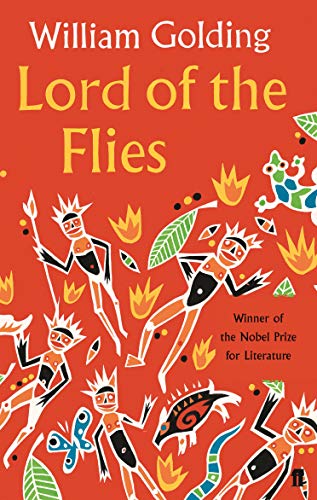
Lord of the Flies by William Golding: a Mini Review of a Short Classic

The first weekly theme for Novellas in November is short classics and I read Lord of the Flies, William Golding’s 1954 novel about a group of boys stranded on a desert island. It was his first novel and it certainly packs a punch. It was described as ‘A post-apocalyptic, dystopian survivor-fantasy … [A novel] for all time … A cult classic.’ Guardian. It’s a quick read of just 183 pages.

What are we? Humans? Or animals? Or savages? What’s grown-ups going to think? Going off-hunting pigs-letting fires out-and now!

A plane crashes on a desert island. The only survivors are a group of schoolboys. By day, they explore the dazzling beaches, gorging fruit, seeking shelter, and ripping off their uniforms to swim in the lagoon. At night, in the darkness of the jungle, they are haunted by nightmares of a primitive beast. Orphaned by society, they must forge their own; but it isn’t long before their innocent games devolve into a murderous hunt …

I thought I’d read this book years ago. But as soon as I began reading I realised I hadn’t read it – it’s one of those books you think you’ve read because you know the basic outline of what happens.

It is frighteningly believable. What at first seemed to the boys as a great adventure – stranded on a desert island, leaving them free to play all day without any annoying interference from adults, soon descended into a sinister nightmare scenario. They elected a leader, Ralph who initially made friends with Jack, the leader of a group of choirboys. But soon the two fell out as Jack, disappointed at not being chosen as leader, tried to take over – and a battle for power followed.

Ralph wanted to make sure they were seen if a ship passed the island and organised the boys to keep a fire going as a smoke signal. But when one of the younger boys thought he saw a beast in the jungle panic set in. Jack made himself the leader of the hunters, promising to hunt and kill the beast band the boys let the fire go out as they joined the hunt. Things got completely out of hand ending in chaos. It is absolutely gripping and very dark, showing the savage side of human nature.