Sunday Selection: Sisters

One of my aims this year is to reduce my massive backlog of unread books, hence the reason for joining the Mount TBR Reading Challenge.  I’m not doing too badly as so far I’ve read 19, but it’s still only a drop in the ocean. In June I wrote about some of the books I’ve owned for more than a year and today I’m looking at some more the books on the list – in some cases I’ve had these books for several years! It’s about time I read at least one of these sometime soon. I don’t like to plan too far ahead what I’m going to read but I like to have some titles in mind.

When I looked through my books I realised that I was picking out books about SISTERS:

First up for consideration are two non fiction books (the blurbs are extracts from Amazon/Goodreads):

The Sisters Who Would Be Queen: The tragedy of Mary, Katherine and Lady Jane Grey by Leanda de Lisle – this is the story of the tumultuous lives of Lady Jane Grey, known as the ‘Nine-Day Queen’ and her sisters. I’ve had this book for 3 years. I was full of enthusiasm when I first bought it because I’d been reading novels about the Tudor period and thought I’d balance them with non fiction.
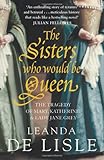
Lady Jane Grey is an iconic figure in English history. Misremembered as the ‘Nine Days Queen’, she has been mythologized as a child-woman destroyed on the altar of political expediency. Exploding the many myths of Lady Jane’s life and casting fresh light onto Elizabeth’s reign, acclaimed historian Leanda de Lisle brings the tumultuous world of the Grey sisters to life, at a time when a royal marriage could gain you a kingdom or cost you everything.

The Mitfords: Letters Between Six Sisters by Charlotte Mosley – a selection of unpublished letters between the Mitford sisters – Nancy, Pamela, Diana, Unity, Jessica and Deborah. I’ve had this book for 5 years! I think two of the reasons I’ve not read it before now is that it is so long – over 800 pages and it’s in a very small font.
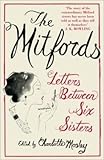
Carefree, revelatory and intimate, this selection of unpublished letters between the six legendary Mitford sisters, compiled by Diana Mitford’s daughter-in-law, is alive with wit, passion and heartbreak. The letters chronicle the social quirks and political upheavals of the twentieth century but also chart the stormy, enduring relationships between the uniquely gifted ‘and collectively notorious Mitford sisters’. 

And then some novels featuring sisters:

Bunner Sisters by Edith Wharton. I’ve not had this one for that long – just since last November. I down loaded it on my Kindle because it’s a free book and I thought maybe I should try another book by Edith Wharton, having failed to finish The House of Mirth. At the time I was not in the mood for it.

In the days when New York’s traffic moved at the pace of the drooping horse-car, when society applauded Christine Nilsson at the Academy of Music and basked in the sunsets of the Hudson River School on the walls of the National Academy of Design, an inconspicuous shop with a single show-window was intimately and favourably known to the feminine population of the quarter bordering on Stuyvesant Square. It was a very small shop, in a shabby basement, in a side-street already doomed to decline; its fame was so purely local that the customers on whom its existence depended were almost congenitally aware of the exact range of “goods” to be found at Bunner Sisters’.

Her Fearful Symmetry by Audrey Niffeneger – I’m not sure how long I’ve had this book, but it’s about three years. I’m not sure I’ll like it as I wasn’t keen on The Time Traveler’s Wife, but it was the time travelling aspect that irritated me with that book – the constant switching backwards and forwards in time. This one looks a bit different.
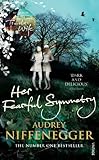
Set in and around Highgate Cemetery in London. Julia and Valentina are semi-normal American teenagers with an abnormally intense attachment to one another. The girls move to their aunt’s flat, which borders Highgate Cemetery in London and as the girls become embroiled in the fraying lives of their aunt’s neighbors, they also discover that much is still alive in Highgate, including–perhaps–their aunt, who can’t seem to leave her old apartment and life behind.

Rise and Shine by Anna Quindlen, a book I’ve had for six years! I bought it because I’d enjoyed Blessings a satisfying but sad novel about an abandoned baby. 

A novel about two sisters, the true meaning of success, and the qualities in life that matter most. It’s an otherwise ordinary Monday when Meghan Fitzmaurice’s perfect life hits a wall. A household name as the host of Rise and Shine, the country’s highest-rated morning talk show, Meghan cuts to a commercial break but not before she mutters two forbidden words into her open mike. 

In an instant, it’s the end of an era, not only for Meghan, who is unaccustomed to dealing with adversity, but also for her younger sister, Bridget, a social worker in the Bronx who has always lived in Meghan’s long shadow.

I’ve nearly finished reading Third Girl by Agatha Christie, also one of my to-be-read books, so now all I have to do is decide which book to read next. At the moment I’m leaning towards Her Fearful Symmetry, despite my misgivings about The Time Traveler’s Wife.

Wondrous Words

wondrous2Wondrous Words Wednesday is a weekly meme run by Kathy at Bermuda Onion’s Weblog where you can share new words that you’ve encountered or spotlight words you love.

These are some words from Barnaby Rudge by Charles Dickens:

Usquebaugh – ‘what does my noble captain drink – is it brandy, rum, usquebaugh?’

This is obviously a drink of some sort, but I didn’t know what. Usquebaugh is Gaelic meaning “Water of Life”, phonetically it became “usky” and then “whisky” in English.

Flip – ‘every man … put down his sixpence for a can of flip, which grateful beverage was brewed with all dispatch, and set down in the midst of them on the brick floor; both that it might simmer and stew before the fire, and that its fragrant steam, rising up among them, and mixing with the wreaths of vapour from their pipes, might shroud them in a delicious atmosphere of their own and shut out all the world.’

Another intoxicating drink, I thought. Flip is eggnog, a drink of eggs and hot beer or spirits. I was interested to see it came in a can! Canning food was invented by a French chef in 1795 to preserve military food for Napoleon’s army. Barnaby Rudge, although written in 1839-41 when sealed cans similar to those we use now would have been in use, is set in 1775 and 1780 so Dickens was probably using the word to mean a container for holding liquid – or it’s an anachronism?

Poussetting – ‘Joe Willet rode leisurely along in his desponding mood, picturing the locksmith’s daughter going down long country dances, and poussetting dreadfully with bold strangers – which was almost too much to bear ...’

Poussette is simply a figure in country dancing when the couples hold hands and move up or down the set changing places with the next couple. And by the way Joe describes it he was thinking the locksmith’s daughter was being too familiar with strangers.

Barnaby Rudge by Charles Dickens

I knew absolutely nothing about Barnaby Rudge: a Tale of the Riots of ‘Eighty before I started to read it. It’s not a book that I’ve seen dramatised. But whilst reading (very slowly) Claire Tomalin’s biography, Charles Dickens A Life I came across the following information. In May 1836, the year that Dickens, then 24, married Catherine Hogarth on 2 April, he agreed he would write a three volume novel, called Gabriel Vardon by November. But by November he was trying to withdraw from the agreement, due to his commitments in writing Pickwick and Sketches by  Boz. He began writing Gabriel Vardon in 1839 and it was only in February 1841 that its serialisation began. By then he had renamed it as Barnaby Rudge.

It’s a murder mystery as well as a historical novel, mainly concerning the events surrounding the Gordon Riots of 1780. The Riots began in protest to the Catholic Relief Act of 1778, which granted Roman Catholics exemption from taking the religious oath when joining the British Armed Forces and granted them a few liberties, previously denied to them. Led by Lord George Gordon the protests quickly turned violent, Parliament was invaded and Newgate prison was burned to the ground. I was rather surprised that Tomalin gave away most of the plot in describing Barnaby Rudge and gave away the identity of the murderer. I don’t intend to do the same as it spoilt the mystery for me.

Barnaby Rudge begins in 1775, five years before the riots as a group of customers in the Maypole Inn in the village of Chigwell, on the borders of Epping Forest and about 112 miles from London, recollect the murder of Reuben Haredale, the owner of The Warren, 22 years earlier to the day. His steward, a Mr Rudge was found months later, stabbed to death.The murderer had never been discovered. Reuben’s brother Geoffrey had lived at The Warren with his niece, Emma ever since.

From then on the book becomes much more complicated with many characters and sub-plots. There is the love story of Emma, a Catholic and Edward Chester, the son of Sir John Chester, a Protestant and opponent of her uncle, who is dead against their marriage. Also crossed in love are Joe Willet, whose father John Willet is the landlord of the Maypole and the captivating Dolly Varden whose father Gabriel Vardon is a locksmith. Barnaby Rudge is a simple young man, living with his mother. His pet raven, Grip goes everywhere with him. He’s a most amazing bird who can mimic voices and seems to have more wits about him than Barnaby. Grip is based on Dickens’s own ravens, one of whom was also called Grip. (Edgar Allen Poe was inspired by Dickens’s portrait to write his poem The Raven).

It’s a long book and in parts loses its impetus, but picks up when Dickens jumps five years forward into the Riots and I was taken aback by his vivid and dramatic descriptions of the violence and horror:

If Bedlam gates had been flung wide open, there would not have issued forth such maniacs as the frenzy of that night had made. … There were men who cast their lighted torches in the air, and suffered them to fall upon their hands and faces, blistering the skin with deep unseemly burns. There were men who rushed up to the fire, and paddled in it with their hands as if in water; and others who were restrained by force from plunging in, to gratify their deadly longing. On the skull of one drunken lad – not twenty, by his looks – who lay upon the ground with a bottle to his mouth, the lead from the roof came streaming down in a shower of liquid fire, white hot; melting his head like wax.

And then there is the attack on Newgate prison, the release of the prisoners and finally the scene as the mob set fire to the prison, scenes that rival the storming of the Bastille in A Tale of Two Cities.

By the end of the novel the murderer is revealed and all the plot strands are completed. There are a number of themes running through the novel – the relationship between fathers and sons, the position of authority, justice and the question of punishment for crime, and religious conflict. Dickens paints a picture of London, the dirt and poverty, the terrible condition of the roads, the perils of footpads and highwaymen which is in contrast to the countryside that still at that period surrounded London making it a cleaner, purer place to live in. There are detailed descriptions of the old inn, the Maypole and Vardon’s house and shop with their individual irregularities and strangeness.

And alongside all this are the characters, the restless innocent that is Barnaby, his over-protective and distracted mother, the melodramatic servant Miggs, the pure evil of Hugh, an idle servant at the Maypole who becomes one of the leaders of the riots, and Mr Dennis, the hangman to name but a few.

It wasn’t such a success as some of Dickens’s other novels but I think that that is not a fair reflection of its qualities. It’s almost a book of two parts and the dramatic second half, to my mind, more than makes up for the slow beginning which I had to read slowly and carefully. The portrayal of Barnaby Rudge is also masterly – a sympathetic but totally unsentimental characterisation of his ‘madness’ and his underlying common sense.

Barnaby Rudge was number 6 in the Classics Club Spin, which is the reason I’ve been reading it this June, rather than later.  I’ve had the book on my Kindle since March 2013, so not as long as some of my to-be-read books, so it also counts towards the Mount TBR Reading Challenge and the Historical Fiction Challenge too. There are numerous editions of Barnaby Rudge and each one gives different page numbers, depending, I suppose on the format and font size. The Kindle edition estimates its length at 845 pages, so it also counts towards the Tea and Books Challenge.

Classics Club May Meme

The Classics Club

I recently joined the The Classics Club. Each month there is a meme – a question to answer and this is my first one.

Tell us about the classic book(s) you’re reading this month. You can post about what you’re looking forward to reading in May, or post thoughts-in-progress on your current read(s).

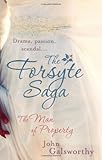
I’ve just started to read A Man of Property the first book in the Forsyte Saga by John Galsworthy, a book I’ve been meaning to read for some years. My copy contains this first novel plus Indian Summer of a Forsyte. It begins in June 1886 with an ‘at home’ at the house of old Jolyon Forsyte to celebrate the engagement of Miss June Forsyte, old Jolyon’s granddaughter, to Mr Philip Bosinney, an architect. The rest of the family all attend and are introduced to the reader, explaining their relationships. There is a family tree at the beginning of the book that helps me to understand who they all are.

I watched the first TV dramatisation of The Forsyte Saga way back in 1967 and the later production in 2002, so I know the story – or at least I remember the gist of it and can visualise Damien Lewis as Soames Forsyte and Gina McKee as Irene (I even remember Nyree Dawn Porter as Irene!)

I think the sequence of books in the Saga is a little confusing, so I’ve listed the books to clarify the sequence for myself:

The first trilogy, comprising:

  1. A Man of Property published in 1906 followed by Indian Summer of a Forsyte: a short interlude, published in 1918 (I have this book, which is the version shown above).
  2. In Chancery published in 1920 and another short interlude: Awakening (1920) – I don’t have this.
  3. To Let published in 1921 – I don’t have this.

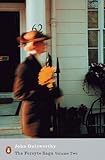
A Modern Comedy, written between 1924 and 1928. I have these books in one volume,  called The Forsyte Saga Volume Two comprising:
  1. The White Monkey (1924)
  2. The Sliver Spoon (1926)
  3. Swan Song (1928)

But there are also Two Forsyte Interludes: A Silent Wooing / Passers By (1928)
On Forsyte Change (1930), which I don’t own.

And a further trilogy called End of the Chapter (I don’t own this), comprising:

  1. Maid in Waiting (1932)
  2. Flowering Wilderness (1933)
  3. Over the River (1933)

I think I’ve got that sorted out now!

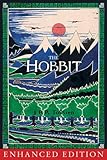
The Hobbit by J R R Tolkien

Many years ago I read Tolkien’s The Lord of the Rings and loved the story, so much so that over the years I’ve re-read the books several times. Somehow I’ve ignored The Hobbit, or There and Back Again, maybe thinking that because it’s a children’s book it was too late for me to appreciate it. So even though I’ve had a copy for years it’s only now that I’ve got round to reading it, spurred on by seeing the film this year. (I read the enhanced version on Kindle.) How wrong I was not to have read it before – The Hobbit is a book that all ages can enjoy.

It’s an adventure story of a quest set in a fantasy world, so beautifully written that it seems completely believable. Bilbo Baggins, a hobbit, is recruited through Gandalf, the wizard, to accompany a party of thirteen dwarves, led by Thorin, on their quest to recover the dwarves’ treasure stolen by Smaug the dragon and regain possession of the Lonely Mountain. Along the way Bilbo grows in confidence and becomes a hero, meeting elves, outwitting trolls, fighting goblins, and above all gaining possession of the ring from Gollum.

The enhanced version has a foreword by Christopher Tolkien, complete with illustrations including manuscript pages and unused drawings, in which he describes how and why his father came to write The Hobbit: he would stand in front of the fire in his study and tell stories to Christopher (then aged between four and five years old) and his brothers. One story, this story, he said, was a long story about a small being with furry feet, which he thought he would call a “Hobbit”. This was in about 1929. The book was eventually published in 1937, written whilst Tolkien was engrossed in writing the myths and legends told in The Silmarillion. He hadn’t intended The Hobbit to be connected to the mythology, but his tale gradually became larger and more heroic as he wrote it.

The Hobbit sold very quickly and people asked for a sequel. At first Tolkien thought that writing more details about Gandalf and the Necromancer (Sauron) would be too dark and that many parents “may be afraid that certain parts of it would be terrifying for bedtime reading.” He also wrote:

Mr Baggins began as a comic tale among conventional and inconsistent Grimm’s fairy-tale dwarves, and got drawn into the edge of it – so that even Sauron the terrible peeped over the edge. And what more can hobbits do? They can be comic, but their comedy is suburban unless it is set against things more elemental. (location 339)

Three days after writing those words he wrote:

I have written the first chapter of a new story about Hobbits – “A long expected party.”

That was the first chapter of The Lord of the Rings. (location 339)

It also includes recently discovered audio recordings of J.R.R. Tolkien reading excerpts from The Hobbit, including the dwarves’ party song, the account of their capture by the three trolls, and Bilbo Baggins’s creepy encounter with Gollum.

The Hobbit is an excellent first book for Carl’s Once Upon a Time VII.

Pride and Prejudice 200th Anniversary

Title page from the first edition of the first volume of Pride and Prejudice 1813

Today is the 200th anniversary of the publication of Jane Austen’s Pride and Prejudice and to mark the occasion the Jane Austen Centre in Bath is hosting a 12 hour readathon (click this link to go to the readathon site) of the book. It’s taking place at the Centre in Gay Street and will be filmed and broadcast around the world live on the internet.

From 11am this morning Pride and Prejudice will be read in short 10 minute segments by up to 140 celebrities, authors, politicians, musicians, Olympians, school children, competition winners and personalities.