The Graveyard Book by Neil Gaiman

Neil Gaiman is one of those authors I keep reading about on other book blogs and I’ve been meaning to check out one of his books for ages just to see for myself. I didn’t think his books were probably the sort I’d like as I rarely read children’s or Young Adult books. Then recently I saw The Graveyard Book on display in my local library, my eye was caught by the cover, and I was curious enough to find out what makes Gaiman such a popular author, encouraged by the blurb from Diana Wynne Jones declaring: ‘The best book Neil Gaiman has ever written.’
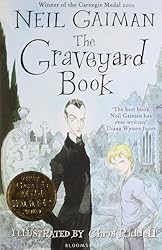
When I began reading I wondered if is this book really is for children – it’s so scary:

There was a hand in the darkness, and it held a knife. The knife had a handle of polished black bone, and a blade finer and sharper than any razor. If it sliced you, you might not even know you had been cut, not immediately.

The knife had done almost everything it was brought to that house to do, and both the blade and the handle were wet. (page 3)

The Graveyard Book won the Newbery Medal and the Booktrust Teenage Book Prize 2009, and was nominated for both the 2010 Carnegie Award and the Kate Greenaway Award.

Intrigued I read on and I was soon hooked into the story of the baby who escapes a murderer (the man Jack) intent on killing his entire family, and who stumbles into the local disused graveyard where he is rescued by ghosts. Think of The Jungle Book but with ghosts looking after the baby rather than animals – and Neil Gaiman acknowledges his debt to Rudyard Kipling’s book. And like The Jungle Book, The Graveyard Book is episodic. The baby, named by the ghosts, Nobody Owens, or Bod for short, grows up looked after by his adoptive parents Master and Mistress Owens who had been dead for a few hundred years and numerous other occupants of the graveyard.

I was fascinated by this fantasy, coming of age novel. Bod is given the Freedom of the Graveyard and educated by the ghosts, learning all sorts of strange and wonderful things, such as the ability to fade from sight. Silas, who is neither dead nor alive appoints himself as his guardian, helped by Miss Lupescu, who is not what she first appears to be. He is only safe if he doesn’t leave the graveyard and of course as he grows up that is what he really longs to do.

It’s creepy, but never gory. There are ghouls as well as ghosts, ancient ghosts predating Christianity, a particularly scary pre-historic tomb guarded by the slithering Sleer awaiting the return of the ‘Master’ and a young witch, Liza buried in the unconsecrated section of the graveyard. Needless to say, Bod has many adventures before his past catches up with him.

Apart from the fantastic characters, all of which I could easily believe to be ‘real’, the graveyard itself is so well described that I had no difficulty imagining what it looked like, so I wasn’t surprised to see in the Acknowledgements that Audrey Niffennegger had shown Gaiman around Highgate Cemetery West.  I like all the details of the epigraphs on the headstones – in particular Mother Slaughter’s headstone. It is so ‘cracked, worn and weathered that all it now said was: LAUGH – which had puzzled the local historians for over a hundred years.

The Graveyard Book is ultimately about life and death, love and friendship, loyalty and the fight between good and evil. There is humour, sadness and suspense. Above all it is about growing up and the excitement and expectations that Bod has about life:

Bod said, ‘I want to see life. I want to hold it in my hands. I want to leave a footprint on the sand of a desert island. I want to play football with people. I want’, he said, and then he paused and he thought. ‘I want everything.’ (page 286)

It is an ideal book for Carl’s Once Upon A Time VIII challenge (my 4th book). I’ll certainly read more of Neil Gaiman’s books.

Once Upon a Time VII – Quest Completed

Once upon a time VII

Carl’s  Once Upon a Time VII has now ended and I completed Quest the First

which was to read at least 5 books that fit somewhere within the Once Upon a Time categories of fantasy, or folklore, or fairy tales, or mythology. I read a mixture, four of which were books I’ve been meaning to read for ages.

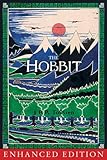
  1. The Hobbit by J R R Tolkien – a fantasy adventure story of Bilbo Baggins’s quest to recover the dwarves’ treasure stolen by Smaug the dragon and regain possession of the Lonely Mountain. Fantastic!
  2. Daughters of Fire by Barbara Erskine – a time slip novel focussed on the legends surrounding Cartimandua, a Celtic queen. This was a bit of a disappointing read.
  3. The Lollipop Shoes by Joanne Harris – a story about good versus evil, the power of the mind and the use of spells, but lacking the charisma of Chocolat, and not as good!
  4. The Third Pig Detective Agency by Bob Burke – a fairytale detective story, in which the third little pig, Harry is faced with recovering Aladdin’s lamp. I really enjoyed reading this.
  5. The Owl Killers by Karen Maitland – a tale of witchcraft and pagan superstition, full of tension and suspense, that kept me guessing to the end.

Hobbit & Pig

My favourite out of these is The Hobbit, followed by The Third Pig Detective Agency, and I think these two books were the best choices for the Once Upon a Time theme.

The Hobbit by J R R Tolkien

Many years ago I read Tolkien’s The Lord of the Rings and loved the story, so much so that over the years I’ve re-read the books several times. Somehow I’ve ignored The Hobbit, or There and Back Again, maybe thinking that because it’s a children’s book it was too late for me to appreciate it. So even though I’ve had a copy for years it’s only now that I’ve got round to reading it, spurred on by seeing the film this year. (I read the enhanced version on Kindle.) How wrong I was not to have read it before – The Hobbit is a book that all ages can enjoy.

It’s an adventure story of a quest set in a fantasy world, so beautifully written that it seems completely believable. Bilbo Baggins, a hobbit, is recruited through Gandalf, the wizard, to accompany a party of thirteen dwarves, led by Thorin, on their quest to recover the dwarves’ treasure stolen by Smaug the dragon and regain possession of the Lonely Mountain. Along the way Bilbo grows in confidence and becomes a hero, meeting elves, outwitting trolls, fighting goblins, and above all gaining possession of the ring from Gollum.

The enhanced version has a foreword by Christopher Tolkien, complete with illustrations including manuscript pages and unused drawings, in which he describes how and why his father came to write The Hobbit: he would stand in front of the fire in his study and tell stories to Christopher (then aged between four and five years old) and his brothers. One story, this story, he said, was a long story about a small being with furry feet, which he thought he would call a “Hobbit”. This was in about 1929. The book was eventually published in 1937, written whilst Tolkien was engrossed in writing the myths and legends told in The Silmarillion. He hadn’t intended The Hobbit to be connected to the mythology, but his tale gradually became larger and more heroic as he wrote it.

The Hobbit sold very quickly and people asked for a sequel. At first Tolkien thought that writing more details about Gandalf and the Necromancer (Sauron) would be too dark and that many parents “may be afraid that certain parts of it would be terrifying for bedtime reading.” He also wrote:

Mr Baggins began as a comic tale among conventional and inconsistent Grimm’s fairy-tale dwarves, and got drawn into the edge of it – so that even Sauron the terrible peeped over the edge. And what more can hobbits do? They can be comic, but their comedy is suburban unless it is set against things more elemental. (location 339)

Three days after writing those words he wrote:

I have written the first chapter of a new story about Hobbits – “A long expected party.”

That was the first chapter of The Lord of the Rings. (location 339)

It also includes recently discovered audio recordings of J.R.R. Tolkien reading excerpts from The Hobbit, including the dwarves’ party song, the account of their capture by the three trolls, and Bilbo Baggins’s creepy encounter with Gollum.

The Hobbit is an excellent first book for Carl’s Once Upon a Time VII.

ABC Wednesday: P is for …

… Peter Rabbit and Beatrix Potter

Peter Rabbit first made his appearance in 1902 in Beatrix Potter’s The Tale of Peter Rabbit.

Peter was a very naughty rabbit, who disobeyed his mother, despite being told the terrible fate of his father who had had an accident in Mr McGregor’s garden and was put into a pie by Mrs McGregor. He squeezed under the gate into the garden, ate lots of vegetables and then came face to face with Mr McGregor and escaped by the skin of his teeth.

Helen Beatrix Potter (28 July 1866 – 22 December 1943) was an English author, illustrator, mycologist and conservationist best known for children’s books featuring anthropomorphic characters such as in The Tale of Peter Rabbit which celebrated the British landscape and rural lifestyle. (From Wikipedia)

Her original watercolour paintings and sketches are in the Beatrix Potter Gallery at Hawkshead, Cumbria. Hill Top, the house which she bought with the proceeds from sales of her books and which she used as an artistic retreat from London, is in Near Sawrey, near Hawkshead. She left it to the National Trust. It is open to the public and it remains just as it was when Beatrix lived there.

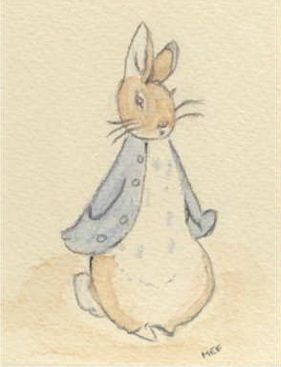
I love the watercolours in her books and this is my attempt at painting Peter Rabbit, copied from The Tale of Peter Rabbit.

Peter Rabbit 002

An ABC Wednesday post.

ABC Wednesday – C is for …

Thumbnail for version as of 06:51, 12 November 2010… Susan Coolidge, the American author of some of my favourite books when I was a child.
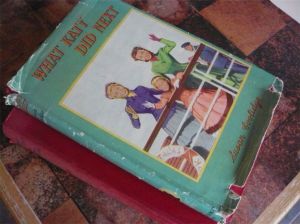
Susan Coolidge was her pen name – her real name was Sarah Chauncey Woolsey (1835 – 1905). She is best known for her classic children’s book – What Katy Did, featuring Katy Carr and her family. Along with Little Women this must be the book that I’ve the most number of times, together with What Katy Did at School and What Katy Did Next.

Looking at her entry in Wikipedia I realise now that she wrote many other books, short stories and poems, some of which are available from Project Gutenberg, including two more ‘Katy’ books, which I haven’t read – Clover and In the High Valley. There is a brief biography at the 19th-Century Girls’ Series.

I loved Katy. She was a tomboy, always getting into scrapes, playing rough games and getting into trouble. But there is another side to the story of Katy and her little brothers and sisters (based roughly on her own family) because Katy has an accident, falling off a swing and becomes bedridden, eventually with the help of Cousin Helen learning patience and cheerfulness. I haven’t read the book for years and I suspect I could find it a little too moralising now. I hope not I enjoyed it so much.

Katy’s hair was always untidy; her frocks were always catching on nails and ‘tearing themselves’; and in spite of her age and size, she was as heedless and innocent as a child of six. Katy was the longest girl that was ever seen. What she did to make herself grow so, nobody could tell; but there she was – up above papa’s ear and half a head taller than poor Aunt Izzie. …

She had fits of responsibility about the other children, and longed to set them a good example, but when the chance came, she generally forgot to do so. Katy’s days flew like the wind; for when she wasn’t studying lessons or sewing or darning with Aunt Izzie, which she hated extremely, there were always so many delightful schemes rioting in her brains, that all she wished for was ten pairs of hands to carry them out. These same active brains got her into perpetual scrapes.

These are my well-worn ‘Katy’ books:

Katy books

So far my entries for ABC Wednesday have had a literary connection and I hope to continue with them as long as possible. I also post non-literary entries on my other blog Margaret’s Miscellany – this week it’s C for Corfe Castle.

Booking Through Thursday – Firsts (on Friday)

Although it’s now Friday I wanted to answer this Booking Through Thursday question:

Do you remember the first book you bought for yourself? Or the first book you checked out of the library? What was it and why did you choose it?

Teddy Robinson

I can’t remember which was the first library book I borrowed – it cold have been Dear Teddy Robinson by Joan G Robinson. My mum took me to the library before I started school and I remember that whichever book it was I liked it so much I didn’t want to return it and was only consoled when mum said I could borrow another book.

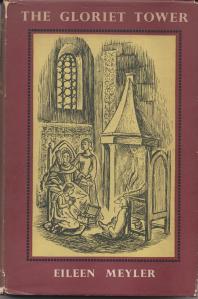
I think The Gloriet Tower by Eileen Meyler is the first book I bought for myself. I still have this hardback book. The description on the book jacket describes it as a

… tale for older children set in Corfe Castle a few years before the beginning of the Hundred Years War. The family there who found themselves drawn into a strange and cruel plot had no existence except in the Author’s imagination. Nevertheless a thin thread of fact runs through the story. The death of Edward II and the power wielded by his widowed Queen and her favourite Mortimer belong to history. The plot to ensnare the King’s brother and the merry-making and the dancing on the walls are true enough and true also is the story of the capture of the Earl of Kent.  … the castle and the wild heath, lapped by the waters of the harbour, are true until this day. They are there for all to see for themselves.

As far as I remember I chose this book because of its historical setting in a castle – I loved castles (still do), and I liked the cover picture. And so began my love of historical fiction. Looking at it today I think I’d like to read it once more.

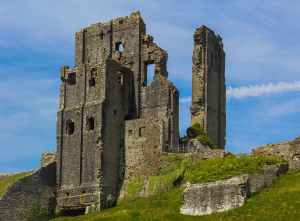
Many years later I visited Corfe Castle in Dorset, now owned by the National Trust. It was swarming with people and I wished I could have seen it in years gone by when it wasn’t a tourist attraction.