A Town Like Alice by Nevil Shute

Rating: 4 out of 5.

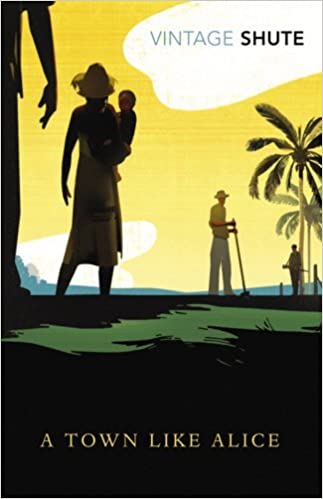
First published in 1950 A Town Like Alice by Nevil Shute is one of those books I’ve been meaning to read for years and now I have at last read it. It was not quite what I had imagined it to be, about Alice Springs in Australia. It is actually set in three parts, with just the third part set in Australia, not in Alice Springs but in Willstown, a fictional town in the outback.

Narrated by Noel Strachan, a solicitor, this is the story of Jean Paget. It begins a few years after the Second World War, when he tells her she has inherited a considerable sum of money from her uncle. But it is held in trust until she reaches the age of thirty five. Until then she will receive about £900 a year to spend. She wonders what to do with the money and eventually decides she wants to go back to Malaya, where she had been a prisoner of war, to dig a well. She tells Noel about what had happened to her in Malaya.

The second part is about that time in Malaya during the War at the time when the Japanese invaded the island. Jean and a group of European women and children were forced by the Japanese to walk for hundreds of miles from place to place before finally managing to stay in one village. Able to speak Malay and being courageous and resourceful, she takes on the role of the leader of their group. She met an Australian soldier, Sergeant Joe Harman, also a prisoner, who was driving a lorry for the Japanese and they became friends with disastrous consequences. This section is the best in the book to my mind.

On her return after the War she writes to Noel telling him how she set about organising the villagers to dig the well so that the women would have fresh water close to their houses and also build a washing-house. And it is here that she learns more about what had happened to Joe and decides to carry on travelling to Australia to find him and thank him for the help he had given her and the other women.

The third part is set in Australia. Jean is an organiser and on her arrival in Willstown she discovers that this is a place where the young women leave as soon as they are old enough. There are no jobs or entertainment to keep them there. So Jean decides she wants to make the town into a town just like Alice Springs. And she does this with remarkable success building a workshop for the girls to make shoes and handbags, providing an ice cream parlour and a public swimming pool and shops. At the same time her search for Joe is eventually successful. She continues writing to Noel about her life in the Australian outback, letters full of detail about her enterprises and the difficulties of cattle ranching in such isolated places – a bit too much detail for me really. But the episode where Jean helped in rescuing an injured stockman is full of drama.

This is really just the bare bones of the story – there is so much more to it than that. Others have commented on the casual racism in the book. It tells it as it was, how people lived at the time, and reflects the attitudes that people had. Jean is of course the main character, a woman somewhat ahead of her time with great strength of character, determination and entrepreneurial skills. The resourcefulness she showed in Malaya is developed in Australia.

In his Author’s Note Shute explains that the forced march during WW2 took place in Sumatra and not in Malaya and the women in the group were Dutch and not British. As in his novel, the local Japanese commander was reluctant to assume responsibility for these women and, to solve his problem, marched them out of his area and took them on a trek all around Sumatra that lasted for two and a half years.

Jean Paget was based on Mrs Geysel, whom Shute had met when he visited Sumatra in 1949. She had been one of the Dutch party, then aged 21, recently married and with a young baby she had carried for over twelve hundred miles around Sumatra. A remarkable story that I really enjoyed.

The Riddle of the Third Mile by Colin Dexter

Rating: 5 out of 5.

Pan| February 2011| 289 pages| e-book| 5*

From the Back Cover

Inspector Morse isn’t sure what to make of the truncated body found dumped in the Oxford Canal, but he suspects it may be all that’s left of an elderly Oxford don last seen boarding the London train several days before. Whatever the truth, the inspector knows it won’t be simple — it never is. As he retraces Professor Browne-Smith’s route through a London netherworld of topless bars and fancy bordellos, his forebodings are fulfilled. The evidence mounts; so do the bodies. So Morse downs another pint, unleashes his pit bull instincts, and solves a mystery that defies all logic. 

My thoughts

The Riddle of the Third Mile is Colin Dexter’s 6th book in his Inspector Morse series, first published in 1983. I remember watching the TV adaptation based on this book, The Last Enemy, but, as with most TV adaptations, it has several changes from the original. Like all of Dexter’s books this is a most complicated mystery, one of the ‘puzzle’ types. Dexter, himself, constructed crossword puzzles and made Morse a crossword aficionado. I agree with Sergeant Lewis when he asks Morse: ‘Aren’t you making it all a bit too complicated?‘ (page 145). I enjoyed trying to follow all the clues that Dexter planted in the mystery, although I had little idea about most of it. But I thoroughly enjoyed it.

The identity of the dismembered and headless corpse could have been that of Morse’s his old classics tutor, Browne-Smith or Browne-Smith’s hated rival, Westerby, or even one of the Gilbert twins who both harboured a grudge against Browne-Smith dating back to the Second World War. Or one of the twins could have been the murderer. Morse eventually works it out, by various means, including considering ‘the most improbable notions, in the sure certainty that by the law of averages some of them stood a more reasonable chance of being near to the truth than others.’ ( page 145) He’s also helped by his intuition, when a passage of scripture springs to his mind about forgiving one’s enemies: ‘ And whosoever shall compel thee to go a mile, go with him twain (Matthew 14.1)’ which he checks in a Gideon Bible, and letting his mind ponder this he remembers a sermon he had heard on the ‘Religion of the Second Mile’:

And it was with the forty-watt bulb shedding its feeble light over the Gideon Bible that Morse smiled to himself in unspeakable joy, like one who has travelled on a longer journey still – that third and final mile …

At last he knew the truth. (page 220)

I can’t say I was also enlightened, and so I just had to read on to find out what Morse had managed to deduce.

Along with the mystery details of Morse’s earlier life when he was a student at St John’s College, Oxford are revealed. He had failed the classics degree, known as ‘Greats’, after his love affair with a postgraduate student at St Hilda’s, Wendy Spencer, came to an end. It had had a disastrous effect on his academic work.

… he departed from Oxford, a withdrawn and silent young man, bitterly belittled, yet not completely broken in spirit. It had been his sadly disappointed old father, a month or so before his death, who suggested that his only son might find a niche somewhere in the police force. (page 61)

I’ve now read 9 of the 13 Morse books:

1. Last Bus to Woodstock (1975) – read in October 2020 not reviewed
2. Last Seen Wearing (1976)
3. The Silent World of Nicholas Quinn (1977)
4. Service of All the Dead (1979)
5. The Dead of Jericho (1981)
6. The Riddle of the Third Mile (1983)
7. The Secret of Annexe 3 (1986)
8. The Wench Is Dead (1989)
9. The Jewel That Was Ours (1991)
10. The Way Through the Woods (1992)
11. The Daughters of Cain (1994)
12. Death Is Now My Neighbour (1996)
13. The Remorseful Day (1999)

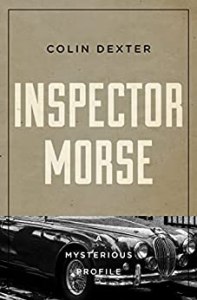
Inspector Morse: A Mysterious Profile by Colin Dexter is also available, published as one of the Mysterious Profiles series of 26 books.

Synopsis:

The international-bestselling author answers readers’ questions and discusses the origins of the Oxford inspector with a penchant for classical music.

In 1975, Inspector Morse debuted, working to solve the case of a murdered hitchhiker in Colin Dexter’s Last Bus to Woodstock. The book led to a multimillion-bestselling mystery series and a television show that spawned a spinoff and a prequel. But how did the beloved DCI from Oxford come to be exactly?

In this quick read, Colin Dexter addresses some of the many questions posed to him by his readers. He reveals what motived him to break into crime writing and which authors and novels influenced him. He discusses Morse’s many traits and inner workings, as well as how he got his first Morse novel published. He also shares how he maintains a discipline with writing, how he deals with critics, and what it’s like to transform a series of novels into a television series.

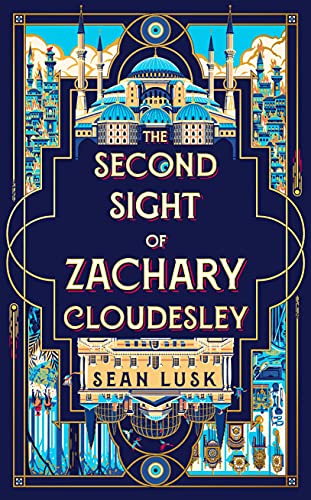
The Second Sight of Zachary Cloudesley by Sean Lusk

Random House UK, Transworld| 9 June 2022| e-book, print length 355 pages| Review copy| 4*

Synopsis from Amazon

In 1754, renowned maker of clocks and automata Abel Cloudesley must raise his new-born son Zachary when his wife dies in childbirth.

Growing up amongst the cogs and springs of his father’s workshop, Zachary is intensely curious, ferociously intelligent, unwittingly funny and always honest—perhaps too honest. But when a fateful accident leaves six-year-old Zachary nearly blinded, Abel is convinced that the safest place for his son is in the care of his eccentric Aunt Frances and her menagerie of weird and wonderful animals.

So when a precarious job in Constantinople is offered to him, Abel has no reason to say no. A job presented to him by a politician with dubious intentions, Abel leaves his son, his workshop and London behind. The decision will change the course of his life forever.

Since his accident, Zachary is plagued by visions that reveal the hearts and minds of those around him. A gift at times and a curse at others, it is nonetheless these visions that will help him complete a journey that he was always destined to make—to travel across Europe to Constantinople and find out what happened to his father all those years ago.

With a Dickensian cast of characters that are brilliantly bonkers one moment and poignant the next, Sean Lusk’s debut will take listeners on an immersive journey into the wonders of the world of Zachary Cloudesley.

I’ve enjoyed novels about clockwork and automata inventions before, so I was hoping Sean Lusk’s debut novel, The Second Sight of Zachary Cloudesley would be just as enjoyable – and it is. It’s a mixture of historical fact and fantasy set in the 18th century, in London and in Constantinople.

It follows the events in Zachary’s life from his birth in London, brought up two strong-minded women, surrounded by the clocks and clockwork automata in his father’s workshop, to his teenage years, when he travelled to Constantinople in search of his father, Abel. Zachary, an intelligent and gifted child, who had visions of future events, had an unusual most unusual life – as indeed, did Abel.

For me this book was as much about Abel as about Zachary and I loved the rich descriptions and all the detail that Lusk packed into his book. It did slow the action down at times, but it didn’t spoil my enjoyment at all. The characters are fabulous, the settings are beautifully described and the historical background is fascinating.

Lusk begins his book with an extensive note about Ottoman heirachy in the mid eighteenth century and ends it with a section of Historical and Other Notes explaining that his inspiration to write his novel came when he discovered an eighteenth century Ottoman clock made in England, in a shop in Istanbul. He finally produced his book after several years of research into clockmaking, Anglo-Ottoman relations and other 18th century matters, and having spent numerous hours in the British Library. He also includes a list of books for further reading. It is a remarkable book on a grand scale that entertained me enormously. I’m looking forward to reading more books by Sean Lusk.

About Sean Lusk

Sean Lusk is an award-winning short story writer, winner of the Manchester Fiction Prize, the Fish Short Story Prize and runner-up in the Bridport and Tom-Gallon Trust prizes. He has lived in Greece, Pakistan and Egypt, working variously as a gardener, speechwriter and diplomatic official. He now lives near Forres on the Moray Firth. The Second Sight of Zachary Cloudesley is his debut novel.

My thanks to Random House, UK for a review copy via NetGalley.

The Key in the Lock by Beth Underdown

Penguin UK| 13 January 2022| 283 pages| e-book| Review copy/4*

Rating: 5 out of 5.

Synopsis:

I still dream, every night, of Polneath on fire. Smoke unravelling from an upper window, and the terrace bathed in a hectic orange light…. Now I see that the decision I made at Polneath was the only decision of my life. Everything marred in that one dark minute.

By day, Ivy Boscawen mourns the loss of her son Tim in the Great War. But by night she mourns another boy – one whose death decades ago haunts her still.

For Ivy is sure that there is more to what happened all those years ago: the fire at the Great House, and the terrible events that came after. A truth she must uncover, if she is ever to be free.


From the award-winning author of The Witchfinder’s Sister comes a captivating story of burning secrets and buried shame, and of the loyalty and love that rises from the ashes.

My thoughts:

The Key in the Lock is Beth Underdown’s second book. I read her first book The Witchfinder’s Sister (my review) and enjoyed it immensely, so I had high expectations that I’d enjoy this book too – and it fully met my expectations. It is historical fiction set between two periods 1888 and 1918 in Cornwall.

It captures both time periods, reflecting the society both before and after the First World War showing the changes that the war had made. I loved the slow pace of this book as the secrets surrounding the death of William, the seven year old son of Edward Tremain in 1888 in a fire at Polneath, and that of Ivy’s son, Tim, on the battlefields of France are gradually revealed.

Both stories are shrouded in mystery as the circumstances of how William and Tim died are by no means clear. Ivy is devastated by Tim’s death and is determined to discover what actually happened to him, the letter informing them of his death was not phrased in the normal form of words. She wondered why.

It brought back painful memories of little William’s death. The fire at Polneath had started at night when everyone had gone to bed. William had been in the maid’s room, not his own bedroom when he had died. The postmortem revealed that he had died from asphyxiation by inhaling the smoke. Found under the bed, with paint from the door under William’s fingernails and bruised hands, it appeared that he must have been locked in and yet when he was found the door was standing open. The conclusion was that at some point the door had been locked – and later unlocked by a person or persons unknown.

The events surrounding each death are gradually revealed and there are plenty of secrets that come to light. It is described as a ‘gothic’ novel, but apart from the setting in an old isolated house, that had once been an ancient manor house, I didn’t find it gothic at all. It is a complicated story and at times I had to go back to make sure I’d got the facts right. I really liked Ivy and I liked the way her character is shown to develop with the passage of time. I loved the details about the attitudes to the First World War and the change from the earlier period. This is a novel full of grief and the circumstances surrounding both deaths provide an element of mystery. I loved the way the two time periods were interlocked as the novel progressed. I was fully engaged in it and I’ll be looking out for Beth Underdown’s next book.

A Tapping At My Door by David Jackson

Zaffre/ 2016/ e-book/ Print length: 315 pages/ My own copy/ 4*

It’s that time of year ago when I’ve been reading and not reviewing – spending more time gardening as the grass grows so quickly and the weeds multiply. And I want to do some more family history . As it’s too hot to do much gardening today I’ve got some time to write a short review.

A Tapping At My Door is a crime thriller, the first in David Jackson’s DS Nathan Cody crime thriller series. I bought it not long after it had been published in 2016, but I’ve only just got round to reading it. I wrote about the opening in this post. Even though this book is more scary and, in parts more gruesome, than I like to read, I did finish it, and enjoyed it for the characters and the plot.

I liked Nathan immediately. He works in the Major Investigation Team in Liverpool, but was previously an undercover officer. It’s obvious that something had gone wrong whilst he was working undercover, which had affected him very badly. He can’t sleep, has a quick temper and flares up very easily, especially with the local reporter and he acts recklessly with little regard for his safety.

The mystery begins as Terri Latham is disturbed late one night by a ‘tapping, scratching, scrabbling noise at her back door’. When she goes outside to investigate she sees a large black bird trapped at her window and she is then struck with something hard and heavy, rammed into her skull. What follows is not a quick death and when the police find her, it is with the dead bird’s wings unfurled and spread across her where her eyes had been, and her cheeks. There is a note attached to the bird’s leg, with the message: ‘Nevermore‘, a reference to Edgar Allan Poe’s poem, The Raven.

There are more bodies, each accompanied by a dead bird and a cyptic note, and it is soon obvious that the murderer is targeting the police. This book is full of tension, it’s very creepy and in places it is utterly gross. Although, I’m giving it 4 stars I am not at all sure I’ll read any more of the books in this series, but if you have a stronger stomach than me you’ll probably love them.

I have a backlog of reviews to write, so this is the first of several short reviews so that I can catch up!

Stamboul Train by Graham Greene

Vintage Digital/ 2010/ e-book/ Print length: 216 pages/ My own copy/ 4*

Stamboul Train was first published in the UK in 1932 and was renamed Orient Express when it was published in the USA. My copy is an e-book, with an Introduction by Christopher Hitchins.

I read it in February and didn’t find time to write about it then, so this is just a mini review that really only skates over the surface of the novel. I enjoyed it, set in the early 1930s, about a three day journey on the luxurious Orient Express travelling from Ostend to Constantinople (Instanbul or Stamboul), via Cologne, Vienna and Belgrade.

Greene weaves a web of subterfuge, murder and politics around his characters, including Carleton Myatt, a Jewish businessman, who trades in currants; Coral Musker, a dancer, a chorus girl on her way to join the Dunn’s Babies dance troupe in Constantinople; a journalist, Mabel Warren, a lesbian who drinks too much; Dr Czinner, a Yugoslavian on his own mission of revolution (as Hutchins describes it), a dissident communist leader, travelling under the name of schoolteacher Richard John – Mabel has recognised him as Dr Czinner and is after a scoop from him for her newspaper; and Josef Grünlich, a murdurous burglar. .

It’s a dismal book in some respects. Written in 1931, it reflects the anti-Semitism of the period, although I think Greene’s description of Myatt’s generosity towards Coral in giving her his berth in a first-class sleeping compartment shows some sympathy towards Jews. Having said that, I also think the characters as a whole are stereotypical, but the tension that he builds around them is palpable.

Greene’s storytelling saved the book for me, with descriptions of the train itself and the glimpses of the countryside as the train speeds along – as well as Myatt’s dramatic car journey through the snow-laden countryside to and from the railway station at Subotica on the Yugoslavian border. Written just as the Nazi party was preparing to take power in Germany there is a sense of unease throughout the novel.