The 2015 TBR Pile Challenge: February Checkpoint

official tbr challengeIt’s time for the February Checkpoint for the 2015 TBR Pile Challenge, hosted by Adam of Roof Beam Reader.

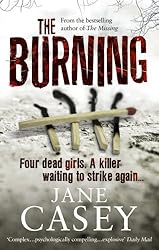
My Progress: 1 of 12 Completed: The Burning by Jane Casey (on my shelves since 2013)

I also began reading one of the other declared TBR books in my pile – The Needle in the Blood by Sarah Bower, but have put it back on the bookshelf at least for the time being. I was keen to read this one as it’s been on my shelves for 7 years! But when I began reading I realised why I hadn’t read it before now ‘“ it’s written in the third person present tense, which I find awkward, and it’s so confusing working out who the characters are. I hate to say this but I may abandon this book. But there are two alternatives I could substitute for this challenge.

These are the books in my piles:

TBR pile 2015

Adam’s Question of the Month: Since it will be Valentine’s Day weekend when this post goes live, I have to ask: Do you have any ‘romantic’books on your 2015 TBR challenge list? If so, which ones?! (This could be capital r Romantic, or regular lovey-steamy romantic).

I don’t often choose ‘romantic’ books and I don’t think any of these could fall into that category – maybe The Secret Keeper? It’s described on the back cover as ‘a spellbinding story of mysteries and secrets, murder and enduring love.’ But I doubt ‘romantic love’ comes into it.

I think that could be my next book to read from these piles.

The Burning by Jane Casey

The Burning by Jane Casey is one of the books I selected for the TBR Pile Challenge 2015. It’s a book that I read about on other book blogs and thought I would like.  I was right – I really enjoyed it.

It’s the first the DC Maeve Kerrigan series. Maeve is on the murder task force investigating the case of the serial killer the media call The Burning Man. Four young women have been brutally murdered, beaten to death and their bodies burnt in secluded areas of London’s parks. When a fifth body is discovered that of Rebecca Haworth, it appears to be the work of The Burning Man – but is it, there are slight differences? The more that Maeve and her colleague Rob Langton check out the facts it appears it could be a copy-cat killing.

The pace of the book is quite slow at first as the characters are introduced and the story unfolds mainly through Maeve’s eyes  with some  chapters narrated by Rebecca’s friend Louise, and briefly by Rob. Because the pace is slow to begin with the main characters are fully rounded – Maeve in particular is a likeable character, intelligent and empathetic, working to impress her male colleagues and determined to catch the murderer. She’s new to the job, which both her boyfriend and her family criticises. Rebecca’s character is revealed through Louise’s eyes,  fleshed out as other friends give their versions of her past to Maeve and Rob. As the pace picks up, a complex  plot develops providing several suspects which kept me turning the pages right to the end.

I have the third Maeve Kerrigan book, The Last Girl, but I think I’ll postpone reading it until I’ve read the second book, The Reckoning. There are now six books in the series and Maeve has her own website!

As well as the TBR Pile Challenge The Burning completes one of the categories in the What’s In a Name challenge, that of a book title containg a word ending in ‘ing’, the My Kind of Mystery challenge and also the Mount TBR Reading Challenge (a book I’ve owned prior to 1 January 2015).

An Autobiography by Anthony Trollope

The primary object of a novelist is to please

2015 is the bicentenary of Anthony Trollope’s birth on 24th April 1815, and  the Trollope Society and other organisations (such as the British Library, the Post Office, the BBC, the Catholic University of Leuven and Oxford University) have planned a whole series of events to celebrate this anniversary.

But I didn’t know that when I began reading his Autobiography. I found it absolutely fascinating, even though I’ve only read two of his books, The Warden and The Way We Live Now, both of which I enjoyed.

Autobiography Trollope 001

(The link above is to the latest edition, edited by Nicolas Shrimpton and published in October 2014 which includes some of his other writings – my copy is a paperback in The World’s Classic series, edited by Michael Sadler and Frederick Page, first published in 1930, reprinted in 1989, shown above.)

I’d almost forgotten about his Autobiography because I’ve  had it for so long. Although it was new when I bought it the pages are now yellowed and the paperback a bit worn and damaged from moving house. I bought it when I was doing an Open University course and my tutor was an avid fan of Trollope. Part of the reason it has sat unread on my shelves is that when I bought it I hadn’t read any of Trollope’s books and I thought it would be better if I knew a bit about his work before reading about his life. So now I’ve read two and have started reading Barchester Towers I decided it was time to read it.

Anthony Trollope was the son of an unsuccessful barrister and had a miserable childhood, his family most often in debt and struggling to make ends met. It was his mother who supported the family through her writing. He was unhappy at school where he was bullied, always in disgrace and had no friends. When he was 19 he became a clerk in the London Post Office, eventually  becoming a Surveyor, working in both Ireland and England and he introduced the red pillar boxes to Britain.

I found it fascinating because it is not only his life story – his unhappy childhood, his work in the Post Office, including his work in Ireland and abroad, his marriage and family life and his love of hunting, but Trollope also writes a lot about his writing, criticises his own books and discusses his fellow writers in a chapter called ‘On English Novelists of the Present Day’, including – Thackeray, George Elliot, Dickens, Wilkie Collins, Charlotte Brontë to name but a few.

Remarkably whilst he was working full time he was also writing his novels. His practice was to get up at 5.30 am and work for 3 hours before dressing for breakfast. He wrote with his watch before him, writing 250 words every 15 minutes. But he didn’t confine his writing to the early hours he also wrote whilst travelling on trains, making a ‘tablet’ to write on and ‘found that after a few days’ exercise that I could write as quickly n a railway-carriage as I could at my desk. I worked with a pencil, and what I wrote my wife copied afterwards.’ He included a list of the books he had written with the dates of publication and the sums he had received for them, totalling £68, 959 17 shillings and 5 pence.

But he wasn’t just a remarkably disciplined writer, he was a writer who made his characters come alive – I can see that in just the two books I’ve read. When I went to see Hilary Mantel at the Borders Book Festival she said that she lives in a parallel world in the present and in the world of Cromwell and Henry VIII, plus all the characters, at one and the same time. It is always with her. So it was with Trollope. Here he writes about how an author can make characters ‘speaking, moving, living, human creatures’:

They must be with him as he lies down to sleep, and as he wakes from his dreams. He must learn to hate them and to love them. He must argue with them, quarrel with them, forgive them, and even submit to them. He must know of them whether they be cold-blooded or passionate, whether true or false, and how far true and how far false. The depth and the breadth, and the narrowness and the shallowness of each should be clear to him.

I have lived with my characters … I may say that I know the tone of voice, and the colour of the hair, every flame of the eye, and the very clothes that they wear. Of every man I could assert whether he would have said those words; of every woman, whether she would then have smiled or so have frowned. (page 233)

Here are some more passages I marked as I read the book that I thought interesting (there are many more!):

An author can hardly hope to be popular unless he can use popular language. (page 176)

His language must come from him as music comes from the rapid touch of the great performer’s fingers; as words come from the mouth of the indignant orator; as letters fly from the fingers of the trained compositor; as the syllables tinkled out by little bells form themselves to the ear of the telegraphist. (page 177)

Short novels are not popular with readers generally. Critics often complain of the ordinary length of novels, – of the three volumes to which they are subjected; but few novels which have attained great success in England have been told in fewer pages. (page 237)

And as my blog is called BooksPlease I was delighted to read this sentence:

The primary object of a novelist is to please … (page 248)

Nonfiction Reading Challenge 2015

I wasn’t going to take part in any more challenges this year – I’m probably doing too many – but when I saw this Nonfiction Challenge, hosted by The Introverted Reader I thought it could encourage me to read my non-fiction books. It runs between 1 January to 31 December 2015. You can sign up any time throughout the year.

Unlike some of the challenges I’ve joined this one really is a challenge for me, because although I like to read non-fiction I often find my self opting for fiction.

Nonfiction Reading Challenge hosted at The Introverted Reader
Image courtesy of Serge Bertasius Photography at FreeDigitalPhotos.net

The Challenge:  Read any non-fiction book(s), adult or young adult.That’s it. You can choose anything. Memoirs, History, Travel – absolutely anything that is classified as non-fiction counts for this challenge.

The levels:

Dilettante–Read 1-5 non-fiction books

Explorer–Read 6-10

Seeker–Read 11-15

Master–Read 16-20

I am aiming at the Seeker level and hoping to read more than 12 books (my total for last year!)

See my progress page here.

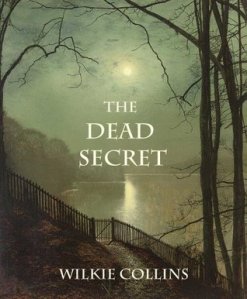
The Dead Secret by Wilkie Collins

I can imagine how intriguing Wilkie Collins’ novel The Dead Secret must have been when it was first serialised in weekly episodes in Household Words in 1857, every episode ending leaving the reader eager to know what happens next. It’s a sensation novel* (see my note below) , with many twists and turns, giving hints to the secret (which I did guess fairly early in the book) gradually and surely building up the suspense and with a final twist at the end (which I hadn’t forseen).  I’m reading Anthony Trollope’s Autobiography and this is what he had to say about his friend, Wilkie Collins:

 When I sit down to write a novel I do not all know, and I do not very much care, how it is to end. Wilkie Collins seems so to construct his that he not only, before writing, plans everything on, down to the minutest detail, from the beginning to the end; but then plots it all back again, to see that there is no piece of necessary dove-tailing, which does not dove-tail with absolutely accuracy. The construction is most minute and most wonderful.

And the plotting is like this in The Dead Secret – detailed and dove-tailed right from the powerful beginning at Porthgenna Tower in Cornwall in the 1820s, at the bedside of a dying woman, Mrs Treverton as she commands her maid, Sarah Leeson, to give her husband a letter confessing a great secret, to its end when all is revealed.

I think that to the modern reader the impact of this book is not the revelation of the secret but the manner of its style of delivery – the initial questions about the secret, what is in the letter, why has Sarah’s hair turned prematurely white, why she visits an an old grave set apart from others in the graveyard, why she talks to herself and why she disappears from Cornwall soon afterwards, having hidden the letter.

Fifteen years later, Rosamund, Mrs Treverton’s daughter returns to Porthgenna Tower to live in her old home. By an accident of circumstances, before Rosamund and her husband reach Cornwall, she gives birth a month earlier than expected and Sarah under an assumed name, is appointed to nurse Rosamund and the baby. Overcome by emotion Sarah cannot stop herself from warning Rosamund not to go into the Myrtle Room, which of course arouses Rosamund’s curiosity.

Trollope, however, says he ‘can never lose the taste of the construction’, feeling that Collins ‘books are ‘all plot’. I think this is a harsh judgement. In The Dead Secret, I think that on the whole the characters do come across as real people – I particularly like Rosamund and Sarah’s Uncle Joseph, both are sympathetically drawn – and there are other characters that add colour and interest. The settings and details of Victorian life are clearly described.  It also examines several social and moral issues of period, such as the role of women and respectability.

I don’t think The Dead Secret is in quite the same league as The Moonstone or The Woman in White, but it has all the elements of a good mystery story, drawing out the secret in tense anticipation of its revelation and making me as eager as Rosamund to know the secret and then almost as paranoid as Sarah that it should remain a secret!

*Sensation Novels*

I wrote about sensation novels,  in an earlier post and have reproduced the information here for ease of reference. It is a novel  with Gothic elements  ‘“ murder, mystery, horror and suspense ‘“ within a domestic setting. They have complicated plots, are set in modern times, and are reliant on coincidences, with plots hinging on murder, madness and bigamy. They exploited the fear that respectable Victorian families had of hidden, dark secrets and explored the woman’s role in the family. There is a pre-occupation with the law ‘“ wills, inheritance, divorce and women’s rights over property and child custody. They are emotional dramas about obsessive and disturbed mental states, with villains hiding behind respectable fronts, and bold assertive women, as well as passive, powerless and compliant women.

Reading Challenges: Mount TBR Challenge 2015, My Kind of Mystery Challenge, Victorian Bingo Challenge 2015 

Books I read in January & Reading Challenges

I’ve not got any  reading plans for 2015  and I’ve not set myself a target on the Goodreads 2015 Reading  Challenge as I find it annoying that it tells you whether you’re on target or how many books behind you are – as though you need prodding to make you read more. Reading should be a pleasure not a chore or a competition.

I finished reading eight books in January,  all fiction apart from Wilkie Collins, which is a biography. Three of them are crime fiction – marked with an asterisk*. Two are books I received for review – both from Love Reading. (The links are to my posts on the books)

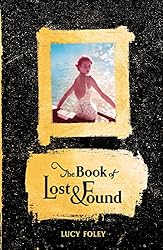
  1. The Book of Lost and Found by Lucy Foley (review book) – most enjoyable.  It’s the story of Tom and Alice beginning in 1928 in Hertfordshire and moving backwards and forwards in time and place to 1986, from Paris, to London, Corsica and New York.
  2. Towards Zero* by Agatha Christie – now one of my favourite of her books. A murder is planned, events set in motion, people are brought together and murder ensues.
  3. Wilkie Collins by Peter Ackroyd – very readable and a clear and concise account of Collins’ life and work.
  4. Green Darkness by Anya Seton – better in parts than in others.
  5. The Betrayal of Trust* by Susan Hill –  a rather dark and complex book highlighting the dilemma facing those with terminal and debilitating illnesses.
  6. A Question of Identity* by Susan Hill – I preferred this book to the previous one. This is full of tension and suspense, revolving around the question of ‘identity’.
  7. The Raven’s Head by Karen Maitland (review book) – her latest book, due to be published in March, a book that pushed me to the edge of my comfort zone in places with  some scenes of dark horror – more about that in a later post.
  8. The Dead Secret by Wilkie Collins  (post to follow) –  a well-plotted book, full of clues about the secret.

I have also been reading An Autobiography by Anthony Trollope for most of January. I’ll probably finish it tomorrow, so more about that later. And I’ve just started reading two books -Trollope’s Barchester Towers, his second book in the Barchester Chronicles, and The Burning by Jane Casey. Both books are looking good so far.

My favourite book is without doubt The Book of Lost and Found by

Lucy Foley. I don’t often read love stories so I was surprised at how much I enjoyed this beautiful book. It is a book I shall re-read – a book for keeping.

Taking Part in Reading Challenges

I’ve  been wondering if I’ve committed to doing too many reading challenges and whether I should pull out of some as I don’t want to read to any set plan or timetable. But I’ve realised that for me these are not ‘challenges’ but are different ways of recording and analysing what I have read. So I’ve decided to stick with them.

The challenges I’ve joined are: