The Sunday Salon

Sunday SalonLast August I read The House at Riverton by Kate Morton and thought it was one of the best books I’d read in 2007. So it was with great anticipation that I started to read The Forgotten Garden. It starts off well, with a little girl in London in 1913 on a boat bound for Australia. The lady who took her to the boat has disappeared and the little girl is found alone on the Maryborough wharf, with no name and no family. All she can remember is that the name of the lady is the Authoress and she has a little white suitcase containing a book of fairy stories written by the lady.

The Forgotten Garden

The novel is about three women – Eliza, Nell and Cassandra and follows their lives from 1900 to 2005. Nell is the little girl in the opening chapter and the book reveals the story of her birth. Of course it’s not just as simple as that – there are several mysteries in this long book. It’s quite easy to read once you have got used to jumping from England in 1913 to Australia in 2005, and in and out of the 1930s and 1975 in both countries and back again to 2005 in England and Australia and sorting out the characters of the three women.

I was enjoying it and then I realised that I was reading a re-working of The Secret Garden, as Eliza is taken as a child of twelve to live with her aunt and uncle at Blackhurst Manor in Cornwall, just as Mary is taken to live with her uncle at Misselthwaite Manor on the Yorkshire Moors, both houses in isolated places, both girls finding it difficult to fit into their new surroundings, both with maids who help them settle in, both with walled gardens and secrets to be discovered. Even down to both having sickly cousins who stay in their rooms.

I was so disappointed that I stopped reading the book! But I picked it up again the next day and carried on. I worked out the ‘mystery’ quite easily and found the book rather predictable, which was also disappointing. Nell attempts to find out the truth about her parents and in 1975 travels to England, eventually finding Blackhurst Manor where the Mountrachet family used to live. After her death in 2005, Cassandra her granddaughter discovers she has been left a surprise inheritance, Cliff Cottage and its forgotten garden in Cornwall, now derelict.

It wasn’t just the predictability of the story I found a let down, I also had difficulty picturing the settings and working out the locations of the cottage, its garden, the maze and Blackhurst Manor even though I re-read their descriptions several times.

I read this book whilst on my recent travels along with The Other Side of You by Salley Vickers, which I also found a bit disappointing – more about that some other time maybe. Other reading this week has been more enjoyable with The Fall of Troy by Peter Ackroyd and Wessex Tales by Thomas Hardy. I also finished reading The Prime of Miss Jean Brodie by Muriel Spark. I first read this about 10 years ago and was a bit worried that I would find it a let down on re-reading it, but thankfully I thoroughly enjoyed it. It’s the next book up for discussion on Cornflower’s Blog on 12 July. For once I’ve read the book well in advance.

I’m also re-reading The Scarlet Pimpernel by Baroness Orczy for the Heart of a Child Challenge. A tale of the French Revolution, a time of terror and tension as the dashing Englishman rescues French aristos destined to death by guillotine. I loved this book as a child and so far it’s living up to my expectations.
Recent Additions

I haven’t written much on the blog recently as we’ve been out and about in various parts of the country. I’ve still been reading but am behind with writing about the books I’ve read. We’ve been visiting several places (Suffolk, the Cotswolds and the Chilterns) and gathering books along the way!

On our trip to Suffolk I bought booklets on the castles at Orford and Framlingham and Medieval Women: a Short History of Women in England 450 – 1500 by Henrietta Leyser from the bookshop in Framlingham Castle. This looks comprehensive, covering medieval views on sex, motherhood, work and the intellectual and spiritual worlds of women.

There is also a second-hand bookshop in Framlingham but I was very restrained and only bought one book – Elizabeth Gaskell’s Mary Barton. This was her first novel and the blurb on the back says that it is “Part tragedy, part romance, passionate with anger, yet touched by humour.”

When I returned home from Suffolk I found a copy of The Death of King Arthur  had been delivered. This was from Penguin Books and I’d forgotten I’d put my name in Blog a Penguin Classic. This is a translation of the 13th century version of the Camelot legend – the Round Table, King Arthur distressed at rumours of Queen Guinevere’s infidelity with Sir Lancelot and at the mercy of the treacherous Sir Mordred. It looks very different from anything else I’ve read recently.

I had to buy Sarah Bower’s Book of Love, despite the fact that I must be one of the few people who still hasn’t read Needle In the Blood. I also bought The Thirteenth Apostle by Michel Benoit. On the back cover it says this is a “captivating and thoroughly researched religious thriller comparable to Umberto Eco’s The Name of the Rose.” Anything to do with ancient sects, papyrus sheaves discovered at Qumran, the Knights Templar, and the supposed existence of a thirteenth apostle always catches my eye.

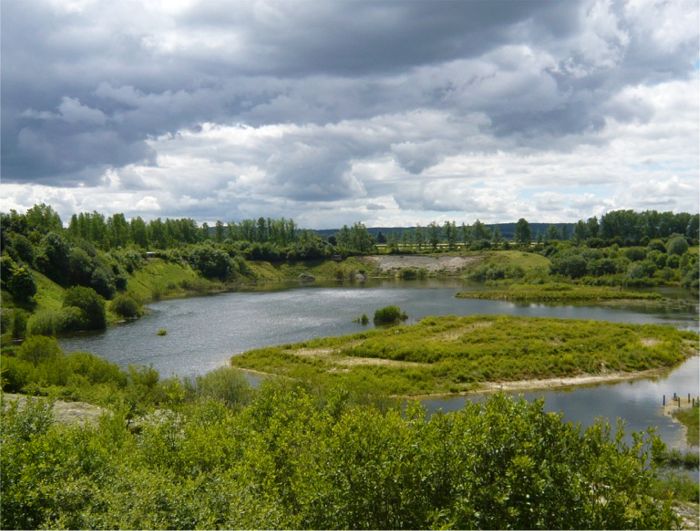
On another trip out – this time to College Lake Nature Reserve in the Chilterns – I found not just beautiful scenery, and bird watchers’ haven, but also a bookshop in a shed. I bought three books:

  • The Snow Geese by William Fiennes – this is a book on natural history and a personal memoir/meditation on leaving and homing.
  • The Forsyte Saga volume two by John Galsworthy – I have volume one, still waiting to be read!
  • Ripley Under Water by Patricia Highsmith – I don’t think I’ve ever read anything by Patricia Highsmith. On the back cover it is described as follows: “As haunting and harrowing a study of a schizophrenic murderer as paper will bear.” I don’t know if I dare to read it!

Finally, there are these two books, one borrowed and the other a gift from a friend:

  • An Equal Music by Vikram Seth. My friend thinks this is a really good book. It is described as a “hauntingly beautiful story about loss and love, and the power of music to transform human experience.” This sounds less frightening than the Highsmith book.
  • The Gravedigger’s Daughter by Joyce Carol Oates. Maybe this will be another harrowing book to read – “a bleak, gothic, powerhouse of a book”.

I’m never going to be short of anything to read!

But just in case I do, I popped into the library today and was really pleased to find:

  • Wessex Tales by Thomas Hardy
  • A Pair of Blue Eyes by Thomas Hardy
  • Milton In America by Peter Ackroyd
  • The Evangelist by Claire George

Now I just wish I could read all these books at once …

Booking Through Thursday – Holiday Reading

btt button

Today’s BTT question is: It’s a holiday weekend in the U.S., so let’s keep today’s question simple – What are you reading? Anything special? Any particularly juicy summer reading?

It’s not a holiday here in the UK, but July 4 is a memorable day for me as it was my father’s birthday.

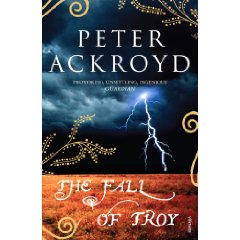
fall-of-troyI have several books listed on the side bar as current reading. Actually I’ve just finished reading Peter Ackroyd’s The Fall of Troy, which is a fascinating book – a love story, set in the late 19th century during the excavations of Ancient Troy. It’s about obsession and deception. I know next to nothing about archaeology, but this book has made me keen to find out about how Troy really was excavated and also to read Homer. The main characters are Heinrich Obermann, a dislikable character and his beautiful young wife, Sophia. Strange things start happening when a young American archaeologist, who questions Obermann’s methods, dies of a mysterious fever and then the arrival of a British archaeologist who falls in love with Sophia brings the story to a dramatic climax.
Reading Summary 1 January – 30 June 2008

It’s hard to believe that it’s now July – half the year has gone by in the blink of an eye – or in the time it has taken to read 44 books. The full list is here. This time last year I had read 52 books, so either I’m not reading as much, or as quickly, or the books are longer/more detailed. Anyway, of these 44 books, 36 are fiction and 8 are non-fiction. Month by month totals are:

  • Jan: 7
  • Feb: 9
  • March: 5
  • April: 7
  • May: 7
  • June: 9

Best reads are:

Clicking on the titles takes you to my thoughts on each book.

Overall, so far, the best book has to be Our Longest Days with Half of a Yellow Sun a close second.

I’ve participated in several reading challenges:

Celebrate the Author. The challenge is to read a book each month by an author who celebrates a birthday in that month. From January to May I succeeded and read books by

  • Virginia Woolf –The Death of the Moth and Other Essays – see here
  • Paul Auster – The Book of Illusions – see here
  • Robert Frost – see here
  • Ian Rankin – A Good Hanging – see here
  • Margaret Forster – Keeping the World Away – see here

June’s author was to have been Orhan Pamuk or Thomas Hardy but I didn’t read anything by either of these authors – maybe I’ll catch up in July. July’s author is either Alexander Dumas or Joanne Harris. I have a feeling it will be Joanne Harris as I have both Chocolat and The Lollipop Shoes, which I have been meaning to read for ages.

The Chunkster Challenge. This challenge is to read at least 4 books of over 450 pages. So far I’ve read three:

  • The Book Thief by Markus Zusak (584 pages) See here.
  • Winter In Madrid, C J Sansom (530 pages) See here.
  • Revelation by C J Sansom (546 pages). See here.

I’m also aiming to read:

  • The Meaning of Night by Michael Cox (598 pages)
  • The Needle in the Blood by Sarah Bower (575 pages)
  • Cloud Atlas by David Mitchell (529 pages) 

Heart of a Child Challenge. The challenge is to read 3 to 6 books by July 14, 2008 that you discovered, loved or adored as a child. So far I’ve read two – Mr Blossom’s Shop by Barbara Euphan Todd, see here and The Secret Garden by Frances Hodgson Burnett, see here. I’ll be reading one of these in the next two weeks to complete the challenge.

  • What Katy Did and What Katy Did Next by Susan Coolidge
  • Heidi by Johanna Spyri and Heidi Grows Up and Heidi’s Children by Charles Tritten
  • The Scarlet Pimpernel by Baroness Orczy
  • The Gloriet Tower by Eileen Meyler 

What’s In a Name Challenge. This challenge ends in December and is to read one book in each of the categories. So far I’ve read three out of the six as follows:

  • A book with a colour in the title: Half a Yellow Sun, Chimamanda Ngozi Adichie – see here
  • A book with an animal in its title: The Tenderness of Wolves, Stef Penney
  • A book with a first name in its title: Daniel Isn’t Talking, Marti Leimbach – see here
  • A book with a place in its title: Winter in Madrid, C J Sansom – see here
  • A book with a weather event in its title: Snow, Orhan Pamuk
  • A book with a plant in its title: Gem Squash Tokoloshe, Rachel Zadok

Soup’s On Challenge. Challenge is to select six cookbooks to read (enough to give an overview of the book) and make at least one of the recipes. See here. So far I’ve read After Work – see here and Toast by Nigel Slater – see here.

Once Upon a Time Challenge. This challenge ended in June. I didn’t manage to complete it and only read John Wyndham’s The Chrysalids – see here.

The Pulitzer Project. This is an open ended project. The goal is to read all 81 books that have won the Pulitzer Prize for Fiction. This year I’ve read The Shipping News by Annie Proulx, the winner in 1994 – see here.

Tuesday Thingers

For this week’s Tuesday Thingers the questions are about the most unpopular books you own. Do you have any unique books in your library- books only you have on LT? How many? Did you find cataloging information on your unique books, or did you hand-enter them? Do they fall into a particular category or categories, or are they a mix of different things? Have you ever looked at the “You and none other” feature on your statistics page, which shows books owned by only you and one other user? Ever made an LT friend by seeing what you share with only one other user?

My answer:

I have 44 unique books in my LT account. They are a mixture of books on cookery, yoga, gardening, local history/guide books, wildlife, biography/autobiography and a handful of fiction. I think some of these are just because they are different editions; for example I’m not the only person who owns D H Lawrence’s Sons and Lovers, but presumably I’m the only one to own this particular publication.

I feel quite protective now about these books. Mountains on the Moon is by a friend so I’m sad I’m the only person with this book. Michael Arthern is a retired biology teacher and wrote this book when he retired having been granted a studentship at Regents Park College, Oxford. He is a Christian who believes that science and faith enhance each other and so he is interested in the science versus religion debate. His book covers a number of scientists through nearly three thousand years from Thales c.625 – c.547 BC to Francis Collins, the director of the Human Genome Project, including Galileo, Newton, Darwin, Max Planck and Einstein.

As for cataloguing them some of them I found from the ISBN, but a lot I entered manually, which is like ‘proper’ cataloguing, although I’ve been brief with some of the information. I’m a bit particular about the cover I use as well, which means that I’ve had to scan many of my books to get the right cover. I still have many to do to get rid of the default covers. 

I didn’t know about the “You and none other” feature before today. There are 24 books listed there that I share with only one other person – and not one of them is the same person!

The Sunday Salon – Today’s Reading

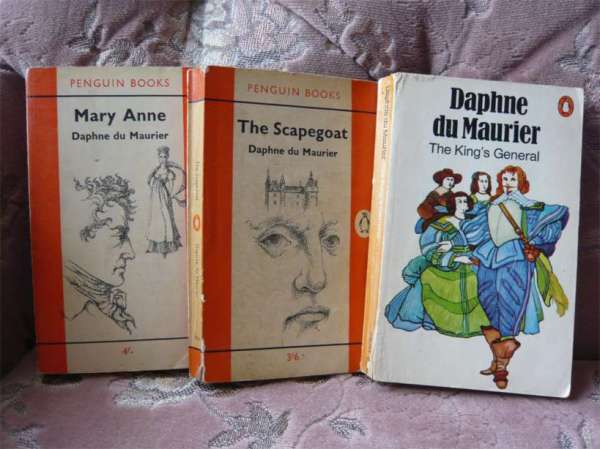
Today I’ve been reading The Flight of the Falcon by Daphne Du Maurier. My introduction to Daphne Du Maurier’s books was Rebecca, when I was a teenager. I then read as many of her books as I could find –Jamaica Inn, Frenchman’s Creek, The Scapegoat, The King’s General and Mary Anne.

Du Maurier bks

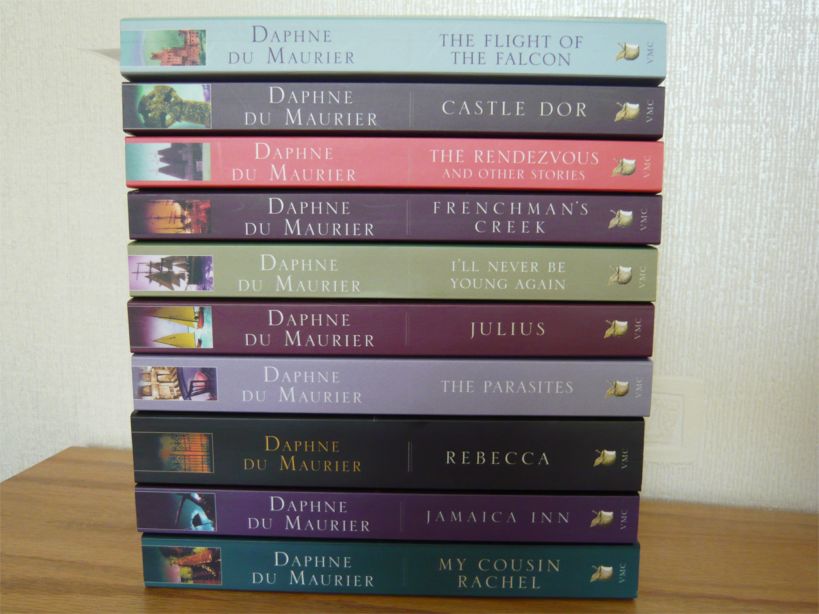
Then I had a big gap in reading her books although I re-read Rebecca several times, until I came across Margaret Forster’s biography Daphne Du Maurier, and I realised how many she had written that I hadn’t read. I bought ten of her books from the Book People (a remarkable bargain at £9.99) last year or the year before and apart from looking at each one, they’ve been sat on the bookshelves unread until yesterday, when I picked out at random The Flight of the Falcon.

I’m about half way through it now and finding it the sort of book that makes me want to read it all in one go; that’s not possible today and anyway I want to make it last as long as possible. It starts in Rome, when Armino Fabbio, a tour guide, comes across an old woman who he thinks is Marta, his family’s servant from his hometown of Ruffano. When she is found, murdered, he returns to Ruffano to find out if it was Marta. It is twenty years since he left and he finds that the town has changed.  Du Maurier used Urbino as the model for Ruffano, and according to Forster’s biography the idea for this story came on a visit to Urbino with her son Kits and on another holiday with Tessa, her daughter when she came across an old woman asleep in the doorway of a church.

There’s a mystery about Armino’s family and the history of the town. Five hundred years earlier it had been terrorised by the Duke Claudio, known as the Falcon, and as Armino arrives the town and university are preparing an enactment of  the uprising of Ruffano against the Falcon for the annual Festival play. There are surprises in store for Armino  and he realises that his own family history is not what he thought it was.

I’ve resisted reading the introduction to The Flight of the Falcon, as I’ve often found that the plot is revealed in an introduction. Why anyone would think that is a good thing to do is beyond me. But I couldn’t help going back to Margaret Forster’s book because I remembered that she described what Daphne was doing and thinking when she was writing. She started to write The Flight of the Falcon in January 1964 at Menabilly when it was cold and raining and she struggled to capture the warmth and sun of Italy in her narrative. She no longer wanted to write straightforward stories, but wanted it to be an allegory, whose meaning was linked with the idea of psychological predestination. Interestingly she didn’t think it was as good as The Scapegoat and the British critics were less than enthusiastic when it was published in January 1965. Well, I enjoyed The Scapegoat years ago, but I’m not bothered about the critics – so far I’m finding it a good story.