Sunday Salon

tssbadge1

It’s been a busy time here this week as we now have a date for moving house. In six week’s time we don’t know where we’ll be living, but it definitely won’t  be in this house. We may be in our new house (a bungalow) but as we haven’t exchanged contracts yet we don’t have a date for moving in. Until we have I don’t want to write anything about it – but it looks as though there may even be a room that could be called a “book room”,  or even a “library”!

So this week has seen a transformation in this house – we’re now surrounded by boxes everywhere. Even though the removal company will be packing our stuff we’ve had to empty the lofts – why do we store so many things? – so the contents are now filling up the rest of the house. There are tons of old videos (not personal ones!), old computers and microwaves, tennis, badminton and squash rackets, a cricket bat, rucksacks, ropes and other climbing gear, an old breadbin (why?) even a box of coathangers as well as the usual Christmas decorations (three Christmas trees of varying sizes) and so on and so forth. I got excited when D said he’d found a box of books, thinking he’d found some I’d forgotten about. Sadly it was a box of his HNC notebooks! We’ve been sidetracked looking through old photos and old videos of the family and reminiscing.

D has been clearing out one of the sheds as well. We couldn’t find Lucy one night and eventually found her curled up on some old sheets in the shed. She was nearly locked in for the night:

Lucy in shed1


There’s still so much to do but I have been managing to read in between sorting out stuff and trips to the tip to dump stuff that we should have thrown out years ago. This week I finished reading Nocturnes by Kazuo Ishiguro and The Complaints by Ian Rankin – posts on both to follow and am well into Death of the Chief by Douglas Watt. I’ve caught up a bit with writing reviews of books as well with posts on:

As for Reading Challenges I’ve really been neglecting those since we started to sell the house earlier this year but I have been keeping up with the Agatha Christie Reading Challenge and this week have posted an update of my progress. I enjoy Agatha Christie’s books immensely and this has spurred me on to read more of hers – this morning I started reading A Pocketful of Rye – a Miss Marple mystery.

This coming week I do intend to pick up either Wolf Hall again or The Children’s Book. My problem is, as I’ve said before, they’re both physically heavy books and I really need to set aside some time to concentrate on one of them during the day rather than early morning or late at night – not easy right now.

“A house without books is like a room without windows”: Horace Mann

We own quite a few books but I know from LibraryThing that many people own far more. There is not enough room in our house to shelve all the books we own, so one of the things we’ve been looking for in a new house is room for our books and bookcases. It’s hard.

I’ve been surprised how few books other people own. Out of all the houses we’ve viewed there was only one that had a bookcase in the living room and books in the bedrooms. In one house there were cookery books on a shelf in the kitchen, but all the others were bookless! Everyone had a TV or two, but no books. And watching those house programmes on TV I see that very few people own books and no-one says they want room for books when describing what they are looking for in a new house.

How do people live without books?

Musing Monday – My Wishlist

Musing Mondays (BIG) Today’s MUSING MONDAYS post from Just One More Page is about books on your wishlist€¦

Last week we talked about keeping a wishlist. Why not pull out that list and show us some of the books you’ve been eyeing off?

I have a wishlist on Amazon, just adding books every now and then. Actually I forget to look at it unless it’s my birthday or Christmas is getting near. I looked at it today for this post and found most of the books are non-fiction – possibly because I read more fiction and non-fiction tends to get overlooked. I’ve copied the descriptions from Amazon.

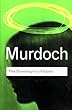
Some of them have been on the list for years. The oldest entry is dated November 2005! But I do remember adding it after reading some of Iris Murdoch’s novels and thinking Sovereignty of Good would be interesting. I still do.
Iris Murdoch once observed: ‘philosophy is often a matter of finding occasions on which to say the obvious’. What was obvious to Murdoch, and to all those who read her work, is that Good transcends everything – even God. Throughout her distinguished and prolific writing career, she explored questions of good and bad, myth and morality. The framework for Murdoch’s questions – and her own conclusions – can be found in the Sovereignty of Good .

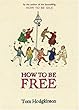
How To Be Free by Tom Hodgkinson. I haven’t read anything by this author and can’t remember where I saw this book but who wouldn’t want to be free?

Read “How To Be Free” and learn how to throw off the shackles of anxiety, bureaucracy, debt, governments, housework, moaning, pain, poverty, ugliness, war and waste, and much else besides.

More recent additions to my wishlist are these:

In Our Time by Lord Melvyn Bragg. I used to listen to this radio series regularly but haven’t managed it recently – this could help fill in the gaps.

Melvyn Bragg’s In Our Time series regularly enlightens and entertains substantial audiences on BBC Radio 4. For this book he has selected episodes which reflect the diversity of the radio programmes, and take us on an amazing tour through the history of ideas, from philosophy, physics and history to religion, literature and biology.

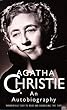
Agatha Christie’s Autobiography. I’ve been reading quite a few of Agatha Christie’s books so I thought I’d like to read more about the author herself.
The life of Agatha Christie as told by herself. It covers her childhood, her first marriage, the birth of her daughter Rosalind, her second marriage to archaeologist Max Mallowan, and an account of her legendary career as a novelist and playwright.

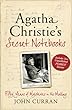
Agatha Christie’s Secret Notebooks
A fascinating exploration of the contents of Agatha Christie’s 73 recently discovered notebooks, including illustrations, deleted extracts, and two unpublished Poirot stories.


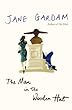
The Man in the Wooden Hat by Jane Gardam. I read Old Fifth a while ago and loved it so I thought this should be good.

Written from the perspective of Filth’s wife, “Betty”, this is a story which will make the reader weep for the missed opportunities, while laughing aloud for the joy and the wit. Filth (Failed In London Try Hong Kong) is a successful lawyer when he marries Elisabeth in Hong Kong soon after the War. Reserved, immaculate and courteous, Filth finds it hard to demonstrate his emotions. But Elisabeth is different – a free spirit.

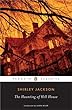
The Haunting of Hill House by Shirley Jackson. I read We Have Always Lived in the Castle earlier this year and loved it. So now I want to read this one.

Hill House stood abandoned six miles off the road. Four people came to learn its secrets. But Hill House stood holding darkness within. Whoever walked there, walked alone.

Sunday Salon – The Case for God by Karen Armstrong

tssbadge1Just as we’ve been all over the place physically – up and down England with occasional forays into Scotland, so my mind and reading has wandered around and I now find that I’ve started several books at once. Some of them are listed on the sidebar over on the right. I’m going to leave them there as a reminder of what I’ve begun, but I’ve decided to concentrate on just reading two books at a time – one non-fiction (Karen Armstrong’s The Case for God;What Religion Really Means) and one fiction (probably Among the Mad by Jacqueline Winspear as I’ve read more of that than the others and it’s a library book that should be returned soon).

Karen Armstrong’s books always impress me – so much detail and words that I have to look up the meaning. I feel rather inadequate when it comes to writing about The Case for God. The book jacket tells me she ‘is one of the world’s leading commentators on religious affairs’ and in the introduction she writes

We are talking far too much about God these days and what we say is often facile. In our democratic society, we think the concept of God should be easy and that religion ought to be readily accessible to anybody. ‘That book was really hard!’ readers have told me reproachfully, shaking their heads in faint reproof. ‘Of course it was!’ I want to reply. ‘It was about God.’ (page 1)

So I knew from the beginning I should concentrate and make notes as I read. I’m now about a third of the way into the book and have several pages of notes of points that particularly interest me. I like this type of book which is balanced and objective, based on extensive  research and knowledge.

Fortunately Karen Armstrong has included a glossary of such words as ‘apophatic’, that I had no idea of  their  meaning (it means ‘speechless’; wordless; silent – referring to theology that defines God in negative terms “God is not …”) and words that I thought I did know such as ‘faith’.  Translated from the Greek ‘pistis; this meant ‘trust, loyalty, commitment’ and did not mean the acceptance of orthodox theology of belief. So when Jesus was berating his disciples for their lack of faith he was not asking them to believe in him but was asking for their commitment to his mission to feed the hungry etc (page 90).

She states that ‘our religious thinking is sometimes remarkably undeveloped, even primitive’ (page 1) and that religion was ‘not primarily something that people thought but something they did.’ (page 4)

This book does not attack anyone’s beliefs – Armstrong states that quarrelling about religion is counterproductive and aims to show how people in the pre-modern world thought about God, throwing light on some problematic issues such as creation, miracles, revelation, faith, belief and mystery. She then traces the rise of the ‘modern God’ (page 9).

I’m reading The Case for God quite slowly and not reading it at night, when I often fall asleep with a book in my hands which means that when I next continue reading I have no idea of what the previous pages were about and have to read them again. So it’s daytime reading with a pen and notebook at hand.

Finding Books whilst Searching for a House

The search for a house is still on! House hunting has been top of our priorities this last week, so much so that I’ve been neglecting this blog. If only it was as easy to find a house as it is to find books, but as we were looking around the area where Barter Books is, it would have been impossible not to come away without buying any.

Barter Books is a beautiful secondhand bookshop, one of the largest in the country. It’s in what used to be a Victorian railway station on the main road into Alnwick in Northumberland and I’d love to live nearby (there are houses for sale, one is very near!) . There are shelves and shelves of books to browse. I restricted myself both in time spent there, otherwise I would have been there all day, and in the number of books I bought – just two hardbacks of the Collected Works of Agatha Christie comprising Why Didn’t They Ask Evans?, The ABC Murders, Death on the Nile and They Do It With Mirrors and a paperback copy of Margaret Atwood’s The Robber Bride.

Then one day whilst in Wooler having lunch in Breeze, which is a lovely giftshop, art gallery and coffee shop I just happened to notice that they were also selling secondhand books and I bought an excellent hardback copy of Dracula by Bram Stoker.  Wooler is a small market town at the edge of the Cheviots set in the most beautiful countryside and we would like to live there. The Wooler Community website describes it as the “natural gateway to Glendale and Northumberland National Park”. Bamburgh with its impressive castle is not far away.

Bamburgh Castle
Bamburgh Castle

I really shouldn’t be buying any more books at all as we don’t have any more space to keep them in the house we live in now and one of the requirements for a new house is that there has to be space for all our books – a separate room would be ideal but failing that enough wallspace to take all the bookcases. Even with that in mind I still bought two more books in one of the motorway service stations on the way north. I keep reading about how good Steig Larsson’s books are so when I saw The Girl with the Dragon Tattoo and The Girl Who Played with Fire in the “Buy 1 Get 1 Half Price” books I bought them.

Life According to Literature

I saw this on Dorothy’s blog and thought I’d have a go too.

Using only books you have read this year (2009), answer these questions. Try not to repeat a book title. It’s a lot harder than you think!

Describe yourself: The Madonna of the Almonds (Mariana Fiorata)

How do you feel: A Lost Lady (Willa Catha)

Describe where you currently live: We Have Always Lived in the Castle (Shirley Jackson)

If you could go anywhere, where would you go: Wuthering Heights (Emily Bronte)

Your favorite form of transportation: Doors Open (Ian Rankin) (the best I could do)

Your best friend is: Jane Austen (Claire Tomalin)

You and your friends are: Tangled Roots (Sue Guiney)

What’s the weather like: Turbulence (Gile Foden)

You fear: The Hound of Death (Agatha Christie)

What is the best advice you have to give: Elephants Can Remember (Agatha Christie)

Thought for the day: When Will There Be Good News? (Kate Atkinson)

How I would like to die: Fire in the Blood (Irene Nemirovsky) (no way – this sounds far too painful!)

My soul’s present condition: Star Gazing (Linda Gillard)

Note: this is not a personal look at my life – it’s just book titles!