This is Emily’s Attacking the TBR Tome challenge.
The challenge is to read 20 books from your TBR list between December 1st, 2009 and December 31st, 2010. AND you’re supposed to refrain from buying books until you have read or attempted to read all 20 of your chosen books, unless you need to buy a book for a book group. You also have to write a blog post about each book as you finish (or decide you can’t finish) it.
There’s been some discussion on blogs recently about feeling guilty about buying books and not reading them soon after buying them. This is something I’ve never felt. I often buy a book knowing I won’t get round to reading it for a while because I’m currently reading other books and this doesn’t bother me at all. In fact it adds to the pleasure of reading, knowing I’ve got some good books lined up to read in the future. The only time I feel bad about not reading books is when someone has lent them to me and months later I still haven’t read them. I’ll try not to buy any more books (I’m always trying not to buy books!) but I can’t see myself sticking to that for very long.
I attempted to read from my to-be-read piles this year and managed a few, but also added lots of books to the piles. So there are plenty to choose from. Emily’s challenge is to specify the books you’re going to read and not substitute them, but I think I’d better give myself some leeway and if I want to read a book I haven’t listed I will.
As there is a delay between our house sale and house purchase most of my books will be going into storage next week. This challenge has helped me focus on which books to keep out to read until I can get my hands on the rest. I keep changing my mind about which ones to take but so far these are in a box:
- The Day Gone By, by Richard Adams (autobiography)
- One Good Turn by Kate Atkinson
- The Children’s Book by A S Byatt
- The Country Life by Rachel Cusk
- Helen of Troy: a novel by Margaret George
- The Rose Labyrinth by Titania Hardie
- Ghost by Robert Harris
- Slipstream: a memoir by Elizabeth Jane Howard
- Rivers by Griff Rhys Jones
- The Girl with the Dragon Tattoo by Stieg Larsson
- The Girl Who Played with Fire by Stieg Larsson
- Mollie Fox’s Birthday by Deirdrie Madden
- Wolf Hall by Hilary Mantel – read
- Love in the Time of Cholera by Gabriel Garcia Marquez
- Eden’s Outcasts: the story of Louisa May Alcott and Her Father by J Matteson
- Be Near Me by Andrew O’Hagan – read
- Map Addict by Mike Parker
- Resistance by Owens Sheers
- Corvus: a Life with Birds by Esther Woolfson
- Being Shelley: The Poet’s Search for Himself by Anne Wroe
This could easily change in the next few days.
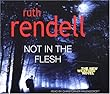 Dave and I listened to this in the car whilst travelling to Northumberland and back. This is an Inspector Wexford mystery – a man taking his dog for a walk discovers a severed hand, which turns out to be part of a skeleton wrapped in a purple sheet. The police have to discover the identity of the victim – and of the body of a second corpse found in a nearby house. Both have been lying undiscovered for at least ten years. I’m not used to listening to books and I did find it a bit difficult to follow. Of course, the sat nav and traffic news kept interrupting which didn’t help, but even so I did get confused. There were too many people and sub-plots. Maybe I should read the book.
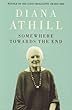 I loved this memoir. Diana Athill comes across as an honest writer, not afraid to say what she thinks, now she is no longer an editor. As the title indicates, she writes about what it is like getting towards the end of her life. At the time of writing she was 89 years old and looking back on her life with few regrets. This is a book I may well buy to re-read at leisure.
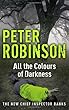 I have mixed feelings about this book, parts of it really interested me, but I could have done without the terrorist attack and involvement of MI5 and MI6. This is only the 2nd Inspector Banks book I’ve read and it’s the 18th in Robinson’s series. I think that doesn’t matter as I had no difficulty in sorting out his relationships and although other cases are referred to this reads OK as a stand-alone book. What I did have difficulty with was believing the spy stuff – one of the victims had been a spook. What I do like is Robinson’s descriptive writing eg:
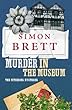 This is the fourth in Simon Brett’s Fethering Mysteries series. It’s set in Bracketts, an Elizabethan house, the former home of Esmond Chadleigh, a celebrated poet during his lifetime. The house is about to be turned into a museum, although not all the Trustees agree. Carole Seddon has been co-opted onto the Board of Trustees and when a skeleton is discovered in the kitchen garden she soon becomes involved in solving the mystery. Then Sheila Cartwright, the bossy domineering former Director of the Trustees is shot, and Carole finds her own life is in danger.
 Another author who used to be a great favourite of mine is Ed McBain. I haven’t read anything of his for many years. He was born Salvatore Albert Lombino in 1926 and changed his name to Evan Hunter, writing under the pseudonym Ed McBain from 1956. He died in 2005. He wrote an enormous number of books – from 1958 until his death he wrote one or two books a year as Ed McBain. The first one in his 87th precinct series is
  Then there is Ellery Queen – who was actually two people writing pseudonymously. They were cousins Daniel (David) Nathan, alias Frederic Dannay and Manford (Emanuel) Lepofsky, alias Manfred Bennington Lee. They also used the pen name Barnaby Ross. Ellery Queen was also the chief character of their novels. A list of their books can be found on the
  Umberto Eco wrote one of my favourite books


