Naming the Bones by Louise Welsh: A Book Review

I’d planned to read Naming the Bones by Louise Welsh, which is from my to-be-read books and it seemed appropriate to include it in the books I’ve selected for the RIP IV Challenge. But as I read it I began to wonder if it really fitted into that category. Although the blurb on the back cover says it is ‘Loaded with Welsh’s trademark wit, insight and gothic charisma‘ the gothic elements are not evident in the first half or so of the book. It’s only as the story unfolds that the mystery element emerges and just a touch of the gothic and the occult comes to the fore.
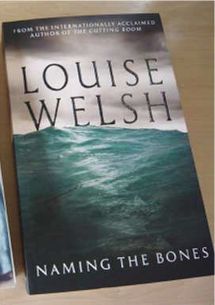
Naming the Bones2
I found it a slow start as Dr. Murry Watson, an English literature professor from Glasgow University researches the life of a largely unknown poet Archie Lunan. Lunan had died thirty years earlier, presumed drowned off the island of Lismore, although his body had never been discovered. As Murray investigates Lunan’s life, talking to people who had known him, he begins to suspect that Archie’s death may not have been the suicide it seemed and as more deaths come to his attention the mystery grows and becomes more sinister.

Murray’s personal life is in a mess; his relationship with his brother has broken down following their father’s death and his work life is complicated by his affair with his boss’s wife. This is a detailed book, the characters are vivid and memorable and  each location is beautifully described, not only the sights and sounds but smells too:

Murray pulled back his hood. The scent of wood smoke mingled with the falling rain and the damp rising from the sodden earth. It was an ancient smell, the same one the earliest islanders who could be resting, preserved beneath the peat, had known a millennia or so ago. (pages 327-8)

It is when Murray arrives on the island of Lismore in Loch Linnhe on the west coast of Scotland that the pace picks up, and the tension builds. Here Murray finally meets Archie’s girlfriend, Christie and begins to piece together what had happened thirty years ago. The book ends with some ambiguities still to be explained, an ending which I found perfectly in keeping with the story.

I was taken with Welsh’s handling of biography, describing it as

… a paper facsimile of life hurtling towards death. (page 128)

Murray is hoping to discover how much Archie’s life had influenced his art, whereas his former tutor, Professor James, had insisted on the importance of divorcing writers’ lives from their work, thinking it to be reductive and simplistic. It is the work itself that is important and Murray wonders whether this is right and whether he should limit himself to a discussion of the poetry, rather than the man. Again Welsh leaves this open to the reader to decide.

Naming the Bones isn’t the book I thought it was going to be – it isn’t really ‘gothic’, or dark, or about the occult. It isn’t really crime fiction, either. Nor is it anything like the only other book by Louise Welsh that I’ve read – The Cutting Room, which is really gothic and dark. Once I’d got over my expectations I enjoyed the book for what it is – a mystery and a good one too.

  • Paperback: 389 pages
  • Publisher: Canongate Books Ltd (3 Feb 2011)
  • Language English
  • ISBN-10: 1847672566
  • ISBN-13: 978-1847672568
  • Souce: I bought it

My Life as a Book: a Meme

I am way behind with writing about the books I’ve read recently but when I saw this on Margot’s blog who found it on Pop Culture Nerd’s blog I decided to postpone writing about any of them today and do this instead. It’s My Life as a Book – a meme in which players complete sentences about themselves with titles of books. Here are my answers:

  • One time at band/summer camp, I: (was) Betrayed in Cornwall (Janie Bolitho) – at Girl Guide camp for me!
  • Weekends at my house are: (spent) Drawing Conclusions (Donna Leon)
  • My neighbour is: The Private Patient (Ruth Rendell)
  • My boss is: The Doctor of Thessaly (Anne Zouroudi)
  • My ex was: Once a Biker (Peter Turnbull)
  • My superhero secret identity is: The Blood Detective (Dan Waddell)
  • You wouldn’t like me when I’m angry because: (I’m) An Expert in Murder (Nicola Upson)
  • I’d win a gold medal in: The Art of Drowning (Frances Fyfield)
  • I’d pay good money for:  The Janus Stone (Elly Griffiths)
  • If I were president, I would : (take) A Ticket to Ride (Janet Neel)
  • When I don’t have good books, I(‘m):  No Longer at Ease (Chinua Achebe)
  • Loud talkers at the movies should be: (sent to) The House of Silence (Linda Gillard)

What’s In a Name 4 Challenge – Completed

I’ve  finished the What’s In a Name Challenge, hosted by Beth Fish Reads, reading a book from each of the set categories. Apart from Evil Under the Sun, which was a new purchase the books were all from my To-Be-Read books. They are listed below with links to my posts on them:

1. A book with a number in the title ‘“ One Good Turn by Kate Atkinson
2. A book with jewelry or a gem in the title ‘“ The Moonstone by Wilkie Collins
3. A book with a size in the title ‘“ Little Women by Louisa May Alcott
4. A book with travel or movement in the title ‘“ Exit Lines by Reginald Hill
5. A book with evil in the title – Evil Under the Sun by Agatha Christie
6. A book with a life stage in the title ‘“ Molly Fox’s Birthday by Deirdre Madden

I had read Little Women several times before, many years ago and I read it this time prior to reading a biography of Louisa May Alcott and her father – Eden’s Outcasts by John Matteson. I think re-reading Little Women has taught me to leave well-loved books in my memory.  Although some of the magic was still there I thought it was a dated, sentimental tale.

Four of the books are crime fiction, which seems to be my preferred genre this year. The book I enjoyed the most was Reginald Hill’s Exit Lines, which is an excellent crime fiction novel which kept me guessing until the end.

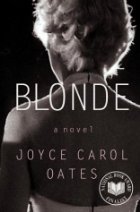
Blonde by Joyce Carol Oates: a Book Review

Blonde is a work of fiction, not a biography of Marilyn Monroe. I had to keep reminding myself of that as I was reading, because it was so easy to believe in the characters.

Joyce Carol Oates makes it crystal clear in her Author’s Note:

Blonde is a radically distilled “life” in the form of fiction, and, for all its length, synecdoche is the principle of appropriation. In place of numerous foster homes in which the child Norma Jeane lived, for instance, Blonde explores only one, and that fictitious; in place of numerous lovers, medical crises, abortions and suicide attempts and screen performances, Blonde explores only a selected, symbolic few.

… Biographical facts regarding Marilyn Monroe should not be sought in Blonde, which is not intended as a historic document, but in biographies of the subject.

As you would expect it’s a tragic story, intense and shocking in parts. It begins with a Prologue – 3 August 1962 with Death hurtling along towards 12305 Fifth Helena Drive, Brentwood, California. It then follows Norma Jeane Baker’s life in chronological sections from The Child 1932 – 1938 to The Afterlife 1959 – 1962. It switches from one narrator to the next, and from third person to first person perspective throughout. It’s brutal, tender and both lyrical and fragmented.

It focuses on need, on Norma/Marilyn’s need for love and acceptance – to be loved as a person and acknowledged as an actress. She wanted to be good. ‘Marilyn Monroe’ was a role she had to play:

A light must have shone in Norma Jeane’s eyes. An electric current must have run through her supple, eager girl’s body. She was “Marilyn” – no she was “Angela” – she was Norma Jeane playing “Marilyn” playing “Angela” – like a Russian doll in which smaller dolls are contained by the largest doll which is the mother … (pages 256-7)

She took drugs to help her sleep, and drugs to give her energy.She couldn’t cope with ordinary life, it baffled her without a script to follow and no guidance about what was happening, or why. She was driven, desperate to have a baby, desperate to know her father, calling her husbands ‘Daddy’, moody, childlike, fragile, always wanting to do and be better.

Joyce Carol Oates has got really inside this character, so much so that I could believe she’d had access to Norma/Marilyn’s thoughts and feelings. The other characters are intriguing, sometimes just given initials, Mr Z, W, C and so on, others are recognizable through their nicknames – The Ex-Athlete, The Playwright, The Prince and the President for example. But Marilyn is the star. In the Author’s Note Oates lists the sources she has consulted, not just biographies but also books about American politics, Hollywood and books on acting. Marilyn had kept a journal and also written poems, two lines of which are included in the final chapter; the other poems apparently by her are invented. Some of the text is taken from interviews and some is fictitious. But it’s all woven together so skilfully that it’s hard to tell what is from real life and what is not.

For me this ranks as one of Joyce Carol Oates best books, although I have by no means read all her books. The ones I’ve read have all had the power to move me. In addition to the ones I’ve written about on this blog I’ve also read The Tattooed Girl, Middle Age, Solstice and The Falls.

R.I.P. VI

The purpose of the R.I.P. Challenge, which runs from 1 September to 31 October, is to enjoy books that could be classified as:

Mystery.
Suspense.
Thriller.
Dark Fantasy.
Gothic.
Horror.
Supernatural.

There are two simple goals for the R.eaders I.mbibing P.eril VI Challenge:

1. Have fun reading.
2. Share that fun with others.

As always Carl is hosting and this is the site to visit if you’re interested in joining in. There are several levels and I’m aiming to do Level One:

Peril the First:

‘Read four books, any length, that you feel fit (my very broad definitions) of R.I.P. literature. It could be Stephen King or Sir Arthur Conan Doyle, Ian Fleming or Edgar Allan Poe’¦or anyone in between.’

I’ll be choosing from these books (in no particular order), all from my to-be-read books:

  • Naming the Bones by Louise Welsh
  • Blood Harvest by S J Bolton
  • Shadows in the Street by Susan Hill
  • Life Support by Tessa Gerritsen
  • Diamonds are Forever by Ian Fleming
  • The Distant Hours by Kate Morton
  • Blood Hunt by Jack Harvey (Ian Rankin)
  • Portobello by Ruth Rendell
  • Great Ghost Stories by Aldous Huxley & others
  • The Turn of the Screw by Henry James – I started this ages ago and never finished it!

This has come at an appropriate time for me as, for once and amazingly, I have no books on the go!

Now I just need to decide which one to read first – I’m torn between Naming the Bones and Blood Harvest!

A Book Meme

Musing Mondays from Should Be Reading is here on Tuesday this week!

This week’s musing is’¦ a book meme!
What was the last book you’¦

‘¢ borrowed from the library? 
‘¢ bought? 
‘¢ cried over?
  • I don’t often cry over books, I can’t remember the last one.
‘¢ disliked and couldn’t finish?
  • Cloud Atlas by David Mitchell – I think I’ve given up on this one after trying to read it three times. What am I missing?
‘¢ read & loved?
‘¢ got for review? (or: got in the mail?)
‘¢ gave to someone else?
  • I gave a pile of books to the book stall at my local hospital – can’t remember the titles.
‘¢ stayed up too late reading?
  • Blonde by Joyce Carol Oates – I fell asleep reading this book for many nights.