Musing Mondays: e-reading

This week’s musing asks’¦

What devices ‘“if any’“ do you read books on? Do you find it enjoyable, or still somewhat bothersome? Or: If you only read the print books, why haven’t you chosen to read on any devices?

I’ve had a Kindle for about a year now and have read several books on it. I’ve got more used to it now and don’t find it a bothersome way to read books. It’s just another way of reading, although with some disadvantages, as I still like the experience of reading a print book. I like the feel of a book, being able to flip over the pages easily, going backwards and forwards in the text, and looking at the cover and any illustrations – in colour.

But, I’m finding it easier and easier to read on my Kindle and that’s because I can enlarge the font, which makes it much easier to read in bed. My Kindle has its own light which makes it even better for reading in bed, or in poor light anywhere. I’ve picked up several print books recently and struggled to read them, because of the very small font – they would be much easier to read on a Kindle! Another bonus is the weight. For example, this month I’ve read The Woman in White by Wilkie Collins on my Kindle – this in a print book is around 700+ pages, making it a heavy and awkward book to read, but a doddle on the Kindle, no heavier or fatter than the slimmest paperback!

I also like the speed you can get a book – instantly, no more waiting for it to arrive in the post. This, of course, can also be a disadvantage, encouraging me to buy more books, but so far, I’ve been very strict with myself and the majority of books I’ve acquired have been free – another plus!

Booking Through Thursday: An Interview with Me

btt button

Booking Through Thursday asks:

1. What’s your favorite time of day to read? I don’t have a favourite time – any time is best. I read mostly early mornings and late at night.

2. Do you read during breakfast? (Assuming you eat breakfast.) Yes.

3. What’s your favorite breakfast food? (Noting that breakfast foods can be eaten any time of day.) I love porridge for a hot breakfast and muesli when I fancy a cold breakfast.

4. How many hours a day would you say you read? 2 – 3 hours.

5. Do you read more or less now than you did, say, 10 years ago? About the same.

6. Do you consider yourself a speed reader? No

7. If you could have any superpower, what would it be? To read multiple books at the same time.

8. Do you carry a book with you everywhere you go? Not everywhere, but most places – it’s easier now with my Kindle.

9. What KIND of book? If it’s a ‘real’ book it has to be small enough to fit in  my bag or pocket and can be any genre – usually whatever I’m reading.

10. How old were you when you got your first library card? Four or five, I think, or I may have been able to borrow books on my mother’s card, I don’t know. I only remember borrowing books from the library before I went to school aged five.

11. What’s the oldest book you have in your collection? (Oldest physical copy? Longest in the collection? Oldest copyright?) I don’t know the oldest physical book in my collection. It would be one of the books my parents or grandparents owned. I have several of these that I know my parents were given (as school and Sunday School prizes) in the 1920s, but there are a few like these that probably belonged to my grandparents:

Jane Eyre by Currer Bell (Charlotte Bronte) published by Richard Edward King, 88 Curtain Road, E.C. no date probably 1880s- 90s and The Channings by Mrs Henry Wood, published by Richard Bentley and Son, Publishers in Ordinary to Her Majesty the Queen, 1890.

12. Do you read in bed? Yes – see question 1.

13. Do you write in your books?I was brought up never to write in books, but I sometimes do now – in pencil. I have some of my children’s books that I’ve coloured in the line drawings with coloured pencils and some novels I read for school with passages underlined in biro (I’m shocked by my younger self!)

14. If you had one piece of advice to a new reader, what would it be? Read whatever you like and read, read, read. Never believe anyone who tells you that you should be doing something else rather than reading.

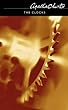
The Clocks by Agatha Christie: My Thoughts

The Clocks is one of Agatha Christie’s later books, published in 1963. I read it in December and then watched the TV version. They are different and for once that didn’t irritate me, although I do wonder why some of the names were altered. The main difference is that in the book, Poirot doesn’t appear until about halfway into the book, whereas in the TV version he is the main investigator.  So be it, I liked both versions.  This post is now just about the book.

Sheila Webb, a typist, had found a dead man in the sitting room at the home of Miss Pebmarsh at 19 Wilbraham Crescent. He had been drugged and then stabbed. Miss Pebmarsh who is blind didn’t know the dead man and denied ringing the secretarial agency and asking for Sheila. The strange thing was that there were five clocks in the sitting room and all, except for the cuckoo clock which announced the time as 3 o’clock, had stopped at 4.13. Sheila ran out of the house in a panic into the arms of Colin Lamb. Colin has his own reasons for being in Wilbraham Crescent, which only become clear later in the story. He reports the death to Detective Inspector Hardcastle and together they investigate. The first problem is to identify the dead man as no one knows who he is. In fact no one seems to know anything.

This is where Poirot gets involved because Colin knows him. Colin has changed his surname; his father had been a Police Superintendent  – presumably Superintendent Battle. Colin asks for Poirot’s opinion, and challenges him to solve the mystery. At this point Poirot then runs through what amounts to a potted history of crime fiction and the art of detection. He refers to real crimes and then to examples of criminal fiction, including The Leavenworth Case by Anna Katherine Green (which reminds me I have a copy on Kindle still to read). He lambasts fictional writers such as Gary Gregson (one of the characters in The Clocks) and Ariadne Oliver, another of Agatha Christie’s creations, thinking her books are highly improbable.

Colin gives him the facts and wants the answer. He says:

I want you to give me the solution. I’ve always understood from you that it was perfectly possible to lie back in one’s chair, just think about it all, and come up with the answer. That it was quite unnecessary to go and question people  and run about looking for clues. (page 193)

I enjoyed these aspect of the book immensely, where I imagine Agatha Christie was amusing herself at her characters’ expense. Poirot sends Colin away instructing him to talk to people and to let them talk to him. Later on his curiosity gets the better of him and he does leaves his chair and visit the scene of the crime.

I  also liked the descriptions of the neighbours in the Crescent and the confusing way the houses are numbered. I did work out the significance of the numbering quite early on in the book, which rather pleased me. There are many red herrings and I didn’t think the separate plot involving Colin’s work as a British Intelligence agent was terribly interesting,or necessary, although the two plots do connect by the end.

For a more detailed account of the book see Wikipedia.

My rating: 4/5

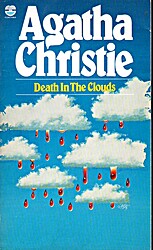
Death in the Clouds by Agatha Christie: a Book Review

Death in the Clouds is a kind of locked room mystery, only this time the ‘locked room’ is a plane on a flight from Paris to Croydon, in which Hercule Poirot is one of the passengers.

In mid-air, Madame Giselle, is found dead in her seat. It appears at first that she has died as a result of a wasp sting (a wasp was flying around in the cabin) but when Poirot discovers a thorn with a discoloured tip it seems that she was killed by a poisoned dart, aimed by a blowpipe.

At the inquest the jury’s verdict is that the murderer is Poirot! However the coroner refuses to accept this and finds that the cause of death was poison with insufficient evidence to show who had administered the poison. All the other passengers and flight attendants are suspects and Poirot together with Inspector Japp, studies the passenger list with details of their belongings. There is a helpful plan of the cabin at the front of the book showing who sat where, including a crime fiction writer, a flute-playing Harley Street doctor, two French archaeologists, a dentist, a hairdresser, a Countess (formerly an actress), a woman who is a compulsive gambler, a crime writer and a businessman . Despite all this I was quite unable to work out who did it.

The question is who could have acquired the rare poison and how could it have been shot at Madame Giselle without anyone noticing that happening. Why would anyone want to kill her, and how were any of the suspects connected with her? Even when Poirot details the clues, including the Clue of the Passenger’s Baggage (and I read through the list a few times), I still didn’t work it out.

Apart from the ingenious mystery, which the coroner describes as the most astonishing and incredible case he had ever dealt with, there were other things I enjoyed in reading this book. First of all the ‘psychological moments’  in which people don’t notice what is happening in front of them because their attention is diverted. Then there is the way Christie makes fun of crime fiction writers and readers, making Japp comment that:

I don’t think it healthy for a man always to be brooding over crime and detective stories, reading up all sorts of cases. It puts ideas into his head. (page 63)

Poirot’s denouement at the end of the book clears up all the confusion, detailing his impressions, precise ideas and methods in dealing with the case. Looking back through the book, all the clues were there, of course, but so cleverly concealed that in most cases I had overlooked them or not realised their significance. A most enjoyable book!

  • Paperback: 336 pages
  • Publisher: HarperCollins; Masterpiece edition (Reissue) edition (3 Mar 2008)
  • Language English
  • ISBN-10: 000711933X
  • ISBN-13: 978-0007119332
  • Source: I bought the book
  • My rating 4/5

Wilkie Collins: A Classics Challenge – January Prompt

The Classics Challenge has started and the first book I’m reading is The Woman in White by Wilkie Collins. Katherine at November’s Autumn has provided some questions at different levels, depending on how much of the book you’ve read. I’m starting with level 1:

The Author:

Who is the author? What do they look like? When were they born? Where did they live? What does their handwriting look like? What are some of the other novels they’ve written? What is an interesting and random fact about their life?

Wilkie Collins (1824 – 1889)

Wilkie Collins was born in Marylebone, London and lived in a number of houses in the area:
  • Blandford Square (1848-1850)
  • Hanover Terrace (1850-1856)
  • Harley Place (1856-1857)
  • Harley Street (1860-1864)
  • Melcombe Place (1864-1867)
  • Gloucester Place (1867-1888)
  • Wimpole Street (1888-1889)

He wrote 30 novels, more than 60 short stories, 14 plays, and over 100 non-fiction pieces. His best-known works are The Woman in WhiteThe MoonstoneArmadale and No Name.

Collins’s handwriting:

Collins also considered a career in painting and exhibited a picture at the Royal Academy summer exhibition in 1849.

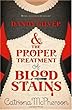
Dandy Gilver and the Proper Treatment of Bloodstains by Catriona McPherson

I hadn’t come across any of Catriona McPherson’s books until the publishers emailed me about her latest book – Dandy Gilver and an Unsuitable Day for a Murder, which is coming out in the spring and they kindly sent me the fifth in the Dandy Gilver series – Dandy Gilver and the Proper Treatment of Bloodstains. Given that it has the sort of title and jacket cover that normally make me avoid a book, I was pleasantly surprised to find that I really enjoyed this book. It just goes to show not to judge a book by its cover.

It’s set in Edinburgh in 1926, when Dandy (short for Dandelion Dahlia!), a wealthy aristocrat who is also an amateur sleuth, receives a letter from Lollie Balfour asking for help as she is convinced that her husband is going to kill her. The only way Dandy can investigate is for her to go undercover as lady’s maid to Lollie. She manages to pass as a  lady’s maid (albeit an inexperienced one) with the other household servants, who with just one exception, all have stories of how horrible Mr Balfour is. And then he is found dead in his bedroom, a locked room, stabbed with ‘a long, bone-handled knife, lodged to its hilt and standing straight up out of his neck, pooled all round with blood that was almost black.’

There are plenty of suspects for his murder, including Lollie herself, and Dandy has to work out who is telling the truth. I had my suspicions quite early on but hadn’t quite foreseen the actual outcome or culprit. Even though I didn’t get it right I was on the right lines, which is pleasing and in any case I wouldn’t have liked it to be too easy to work out the puzzle.

Along with a good plot, the characters are all well defined and distinct and although at one point I thought the amount of description of the miners’ strike was just that bit too detailed, it has a great sense of time and place reflecting the mood of the 1920s during the general strike. And now I do know the proper treatment for bloodstains.

  • Hardback: 291 pages
  • Publisher:Thomas Dunne Books (2009)
  • Language English
  • ISBN-13: 978-0312654184
  • Source: the publishers

My rating 4.5/5

I wonder how I’ve managed to be totally unaware of Catriona McPherson‘s books up to now. She is a Scottish writer who now lives in Northern California. I’ll certainly read more of her books in future.