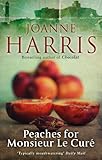
Peaches for Monsieur Le Curé by Joanne Harris

After I finished reading The Lollipop Shoes by Joanne Harris I was in two minds about reading her next book about Vianne Rocher Peaches for Monsieur Le Curé, but as I’d reserved it from the library and spurred on by other reviews I decided to read it. I was hoping I would like it more than The Lollipop Shoes.

From the book jacket:

When Vianne Rocher receives a letter from beyond the grave, she has no choice but to follow the wind that blows her back to the village in south-west France where, eight years ago, she opened up a chocolate shop. But Vianne is completely unprepared for what she finds there.Women veiled in black, the scent of spices and peppermint tea, and there, on the bank of the river Tannes, facing the square little tower of the church of Saint-Jerome, like a piece on a chessboard – slender, bone-white and crowned with a silver crescent moon – a minaret.

 Nor is it only the incomers from North Africa that have brought big changes to the community. Father Reynaud, Vianne’s erstwhile adversary, is now disgraced and under threat. Could it be that Vianne is the only one who can save him?

My view:

Peaches for Monsieur Le Curé is a diluted version of Chocolat; it is too long and drawn out for the story line. It’s told from two viewpoints, that of Vianne and Father Reynaud, but I found that this resulted in too much ‘telling’, too much explanation and repetition. This means that the storyline gets padded out with too much detail. It became predictable and I wanted it to end before it actually did. I read on to the end because I wanted to know what happened. Although I hadn’t foreseen the detail I had foreseen the end.

I should like it more than I did, because it is so similar to Chocolat, covering many of the same themes: fear of the outsider, religious conflict, intolerance and prejudice, with issues of gender and race. It’s also about how people interact and how their lives intersect and above all about the importance of communication, love, and understanding and respecting the others’ point of view. But, the magic is missing for me.

May's Books 2013 & Crime Fiction Pick of the Month

I’ve read ten books this month and have only written about five of them – I don’t think I’ll get round to writing about all of them now. More reading means less writing!

I read five crime fiction novels:

May bks

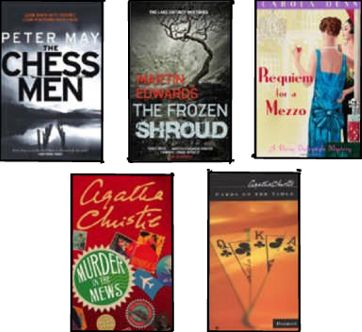
  • The Chessmen by Peter May. This is the third in his Lewis Trilogy, a fascinating and compelling book in which the body of an old friend of Fin McLeod’s is discovered seventeen years after he had disappeared. Whilst the books in this trilogy can be read as stand-alones I think it’s best to read them in sequence, because the second and third books refer to events and characters covered in the first book.
  • The Frozen Shroud by Martin Edwards, the sixth in his Lake District Mysteries with another cold case and a possible copycat murder five years later for Daniel Kind and DI Hannah Scarlett to solve. An excellent book.
  • Requiem for a Mezzo by Carola Dunn, Daisy Dalrymple and DI Alex Fletcher are faced with the murder of an opera singer during a performance of Verdi’s Requiem. A quick, easy read.
  • Murder in the Mews by Agatha Christie (Poirot 4 short stories), longer than the average short stories (and so more satisfying) these feature some of Agatha Christie’s plot elements and endings, with Poirot performing his usual final denouements.
  • Cards on the Table by Agatha Christie – an excellent murder mystery – I want to write about this in more detail in a later post.

My Crime Fiction Pick of the Month is The Frozen Shroud by Martin Edwards. See Kerrie’s blog, Mysteries in Paradise for more Crime Fiction Picks of the Month.

The other five books I finished reading in May are:

  • The Lollipop Shoes by Joanne Harris – I wasn’t too keen on this one.
  • Peaches for Monsieur Le Curé by Joanne Harris and again was rather disappointed. I may write more about the latter book and feel a bit differently about it. Sometimes writing about a book makes me appreciate it more. It’s as though it crystallises my thoughts and I can evaluate it better.

I may also write about these books:

May bks

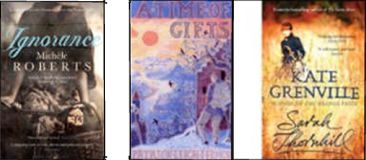
  • Ignorance by Michèle Roberts on Kindle – historical fiction set in France before and during the Second World War. a book about guilt, desire and love.
  • Patrick Leigh Fermor’s A Time of Gifts, non-fiction, about his journey from the Hook of Holland to Constantinople, although this book only covers his journey to the Danube between what were in 1934 Slovakia and Hungary.
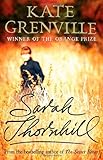
  • Sarah Thornhill by Kate Grenville – a beautiful book, also historical fiction set in Australia during the early/mid 19th century. A book about race, family, secrets and love.

Sarah Thornhill by Kate Grenville: a Book Beginnings post

Book Beginnings Button

Book Beginnings on Friday at Gilion’s blog Rose City Reader is the place to share the first sentence (or so) of the book you are reading, along with your initial thoughts about the sentence, impressions of the book, or anything else the opener inspires.

I’m currently reading Sarah Thornhill by Kate Grenville. It begins:

The Hawkesbury was a lovely river, wide and calm, the water dimply green, the cliffs golden in the sun, and white birds roosting in the trees like so much washing. It was a sweet thing of a still morning, the river-oaks whispering and the land standing upside down in the water.

They called us the Colony of New South Wales. I never liked that. We wasn’t new anything. We was ourselves. (page 3)

I heaved a sigh of relief when I read these opening paragraphs. They paint such a beautiful picture in the first paragraph – I love the peaceful image of a dimply green river reflecting the world upside down – and then the contrast of the strongly individual statements in the second paragraph. The narrator is Sarah Thornhill, a young girl at the beginning of the book, the youngest daughter of William Thornhill, who had been transported to Australia for stealing timber and whose story is told in Kate Grenville’s book The Secret River.

My sigh of relief is because recently I’ve been rather disappointed in my choice of books. Sarah Thornhill is the follow up book to The Secret River, a book I absolutely loved and I was concerned that this book wouldn’t live up to my expectations (see my previous post on Joanne Harris’s book The Lollipop Shoes).

I’m now over half way through the book and although it’s written in different style from The Secret River, so far it’s living up to its early promise. My sigh of relief is now a sigh of contentment.

The Lollipop Shoes by Joanne Harris

ChocolatI read Chocolat by Joanne Harris in 2008 and loved it. Here’s an extract from my post at that time.

It’s the story about Vianne Rocher who arrives in Lansquenet-sous-Tannes, a place that is’ no more than a blip on the fast road between Toulouse and Bordeaux’ on Shrove Tuesday. She takes over the old bakery and transforms it into La Celeste Praline Chocolaterie Artisanale €“ in other words the most enticing, the most delicious and sensuous Chocolaterie, selling not only all sorts and types of chocolate treats but delicious chocolate drinks. Together with Anouk her daughter and Anouk’s imaginary friend Pantoufle the rabbit, she also transforms everyone’s life along the way.

It’s not just a story about a chocolaterie – it’s about fear of the outsider, prejudice against ‘these people’ €“ immigrants, vagrants, and gypsies; bigotry; fear of death, old age and illness; and fear that the Church will lose its purity and that the community will be corrupted by liberal and heretic beliefs. It’s also about how so many lives intersect and interact and above all about the importance of love and understanding in everyone’s life.

So, I had high expectations about the next two books about Vianne Rocher – The Lollipop Shoes (in the US this is published as The Girl With No Shadow) and Peaches for Monsieur Le Curé (in the US – Peaches for Father Francis). Maybe my expectations were too high because I was disappointed – neither book is as good, or as enchanting as Chocolat.

The Lollipop Shoes continues Vianne’s story four years later in Paris with Anouk and a second daughter Rosette. Blown there by the wind, Vianne now goes by the name of Yanne Charbonneau and Anouk, now eleven years old, is known as Annie. Rosette who is nearly four years old has an imaginary friend, a monkey called Bam. Yanne is now trying to live a ‘normal’ life, without using magic, trying to fit in with the people around them. However, her efforts are disrupted by the arrival of Zozie de l’Alba, the young lady with the shiny red shoes – the ‘lollipop’ shoes, Annie calls them. Zozie has no scruples and doesn’t hesitate to practise her own kind of magic, bewitching Annie with her spells and the power of her mind. Zozie’s magic though, is dark magic, evil and dangerous. She’s a stealer of lives and plans to take Vianne’s identity and make Annie her own.

As in Lansquenet-sous-Tannes, Yanne is living above a chocolaterie. This one in Montmarre is owned by Thierry le Tresset, ‘fifty-one; divorced, one son, a churchgoer, a man of rock’. He wants to marry Yanne, but she isn’t sure. Annie is having problems at school, fitting in with the other children and Rosette is a child living very much in her own world, she hardly speaks and communicates by signs. Is Bam just an imaginary friend or is there more to him?

This is really a story about good versus evil and where Chocolat was about the power of love, The Lollipop Shoes is about the strength and destructive power of evil. But there is something missing, there is no sparkle; it’s flat. The story is narrated by Annie, Zozie and Yanne and sometimes I found it difficult to decide which character was the narrator, and had to check the little symbol at the beginning of each chapter. Maybe it’s just me, because other people have really enjoyed this book – there are lots of 4 and 5 stars on both Goodreads and Amazon.

This book qualifies for two challenges – Mount To-Be-Read 2013 and Once Upon a Time VII (Fantasy).

Recent Additions – Waiting to be Read

I’ve got more books waiting to be read than I can possibly read in the near future, so many that they’re sitting around making me feel just a bit guilty that I can’t get round to them. So this post is just to list some of the titles, quoting the publishers’ blurbs.

Here are a few in no particular order and with no recommendation to read them, these are simply books that have been sent to me by the author/publisher to read and review. I may post my own thoughts on these books at a later date.

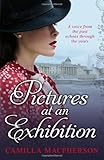
Pictures at an Exhibition by Camilla Macpherson – published April 2012

Blurb from the Back Cover

London, 1942 – With bombs raining down on London, the National Gallery’s most treasured paintings have been hidden away. The authorities have decided that only one masterpiece will be displayed each month. And each month, Daisy Milton writes to her cousin Elizabeth to tell her about the paintings, her life – and the man she loves.

London, present day – A terrible tragedy has left Claire’s marriage to Rob in tatters and there seems little hope of reconciliation. Then she finds Daisy’s letters, written to Rob’s grandmother, and gradually, picture by picture, month by month, Daisy’s world in the 1940s becomes more real to Claire than her own. Slowly, too, she begins to notice intriguing parallels between both their lives.

But Daisy is from another time, and unless Claire can find a way to make sense of the past, she risks losing everything that she cares about in the present.
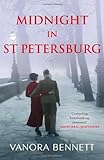
Midnight in St Petersburg by Vanora Bennett – published April 2013

Blurb from Amazon:

St Petersburg,1911: Inna Feldman has fled the pogroms of the south to take refuge with distant relatives in Russia’s capital city. Welcomed into the flamboyant Leman family, she is apprenticed into their violin-making workshop. With her looks and talents, she feels instantly at home in their bohemian circle of friends. But revolution is in the air and, as society begins to fracture, she is forced to choose between her heart and her head.She loves her brooding cousin, Yasha, but he is wild, destructive and bent on revolution; Horace Wallich, the Englishman who works for Fabergé, is older and promises security and respectability.

As the revolution descends into anarchy and blood-letting, a commission to repair a priceless Stradivarius violin offers Inna a means of escape. But will man will she choose to take with her? And is it already too late?

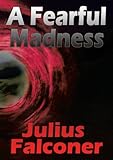
A Fearful Madness by Julius Falconer – published March 2013 
Blurb from the back cover:

If you think that religion, sex, the aristocracy and mystery might make a good crime novel, TRY THIS ONE! A police investigation into the violent death of a part-time cathedral verger stalls for lack of incriminating evidence. However, three people have a close interest in clearing the matter up where the police have failed: the dead man’s sister, anxious to see justice done, and two of the police suspects, both released without charge but keen to clear their names.

Striking out on their own, each approaches the murder from a different perspective: book-trafficking on the black market; revenge by an extremist religious organisation for the dead man’s betrayal of them; and retaliation in a case of blackmail. The police continue to maintain that the murder was committed out of sexual anger, even though they have no proof apart from the circumstances of the verger’s death.

Eventually DI Moat and his assistant DS Stockwell, from the North Yorkshire Force, take a hand. Moat pays his predecessors in the investigation, both professional and amateur, the compliment of taking their findings seriously – but comes up with an idea of his own.

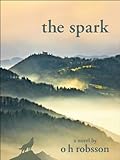
The Spark by O H Robsson – Kindle edition, oublished February 2013
Blurb from Amazon:

He steps off the train and they’re there, watching and waiting, anticipating the moment when his head will turn and their eyes will meet. But there are too many people. The platform’s crowded and for ten seconds nothing happens, until suddenly somebody moves, a gap opens up and he sees them off to his right. There’s a pause, then they start to run. Eva with the dogs, Kristoffer with his bags, the four of them pushing through and around people, desperate to be together once more.

They hold each other tight, breathing each other in. It’s been too long. He reaches down to the dogs and she whispers into his ear that everything’s fine now, everything’s great. He nods his head and picks up his bags. She uses the word four more times before they reach the car. It seems everything’s great.

Except something’s wrong.

Enchanting and calming, ‘the spark’ is o h robsson’s classic tale of life and love, set amidst the breath-taking beauty of Norway’s west coast. Exclusive to this ebook edition are two behind-the-scenes photo galleries, and an in-depth author interview.

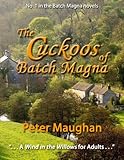
The Cuckoos of Batch Magna by Peter Maughan, published March 2103
Blurb from Amazon:

When Sir Humphrey Miles Pinkerton Strange, 8th baronet and huntin’ shooting’ and fishin’ squire of the village of Batch Magna in the Welsh Marches, departs this world for the Upper House (as he had long vaguely thought of it, where God no doubt presides in ermine over a Heaven as reassuringly familiar as White’s or Boodle’s), what’s left of his decaying estate passes, through the ancient law of entailment, to distant relative Humph, an amiable, overweight short-order cook from the Bronx.

Sir Humphrey Franklin T Strange, 9th baronet and squire of Batch Magna, as Humph now most remarkably finds himself to be, is persuaded by his Uncle Frank, a small time Wall Street broker with an eye on the big time, to make a killing by turning the sleepy backwater into a theme-park image of rural England €“ a vacation paradise for free-spending US millionaires.

But while the village pub and shop, with the lure of the dollar in their eyes, put out the Stars and Stripes in welcome, the tenants of the estate’s dilapidated houseboats are above any consideration of filthy lucre and stand their ground for tradition’s sake €¦ and because they consider eviction notices not to be cricket.

Each disgruntled faction sees the other as the unwelcome cuckoo in the family nest.

So, led by randy pulp-crime writer Phineas Cook, and Lt-Commander James Cunningham DSO, DSC and Bar, RN (ret) €“ a man with a glass eye for each day of the week, painted with scenes from famous British naval victories and landscapes that speak of England €“ the motley crew run up the Union Jack and battle ensign and prepare to engage.

But this is Batch Magna, a place where anything might happen. And does €¦
First Chapter, First Paragraph

First chapterEvery Tuesday Diane at  Bibliophile by the Sea hosts First Chapter First Paragraph Tuesday Intros, sharing the first paragraph or (a few) of a book she’s reading or thinking about reading soon.

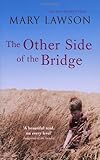
This is a book I’ve had for some time and haven’t read yet. It’s The Other Side of the Bridge by Mary Lawson. I bought this book because I’d read and loved Mary Lawson’s book, Crow Lake (link to my post on the book).

The Other Side of the Bridge begins: 

Prologue

There was a summer back when they were kids, when Arthur Dunn was thirteen or fourteen and his brother Jake was eight or nine, when for weeks on end Jake pestered Arthur to play the game he called knives. Jake had a great collection of knives at the time, everything from fancy little Swiss Army jack-knives with dozens of attachments to a big sleek hunting knife with a runnel down one side for blood. It was the hunting knife that was to be used in the game because according to Jake it was the best for throwing.

The only reason I haven’t read it yet is pressure of time  – and lots of other books that I’m dying to read. But should I read this one soon?

This is the blurb on the back cover:

Arthur and Jake are brothers, yet worlds apart. Arthur is older, shy, dutiful, and set to inherit his father’s farm. Jake is younger and reckless, a dangerous man to know. When Laura arrives in their 1939s rural community, an already uneasy relationship is driven to breaking point …

And this is what Penelope Lively wrote about it in the Guardian:

This is a fine book – an enthralling read, both straightforward and wonderfully intricate.

I think I’ll move it up the list of books-to-be-read.