Mrs McGinty's Dead by Agatha Christie

Mrs McGinty 001

I think Agatha Christie enjoyed herself writing Mrs McGinty’s Dead, especially the character of the crime novelist, Ariadne Oliver. It was first published in 1952 and written not long after the end of the Second World War, reflecting the difficulties of finding employment and the changes for the post-war impoverished middle classes.

Hercule Poirot is rather bored, missing his friend Hastings and finding that his days are revolving around his meals: ‘One can only eat three times a day. And in between there are gaps.’ Even a newspaper report about the result of the McGinty trial doesn’t interest him: ‘It had not been an interesting murder. Some wretched old woman knocked on the head for a few pounds. All part of the senseless brutality of these days.

It is only when Superintendent Spence comes to him for help, convinced of the innocence of James Bentley, convicted of the murder and under sentence of death that Poirot agrees to reinvestigate the case. And so it is that he goes to the village of Broadhinny, treating it as a ‘challenge to the little grey cells of my brain.’

He investigates in his usual way, with method and logic, first of all by considering the motive and then looking at the characters of Mrs McGinty and James Bradley. He decides that the answer is to be found in the personality of the murderer.There is a sense of urgency, as the death penalty was still in force and there is little time left before James Bentley is due to be hanged. Poirot talks to Mrs McGinty’s neighbours and the people she worked for as a charlady and eventually solves the mystery, but not without a second murder and nearly getting killed himself.

It’s a lively book, the characters and dialogue moving the plot along smoothly. There are plenty of surprises and a lot of misdirection before the killer is revealed. The clues are all there and although I did pick up on the main clue, I picked the wrong person as the murderer.

As always, for me, there is more to the book than the puzzle of the murders, and in Mrs McGinty’s Dead there are several things, including the view Agatha Christie paints of life in an English village not long after the war (usually the setting for a Miss Marple mystery), the mix of characters, working class and middle class, the very amusing picture of the dreadful Bed and Breakfast, run by Major Summerhayes and his wife, Maureen, where Poirot stays in Broadhinny, and then there is Ariadne Oliver.

In portraying Ariadne I think Agatha Christie is revealing her feelings about writing about Poirot, a character she described in her Autobiography as ‘hanging round my neck, firmly attached there like the old man of the sea.’ Ariadne’s detective is a Finn, Sven Hjerson and she has been writing about him for thirty years:

 How do I know why I ever thought of the revolting man? Why a Finn when I know nothing about Finland? Why a vegetarian? Why all the  idiotic mannerisms he’s got? …

And people even write and say how fond of him you must be. Fond of him? If I met that bony, gangling, vegetable-eating Finn in real life, I’d do a better murder than any I’ve invented. (page 201)

She also reveals her feelings about playwrights adapting her plays (and about money for her books!):

So far it’s pure agony. Why I ever let myself in for it I don’t know. My books bring me quite enough money – that is to say the bloodsuckers take most of it, and if I made more, they’d take more. But you have no idea of the agony of having your characters taken and made to say things that they never would have said, and do things that they never would have done. And if you protest, all they say is that it’s “good theatre”. (page 125)

She also wrote in her Autobiography about the ‘terrible suffering you go through with plays, owing to the alterations made in them.'(page 448). I find it reassuring that she didn’t like the way dramatisations changed her books, because I don’t either, although I do like David Suchet as Poirot and Joan Hickson as Miss Marple.

There are references to real life murder cases. On the Sunday before her death, Mrs McGinty had been reading the Sunday Comet, which had an article on women victims of tragedies from the past. Poirot looks at these in detail, concluding that one of the women might have been in Broadhinny when the murder took place.

A short while ago I wrote a guest post for Alyce’s blog At Home With Books about the best and the worst of Agatha Christie’s works. Trying to decide between her numerous novels which one is the best is an impossible task, but I think that Mrs McGinty’s Dead is up there amongst the best of them.

The Hobbit by J R R Tolkien

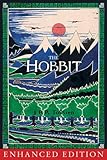
Many years ago I read Tolkien’s The Lord of the Rings and loved the story, so much so that over the years I’ve re-read the books several times. Somehow I’ve ignored The Hobbit, or There and Back Again, maybe thinking that because it’s a children’s book it was too late for me to appreciate it. So even though I’ve had a copy for years it’s only now that I’ve got round to reading it, spurred on by seeing the film this year. (I read the enhanced version on Kindle.) How wrong I was not to have read it before – The Hobbit is a book that all ages can enjoy.
It’s an adventure story of a quest set in a fantasy world, so beautifully written that it seems completely believable. Bilbo Baggins, a hobbit, is recruited through Gandalf, the wizard, to accompany a party of thirteen dwarves, led by Thorin, on their quest to recover the dwarves’ treasure stolen by Smaug the dragon and regain possession of the Lonely Mountain. Along the way Bilbo grows in confidence and becomes a hero, meeting elves, outwitting trolls, fighting goblins, and above all gaining possession of the ring from Gollum.

The enhanced version has a foreword by Christopher Tolkien, complete with illustrations including manuscript pages and unused drawings, in which he describes how and why his father came to write The Hobbit: he would stand in front of the fire in his study and tell stories to Christopher (then aged between four and five years old) and his brothers. One story, this story, he said, was a long story about a small being with furry feet, which he thought he would call a “Hobbit”. This was in about 1929. The book was eventually published in 1937, written whilst Tolkien was engrossed in writing the myths and legends told in The Silmarillion. He hadn’t intended The Hobbit to be connected to the mythology, but his tale gradually became larger and more heroic as he wrote it.

The Hobbit sold very quickly and people asked for a sequel. At first Tolkien thought that writing more details about Gandalf and the Necromancer (Sauron) would be too dark and that many parents “may be afraid that certain parts of it would be terrifying for bedtime reading.” He also wrote:

Mr Baggins began as a comic tale among conventional and inconsistent Grimm’s fairy-tale dwarves, and got drawn into the edge of it – so that even Sauron the terrible peeped over the edge. And what more can hobbits do? They can be comic, but their comedy is suburban unless it is set against things more elemental. (location 339)

Three days after writing those words he wrote:

I have written the first chapter of a new story about Hobbits – “A long expected party.”

That was the first chapter of The Lord of the Rings. (location 339)

It also includes recently discovered audio recordings of J.R.R. Tolkien reading excerpts from The Hobbit, including the dwarves’ party song, the account of their capture by the three trolls, and Bilbo Baggins’s creepy encounter with Gollum.

The Hobbit is an excellent first book for Carl’s Once Upon a Time VII.

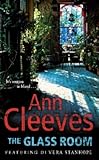
The Glass Room by Ann Cleeves

The Glass Room is the fifth book in Ann Cleeves’s Vera Stanhope series.

It’s going to be a contender for my best book of the year, because I loved it. It has everything I like in a crime fiction novel – setting, characters and a cleverly constructed plot. I didn’t guess who the murderer was but realised afterwards that all the clues had been there, skilfully woven into the narrative, hidden among the dead-ends and red herrings, so that I’d read on without realising their significance.

Set in the Northumberland countryside in an isolated country house, a number of aspiring authors are gathered at the Writers’ House, run by Miranda Barton, to work on their novels. It’s an old fortified farmhouse close to the sea, sheltered on the landward side by trees. DI Vera Stanhope’s neighbour, Joanna has gone missing and her husband, Jack is frantic to find her, so Vera, having tracked her down to the Writers’ House goes to see her, only to find that one of the visiting tutors, Professor Tony Ferdinand has been murdered in the conservatory, stabbed with a kitchen knife. And Joanna is the chief suspect.

If you’ve seen the TV series Vera, maybe you’ll have a vision of Brenda Blethyn as Vera, but that image gradually faded as I read this book. Vera is bigger, fatter, and ruder than the TV version, but above all she is a truly convincing character, exasperating and opinionated, and she can be a nightmare boss. She has no compunctions about breaking the rules, or doing things in her own way and she acknowledges that if any of the other detectives went freelance, playing the private eye, as she is doing in looking for Joanna, she’d give them ‘such a bollocking’. She cares deeply about her job and she does have a soft side, even if it is touched with cynicism:

And why had she agreed to do as Jack asked and chase around the countryside looking for Joanna? Because I’m soft as clarts. Because I like happy endings and want to bring the couple together again, like I’m some great fat Cupid in wellies. Because it would be bloody inconvenient living here without them next door. (page 10)

The interplay between the Vera and Sergeant Joe Ashworth is excellent. Joe isn’t as easily managed as Vera would want him to be and yet she likes that in him. And her relationship with the rest of her team leaves much to be desired, but she is human – and she gets results.

Alongside the mystery Ann Cleeves includes a commentary on writing and writers and on creative writing weekend retreats. This particular course shows the writing world in rather a bad light, as a place of people with huge egos, selfish and self- absorbed and with aspiring, insecure would-be-writers:

Writers were like parasites, preying on other people’s stress and misery. Objective observers like spies or detectives  (page 98)

All in all, this is a book I thoroughly enjoyed and one that kept me guessing to the end.

Cat Among the Pigeons by Agatha Christie

I’ve read about half of Agatha Christie’s books ranging from her first books in the 1920s to the later ones in the 1970s and the quality of her writing does change, with some of the later books being rather loosely plotted and meandering. Cat Among the Pigeons is one of her later books, first published in 1959 and it’s one of the best of these later novels.

It’s set mainly in an exclusive and expensive girls’ school, Meadowbank, in England, said to be based on her daughter Rosalind’s school. The summer term has just started and there are some new members of staff as well as some new pupils, including Princess Shaista from Ramat, a small and rich Arab state in the Middle East, which has just suffered a revolution. Her fiancé Prince Ali Yusuf the Hereditary Sheik, has been murdered and his family jewels have disappeared.

The success of the school is down to Miss Bulstrode, the headmistress and founder of Meadowbank, but she is thinking of retiring. Miss Chadwick, who had helped Miss Bulstrode to found Meadowbank would like to be her successor, but Miss Bulstrode has other ideas. Will it be Miss Vansittart, who is her second in command, or one of the other teachers who would be able to develop the school in line with modern educational thinking? Miss Bulstrode is not sure. She is busy greeting one of the parents when her attention is distracted by one of the mothers approaching clearly in a state of advanced intoxication, so she misses something else that could very well be important. And although she feels uneasy:

There was nothing to tell her that within a few weeks Meadowbank would be plunged into a sea of trouble; that disorder, confusion and murder would reign there, that already certain events had been set in motion … (page 27)

The new staff members are not all fitting in very well. There is Miss Springer, the new Games Mistress, who is not popular with the girls and asks too many personal questions, Mlle Angele Blanche, the new French teacher, whose teaching leaves much to be desired, Ann Shapland, Miss Bulstrode’s new and efficient secretary, and last but not least Adam Goodman, the handsome young new gardener, who is good at his job and has other talents too.

As well as Princess Shaista, Jennifer Sutcliffe is new to the school this term. She’s an uncomplicated character who lives mainly for tennis. She makes friends with Julia Upjohn, who is a much more thoughtful, observant character. So when Miss Springer is found shot dead in the new Sports Pavilion, followed not long after by the murder of Miss Vansittart, it’s Julia who decides to contact Hercules Poirot.

There are several possible motives and suspects and Agatha Christie combines the murder stories with a thriller element by introducing Colonel Pikeaway, who it is hinted is in charge of British Intelligence – ‘We know all about things here. That’s what we’re for.‘ (page 46) and the mysterious Mr Robinson, who is most decidedly not an Englishman although his voice was English with no trace of an accent.

Poirot, of course, although arriving very late in the investigations, works it all out and explains what had happened. But Julia also has worked it out and without giving too much away I’m quoting this passage where she is writing an essay on the contrasting attitudes of Macbeth and Lady Macbeth to murder:

Macbeth, Julia had written, liked the idea of murder and had been thinking of it a lot, but he needed a push to get him started. Once he got started he enjoyed murdering people and had no more qualms or fears. Lady Macbeth was just greedy and ambitious. She thought she didn’t mind what she did to get what she wanted. But once she’d done it, she found she didn’t like it after all. (page 239)

There in a nutshell are the motives for the murder – a ruthless disregard of the value of life and greed and ambition.

The Redemption of Alexander Seaton by Shona MacLean

There are some books that have the power to transport me to another time and place and The Redemption of Alexander Seaton is one such book. I think it’s one of the best novels I’ve read recently. It’s quite long and detailed but each time I put it down I wanted to get back to it as quickly as possible. It’s a fantastic book, historical crime fiction, full of atmosphere and well-drawn characters.

It’s set in 17th century Scotland, mainly in the town of Banff, where on a stormy night Patrick Davidson, the local apothecary’s assistant collapses in the street. The next morning he is found dead in the school house of Alexander Seaton, a failed minister, now a schoolteacher. Davidson was poisoned and when Charles Thom, one of Alexander’s few friends in the town is arrested for the murder, he sets out to prove his innocence. It’s not an easy task, and Alexander finds himself embroiled in an apparent Spanish Catholic plot to invade Scotland, and bigoted prejudices that result in a witch hunt.

As the story unfolds details of Alexander’s history are gradually revealed, his family background, friends and education and the disgrace that prevented him from becoming a minister. The religious conflict between Catholics and Protestants during the reign of Charles I is slotted into the plot seamlessly, explaining the beliefs and prejudices that struck fear into many hearts. It’s a story of murder and cruelty, but also of love and the power of good over evil. For Alexander it’s a trial that eventually sees him beginning to regain his faith in God.

I found the book totally absorbing, convinced I was back in Scotland in the 17th century, eager to find out who the murderer was and the motivation for killing Patrick Davidson. Alexander Seaton is an engaging character and I’m keen to read more about him as there are other books in the series.

The author originally wrote under her name – Shona Maclean, but now her books are published under the truncated name, S G MacLean. She explained in an interview in Shots magazine that ‘the thinking was that my name was too soft and feminine and men wouldn’t buy my books.’ She has an M.A. and Ph.D. in History from the University of Aberdeen. Her Alexander Seaton books are:

1. The Redemption of Alexander Seaton (2008)
2. A Game of Sorrows (2010)
3. Crucible of Secrets (2011)
4. The Devil’s Recruit (2013)

Note: The cover shown above is from the 2009 paperback edition published by Quercus, which I borrowed from my local library.

Memoirs of a Fox-Hunting Man by Siegfried Sassoon

Turn of the Century Salon

Memoirs of a Fox-Hunting Man by Siegfied Sassoon is a perfect choice for the Turn of the Century Salon. It’s the first part of his fictionalised autobiography. The other two books in his trilogy are Memoirs of an Infantry Officer and Sherston’s Progress.

The Book

Fox-Hunting 001

Siegfried Sassoon was born in 1886 and in Memoirs of a Fox-Hunting Man he relives his childhood, youth and experiences as an officer during the First World War. He wrote it in 1928, ten years after the War had ended, calling himself George Sherston. Life for young George/Siegfried was almost idyllic, living in the country as part of the privileged upper class, although his lifestyle exceeded his income. His aunt’s groom, Dixon, taught him to ride and introduced him to the fox-hunting world. At first Siegfried’s sympathies were with the fox and, at one of his first hunts, on spotting a fox he was alarmed so much that when his companion shrieked ‘Huick-holler’ (meaning the fox has been seen) he uttered the words ‘Don’t do that; they’ll catch him.’

Sassoon paints a beautiful picture of the English countryside and country life at the turn of the century. In the passage quoted below he wakes early on the morning of the local village flower show, looking forward to playing in the Flower Show Cricket Match:

When I unlocked the door into the garden the early morning air met me with its cold purity; on the stone step were the bowls of roses and delphiniums and sweet peas which Aunt Evelyn had carried out there before she went to bed [in preparation for the Flower Show]; the scarlet disc of the sun had climbed an inch above the hills. Thrushes and blackbirds hopped and pecked busily on the dew-soaked lawn, and a pigeon was cooing monotonously from the belt of woodland which sloped from the garden toward the Weald. Down there in the belt of river-mist a goods train whistled as it puffed steadily away from the station with a distinctly heard clanking of buffers. How little I knew of the enormous world beyond that valley and those low green hills. (page 53)

The first part of the book is carefree, as Siegfried passes through his school years and time at Cambridge University, which he left before completing his degree. Not a lot happens. His life, despite his lack of funds was a seemingly endless round of riding and hunting. He describes his friends and fox-hunting companions with affection and realism – the old country gentlemen, the benevolent gentry, the newly rich and the dare-devil younger riders, who were ‘reckless, insolent, unprincipled and aggressively competitive; but they were never dull, frequently amusing, and, when they chose, had charming manners.’ (page 235)

Siegfried, himself comes across as a likeable young man, shy, reserved, and modest, happy-go-lucky but aware of his own shortcomings.

All this changed with the onset of the First World War. He enlisted and was eventually posted to France, where because of his connections and abilities, he was appointed as a Transportation Officer stationed behind the trenches and the Front Line. But war brought him face to face with the grim realities of life and death. At first he was philosophical about the War – it seemed ‘inevitable and justifiable. Courage remained a virtue.’ But writing in 1928 he considered:

And that exploitation of courage, if I may be allowed to say a thing so obvious, was the essential tragedy of the War, which as everyone now agrees, was a crime against humanity. (page 256)

He sees men under his command die and suffer appallingly, his friends die, and Dixon his former groom who had enlisted died of pneumonia. Whilst home on leave as he talked to an old friend of Dixon’s he realised the past had gone …

  • Paperback: 320 pages
  • Publisher: Faber and Faber; 2nd edition (31 Jan 1974)
  • Language: English
  • ISBN-10: 057106454X
  • ISBN-13: 978-0571064540
  • Source: library book

The Author

Siegfried Sassoon 1915 (from Wikipedia)

Sassoon is one of the of the War Poets. Unlike others, such as Rupert Brooke, he survived the War. He came to the conclusion that the war was being needlessly prolonged. In 1917 he wrote a protest to his commanding officer. Its impact was reduced because rather than facing a court martial he was tried by a medical board and was judged to be suffering from severe shell shock. His account of the ruling is in the second part of his trilogy Memoirs of an Infantry Officer (1931). He was sent to Craiglockhart military hospital where he met Wilfred Owen, also one of the War Poets. It was in the hospital that Sassoon published some of his war poems. I’ll write more about those in another post and also more about his life when I’ve read Siegfried Sassoon: a biography by Max Egremont (which I’ve reserved at the library). In his later years he wrote The Old CenturyThe Weald of Youth andSiegfried’s Journey, three volumes of non-fictionalised autobiography.