The Secret Garden – Book and Film

Recently I watched the 2020 film of The Secret Garden. The first thing so say it is that it is not like Frances Hodgson Burnett’s book. The basic premise is the same – Mary Lennox is an orphaned child who goes to live with her uncle in Yorkshire where she discovers a secret garden. I’m not going to describe the differences between the book and the film – there are so many – but the main difference is the garden itself. And that is what disappointed me the most about the film.

The ‘garden’ is not a garden – it is a huge version of maybe the Amazon rain forest, a digital fantasy, nothing like the garden in the book. And Misselthwaite Manor has been morphed into Misselthwaite Hall, a huge palatial building dominating the Yorkshire skyline. And what has become of Ben Weatherstaff, the gardener and Mrs Sowerby, Dickon and Martha’s mother? They are just not in the film!

If you don’t like modern versions of old favourites, then steer clear of this film – it is nothing like the book. It’s CGI ‘magic’ is simply not the real Magic of the natural world.

This is what I wrote about the book when I last re-read it 8 years ago. I’m tempted to read it again to obliterate the film from my imagination.

I read The Secret Garden several times as a child and the story has stayed with me ever since. For years my picture of the ideal garden has been a walled garden, just like the secret garden. The story can be read on different levels. As a child it seemed to me to be a straight forward story of Mary Lennox, orphaned after her parents died of cholera in India. Up until the age of nine she had lived a cosseted life looked after by servants, in particular her Ayah, ignored by her parents. After their death she was sent to live at Misselthwaite Manor, on the bleak Yorkshire moors, with her uncle, who was a hunchback recluse, who took little interest in her. Soon after Mary’s arrival, her uncle went abroad leaving her again in the care of servants. These were very different from the servants in India and Mary struggled to adjust.

Soon after she discovers she is not the only child in the house, when she finds Colin, her cousin, a hypochondriac, unable to walk, who believes he won’t live to grow up. Both Mary and Colin are selfish children, hating both themselves and the adults in their lives. Both also hate the outdoors, but encouraged by Martha, her maid, Mary wanders in the gardens of the Manor house and comes across a walled garden, which apparently has no door. There seems no way to get inside it – until guided by a robin, she finds an old key buried in the earth. I loved the descriptions of the Yorkshire countryside, the garden and how under the influence of Martha and her younger brother Dickon and even the grumpy gardener, Ben Weatherstaff, Mary blossomed as the year progressed along with the garden.

Reading it now I can see it is full of symbolism using nature, the Bible and myths, that I never noticed as a child. The image of the garden is used as both paradise lost and paradise regained. As the garden is nurtured and begins to blossom so do Mary and Colin, through springtime and into summer, culminating in the autumn when both are brought to full health. Dickon is accompanied by a young fox, a lamb, a crow and tame squirrels, reminiscent of St. Francis of Assisi and plays his pipe to charm the animals, like Pan. His mother, Mrs. Sowerby, is a plain-speaking down-to-earth Yorkshire woman, full of common sense and wisdom, who through Dickon and Martha helps the children, feeding Mary and Colin with both her words and wholesome food. At times I thought the language becomes over sentimental and a bit syrupy (I never thought that as a child). But there are descriptions that still appeal to me, such as this description of the roses in the garden:

And the roses – the roses! Rising out of the grass, tangled round the sundial, wreathing the tree trunks, and hanging from their branches, climbing up the walls and spreading over them with long garlands falling in cascades – they came alive day by day, hour by hour. Fair, fresh leaves and buds – and buds – tiny at first, but swelling and working Magic until they burst and uncurled into cups of scent delicately spilling themselves over their brims and filling the garden air. (page 210 in my copy)

Above all it is the power of Magic that is invoked in this book. The magic of nature, that makes plants and people grow and develop, the magic of the power of positive thinking and prayer, of the healing power of the mind, and of laughter and love. Sometimes it seemed too simplistic and yet at the same time I was swept along with the sentiments and enjoying the experience of re-reading this book.

The Survivors by Jane Harper

Little, Brown Book Group UK| 1 October 2020| 337 pages| Kindle review copy| 4*

Kieran Elliott has moved back to his home town of Evelyn Bay on the island of Tasmania twelve years after the death of his older brother, Finn. His father has dementia and he has come home to help his mother move house. He feels guilty as Finn died trying to rescue him during a violent storm at sea and he has always thought that his parents blamed him for the loss of their favourite son. On that same day twelve years earlier, a teenage girl went missing. Her bag was later found on the beach, washed up by the tide, but her body was never found. The day after Kieran’s arrival, Bronte, a waitress at the Surf and Turf bar, is found dead on the beach, which stirs up memories of the events of twelve years ago.

I struggled reading the first part of this book. I couldn’t easily make out who was who, especially between the male characters, and I had no idea who or what the ‘Survivors‘ in the title were. There were hints about what had happened twelve years ago, but it wasn’t really compelling me to read on to find out who did what, where and how – until, that is, I’d read about 25% of the book. I was on the point of giving up, when things became clearer, the characters came to life and I realised what was going on – and I just had to read on.

Evelyn Bay is a small community where everyone knows everyone else. There are plenty of rumours flying around, and suspicion falls on several people. Just who and what the ‘Survivors‘ are plays a major role in the story – along with the sea, the caves and the tides. So, this is a slow-burner at first, that turns into an emotionally charged book rather than one of high tension and suspense. I enjoyed it, but not as much as Jane Harper’s earlier books, The Dry, Force of Nature or The Lost Man, which all had me enthralled.

My thanks to the publishers and NetGalley for my review copy.

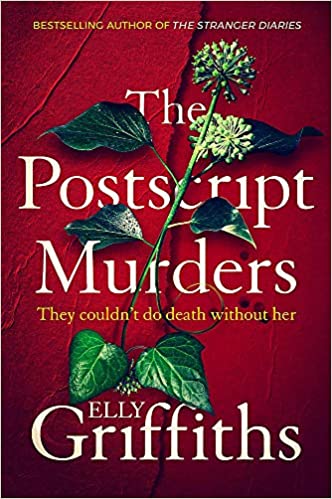
The Postscript Murders by Elly Griffiths

Quercus Books| 1 October 2020| 352 pages| Review copy| 4*

From the sleepy seaside town of Shoreham to the granite streets of Aberdeen, The Postscript Murders is a literary mystery for fans of Anthony Horowitz, Agatha Christie and anyone who’s ever wondered just how authors think up such realistic crimes..

PS: Trust no one.

My thoughts:

I enjoyed Elly Griffiths’ first DS Harbinder Kaur book, The Stranger Diaries, so I was keen to read the second book, The Postscript Murders. It’s very different, in a much lighter style and I think Elly Griffiths was enjoying herself writing this poking fun at crime fiction writers and the book world, with book bloggers and a literary festival. I really enjoyed it. It’s very readable, cleverly plotted, with interesting and well defined characters.

Peggy Smith is ninety, living in a retirement flat at Seaview Court in Shoreham. The book begins as she is ‘lurking’ in a bay window watching the world go by and writing down details of everyone she sees. But when Natalka, Peggy’s Ukranian carer, finds her sitting in her armchair by the window, she knows immediately that she is dead and suspects that something is wrong, especially when she finds a business card – ‘Mrs M Smith, Murder Consultant’. For Peggy is a woman with a past, who helps crime fiction writers with their plots and gory ways for people to die.

But Peggy had a heart condition and DS Harbinder Kaur certainly sees nothing to concern her about her death and initially she does not feature much in the book. Natalka enlists the help of Peggy’s friends, ex-monk Benedict, the local cafe owner and Edwin, who also lives at Seaview Court to help her investigate. When they find sinister notes with the threatening message We are coming for you, and Natalka and Benedict are threatened by a mysterious gunman who bursts into Peggy‘s flat, both D S Kaur and D S Neil Winston then take on an active role.

Their investigations lead them to Peggy’s author friends and another murder victim. Then Natalka, Benedict and Edwin then travel from Shoreham to Aberdeen to a literary festival to warn another of Peggy’s author friends, J D Monroe, Julie, that she too might be in danger, thinking she is the next victim. From then on the mystery deepens, and the suspects increase. There are plenty of red herrings and twists and turns, that kept me guessing throughout.

Many thanks to the publishers and NetGalley for my review copy.

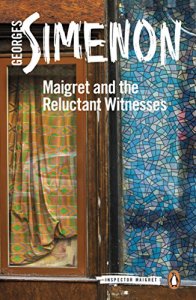
Maigret and the Reluctant Witnesses by Georges Simenon

This week the theme for Novellas in November is Literature in Translation and I’ve chosen Maigret and the Reluctant Visitors by Georges Simenon translated from the French by William Hobson, a novella of 172 pages.

This is the 53rd Inspector Maigret book, originally published in 1955.

It is November and Maigret, nearing retirement, is in a melancholy, nostalgic mood. He has been called out to the home of the Lauchaume family where Léonard, the eldest son has been shot dead. The name Lachaume brings back memories of his childhood in the countryside where the village grocer sold Lachaume Biscuits. But the family is now in dire straits, living in a large house on the Quai de la Gare, Ivry and their biscuit factory is failing. Their house was once an impressive three storey building but is now in a state of decay, cold and damp. The rest of the Lachaume family, his younger brother Armand, Paulette Armand’s wife and his elderly parents, are not only reluctant to talk to the police, they don’t appear to be grieving.

It looks initially that the murder may have been part of a burglary, although only a wallet is missing, but Maigret is suspicious right from the start. His attempts to question the family are held up by their lawyer and also by the Examining Magistrate, Angelot who insists on taking charge of the case. But he makes headway when he visits Véronique Lachaume, Léonard’s estranged sister and eventually Paulette reluctantly talks to him.

The book as a whole has a nostalgic feel, the sense that the world is changing – the Lachaume family has been left behind. Their business has only been kept afloat by the money from the sons’ wives, but they are still proud and reluctant to face the true facts of their situation. Maigret, too, is beginning to realise that his world is changing. for one thing he is getting older, the new magistrates are the younger generation bringing in new methods and he is aware that he only has two years left before his retirement. However, he solves the case mainly through his own intuition, and so he casts off his melancholy.

I’ve now read several of the Maigret books totally out of order, so now I’ve decided it’s time I read the first book, Pietr the Latvian first published in 1931.

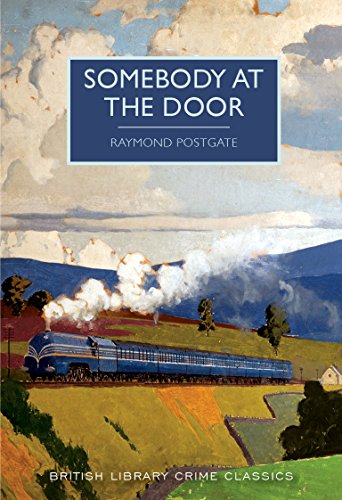
Somebody at the Door by Raymond Postgate

Rating: 4 out of 5.

Somebody at the Door is one of the British Library Crime Classics, originally published in 1943. It’s set in 1942 and it gives a vivid picture of what life was like in wartime England. There is an interesting introduction by Martin Edwards.

In January 1942, Henry Grayling is on the 6.12 train from Euston, travelling home to Croxburn from work in London. There’s a fuel shortage so there are less trains than usual and the carriages are crowded – Grayling views all his fellow passengers with dislike and suspicion as he clutches his attache case, containing £120 pounds close to his chest.

He sits next to a young man, Evetts, who works for the same company and is smoking a foul smelling pipe, and on his other side is the Vicar of Croxburn, both of whom he knows. He also recognises Ransom, a corporal in the Home Guard platoon in which he, Grayling is a second lieutenant. The other occupants of the carriage are a fair young man with a club foot, a refugee doctor, a fat middle aged woman and her teenage daughter, and two young working men in overalls. Most of the passengers are suffering from colds, coughing and sneezing and Grayling has to hold his handkerchief in front of his nose. He is relieved to leave the train when it eventually pulls into the station at Croxburn. However, when Grayling arrived home he is seriously ill and dies later that evening.

An autopsy reveals that he had died of mustard gas poisoning and Inspector Holly finds that there are too many suspects; Grayling was an extremely unlikable person. The rest of the book reads like a collection of short stories as Holly investigates Grayling’s fellow passengers. Their stories are detailed and at times I felt they were too long and slowed the book down too much, but they are interesting in themselves. I particularly like the German refugee’s story, casting light on what life was like in Germany just before and at the onset of the war.

I did enjoy the book, the characters stand out as real people and also reflect Postgate’s own likes and dislikes. Martin Edwards’ introduction gives the background to Postgate’s writing – he was an atheist and a one-time Communist. His stories reveal the corruption in local government at that period, and the attitudes of the British government in the lead up to the war. The murder mystery is really secondary to the suspects’ stories, which makes the book more a reflection of the period, which Postgate does really well, than crime fiction. However, the murder mystery is well plotted, giving me plenty to unravel and it was only in the final section that I guessed who had killed Grayling.

  • Kindle Edition
  • File Size : 3089 KB
  • Print Length : 239 pages
  • Publisher : British Library Publishing (10 Oct. 2017)
  • Source: Prime Reading Library

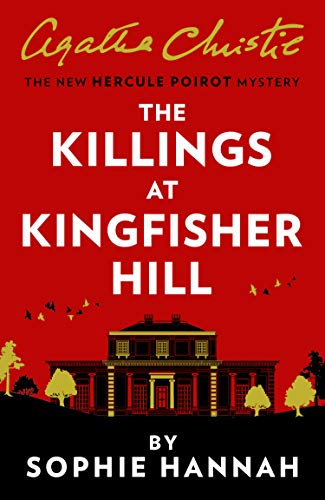
The Killings at Kingfisher Hill by Sophie Hannah

HarperCollins/ 20 August 2020/ Print length 346 pages/ Kindle edition/ 3*

The Killings at Kingfisher Hill is Sophie Hannah’s fourth Hercules Poirot mystery novel and the first one I’ve read. I have read some of Hannah’s books previously. So, I know that she writes complicated and tricky plots. Whilst not attempting to reproduce Christie’s Poirot this book is loosely based on Christie’s books, as Hannah incorporates all the twists and turns, red herrings and misdirections that you find in them. There’s a country house setting, a number of suspects, and a gathering together at the end where Poirot reveals all.

Blurb:

Hercule Poirot is travelling by luxury passenger coach from London to the exclusive Kingfisher Hill estate, where Richard Devonport has summoned him to prove that his fiancée, Helen, is innocent of the murder of his brother, Frank. But there is a strange condition attached to this request: Poirot must conceal his true reason for being there.
 
The coach is forced to stop when a distressed woman demands to get off, insisting that if she stays in her seat, she will be murdered. Although the rest of the journey passes without anyone being harmed, Poirot’s curiosity is aroused, and his fears are later confirmed when a body is discovered with a macabre note attached…

Could this new murder and the peculiar incident on the coach be clues to solving the mystery of who killed Frank Devonport? And if Helen is innocent, can Poirot find the true culprit in time to save her from the gallows?

I wasn’t expecting a cloned Poirot and Hannah’s Poirot is not Christie’s Poirot. There’s no Captain Hastings in this book, Poirot’s faithful friend. Instead Poirot is accompanied by Inspector Catchpole from Scotland Yard. How on earth he got to be an inspector is beyond me – he comes across as rather dim and stupid and Poirot treats him as such, endlessly explaining things to him and telling him what to do in an officious manner.

There are three strands to the plot – who killed Frank Devonport; who is the hysterical woman with an ‘unfinished face’ who insists she will be murdered if she sits in a specific seat on the coach; and who is the mysterious woman who tells Poirot she is a murderer – what a stupid thing to do when she knows he is a ‘world-renowned detective’? And I wondered what makes Richard so sure that Helen didn’t kill Frank when she had immediately confessed that she had? And I’m still wondering why when he was invited to Kingfisher Hall, an exclusive and private country estate, he went by coach with 30 other passengers – even if it was a ‘luxury’ coach. I just can’t see Poirot travelling by coach!

This all makes the book extremely convoluted, confusing and tangled as well as long-winded. Poirot though works his way methodically through the mess and gets to the truth. However, I found it quite dull and repetitive and rather contrived. So, my rating for this book is 2.5 stars, rounded up to 3.

My thanks to HarperCollins for a review copy via NetGalley.