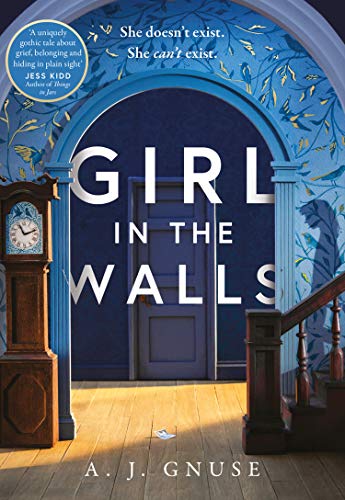
Girl in the Walls by A J Gnuse

Fourth Estate | 18 March 2021 |323 pages | Kindle review copy via NetGalley/ 4*

Description:

She doesn’t exist. She can’t exist.

‘A uniquely gothic tale about grief, belonging and hiding in plain sight’ Jess Kidd, author of Things in Jars

Those who live in the walls must adjust, must twist themselves around in their home,
stretching themselves until they’re as thin as air. Not everyone can do what they can.
But soon enough, they can’t help themselves. Signs of their presence remain in a house.
Eventually, every hidden thing is found.’

Elise knows every inch of the house. She knows which boards will creak. She knows where the gaps are in the walls. She knows which parts can take her in, hide her away. It’s home, after all. The home her parents made for her. And home is where you stay, no matter what.

Eddie calls the same house his home. Eddie is almost a teenager now. He must no longer believe in the girl he sometimes sees from the corner of his eye. He needs her to disappear. But when his older brother senses her, too, they are faced with a question: how do they get rid of someone they aren’t sure even exists?

And, if they cast her out, what other threats might they invite in?

My thoughts:

Set in south Louisiana, Girl in the Walls wasn’t quite what I expected from the book description, but I did enjoy its sense of strangeness and ‘the other’. It’s set in an old house that’s full of strange creaks and scary noises as though someone or some thing is creeping around. It’s a house like no other that I know or have read about. It’s a balloon frame house – that is a house with a timber frame within its outer walls, so there are spaces between the inner and outer walls, beneath the floor and in the attic. Spaces where a young person can crawl and exist. So, Elise is not a ghost but a real eleven year old girl, who lives in these spaces, only coming out when the Masons, the family who live in the house, are asleep or out of the house. And she manages to keep her presence in the house a secret, at least for a while.

Elise is an orphan and has returned to her family home, having escaped from the foster care system. At first, Eddie, the younger son, is the only one of the Masons who senses her presence, feeling that he is being watched and almost catching glimpses of Elise out of the corner of his eye. Eventually his older brother, Marshall too feels that there is some one else in the house, raiding the pantry, taking things and moving things and they decide they have to do something about it. First of all they can’t believe she is actually real and fear what they will find. Elise fears that they will find her.

Their fear is intense as the story takes a terrifying turn, and to make matters worse it is the hurricane season. From a slow start it builds up to a intense nightmare scenario. I think that to say much more would spoil the plot. The characterisation is good, the house is integral to the plot and the setting is brilliantly described. But you do have to suspend your disbelief to enjoy this book – I did!

This is a story about loss, and grief, about safety and security, intermingled with the strange beauty of the landscape and the fears and hopes we all experience. I loved the references to Norse mythology and legends that Elise reads about – Odin, the One-Eyed and how he became the wisest of the gods and about his sons, Thor and Loki.

A J Gnuse explains at the end of the book that he was inspired to write this story after talking to a friend about the strange noises his friend had heard in his apartment and remembered that he had spent much of his childhood in an old creaky house wondering whether someone was sneaking around at night, feeling scared and vulnerable. The house in the book is based on his parents’ house in South Louisiana, where he grew up, where the sea levels are rising as the coast is eroding and the coast is hit by hurricanes,

I wasn’t surprised that he lists Charles Dickens as one of the authors who have influenced his work – there is one particular character in his book who I haven’t mentioned, the monstrous villain who is larger than life and very scary, who wouldn’t have been out of place in a Dickens’ novel. He also lists other authors including, Daphne du Maurier and the Bronte sisters whose descriptive writing captured the eerie beauty of an old house.

Girl in the Walls is described as a ‘gothic’ tale. Gnuse explains that he has been influenced by the literary tradition of the Southern Gothic novel – which is largely unknown to me – referring to writers like Flannery O’Connor – describing its ‘uniquely Gothic sense of the strangeness of decay, of the past latched onto people like vines grown around their legs.‘ I think I need to find out more about this genre of fiction.

My thanks to the publishers and to NetGalley for my advance review copy.
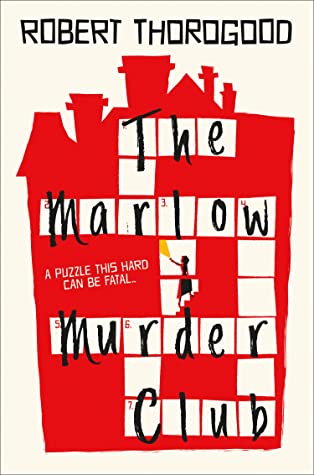
The Marlow Murder Club by Robert Thorogood

HQ| 7 January 2021|347 pages| Kindle review copy via Netgalley| 3*

I hadn’t read any of Robert Thorogood’s books, but I thought I’d enjoy The Marlow Murder Club based on the blurb. It begins well. Seventy-seven year old Judith Potts is happy with her life, living in an Arts and Crafts mansion on the River Thames, although there are hints that there is something in her past she wants to forget. It’s the height of summer, in the grip of a heatwave, and Judith decides to take all her clothes off and go for swim in the Thames. She was enjoying herself when she hears a shout from her neighbour’s house on the opposite riverbank, followed by a gunshot. Later, when she goes to investigate, she finds him, dead in the river, with a bullet hole in the centre of his forehead.

It’s set in Marlow, which is what attracted me to the book as it’s a place I know quite well. The main characters are Judith, Suzie and Becks, who together discover who killed Stefan. They’re all quirky personalities with secrets they’re keeping hidden. Detective Sergeant Tanika Malika leads the police team and eventually when more bodies turn up she agrees that the three woman can help with the official investigation.

The Marlow Club Murder is a ‘cosy’ murder mystery, easy to read and fast paced. Judith is a crossword compiler, who writes cryptic clues so I really enjoyed that aspect of the book, and the relationship between her, Suzie and Becks is well-drawn. But there is quite a lot of repetition as Judith and her friends go over the evidence that they’ve gathered several times and the solution to the murder mystery is easy to predict. The ending is very rushed and let down by convenient coincidences. Overall, I think it’s light, easy reading that is quite entertaining, and the relationship between the three women is what kept me reading to the end of the book.

My thanks to the publishers and NetGalley for my review copy.

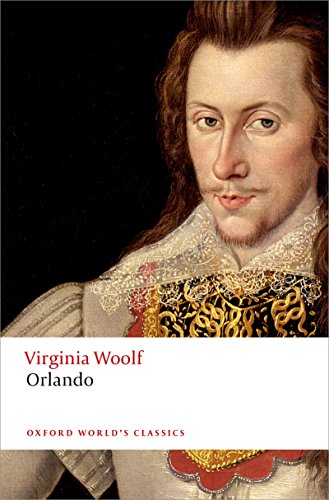
Orlando by Virginia Woolf

Rating: 4 out of 5.

Orlando: a Biography has been on my TBR shelves for nearly five years now, so I was glad it came up in the Classics Club spin as this gave me the push to actually read it. I won Orlando in one of Heaven Ali’s Woolfalong giveaways in May 2016 and I’m sorry that I haven’t read it before now. I did start it when I first got it, but found it a bit ‘difficult to get into it’ and left it on my bookshelves for while – the while turned out to be nearly five years!

I’ve read some of Virginia Woolf’s books before – Mrs Dalloway, To The Lighthouse, Kew Gardens (a short story), Flush: a biography of Elizabeth Barrett Browning’s dog, A Room of One’s Own and The Three Guineas (in one volume and more recently, I’ve read The Voyage Out, and Death of a Moth and other essays.

Synopsis:

Orlando tells the tale of an extraordinary individual who lives through centuries of English history, first as a man, then as a woman; of his/her encounters with queens, kings, novelists, playwrights, and poets, and of his/her struggle to find fame and immortality not through actions, but through the written word. At its heart are the life and works of Woolf’s friend and lover, Vita Sackville-West, and Knole, the historic home of the Sackvilles. But as well as being a love letter to Vita, Orlando mocks the conventions of biography and history, teases the pretensions of contemporary men of letters, and wryly examines sexual double standards.

My thoughts:

Orlando is a fictionalised biography of Vita Sackville-West, based on her life. They had met in 1922 when Woolf was 40 and Vita was 30, when Wolf described her as ‘lovely’ and ‘aristocratic’. I was a bit overwhelmed at times reading Orlando – such a fantastical novel, spanning 500 years. There are copious literary, historical, and personal allusions and despite continually referring to the Explanatory Notes at the end of the book I’m sure I missed a lot of them. And it makes for a fragmentary reading experience, having to stop reading and flip backwards and forwards between the text and the notes, so that I was a bit confused about the story and what happened when.

But having said that the plot is extraordinary, beginning towards the end of Elizabeth I’s reign when Orlando is a young nobleman, and continuing for the next five hundred years to the start of the twentieth century. You have to completely suspend your disbelief, not just for the length of his life, but also for his/her gender as in the late 17th century whilst he is an ambassador for Charles II he falls into a trance for seven days, only to find when he comes to that ‘he’ has become a young woman. As a woman she lives with a group of Turkish gypsies and then returns to England in the 18th century, when she has difficulty in being identified as a woman. In the 19th century she falls in love with a young romantic traveller, finally finding freedom in finishing the poem she began in the 16th century and in experiencing the delights of motoring in the early years of the 20th century.

What I’ve described here is just the bare bones of the book, because there are many vivid passages – such as her description of the ‘Great Frost’ of 1608, when the Thames was frozen for six weeks and Frost Fairs were held on the ice. It hit the country people the hardest:

But while the country people suffered the extremity of want, and the trade of the country was at a stand still, London enjoyed a carnival of the utmost brilliance. The Court was at Greenwich, and the new King seized the opportunity that his coronation gave him to curry favour with the citizens. He directed that the river, which was frozen to a depth of twenty feet and more for six or seven miles on either side should be swept, decorated and given all the semblance of a park or pleasure ground with arbours, mazes, alleys, drinking booths, etc at his expense. For himself and his courtiers, he reserved a certain space immediately opposite the Palace gates; which railed off from the public only by a silken rope, became at once the centre of the most brilliant society in England. (pages 22-23)

She also writes about writing and about books, about the nature of gender, and about the position of women in society over the centuries. One theme that fascinates me is her depiction of the passage of time, particularly in the final section of the book set as the 20th century reached 1928 (the year Orlando was published). Overall it is a book steeped in history showing how the passage of time had changed both the landscape and climate of England along with its society – and I have only scratched the surface in this post. It is a book packed with detail that deserves to be read more than once to appreciate it fully.

  • Publisher : OUP Oxford; 2nd edition (11 Dec. 2014)
  • Language : English
  • Paperback : 288 pages
  • ISBN-10 : 019965073X
  • ISBN-13 : 978-0199650736

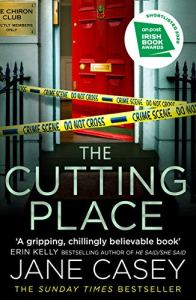
Cruel Acts and The Cutting Place by Jane Casey

This month I have caught up with reading two of Jane Casey’s Maeve Kerrigan books, and having read these two in quick succession I’m feeling as though I’ve overdosed on crime fiction. Too many murders in quick succession. I need to space them out.

Maeve is a Detective Sergeant with the Metropolitan Police – in the first six books she was a detective constable – and her boss Detective Inspector Josh Derwent are the two main characters. They have a confrontational working relationship and their spiky relationship is a recurring theme in the books. In fact they are both strong characters described in depth and completely believable. They’ve both changed as the series has grown, which is why it’s better to read the books in sequence to see how have they’ve developed.

The first book in Jane Casey’s Maeve Kerrigan series was The Burning, published in 2010, but I didn’t get round to reading it until February 2015. I was hooked immediately and read the next five books in quick succession by the end of August 2015. These are all police procedurals, fast-paced novels, with intriguing and complex plots and developing the relationships between the main characters. So, I think that although the books read well as stand-alones, it helps enormously to read them in order, especially to follow the relationship between Maeve and DI Josh Derwent.

Cruel Acts is the 8th book in the series and I enjoyed it more than The Cutting Place, the 9th book.

Blurb:
A year ago, Leo Stone was convicted of murdering two women and sentenced to life in prison. Now he’s been freed on a technicality, and he’s protesting his innocence. DS Maeve Kerrigan and DI Josh Derwent are determined to put Stone back behind bars where he belongs, but the more Maeve digs, the less convinced she is that he did it. Then another woman disappears in similar circumstances. Is there a copycat killer, or have they been wrong about Stone from the start?

The Cutting Place

Blurb
Everyone’s heard the rumours about elite gentlemen’s clubs, where the champagne flows freely, the parties are the height of decadence . . . and the secrets are darker than you could possibly imagine.

DS Maeve Kerrigan finds herself in an unfamiliar world of wealth, luxury and ruthless behaviour when she investigates the murder of a young journalist, Paige Hargreaves. Paige was working on a story about the Chiron Club, a private society for the richest and most privileged men in London. Then she disappeared. 

It’s clear to Maeve that the members have many secrets. But Maeve is hiding secrets of her own – even from her partner DI Josh Derwent. Will she uncover the truth about Paige’s death? Or will time run out for Maeve first?

~~~

I enjoy crime fiction because I like trying to work out happened and why. But I don’t like reading about horrific murders that are described in gory technicolour detail. Whilst there are brutal murders in these books they’ve not been too much for me to read. They are gritty stories but in The Cutting Place the murders and abuse of women and the violence involved is just a step too far for me. One of the changes in Maeve’s life came about in that book was when she acquired a new boy friend – the lawyer Seth Taylor – I didn’t like him straight away and I was right. Now I would like to know what happens next between Maeve and Josh as it seems to me that their relationship took a significant turn in The Cutting Place! So, I am hoping there will be a 10th book.

Jane Casey’s writing makes compelling reading, always satisfying even if her books take me to places and situations that appal and terrify me. Her books are down to earth and based on real life. As she explains at the end of the book, she is married to a criminal barrister ‘who makes sure her writing is realistic and as accurate as possible.’

Her next book is a standalone thriller, The Killing Kind, to be published 27 May 2021, featuring barrister Ingrid Lewis – one to look out for.

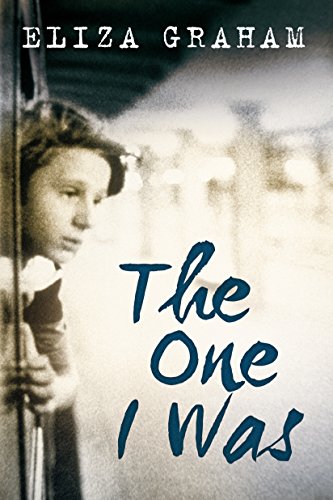
The One I Was by Eliza Graham

Rating: 5 out of 5.

I downloaded The One I Was by Eliza Graham soon after it was published in May 2015 and I’ve just got round to reading it. It was worth waiting for as I really enjoyed it and think it is one of the best books I’ve read recently. It’s historical fiction split between the present and the past following the lives of Benny Gault and Rosamund Hunter.

It begins in the present as Rosamund goes to Fairfleet, her childhood home, to nurse Benny Gault, who first came to Fairfleet in 1939, having fled Nazi Germany on a Kindertransport train. As an adult he bought the house and now he is dying of cancer. It’s a difficult time for Rosamund as she has painful memories of her life at Fairfleet and she is wary about returning – so much so that she doesn’t tell Benny of her connection to the house.

Throughout the book events from both their pasts are revealed, and gradually they discover the connections between them and they come to terms with the traumas that have haunted them. This is a novel about friendship, palliative care, redemption and forgiveness across generations. I was totally engrossed in both their life stories as the various strands of the story eventually combined. Although it was Benny’s story that appealed to me the most – particularly his early life in Germany and the story of how he came to live at Fairfleet – I was also fascinated by the story of Rosamund’s grandmother, one of the few women pilots who flew Spitfires for the Air Transport Auxiliary.

This is obviously a well researched book and Eliza Graham has listed the books she had found invaluable whilst writing The One I Was.

Amazon UK link

I’ve read just two of Eliza Graham’s books, Playing With the Moon and Another Day Gone (linked to my reviews). I hope to read more of her books this year:

Playing with the Moon (2007)
Restitution (2008)
Jubilee (2010)
The History Room (2012)
The One I Was (2014)
Another Day Gone (2016)
The Lines We Leave Behind (2018)
The Truth in Our Lies (2019)
You Let Me Go (2021) – publication date 25 March 2021

Exit by Belinda Bauer

Random House UK, Cornerstone| 21 January 2021| 336 pages| Kindle review copy| 4*

I wasn’t at all sure about Exit by Belinda Bauer when I first started to read it a few months ago, so put it to one side and only picked it up again a few days ago. What initially put me off was the opening chapter, which sets the scene for the work of the Exiteers, a group of people who provide support for people with a terminal illness to end their lives. Their role is ostensibly passive, just to be there to keep the dying company as they take their final breaths. But they do provide the means! And one assignment for John (real name Felix Pink) and Amanda goes wrong when they discover they have ‘helped’ the wrong man.

But I read on and what at first looks like a novel considering the ethics of assisted suicide turns into crime fiction as Felix and Amanda realise they have become murder suspects. It’s all mayhem after that as Felix, overcome with remorse, tries to put things right and to discover how and why the wrong man had died.

Far from being a ‘thriller’ it becomes a borderline ‘cosy’ murder mystery, verging on farce in places and I was amused by the wry humour and surreal scenes. It’s a comedy of errors, interspersed with poignant scenes as we learn about Felix’s grief over the deaths of his wife, Margaret and son James. His thoughts always end up with wondering what Margaret would do in the same situation.

It gets off to a slow start, the pace only gradually picking up in the later chapters, when the multiple twists kept me engaged and keen to know how it would end. There are quite a lot of characters in the book, which I found a bit confusing at first, although the main characters, Felix and Acting DC Calvin Bridges are clearly defined and distinctive characters. Some of the minor characters, such as old Greybeard and other clients in the betting shop, are clearly quirky and their actions absurd. And I particularly liked old Skipper, Albert’s father. But underneath the comedy there is a tragedy, as Felix discovers how he has been deceived all along. And the ending is bitter sweet. I began not sure I really wanted to read Exit and ended it feeling I’m glad I did. It’s unlike anything else I’ve read!

Thanks to the publishers and NetGalley for my proof copy.