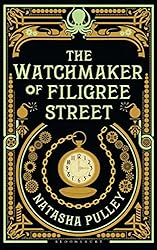
The Watchmaker of Filigree Street by Natasha Pulley

The Watchmaker of Filigree StreetNatasha Pulley’s first novel made a great impact on me from the start of the book. It is one of those books that I enjoyed very much, but don’t feel that I can really do it justice in a blog post. Even after a second reading I’m not at all sure I understand some of it. It’s long, complicated, packed with detail and an awful lot happens in it.

So instead of me trying to write something coherent about it I’ve copied the synopsis from the inside cover:

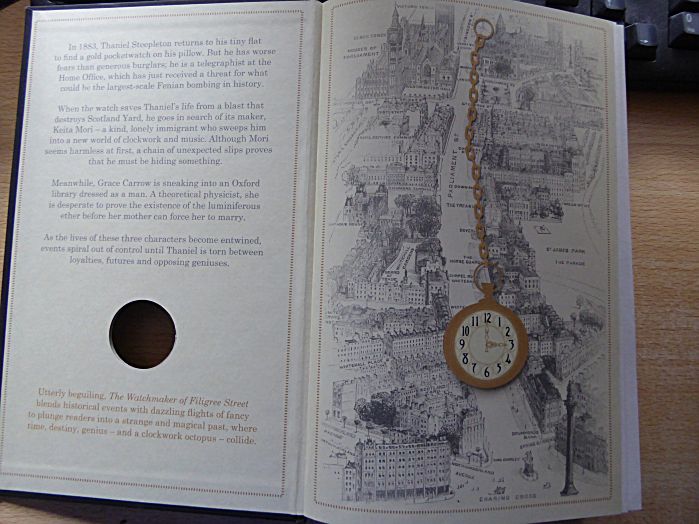
In 1883, Thaniel Steepleton returns to his tiny flat to find a gold pocketwatch on his pillow. But he has worse fears than generous burglars; he is a telegraphist at the Home Office, which has just received a threat for what could be the largest-scale Fenian bombing in history.

When the watch saves Thaniel’s life in a blast that destroys Scotland Yard, he goes in search of its maker, Keita Mori ‘“ a kind, lonely immigrant who sweeps him into a new world of clockwork and music. Although Mori seems harmless at first, a chain of unexpected slips soon proves that he must be hiding something.

Meanwhile, Grace Carrow is sneaking into an Oxford library dressed as a man. A theoretical physicist, she is desperate to prove the existence of the luminiferous ether before her mother can force her to marry.

As the lives of these three characters become entwined, events spiral out of control until Thaniel is torn between loyalties, futures and opposing geniuses.

Utterly beguiling, The Watchmaker of Filigree Street blends historical events with dazzling flights of fancy to plunge readers into a strange and magical past, where time, destiny, genius ‘“ and a clockwork octopus ‘“ collide.

My thoughts:

These are just a few thoughts that struck me both as I was reading the book and later thinking about it. It’s a mixture of historical fact and fantasy set in Victorian times, both in London and Japan, following the lives of the main characters, Thaniel Stapleton, Keita Mori and Grace Carrow. I like to know what is historical fact and what is the author’s own creation. So I was pleased to read in her Acknowledgements, that Natasha Pulley explains that there is some historical accuracy and cites Lee Jackson’s Dictionary of Victorian London for resources on the early days of the London Underground, the Knightsbridge Japanese show village, the bombing of Scotland Yard and numerous other interesting things.  (As I read the book I was very tempted to leave the story to find out more about these topics, but the story drew me on and I left them for later.)

I was completely convinced by the setting in a different time in a world that was familiar and yet so different. I  liked the writing style, although in parts it’s a bit ‘clunky’ and the use of ‘he’, ‘him’ and ‘they’ or ‘them’ made it a bit difficult to follow, but this is only a minor quibble. I also liked the characterisation and how the characters’ history was revealed and how their personalities were developed. Keita Mori is an interesting character and as I read my opinion of him kept changing – just who is he? He is an enigma, why is he living in London, is he the bomb maker, does he in fact know what is going to happen, is he a magician? He baffled and confused me as much as he baffled and confused the other characters.

Equally fascinating are the sections set in Japan; Grace’s story, her research into luminiferous ether (a bit hard to follow), her relationship with Akira Matsumoto, the elegant son of a Japanese nobleman; the Japanese show village in Hyde Park where Gilbert and Sullivan went to research for the Mikado; the early days of the London Underground; and of course the clockwork inventions, in particular Katsu, the clockwork octopus.

There is so much in this book, so many passages I underlined in my e-book, so many intertwining stories and lines that I have not mentioned – politics, the Fenians, bombs, the workings of the Home and Foreign Offices, suffragettes, racism, and class snobbery – I could go on and on. It may seem that this is a hotch-potch of a book, but the more I thought about it, the more I liked it. In fact I loved it both for its historical settings and for its ingenuity, producing a fantastical tale that occupied my mind during and after my reading.

I reserved The Watchmaker of Filigree Street at the library but before it was available the e-book was on offer on Amazon, so I ended up reading from both editions. And in doing so, I can now see the benefits of both – I can underline in an e-book and make notes without any damage to the book and as it has X-Ray it’s easy to find passages about the characters and places etc. But the physical book is a joy to read – the text is set in Bell, originally cut for John Bell in 1788, and the cover is beautiful.
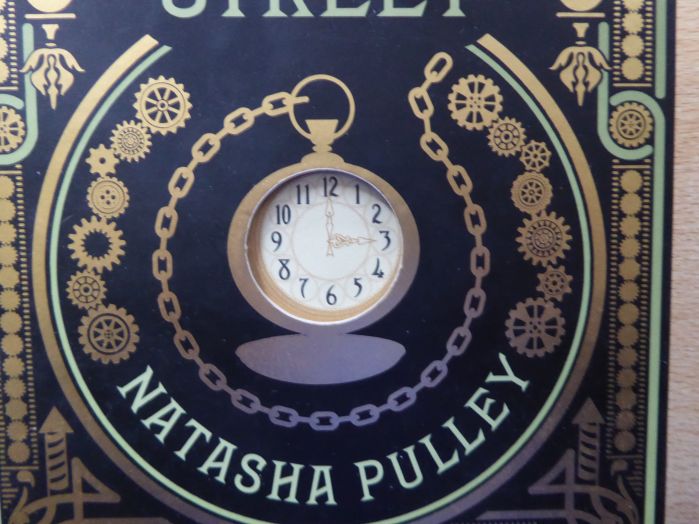
The Watchmaker cover P1020046

and the inside cover has this map:

The Watchmaker map P1020045

This book also fits so well into the Once Upon a Time Challenge in the Fantasy Genre. I’ve seen it described as ‘steampunk’ but I’m not at all sure what that is – to me it’s historical fantasy.

Short Story Sunday: The Snow Queen

Short story questI’m taking part in Carl’s Once Upon a Time event, specifically in the Short Story Quest, which involves the reading of one or more short stories that fit within at least one of the four genres of Fairy Tale, Folklore, Fantasy and Mythology, during the course of any weekend, or weekends, during the challenge. Ideally, posting about your short story readings on Sundays or Mondays, but this is not strictly necessary.

I’m reading some of Hans Christian Andersen’s Fairy Tales ‘“ I first read a lot of the tales as a child in my mother’s book: P1010936Andersen was a Danish author, born in 1805 in Odense. He was a prolific writer of plays, travelogues, novels, and poems, as well as fairy tales. Some of his most famous fairy tales include The Emperor’s New Clothes, The Little Mermaid, The Nightingale, The Snow Queen, The Ugly Duckling, Thumbelina, and many more. He died in 1875.
The Snow Queen was one of my favourite stories as a child and I read it many times. So, I have been holding back from reading it now in case I found that the magical experience was no longer there. However, I felt I really wanted to read it this week and told myself that I would stop if it wasn’t as entrancing as before. Of course I read all of it and if it wasn’t quite as magical it was still entrancing.

I wasn’t surprised that I’d forgotten some of the details, but my memories of the way evil came into the world when the magic looking-glass was shattered were vivid and correct. The pieces let loose in the world distorted whatever was reflected in it, so that whatever was good and beautiful dwindled to almost nothing and whatever was worthless stood out boldly. They entered into men’s eyes, so that they saw only evil, or into their hearts, turning them to lumps of ice. Some were made into panes of window glass and some into spectacles. Some are still flying about in the air even today.

I remembered well the two main characters, the childhood friends, Kay and Gerda, and how Kay was changed when his heart and eyes were pierced by pieces of the magic glass  and how he followed  the beautiful Snow Queen and was whisked away to her ice palace.  I also remembered Gerda’s search for him, but not all the detail of how she was enchanted by a strange old woman, who took her into her strange little house, and how the roses and other flowers brought back her memories.

I had forgotten about the Prince and Princess and the Ravens who helped her on her way to look for Kay and the Lapland Woman and the Finland Woman who also helped her. More memorable was The Little Robber Girl who stopped her robber-mother from killing and eating Gerda.

It was the chapter on Kay in the Snow Palace that was most vivid in my memories and it didn’t disappoint me. Kay’s heart was by then just like a lump of ice and he was almost black with the cold and he didn’t recognise Gerda until her tears penetrated his heart, melted the ice and dissolved the broken glass and washed all the pieces of glass from his eyes. It was Gerda’s love that saved him. As the Finland Woman says:

I cannot give her greater power than she already possesses, and do you not see how great that is? Do you not see that men and beasts must serve her, and how barefooted as she is, she has got on so well in the world. She cannot receive power from us, that is in her own heart, and consists in her being a good, innocent child.

What I hadn’t noticed as a child was that this is not only a story of good against evil but also about love versus reason and logic. At first when the ice has entered Kay’s heart and eyes he becomes focussed on science, looking at the snow flakes through a magnifying glass to see their structure and as the Snow Queen lures him from home he couldn’t pray but could only recite his multiplication tables; he could say how many square miles were in the country as well as the number of inhabitants.

The task the Snow Queen gave him whilst she was away from the Palace was the ice-game of understanding to fit together large pieces of ice to make figures of ‘the highest importance’. But he was unable to make the word ‘Eternity’, which the Snow Queen had promised she would give him the whole world if he succeeded. He thought and thought about it until his brain almost cracked. It was only when the ice had melted from his heart and out of his eyes that the pieces of ice danced and formed the letters of the word so that he was able to leave the palace.

Short Story Sunday: The Shepherdess and the Sweep

Short story questI’m taking part in Carl’s Once Upon a Time event, specifically in the Short Story Quest, which involves the reading of one or more short stories that fit within at least one of the four genres of Fairy Tale, Folklore, Fantasy and Mythology, during the course of any weekend, or weekends, during the challenge. Ideally, posting about your short story readings on Sundays or Mondays, but this is not strictly necessary.

This will be a weekly event for me, until the end of the event on 21 June. I’m reading some of Hans Christian Andersen’s Fairy Tales ‘“ I first read a lot of the tales as a child. Andersen was a Danish author, born in 1805 in Odense. He was a prolific writer of plays, travelogues, novels, and poems, as well as fairy tales. Some of his most famous fairy tales include The Emperor’s New Clothes, The Little Mermaid, The Nightingale, The Snow Queen, The Ugly Duckling, Thumbelina, and many more. He died in 1875.

I’m reading from my mother’s book: P1010936This week it’s another fairy tale that I don’t remember reading before – The Shepherdess and the Sweep.

Unlike The Rose Elf, the story I read last week, The Shepherdess and the Sweep is not a gruesome story, but a story of love, romance, and bravery.

The Shepherdess and the Sweep are two china figures who fall in love but their love is threatened by a strange looking carved satyr the children called the Goatsleg-Highadjutant-general-militarycommandant, as he had goat’s legs, short horns and a long beard and was constantly grinning. He stood on top of a very old wooden cabinet, looking down on the beautiful Shepherdess on the table opposite and wanted her for his wife. There is also a bigger china figure than the little couple – a big old Chinese, who could nod his head. He claims authority over the Shepherdess and says she will marry the satyr that night.

So the two little china figures decide to leave the table and venture out into the wide world. In their desperation to escape they decide to climb the chimney, but when they get to the top the Shepherdess is overcome with fear and cries “This is too much” she sobbed, “That I can never bear. The world is too large; oh, were I but back again on the table under the looking glass!”

Illustration from “Fairy Tales, 1850” by Vilhelm Pedersen, Andersen’s first illustrator (from Wikipedia)

Spoiler follows – don’t read the next paragraph if you don’t want to know how this story ends.

The sweep can’t console her and so they climb back down even though he thought it was foolish. But they find that the Chinese figure in his attempt to follow them had fallen and broken into three pieces. The family mended him but his head, which had rolled far off into a corner of the room had to be riveted onto his neck, so that he could no longer nod. He was too proud to tell the Satyr and so when he asked if he were to have the Shepherdess or not, the Chinese figure was silent. And the little couple remained together. So, a happy ending for this tale.

Inside of Me by Hazel McHaffie

I’ve read one of Hazel McHaffie’s books in the past – Over My Dead Body and was impressed by the way she weaves facts into her fiction so seamlessly that it doesn’t detract from the story. So, when she asked if I would like to read Inside of Me I didn’t hesitate to say yes please. And I wasn’t disappointed. I think this is an excellent book and once I started reading it I didn’t want to stop, keen to find out what was going to happen next.
Hazel McHaffie’s novels all cover medical ethics issues and the issues in Inside of Me concern body image, in particular, but not exclusively, about anorexia; identity, and relationships. There is also a mystery – teenage girls are going missing, the latest one being Maria aged sixteen, last seen walking alone along Regent’s Park Canal. Tonya Grayson is worried, no terrified is a better description, that her missing husband, Victor, could be involved. But the police are convinced he is dead; his clothes were found neatly folded in a beach, although his body was never found. India, their daughter, who was eight at the time, believes, even after seven years, that he is still alive, reinforced by hearing his voice in a crowded London station, the day after Maria was reported missing.

The narrative, told in the first person, switches between Tonya and India living in Scotland, and Chris, who works in a florist shop in London, mourning the loss of a daughter. Chris, after reading the newspaper report about the missing teenager, spots Maria at a local car boot sale, offers to help and ends up taking her home, anxious about her safety.

India is anorexic, but won’t accept the truth, either that her father is dead or that she has a weight problem. Tonya tries to help her but cannot get through to her and for most of the book seems completely out of her depth, unable to move forward herself. She is plagued with doubts about Victor and his relationship with India, which had been very close. India’s best friend, Mercedes is also obsessed with her weight and encourages India both to find her father and to take even more drastic ways to gain her target weight.

Hazel McHaffie has got right inside each character’s mind, making this a compelling and convincing story. And it is a gripping story, easy to read, but by no means a comfortable read, in turns emotional and troubling. It conveys the complex dilemmas of living with eating disorders, problems with body image and difficult family relationships, issues with control and coping with emotional disturbance, obsessions and compulsive behaviour. Added to all this there is the mystery of what happened to Victor – his pile of clothes on the beach reminded me of Reginald Perrin (from the TV series  in the 1970s). I think it is a wonderful book and I don’t think I’ve read another novel like it. I’ve only touched its surface in this post!

  • Paperback: 242 pages
  • Publisher: VelvetEthics Press (5 Mar. 2016)
  • Language: English
  • ISBN-10: 099262312X
  • ISBN-13: 978-0992623128
  • Source: Review copy from the author

Hazel McHaffie is a Scottish author. For details of her background and qualifications as a nurse, midwife, PhD in Social Sciences and Research Fellow in Medical Ethics see her website, where she also lists her awards, life changing experiences, and more personal stuff such as her character traits, addictions (including good books), and hobbies. She also writes a most interesting blog.

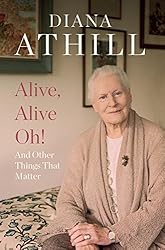
Alive, Alive Oh! And Other Things That Matter by Diana Athill

Alive, Alive Oh! And Other Things That Matter by Diana Athill (published in 2015) contains memories, thoughts and reflections on her life as she approaches her 100th year (she was born in 1917). I quoted the opening paragraph of this book and a teaser paragraph in an earlier post, First Chapter, First Paragraph.

It’s only a short book (168 pages), but it covers a wide range of Diana Athill’s memories, many images of beautiful places, and the friends and lovers she has known. The chapters follow on chronologically but are unconnected except for the fact that they demonstrate her love of life.

She writes about her Great Grandfather’s garden at Ditchingham Hall in Norfolk, which she used to love visiting in the 1920s and 1930s, when her grandparents lived there. Her writing is so clear and precise, describing in detail its exact layout and expressing her delight in her memories of it.

In other chapters she describes post-war life and her visits to Florence, and in particular the Club Mediterranee in Corfu in the 1950s; her experiences in Trinidad and Tobago, where she was struck by the disparity between the local people and the tourists/incomers; and the miscarriage when she was in her early 40s, when she nearly died. It was heart breaking to read this remarkably candid account both about what happened and how she felt, her detachment, her resentment that she had lost the baby, even her relief, and finally her gratitude that she was still alive, and her love of life:

‘I AM ALIVE.’ 

It was enough.

It was everything. It was filling me to the brim with pure and absolute joy, a feeling more intense than any I had known before. (page 87)

It is this love of life that is evident in her writing that makes it such a remarkable book. She writes about her decision to move into a home, persuaded by a friend who lived there and about how much she enjoys living there. And her main luxury now is her wheelchair, which she finds has unexpected benefits, such as when she was at an art exhibition – the crowds fell away from her in her wheelchair and she was able to lounge in perfect comfort in front of Matisse’s red Dance.

Of course, she writes about death and dying, as ‘death is no longer something in the distance, but might well be encountered any time now.’ She doesn’t find this alarming, and remembers when she was close to death after her miscarriage that her feelings were of acceptance: ‘Oh well, if I die, I die‘. Death is not something she fears, although she has some degree of anxiety at the process of dying and recognises that whereas it’s ‘unwise to expect an easy death, it is not unreasonable to hope for one.

This book has given me much to think about, including this paragraph:

Looking at things is never time wasted. If your children want to stand and stare, let them. When I was marvelling at the beauty of a painting or enjoying a great view it did not occur to me that the experience, however intense, would be of value many years later. But there it has remained, tucked away in hidden bits of my mind, and now it comes out, shouldering aside even the most passionate love affairs and the most satisfying achievements, to make a very old woman’s idle days pleasant instead of boring. (pages 5 – 6)

I loved it.

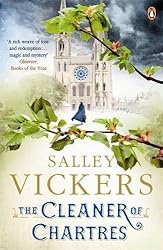
The Cleaner of Chartres by Salley Vickers

Once more I am behind with writing about the books I’ve read, so this is a short post with brief thoughts on The Cleaner of Chartres by Salley Vickers. I enjoyed it immensely.
This is a beautiful book, beautifully written, with the character of Agnès Morel at its centre. Agnès was found as a baby in a straw shopping basket, wrapped in a white tablecloth, with just a single turquoise earring in the bottom of the basket that may or may not indicate her parentage. She was brought up by the Sisters of Our Lady of Mercy at Evreux. It tells of how Agnes became the cleaner of the Cathedral of Notre Dame in Chartres, in central France, north of Paris, and not only of the cathedral but also a cleaner for other residents of the town.

So, there is a mystery about her origins and also about her life before she arrived in Chartres. Moving between the past and the present, the details are slowly revealed. There are many characters, some likeable people including the Abbé Paul, Professor Jones, who teaches Agnes to read, Philippe Nevers, and Alain Fleury, who works on the cathedral restoration and some unlikeable characters such as Madame Beck and Sister (later Mother) Veronique whose interfering ways cause Agnes such a lot of trouble. All are convincing characters with depth.

I liked it all, the slow build up as Agnès’s history unfolds, the interaction of the characters and the description and history of the cathedral also added to my enjoyment of the book.