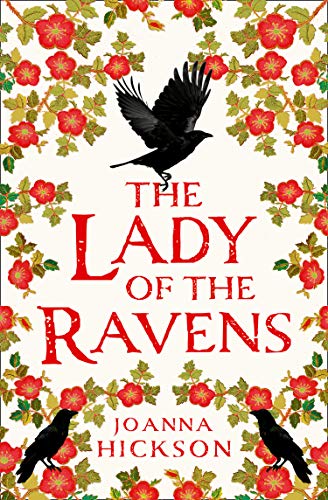
The Lady of the Ravens by Joanna Hickson

Lady of the ravens

Harper Collins|9 January 2020|400 pages|e-book via NetGalley|Review copy|5*

Publishers’ Description:

Elizabeth of York, her life already tainted by dishonour and tragedy, now queen to the first Tudor king, Henry the VII.

Joan Vaux, servant of the court, straining against marriage and motherhood and privy to the deepest and darkest secrets of her queen. Like the ravens, Joan must use her eyes and her senses, as conspiracy whispers through the dark corridors of the Tower.

Through Joan’s eyes, The Lady of the Ravens inhabits the squalid streets of Tudor London, the imposing walls of its most fearsome fortress and the glamorous court of a kingdom in crisis.

My thoughts:

The Lady of the Ravens opens in 1485 just weeks after Henry Tudor had taken the throne to become King Henry VII of England and Lord of Ireland. This is historical fiction about the early years of Henry’s reign as seen through the eyes of Joan Vaux, a lady in waiting to Elizabeth of York, whose marriage in 1486 to Henry united the Houses of Lancaster and York after the end of the Wars of the Roses.

Henry comes across as a competent king, which is really all I knew of his reign before reading this book. I’ve read Joanna Hickson’s earlier book about him, The Tudor Crown, which is about his early life and how he gained the English throne. Joan Vaux also features in a small way in this book. In The Lady of the Ravens he is shown to be determined to hold on to his throne, dealing with several Yorkists’ claims to the throne, in particular those of Lambert Simnel, who claimed to be Edward Plantagenet, 17th Earl of Warwick, Elizabeth’s cousin, and Perkin Warbeck, who claimed to be Richard of Shrewsbury, Duke of York, who was the second son of Edward IV, Elizabeth’s brother, one of the so-called Princes in the Tower. It is also about his family life – his marriage to Elizabeth,,the births of their children (three of them died in childhood), and his concern for his subjects – for example both he and Elizabeth were present at Joan’s wedding and we also see him enjoying dancing at court.

Joan Vaux is also a real historical character – her mother, Katherine was French and had been a lady-in-waiting to the former queen Margaret of Anjou (the wife of Henry VI).. Joan had served Elizabeth as a woman of her bedchamber before Elizabeth’s marriage to Henry and, after her own marriage to Sir Richard Guildford, as a lady-in-waiting. And before that she had been brought up in the household of Lady Margaret Beaufort, Henry’s mother. Joan became a good friend and confidante of Elizabeth, even after her marriage and the birth of her son Henry, known as Hal, who also became a good friend to the young Prince Henry.

The fictional element is in the story of Joan’s fascination for and care of the ravens of the Tower of London firmly believing in the legend that should the ravens leave the Tower for good then the crown will fall and ruin will return to the nation. I came to really like Joan, a warm and caring woman. Joanna Hickson goes into detail describing the traumatic birth of her son and the lives of ordinary people outside the royal court. It is a rich and vibrant novel, full of action and political unrest.

I particularly like the glimpses we see of the ill-fated Prince Arthur and his bride, Katherine of Aragon. And I was especially delighted by the portrait of Prince Henry (who later became Henry VIII) as a young charismatic child of nearly three. His father was  furious about the imposters’ claims to the throne and had decided the best response was to invest his younger son as the trueborn and genuine Duke of York. Little Henry, with his bright red Tudor hair, was mounted on a gleaming black warhorse strapped into a specially made high-backed jousting saddle and escorted by his great-uncles, the Yeoman of the Guard and the King’s Archers as they processed around the streets of London to Westminster.  He was in his element, waving to the crowd who cheered and threw flowers as he went by.

This novel is beautifully written, grounded in its historical context, full of colour and life. I loved all the descriptions of the various settings, especially the Tower of London, and the ravens. My grasp of English history in this period was very hazy and I learned a lot reading this book, especially as the characters came to life on the pages, but most of all I loved the portrayal of Joan Vaux, Lady Guildford. And I see from the Author’s Note at the end of the book that there is more to come about her, including a mystery, her second marriage and her close relationship with Katherine of Aragon and the early years of Henry VIII’s reign. I’m looking forward to reading that!

The Author:

Joanna Hickson became fascinated with history when she studied Shakespeare’s history plays at school. However, having taken a degree in Politics and English she took up a career in broadcast journalism with the BBC, presenting and producing news, current affairs and arts programmes on both television and radio. Now she writes full time. The Lady of the Ravens is her sixth novel. 

My thanks to the publishers for my review copy via NetGalley.
Searching for Sylvie Lee by Jean Kwok

Searching for Sylvie Lee

John Murray|17 October 2019|341 pages|e-book via NetGalley|Review copy|4*

Description extracted from the publishers’ blurb:

It begins with a mystery. Sylvie, the beautiful, brilliant, successful older daughter of the Lee family, flies to the Netherlands for one final visit with her dying grandmother – and then vanishes.

Amy, the sheltered baby of the Lee family, is too young to remember a time when her parents were newly immigrated and too poor to keep Sylvie. Seven years older, Sylvie was raised by a distant relative in a faraway, foreign place, and didn’t rejoin her family in America until age nine. Timid and shy, Amy has always looked up to her sister, the fierce and fearless protector who showered her with unconditional love.

But what happened to Sylvie? Amy and her parents are distraught and desperate for answers. Sylvie has always looked out for them. Now, it’s Amy’s turn to help. 

My thoughts:

I loved Searching For Sylvie Lee by Jean Kwok.  I enjoyed reading its beautiful descriptive language and the mystery of what had happened to Sylvie. I think the characterisation is very good, the three main characters, Sylvie, her younger sister Amy and their mother Ma are each clearly recognisable by the way they speak. The story alternates between the two sisters and their mother’s perspectives, as the details of what happened to Sylvie are revealed.

Sylvie had left her home in the USA to visit her dying grandmother in the Netherlands where she had lived until she was nine. After the funeral she was supposed to return home, but she never arrived. Amy and her parents are distraught and she flies to the Netherlands to find out what had happened to her.

This is a mystery full of suspense and it is also a story about family relationships, about secrets and the barriers that language can raise – Amy’s dominant language is English, whereas her mother and father, Chinese immigrants living in America, have just a basic grasp of English and still speak Chinese. Sylvie also speaks Dutch as until the age of nine she had lived with the Tan family, Chinese immigrants living in the Netherlands. It’s not just the language but also the different cultures and the racism they experienced that separated the characters.

I had realised quite early on what the family secret was and what had happened to Sylvie, but that didn’t spoil my enjoyment of the book. My only criticism is that in the latter part of the book, particularly as Sylvie describes her visit to Venice I thought that the book veered offline. Although the episode is essential to the plot the detailed description took away the momentum of the mystery and my attention wandered a bit. But the ending made up for that!

The Author:

I would like to read more of Jean Kwok’s books. She is trilingual, fluent in Dutch, Chinese, and English, and studied Latin for seven years. Jean immigrated from Hong Kong to Brooklyn when she was five and worked in a Chinatown clothing factory for much of her childhood. She received her bachelor’s degree from Harvard and completed an MFA in fiction at Columbia University. She currently lives in the Netherlands. Her work has been published in twenty countries and taught in universities, colleges, and high schools across the world.  

My thanks to the publishers for my review copy via NetGalley.

Wild Fire by Ann Cleeves

Wild Fire

Macmillan|6 September 2018|417 pages| paperback|4*

Wild Fire is the 8th and last book in Ann Cleeves’ Shetland series. I have loved this series ever since I read the first book, Raven Black, back in 2010. And because I began reading the books before they were televised my picture of Inspector Jimmy Perez is drawn from them rather than from the dramatisations. There are some significant changes  between the TV dramatisations and the books – notably in the characters of Cassie, Fran’s daughter who is still a child in the books is older in the TV stories, and the relationship between her father, Duncan Hunter and Perez is different. And Douglas Henshall, who plays the part of Perez, is not physically like Jimmy Perez – Perez has long dark hair with Spanish ancestry in his blood, whereas Douglas Henshall is a redheaded Scot.

It’s not necessary to have read the earlier books in the series as each one works well on their own, but I think it helps enormously if you have as the personal stories of the main characters form a continuous thread.

Wild Fire is set in Deltaness, an invented village in Northmavine where the Fleming family, Helen, a knitwear designer, her architect husband, Daniel, and their children, autistic Christopher, and Ellie,  have recently relocated from London. They are finding it hard to settle and matters were only made worse when the previous owner of their house is founding hanging in their barn. But they have made friends with the Moncrieff family, Belle, her husband Robert the local doctor and their four children – the eldest two,Martha and Charlie are teenagers, with a younger brother and sister. 

Things go from bad to worse for the Flemings when Christopher discovers the hanged body of the Moncrieff’s nanny, Emma Shearer in the barn. Suspicion immediately falls on Daniel and Helena as the rumours spread like wild fire that Emma and Daniel had been having an affair. Chief Inspector Willow Reeves, Jimmy’s boss returns to Shetland to lead the investigation and it is immediately obvious that they have personal issues to resolve as well as finding the murderer.

But of course it is not that straight forward. Emma comes from a dysfunctional family and has issues of her own to work through, and the Moncrieffs are also suspects. In fact there are plenty of people who bear grudges against the incomers and they become a focus of resentment and jealousy. Emma’s boyfriend Magnie Riddell and his mother Margaret are two more people whose motives and movements come under suspicion.

The main interest for me is the relationship between Jimmy and Willow and how Jimmy reacts to her news. It causes him to question what he really feels and what form his life will take for the future. I don’t think it is giving away any spoilers, as this is the last book in the series, to say that things are about to change for them both. As in all the Shetland books it is Ann Cleeves’ beautiful descriptions of the islands that stand out – that and the characters themselves who have become like real people to me and I shall miss reading about them. But then, I can always re-read the series!

Reading Challenges – Calendar of Crime (the main action takes place in May), and Mount TBR 2019 (a book I’ve owned for 2 years)

As it is the last day of the year, this is my last post in 2019 (you may have noticed that I’ve written three posts today to complete my entries in the two Reading Challenges above).

And now I’m looking forward to the start of a new decade and lots of books to read.


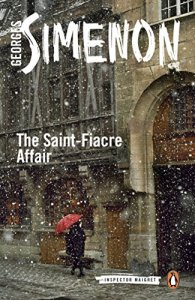
The Saint-Fiacre Affair by Georges Simenon

The Saint-Fiacre Affair

Penguin Classics|6 November 2014|160 pages|Paperback|3*

The Saint-Fiacre Affair by Georges Simenon was first published in January 1932, under the title Maigret Goes Home. My copy is one of the Penguin Classics publications in new translations.

Saint-Fiacre is where Maigret was born and grew up. His father had been the steward of the château there for thirty years. So when an anonymous note predicting a crime during All Souls’ Day mass at the church is handed in to the Moulins police office, Maigret went back there for the first time since his father had died. It is a melancholy visit for as well as a death to investigate, Maigret finds so much had changed and the atmosphere was oppressing him – he had never imagined that he would find the village in such a sorry state.

The predicted death took place in the church whilst Maigret was attending the the first Mass on All Soul’s Day – the old Countess of Saint-Fiacre died during the mass, of heart failure.  But Maigret soon discovers that the heart attack had been brought on when the Countess read a fake newspaper story of her son’s suicide that had been planted in her missal. Maigret suspects a number of people could have been responsible – her son, Maurice, her secretary/lover, Jean, the steward, Ernest and his son, Emile.

I enjoyed this book, although I found it rather disjointed and at times couldn’t follow very easily who was speaking, so it was a bit difficult keeping track of what was going on – maybe that was my problem, I’m not sure. But I thought the melancholy atmosphere and the descriptions of the chateau and Maigret himself were well done and it is packed with drama and tension. The denouement in which Maigret reveals the truth reminded me of the way Poirot rounds up all the people involved and explains who had done the deed and why, and why it was a crime that was not punishable by the law. 

 Reading ChallengesCalendar of Crime (winter scene on the cover), and Mount TBR 2019(a book I’ve owned for 2 years)

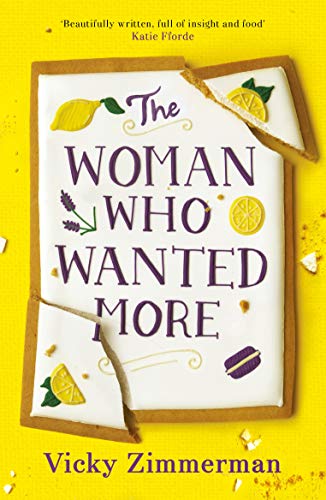
The Woman Who Wanted More by Vicky Zimmerman

Woman who wanted more

Zaffre|30 May 2019|448 pages|e-book via NetGalley|Review copy|3*

Publishers’ blurb:

Two lonely women.

An unlikely friendship.

And one big life lesson: never be ashamed to ask for more . . .

After a major life upheaval on the eve of her 40th birthday, a reluctant Kate Parker finds herself volunteering at Lauderdale House for Exceptional Ladies. There she meets 97-year-old Cecily Finn. Cecily’s tongue is as sharp as her mind but she has lost her spark, simply resigning herself to the Imminent End.

Having no patience with Kate’s plight, Cecily prescribes her a self-help book with a difference – it’s a 1957 cookery manual, featuring menus for anything life can throw at ‘the easily dismayed’. Will Kate find a menu to help her recover from her broken heart? If Kate moves forward, might Cecily too?

The cookbook holds the secrets of Cecily’s own remarkable past, and the story of the love of her life. It will certainly teach Kate a thing or two.

So begins an unlikely friendship between two lonely and stubborn souls – one at the end of her life, one stuck in the middle – who come to show each other that food is for feasting, life is for living and the way to a man’s heart is . . . irrelevant!

My thoughts:

The Woman Who Wanted More by Vicky Zimmerman begins very slowly and I soon felt this wasn’t a book for me. For a start it’s romantic fiction written in the present tense. Then there is Kate, who is nearly 40, single but preparing to move in with her boyfriend, Nick. But on holiday he tells her that he doesn’t want the commitment and she ends up back home living with her mother. Despite her friends’ warnings that he is not worth the bother, she still gives him chance after chance of starting again. And she goes on and on and on about him.

I breathed a sigh of relief when Cecily meets Kate! Cecily is 97 living in Lauderdale House for Exceptional Ladies, a grumpy old lady with intense brown eyes and a sharp tongue. When she hears Kate’s story about her relationship with Nick she tells her in no uncertain terms to give him short shrift and to find a man who isn’t too emotionally stunted to love her.

I was thinking of not finishing this book until Cecily came on the scene. After getting off to a bad start, with several cross words, Kate and Cecily get to know each other better and Cecily’s cookery book gives her some helpful advice mixed in with recipes. And when I got to the end of the book and read the Author’s Note I understood why Cecily’s part of the story appeals to me more – the character was inspired by a real person, Vicky Zimmerman’s grandmother. The book is a mix of fact and fiction – and for me Cecily’s story had the ring of truth. I’m glad I read on to the end.

My thanks to the publishers for my review copy via NetGalley.
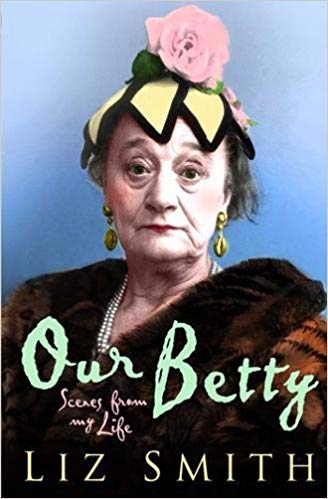
Our Betty: Scenes from my Life by Liz Smith

Our Betty

Simon & Schuster UK| New Ed edition (5 Mar. 2007)|240 pages|Library book|3*

Description from Goodreads:

Liz Smith is one of Britain’s much loved character actresses. This is her life story – from her cosseted yet lonely childhood with her beloved grandparents, through the war, marriage and children, divorce and poverty, long years working in dead-end jobs to her big break at the age of fifty.

From the back cover:

In her brilliantly quirky memoirs Liz Smith tells the hanuting story of her bitter-sweet pre-war childhood’ Daily Mail

These evocative scenes from Lincolnshire life are as good as anything in a Beryl Bainbridge novel. Liz Smith … is our greatest character actress. Her genius is to give all those grotesques and cartoons a measure of her own perky, quirky nature and generous soul. Daily Express

Typically idiosyncratic …shot through with shafts of broad comedy. It’s difficult not to gobble it all up in one go. Sunday Telegraph

From Wikipedia:

Betty Gleadle MBE (11 December 1921 – 24 December 2016), known by the stage name Liz Smith, was an English character actress, known for her roles in BBC sitcoms, including as Annie Brandon in I Didn’t Know You Cared (1975–79), the sisters Bette and Belle in 2point4 Children (1991–99), Letitia Cropley in The Vicar of Dibley (1994–96) and Norma Speakman (“Nana”) in The Royle Family (1998–2006). She also played Zillah in Lark Rise to Candleford (2008) and won the BAFTA Award for Best Actress in a Supporting Role for the 1984 film A Private Function.

My thoughts:

I loved the first part of this book as Liz Smith recalls scenes from her childhood. She was born almost a century ago now and the pictures she paints of her childhood in her words and in her little pen and ink sketches reveal a world so far removed from life as we know it today. She gives an excellent portrait of life between the two world wars. Her mother died when she was two and when she was seven her father left home and she never saw him again. She was brought up by her grandparents.

She writes in short sections telling about her home, how she loved going to the pictures, about the neighbours and the shops, about Christmas, the games she played, her first day at school, summer days, riding her bicycle, learning to be a dressmaker and then what she did during WW2 and her life after the war and becoming an actress.

I had thought before I read the book that it would have been all about her life as an actress, but I’m glad it isn’t. Although I was interested to read about the people she worked with in the various parts she played it was no where nearly as fascinating to me as her early years. It is quirky, funny in parts but also sad and moving.

Reading challenges: this is the 12th library book I’ve read this year and completes my Virtual Mount TBR challenge for the year.