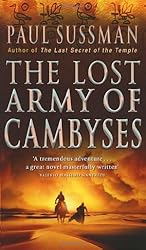
Book Beginnings: The Crow Road by Iain Banks

It was the day that my grandmother exploded. I sat in the crematorium, listening to my Uncle Hamish quietly snoring in harmony to Bach’s Mass in B Minor, and I reflected that it always seemed to be death that drew me back to Gallanach.

A dramatic opening that caught my attention when I began reading Iain Bank’s novel The Crow Road. I’ve read on further and so far I’m intrigued and amused by this family saga of the McHoans, that switches about between the generations.

Every Friday Book Beginnings on Friday is hosted by Gillion at Rose City Reader where you can share the first sentence (or so) of the book you are reading, along with your initial thoughts about the sentence, impressions of the book, or anything else the opener inspires.
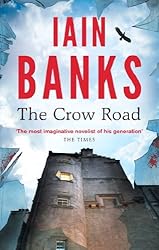
Book Beginning: The Lost Army of Cambyses

After a month of reading library books and new books I’ve got this year I thought it was time to get back into my stock of to-be-read books and picked one at random. It’s The Lost Army of Cambyses by Paul Sussman. Before I began this blog I read Sussman’s The Last Secret of the Temple, which I thought was excellent, so I was looking out for more of his books. Three years later I found this book and it has been sitting unread for the last four years! Time to read it …

The Lost Army of Cambyses is his first book, featuring Inspector Yusuf Khalifa of the Luxor police (as in The Last Secret of the Temple). It begins in 523BC as the Persian army of Cambyses is crossing Egypt’s western desert on their way to destroy the oracle at Siwa:

The Prologue: The Western Desert, 523 BC

The fly had been pestering the Greek all morning. As if the furnace-like heat of the desert wasn’t enough, and the forced marches, and the stale rations, now he had this added torment. He cursed the gods and landed a heavy blow on his cheek, dislodging a shower of sweat droplets, but missing the insect by some way.

‘Damned flies!’ he spat!

As the  account by Herodotus quoted at the front of the book reveals, the story goes that this army never reached its destination and never returned – it was engulfed by a violent sandstorm and disappeared forever.

Chapter 1 picks up the story in Cairo, September 2000, where a mutilated corpse is washed up on the banks of the Nile at Luxor, an antiques dealer is savagely murdered in Cairo, and an eminent British archaeologist is found dead at the ancient necropolis of Saqqara.

The whole thing intrigues me and I’m eagerly reading on …

Every Friday Book Beginnings on Friday is hosted by Gillion at Rose City Reader where you can share the first sentence (or so) of the book you are reading, along with your initial thoughts about the sentence, impressions of the book, or anything else the opener inspires.

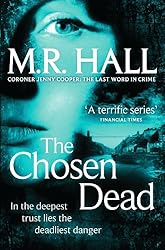
Book Beginnings: The Chosen Dead

What to read next is nearly always a difficult question, the problem being that I have so many books I’ve bought/borrowed that I really want to read right now and much as I would like to I can’t read them all at once.

So, this morning here I am nearly ready to start a new book and wondering which one to go for. It could be The Chosen Dead by M R Hall, his fifth novel in the Coroner Jenny Cooper series.

It begins:

Scottsdale Arizona, 12 March 1982

The last thing Roy Emmett Hudson was expecting on the eve of his forty-first birthday was a bullet in the head, but life and death are only a single breath apart, and as a biologist, he appreciated that more than most. Even as he strolled across the company lot to the Mercedes Coupé he had driven all winter without once raising the roof, his killers’ thoughts were already moving on to where they might dump his body so that it might never be found.

I’ve read three of the earlier books in the series, and liked them, so I’m hoping this one will be good. It’s an intriguing beginning because it doesn’t seem likely that Coroner Jenny Cooper could be involved in investigating this death as she is a Bristol coroner …

Synopsis from the back cover:

When Bristol Coroner Jenny Cooper investigates the fatal plunge of a man from a motorway bridge, she little suspects that it has any connection with the sudden death of a friend’s thirteen year old daughter from a deadly strain of meningitis. But as Jenny pieces together the dead man’s last days, she’s drawn into a mystery whose dark ripples stretch across continents and back through decades. In an investigation which will take her into the sinister realms of unbridled human ambition and corrupt scientific endeavour, Jenny is soon forced to risk the love and lives of those closest to her, as a deadly race to uncover the truth begins . . .

Every Friday Book Beginnings on Friday is hosted by Gillion at Rose City Reader where you can share the first sentence (or so) of the book you are reading, along with your initial thoughts about the sentence, impressions of the book, or anything else the opener inspires.
Book Beginning: Sweet Thursday by John Steinbeck

Book Beginnings ButtonEvery Friday Gilion at Rose City Reader hosts Book Beginnings on Friday, where you can share the first sentence (or so) of the book you are reading, along with your initial thoughts about the sentence, impressions of the book, or anything else the opener inspires.
With just a few days left to go to the end of the TBR Triple Dog Dare I’m still reading from my TBR books and enjoying it. But I’m looking forward to next week when I’m going to start reading some of the books I’ve recently bought. One of them is Sweet Thursday by John Steinbeck, which begins with a Prologue:

One night Mack lay back on his bed in the Palace flop-house and he said, “I ain’t never been satisfied with that book Cannery Row, I would have went about it different.”

And after a while he rolled over and raised his head on his hand and he said, “I guess I’m just a critic. But if I ever come across the guy that wrote that book I could tell him a few things.”

I like this humorous opening, carrying on with the story Steinbeck began in Cannery Row, which I thoroughly enjoyed. Mack is a great character and I’m expecting to find out what happened to him and his friends after the end of the Second World War.

Book Beginnings: The Potter's Hand by A N Wilson

Whilst I’ve been reading from my own book shelves this year so far, I’ve accumulated a pile of library books that are tempting me away from them. One of these books is The Potter’s Hand by A N Wilson.

It begins:

The unoiled hinge joined its melancholy whine to the opium-dosed whimper of the patient who st gagged in his chair, and to the swift rasping of the saw. The door creaked ajar in the very moment that the doctor sawed off the leg of Sukey’s pa.

Such a dramatic opening that immediately grabbed my attention, conjuring up such a vivid picture complete with sound effects! The year is 1768. Sukey (Susannah), who later became the mother of Charles Darwin, was the daughter of Josiah Wedgwood,  an English potter and founder of the Wedgwood company.

The Potter’s Hand is a novel about Josiah Wedgwood and his family. Wilson explains in an Afterword that the broad outlines of the story and most of the details are true, but he has altered dates and rearranged historical events and nearly all the letters are invented. It is ‘meant to be read as fiction, even thought it is intended in part, as an act of homage to one of the great men of our history.’

I’ve read the first two chapters and think I’ll have to read on soon, after I’ve finished Death Under Sail by C P Snow, a crime fiction novel, if not sooner.

Every Friday Gilion at Rose City Reader hosts Book Beginnings on Friday, where you can share the first sentence (or so) of the book you are reading, along with your initial thoughts about the sentence, impressions of the book, or anything else the opener inspires.

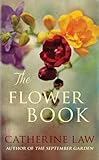
Book Beginnings – The Flower Book

Yesterday I finished reading Purple Hibiscus by Chimamanda Ngozi Adichie, which I thought was an amazing book that kept me captivated even though it’s a challenging book to read because of its subject matter. I’ll write more about that in a later post.

It has left me with the usual problem of deciding what to read next and I’ve picked up and started so many books, none of which seem good enough after Purple Hibiscus. I’ve been reading from my own bookshelves this year, but I’m thinking of having a little break from that and reading a library book. It’s one I picked off the mobile library van, not knowing anything about it or about the author, Catherine Law – The Flower Book. It’s set in 1914 and also in 1936.

It begins in Cornwall in March 1914:

On certain nights if the wind was right, you could hear the sea from Old Trellick. So the legend has it, although Violet had never heard the waves and her parents would not try, due to the fact, she decided, that they had no imagination.

As a child she’d stand at the French windows and implore them to be quiet, to stop what they were doing and to concentrate with her, to catch this magical and elusive sound.

Every Friday Gilion at Rose City Reader hosts Book Beginnings on Friday, where you can share the first sentence (or so) of the book you are reading, along with your initial thoughts about the sentence, impressions of the book, or anything else the opener inspires.

I like the images the beginning of this book conjures and also the sounds. I always like the sight and sound of the waves breaking on the shore; to me too that has a certain magic. So this appealed to me straight away. Couple that with a story set against the backdrop of World War I as Aster Fairling searches for the truth behind her parents’ tragic love through the pages of her mother journal and I want to know more.

The Flower Book is Catherine Law’s third book.