Loitering with Intent by Muriel Spark: Book Beginnings on Friday & The Friday 56

Every Friday Book Beginnings on Friday is hosted by Gillion at Rose City Reader where you can share the first sentence (or so) of the book you are reading. You can also share from a book you want to highlight just because it caught your fancy.
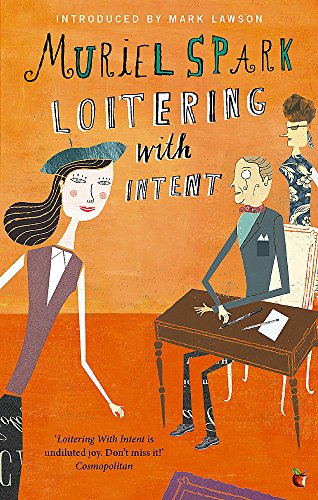
Loitering with Intent by Muriel Spark is a book I’ve had since 2017, when I bought it from Barter Books in Alnwick, one of my favourite secondhand bookshops. One of my favourite books is The Prime of Miss Jean Brodie, so I was hoping to love this book too. I did enjoy it, but not as much as Prime of Miss Jean Brodie.

The book begins:

One day in the middle of the twentieth century I sat in an old graveyard which had not been demolished, in the Kensington area of London, when a young policeman stepped off the path and came over to me.
Also every Friday there is The Friday 56, hosted by Freda at Freda’s Voice, but she is taking a break and Anne at My Head is Full of Books has taken on hosting duties in her absence. You grab a book and turn to page 56 (or 56% of an eBook), find one or more interesting sentences (no spoilers), and post them.

Page 55-56:

Several people turned round to look at Edwina as she spoke with her high cry. People often turned round to stare at her painted wizened face, her green teeth, the raised, red-blood fingernail accompanied by her shrieking voice, the whole wrapped up to the neck in luxurious fur. Edwina was over ninety and might die at any time, as she did about six years later. My dear, dear Solly lived into the seventies of this century, when I was far away.

Description from Amazon:

A funny and clever novel about art and reality and the way they imitate each other, from the author of The Prime of Miss Jean Brodie. With an introduction by Mark Lawson.

Would-be novelist Fleur Talbot works for the snooty Sir Quentin Oliver at the Autobiographical Association, whose members are at work on their memoirs. When her employer gets his hands on Fleur’s novel-in-progress, mayhem ensues when its scenes begin coming true.

If you have read this book, what did you think?
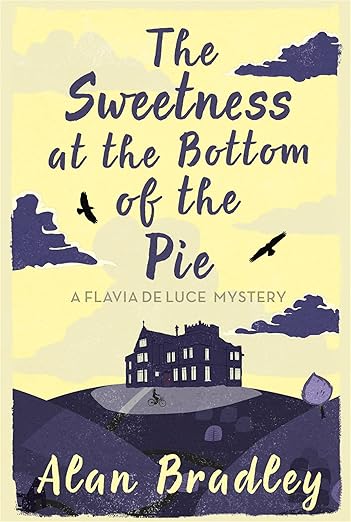
The Sweetness at the Bottom of the Pie by Alan Bradley: Book Beginnings on Friday & The Friday 56

Every Friday Book Beginnings on Friday is hosted by Gillion at Rose City Reader where you can share the first sentence (or so) of the book you are reading. You can also share from a book you want to highlight just because it caught your fancy.

The Sweetness at the Bottom of the Pie caught my eye one day as I was browsing the bookshelves in Barter Books in Alnwick, one of my favourite secondhand bookshops. It’s the first of the Flavia de Luce Mystery novels.

The book begins:

It was as black in the closet as old blood. They had shoved me in and locked the door.

Also every Friday there is The Friday 56, hosted by Freda at Freda’s Voice, but she is taking a break and Anne at My Head is Full of Books has taken on hosting duties in her absence. You grab a book and turn to page 56 (or 56% of an eBook), find one or more interesting sentences (no spoilers), and post them.

Page 56:

Daphne had described to me the effects of tetanus: one scratch from an old auto wheel and I’d be foaming at the mouth, barking like a dog and falling to the ground in convulsions at the sight of water.

Description from Amazon:

England 1950. At Buckshaw, the crumbling country seat of the de Luce family, very-nearly-eleven-year-old Flavia is plotting revenge on her older sisters.

Then a dead bird is left on the doorstep, which has an extraordinary effect on Flavia’s eccentric father, and a body is found in the garden. As the police descend on Buckshaw, Flavia decides to do some investigating of her own.

If you have read this book, what did you think?
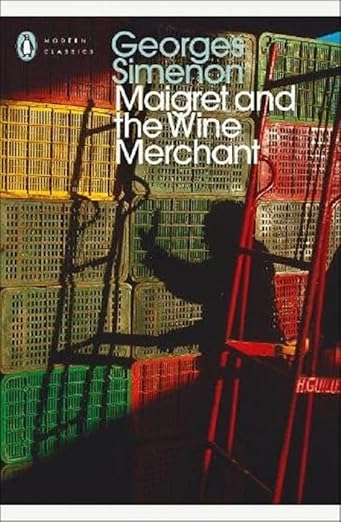
Maigret and the Wine Merchant by Georges Simenon: Book Beginnings on Friday & The Friday 56

Every Friday Book Beginnings on Friday is hosted by Gillion at Rose City Reader where you can share the first sentence (or so) of the book you are reading. You can also share from a book you want to highlight just because it caught your fancy.

Maigret and the Wine Merchant is one of the books I’m currently reading. I fancied reading something shorter that the books I’ve been reading and thought this one with just 176 pages was ideal. It’s the seventy first book in the Maigret series, and was originally published in 1971. The Penguin Classics edition was first published in September 2019.

The book begins:

“You only killed her to rob her, didn’t you?”

Also every Friday there is The Friday 56, hosted by Freda at Freda’s Voice, but she is taking a break and Anne at My Head is Full of Books has taken on hosting duties in her absence. You grab a book and turn to page 56 (or 56% of an eBook), find one or more interesting sentences (no spoilers), and post them.

Page 56:

‘Was Madame Thorel one of Oscar Chabut’s mistresses?’

‘Rita? She’s come with him and with overs. She’s a sexy little brunette who can’t do without men.’

Description from Goodreads:

‘Maigret had never been comfortable in certain circles, among the wealthy bourgeoisie where he felt clumsy and awkward … Built like a labourer, Oscar Chabut had hauled himself up into this little world through sheer hard work and, to convince himself that he was accepted, he felt the need to sleep with most of the women.’

When a wealthy wine merchant is shot in a Paris street, Maigret must investigate a long list of the ruthless businessman’s enemies before he can get to the sad truth of the affair.

The Testaments by Margaret Atwood: Book Beginnings on Friday & The Friday 56

Every Friday Book Beginnings on Friday is hosted by Gillion at Rose City Reader where you can share the first sentence (or so) of the book you are reading. You can also share from a book you want to highlight just because it caught your fancy.

The Testaments by Margaret Atwood is one of the time limited deals on Amazon at the moment and because I read The Handmaid’s Tale many years ago before I’d even heard of book blogs, I jumped at the chance to buy it.

The book begins:

Only dead people are allowed to have statues, but I have been given one while still alive. Already I am petrified.

Also every Friday there is The Friday 56, hosted by Freda at Freda’s Voice, but she is taking a break and Anne at My Head is Full of Books has taken on hosting duties in her absence. You grab a book and turn to page 56 (or 56% of an eBook), find one or more interesting sentences (no spoilers), and post them.

Page 56:

I don’t remember that school day very much, because why would I? It was normal. Normal is like looking out a car window. Things pass by, this and that and this and that, without much significance.You register such hours; they’re habitual. like brushing your teeth.

Description from Goodreads:

When the van door slammed on Offred’s future at the end of The Handmaid’s Tale, readers had no way of telling what lay ahead for her–freedom, prison or death.

With The Testaments, the wait is over.

Margaret Atwood’s sequel picks up the story more than fifteen years after Offred stepped into the unknown, with the explosive testaments of three female narrators from Gilead.

In this brilliant sequel to The Handmaid’s Tale, acclaimed author Margaret Atwood answers the questions that have tantalized readers for decades.

I’m probably way behind many other bloggers who have read this book! If you have read it what do you think? Did you like it?

Small Wars by Sadie Jones: Book Beginnings on Friday & The Friday 56

Every Friday Book Beginnings on Friday is hosted by Gillion at Rose City Reader where you can share the first sentence (or so) of the book you are reading. You can also share from a book you want to highlight just because it caught your fancy.

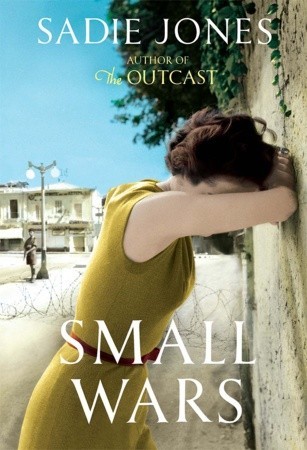
Small Wars by Sadie Jones is historical fiction set mainly in Cyprus in the late 1950s where Major Hal Treherne and his wife Clara and their baby daughters are stationed during the ‘enosis’ (union with Greece) uprising. I’ve read about two thirds of it so far and it is good.

The book begins with a Prologue at Sandhurst in July 1946.

An English rain was falling onto the instruments of the band, onto their olive green uniforms and the uniforms of the cadets as they marched. The quiet rain lay in drops on the umbrellas of the families watching, on the men’s felt hats and the women’s gloved hands; it dampened the grey and green countryside around them and put beads of water onto everything.

The Royal Military Academy Sandhurst (RMAS) is where all officers in the British Army are trained to take on the responsibility of leading their soldiers. The main character is Hal Treherne and this opening chapter is about his passing out parade after he completed his basic training as an officer.

Also every Friday there is The Friday 56, hosted by Freda at Freda’s Voice, but she is taking a break and Anne at My Head is Full of Books has taken on hosting duties in her absence. You grab a book and turn to page 56 (or 56% of an eBook), find one or more interesting sentences (no spoilers), and post them.

Page 56 is in Part Two, which is set in Limassol, Cyprus ten years later in 1956 during the Emergency. Hal has been promoted to a major.

‘It was a sharp sudden valley and it wasn’t fanciful to consider it sinister, with the slithering hard stones and earth that went steeply downward. For most of the day it would be in shadow. Hal had seen the gradients on the map, but was still surprised by the extremity of the land and that anyone would choose to build a farm there, so deep.

Description from Amazon UK:

Hal Treherne is a soldier on the brink of a brilliant career. Impatient to see action, his other commitment in life is to his beloved wife, Clara, and when Hal is transferred to Cyprus she and their twin daughters join him. But the island is in the heat of the emergency; the British are defending the colony against Cypriots – schoolboys and armed guerillas alike – battling for union with Greece.

Clara shares Hal’s sense of duty and honour; she knows she must settle down, make the best of things, smile. But action changes Hal, and the atrocities he is drawn into take him not only further from Clara but himself, too; a betrayal that is only the first step down a dark path.

It was longlisted for the Orange Prize for Fiction in 2010. The Orange Prize for Fiction, now known as the Women’s Prize for Fiction is an annual award that recognizes the best novel written in English by a woman, regardless of nationality.

Nicholas Nickleby by Charles Dickens: Book Beginnings on Friday & The Friday 56

Every Friday Book Beginnings on Friday is hosted by Gillion at Rose City Reader where you can share the first sentence (or so) of the book you are reading. You can also share from a book you want to highlight just because it caught your fancy.

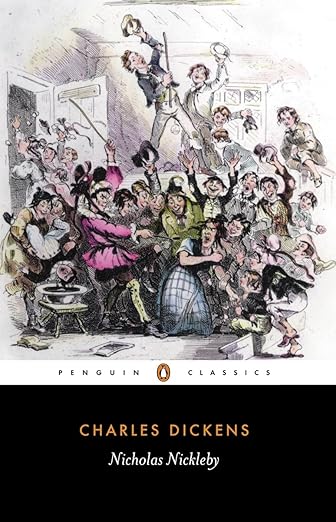
I’m getting to the end of reading Bleak House by Charles Dickens, so I’m looking around to find a book to read to replace it. One of the books I might read is Nicholas Nickleby by Charles Dickens.

Nicholas Nickleby is the third novel by Charles Dickens, originally published as a serial from 1838 to 1839 and published in book form in 1839. I know very little about and don’t remember watching any of the adaptations on TV or film.

The book begins:

There once lived, in a sequestered part of the county of Devonshire, one Godfrey Nickleby: a worthy gentleman, who, taking it into his head rather late in life that he must get married, and not being young enough or rich enough to aspire to the hand of a lady of fortune, had wedded an old flame out of mere attachment, who in her turn had taken him for the same reason. Thus two people who cannot afford to play cards for money, sometimes sit down to a quiet game for love.

Also every Friday there is The Friday 56, hosted by Freda at Freda’s Voice, but she is taking a break and Anne at My Head is Full of Books has taken on hosting duties in her absence. You grab a book and turn to page 56 (or 56% of an eBook), find one or more interesting sentences (no spoilers), and post them.

On page 56

‘Stop,’ cried Nicholas hurriedly; pray hear me. This is the grossest and wildest delusion, the completest and most signal mistake, that ever human being laboured under, or committed. I have scarcely seen the young lady half-a-dozen times, but if I had seen her sixty times, or am destined to see her sixty thousand thousand, it would be, and will be, precisely the same.

Description from Goodreads:

When Nicholas Nickleby is left penniless after his father’s death, he appeals to his wealthy uncle to help him find work and to protect his mother and sister. But Ralph Nickleby proves both hard-hearted and unscrupulous, and Nicholas finds himself forced to make his own way in the world. His adventures gave Dickens the opportunity to portray an extraordinary gallery of rogues and eccentrics, such as Wackford Squeers, the tyrannical headmaster of Dotheboys Hall, a school for unwanted boys; the slow-witted orphan Smike, rescued by Nicholas; and the gloriously theatrical Mr. and Mrs. Crummles and their daughter, the ‘infant phenomenon’. Like many of Dickens’s novels, Nicholas Nickleby is characterised by his outrage at cruelty and social injustice, but it is also a flamboyantly exuberant work, revealing his comic genius at its most unerring.