Book Beginnings & The Friday 56: Whispers Under Ground by Ben Aaronovitch

Every Friday Book Beginnings on Friday is hosted by Gillion at Rose City Reader where you can share the first sentence (or so) of the book you are reading. You can also share from a book you want to highlight just because it caught your fancy.

Today I’m featuring one of the books I’m currently reading, Whispers Under Ground by Ben Aaronovitch, the third book in his Rivers of London series, police procedurals of a very different kind – urban fantasy, set in the real world of London, a mix of reality and the supernatural.

My Book Beginning

Back in the summer I’d made the mistake of telling my mother what I did for a living. Not the police bit, which of course she already knew about having been at my graduation from Hendon, but the stuff about me working for the branch of the Met that dealt with the supernatural.
Also every Friday there is The Friday 56, hosted by Freda at Freda’s Voice, where you grab a book and turn to page 56 (or 56% of an eBook), find one or more interesting sentences (no spoilers), and post them.

Page 56:

I was carrying my magic bowl with both hands and stepping carefully on the frost-slippery cobbles.

Ben Aaronovitch is an English author and screenwriter. He is the author of the Rivers of London series of novels. He worked as a scriptwriter for Doctor Who and Casualty before the inspiration for his own series of books struck him whilst working as a bookseller in Waterstones Covent Garden. His unique novels are the culmination of his experience of writing about the emergency services and the supernatural. 

The series is to be adapted for television, bringing together all nine of the novels, plus the accompanying short stories, novellas and graphic novels, for the screen. The TV adaptation will be co-produced by Pure Fiction Television, See-Saw Films and Aaronovitch’s own production company Unnecessary Logo.

Synopsis:

Peter Grant is learning magic fast. And it’s just as well – he’s already had run-ins with the deadly supernatural children of the Thames and a terrifying killer in Soho. Progression in the Police Force is less easy. Especially when you work in a department of two. A department that doesn’t even officially exist. A department that if you did describe it to most people would get you laughed at. And then there’s his love life. The last person he fell for ended up seriously dead. It wasn’t his fault, but still.

Now something horrible is happening in the labyrinth of tunnels that make up the tube system that honeycombs the ancient foundations of London. And delays on the Northern line is the very least of it. Time to call in the Met’s Economic and Specialist Crime Unit 9, aka ‘The Folly’. Time to call in PC Peter Grant, Britain’s Last Wizard.

What do you think? Would you read it?
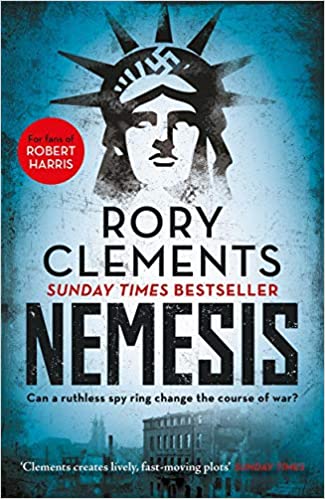
Book Beginnings & The Friday 56: Nemesis by Rory Clements

Every Friday Book Beginnings on Friday is hosted by Gillion at Rose City Reader where you can share the first sentence (or so) of the book you are reading. You can also share from a book you want to highlight just because it caught your fancy.

Today I’m featuring Nemesis by Rory Clements, the third book in his Tom Wilde series, historical fiction set in the Second World War. I’ve read books 1, 2, 4 and 5. It’s probably better to read them in sequence, but I’ve found they read well as standalone books. I am about to start this one.

This was the best day of his life, watching his beloved boy, here in this ancient chamber of light.

Also every Friday there is The Friday 56, hosted by Freda at Freda’s Voice, where you grab a book and turn to page 56 (or 56% of an eBook), find one or more interesting sentences (no spoilers), and post them.

Page 56:

Why was the door open?

He stood on the front doorstep, as his eyes adjusted to the gloom. Across the road, beside the fenced-off garden at the centre of the square, he thought he saw shadowy movement. At first he dismissed it, but then, he heard voices too.

RORY CLEMENTS is a Sunday Times bestselling author. He won the CWA Ellis Peters Historical Award for his second novel, Revenger, and a TV series of the John Shakespeare novels is currently in development. 

Synopsis from Amazon:

In a great English house, a young woman offers herself to one of the most powerful and influential figures in the land – but this is no ordinary seduction. She plans to ensure his death . . .

On holiday in France, Professor Tom Wilde discovers his brilliant student Marcus Marfield, who disappeared two years earlier to join the International Brigades in Spain, in the Le Vernet concentration camp in the foothills of the Pyrenees. Wilde secures his release just as German tanks roll into Poland.

Meanwhile, a U-boat sinks the liner Athenia in the Atlantic with many casualties, including Americans, onboard. Goebbels claims Churchill put a bomb in the ship to blame Germany and to lure America into the war.

As the various strands of an international conspiracy begin to unwind, Tom Wilde will find himself in great personal danger. For just who is Marcus Marfield? And where does his loyalty lie?

A brilliantly intelligent, gripping WW2 spy thriller from the Sunday Times bestselling author of Corpus and Hitler’s Secret.

What do you think? Would you read it?
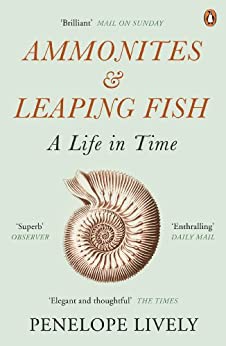
Book Beginnings & The Friday 56: Ammonites and Leaping Fish by Penelope Lively

Every Friday Book Beginnings on Friday is hosted by Gillion at Rose City Reader where you can share the first sentence (or so) of the book you are reading. You can also share from a book you want to highlight just because it caught your fancy.

I was on holiday in the Lake District last week, overlooking Esthwaite Water. There were two shelves of books in our apartment and one of them was Ammonites and Leaping Fish: a Life in Time by Penelope Lively, so I read it whilst we were away. I’ll write more about it in a later post (although I’ve not been keeping up with reviewing the books I’ve read this summer).

This is not quite a memoir. Rather it is a view from old age.

And a view of old age itself, this place at which we arrive with a certain surprise – ambushed, or so it can seem. The view from eighty for me. One of the few advantages of age is that you can report on it with a certain authority; you are a native now and know what goes on here.

Also every Friday there is The Friday 56, hosted by Freda at Freda’s Voice, where you grab a book and turn to page 56 (or 56% of an eBook), find one or more interesting sentences (no spoilers), and post them.

Page 56:

When I was on the other side of the Atlantic a few years ago staying with my best friend in America, she produced a photo she had found of the two of us taken in the early 1980s. We gazed at it with surprised respect; ‘Weren’t we young!’ said Betty. Actually verging on middle age, but never mind – our reaction was in perfect accord: an acknowledgement of those other selves.

Penelope Lively is one of my favourite authors and I’ve been reading her books for years, all of them are enjoyable and this one is no exception. I thoroughly enjoyed it.

Synopsis from Amazon:

In this charming but powerful memoir, Penelope Lively reports from beyond the horizon of old age. She describes what old age feels like for those who have arrived there and considers the implications of this new demographic. She looks at the context of a life and times, the history and archaeology that is actually being made as we live out our lives in real time, in her case World War II; post war penny-pinching Britain; the Suez crisis; the Cold War and up to the present day. She examines the tricks and truths of memory. She looks back over a lifetime of reading and writing. And finally she looks at her identifying cargo of possessions – two ammonites, a cat, a pair of American ducks and a leaping fish sherd, amongst others. This is an elegant, moving and deeply enjoyable memoir by one of our most loved writers.

Book Beginnings & The Friday 56: All Among the Barley by Melissa Harrison

Every Friday Book Beginnings on Friday is hosted by Gillion at Rose City Reader where you can share the first sentence (or so) of the book you are reading. You can also share from a book you want to highlight just because it caught your fancy.

Yesterday I finished reading Shrines of Gaiety, Kate Atkinson’s new book which will be published in September. I’ll write about it in a later post. Although I’m still reading The Return of the King and The Island, I wondered what I’d like to read next. I was thinking of reading  Lion by Conn Iggulden, the first in a new series ‘The Golden Age’, set in Ancient Greece in the 5th century BC. But, today I wasn’t in the mood for ancient historical fiction and fancied something more rural and more modern – and spotted All Among the Barley in a pile of books waiting to be read. It’s set on a farm in Suffolk just before the Second World War.

Prologue

Last night I lay awake again, remembering the day the Hunt ran me down in Hulver Wood when I was just a girl.

And then Chapter 1:

My name is Edith June Mather and I was born after the end of the Great War. My father, George Mather, had sixty acres of arable land known as Wych Farm; it is somewhere not far from here, I believe. Before him my grandfather Albert farmed the same fields, and his father before him, who ploughed with a team of oxen and sowed by hand.

Also every Friday there is The Friday 56, hosted by Freda at Freda’s Voice, where you grab a book and turn to page 56 (or 56% of an eBook), find one or more interesting sentences (no spoilers), and post them.

Page 56:

Unlike Doble, whose family had been tied to ours for generations, John was what we in the village called a ‘furriner’, having been born sixty miles or more north of us, where our clay gave way to flat, rich peat.

Synopsis from Amazon:

WINNER OF THE EU PRIZE FOR LITERATURE

‘BOOK OF THE YEAR’ NEW STATESMAN, OBSERVER, IRISH TIMES, BBC HISTORY MAGAZINE

The fields were eternal, our life the only way of things, and I would do whatever was required of me to protect it.


The autumn of 1933 is the most beautiful Edie Mather can remember, though the Great War still casts a shadow over the cornfields of her beloved home, Wych Farm.

When charismatic, outspoken Constance FitzAllen arrives from London to write about fading rural traditions, she takes an interest in fourteen-year-old Edie, showing her a kindness she has never known before. But the older woman isn’t quite what she seems.

As harvest time approaches and pressures mount on the whole community, Edie must find a way to trust her instincts and save herself from disaster.

I chose this book because earlier this year I enjoyed Melissa Harrison’s novella, Rain: Four Walks in English Weather, which is about four rain showers, in four seasons, across Wicken Fen, Shropshire, the Darent Valley and Dartmoor. I like the way she writes about the natural world and All Among the Barley looks as though it will bring to life a world governed by the old rural traditions, in an evocation of place and a lost way of life.

What do you think? Have you read this book ?

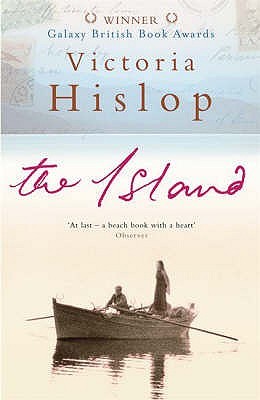
Book Beginnings & The Friday 56: The Island by Victoria Hislop

Every Friday Book Beginnings on Friday is hosted by Gillion at Rose City Reader where you can share the first sentence (or so) of the book you are reading. You can also share from a book you want to highlight just because it caught your fancy.

I’m currently reading The Island by Victoria Hislop, a book I’ve had on my bookshelves for years. The Wanderlust Bingo challenge has given me a massive nudge to read it now as it is the perfect book for the Island category! It is historical fiction inspired by a visit to Spinalonga, the abandoned Greek leprosy colony, an island off the coast of Crete, a stone’s throw from Plaka. I’ve now read 25% of this book and am enjoying it so far.

Plaka, 1953

A cold wind whipped through the streets of Plaka and the chill of the autumnal air encircled the woman, paralysing her body and mind with a numbness that almost blocked her senses but could do nothing to alleviate her grief.

Also every Friday there is The Friday 56, hosted by Freda at Freda’s Voice, where you grab a book and turn to page 56 (or 56% of an eBook), find one or more interesting sentences (no spoilers), and post them.

Page 57 (page 56 is blank):

1939

Early May brings Crete its most perfect and heaven-sent days. On one such day, when the trees were heavy with blossom and the very last of the mountain snows had melted into crystal streams, Elena left the mainland for Spinalonga. In cruel contrast to this blackest of events, the sky was brilliant, a cloudless blue

Synopsis from Amazon:


On the brink of a life-changing decision, Alexis Fielding longs to find out about her mother’s past. But Sofia has never spoken of it. All she admits to is growing up in a small Cretan village before moving to London. When Alexis decides to visit Crete, however, Sofia gives her daughter a letter to take to an old friend, and promises that through her she will learn more.

Arriving in Plaka, Alexis is astonished to see that it lies a stone’s throw from the tiny, deserted island of Spinalonga – Greece’s former leper colony. Then she finds Fotini, and at last hears the story that Sofia has buried all her life: the tale of her great-grandmother Eleni and her daughters and a family rent by tragedy, war and passion.

She discovers how intimately she is connected with the island, and how secrecy holds them all in its powerful grip…

I’ve read three other books by Victoria Hislop and enjoyed them so I’m expecting this one to be good too.

What do you think? Have you read this book ?

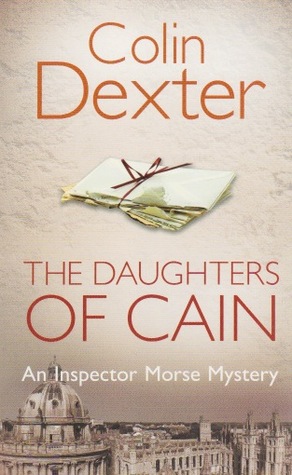
Book Beginnings & The Friday 56: The Daughters of Cain by Colin Dexter

Every Friday Book Beginnings on Friday is hosted by Gillion at Rose City Reader where you can share the first sentence (or so) of the book you are reading. You can also share from a book you want to highlight just because it caught your fancy.

I began reading Colin Dexter’s Inspector Morse books years ago and have read 9 of the 13 books in the series, mostly out of order, so I’ve been reading the earlier books to fill in the gaps, as it were. Chief Inspector Morse is one of my favourite fictional detectives (maybe even the favourite). I first ‘met’ him years ago in the ITV series Inspector Morse and so, just as Joan Hickson is forever in my mind as Miss Marple and David Suchet is Poirot, John Thaw is Morse. This post is about the 11th book The Daughters of Cain.

It begins with a Prolegomena ie Prologue

Natales grate numeras?
(Do you count your birthdays with gratitude?)
(Horace, Epistles II)

On Mondays to Fridays it was fifty-fifty whether the postman called before Julia Stevens left for school.

Julia is a teacher, not a pupil.

Also every Friday there is The Friday 56, hosted by Freda at Freda’s Voice, where you grab a book and turn to page 56 (or 56% of an eBook), find one or more interesting sentences (no spoilers), and post them.

Page 56:

She’d never loved anyone in life really – except for her mum. But amongst her clients, that rather endearing, kindly, caring sort of idiot, Felix, had perhaps come nearer than anyone.

Synopsis from Goodreads:

Bizarre and bewildering – that’s what so many murder investigations in the past had proved to be… In this respect, at least, Lewis was correct in his thinking. What he could not have known was what unprecedented anguish the present case would cause to Morse’s soul.

Chief Superintendent Strange’s opinion was that too little progress had been made since the discovery of a corpse in a North Oxford flat. The victim had been killed by a single stab wound to the stomach. Yet the police had no weapon, no suspect, no motive.

Within days of taking over the case Chief Inspector Morse and Sergeant Lewis uncover startling new information about the life and death of Dr Felix McClure. When another body is discovered Morse suddenly finds himself with rather too many suspects. For once, he can see no solution. But then he receives a letter containing a declaration of love… 

What do you think? Have you read this book – or any of the Inspector Morse books?