Top 5 Tuesday:top 5 books with stars on the cover

Top 5 Tuesday was created by Shanah at Bionic Book Worm, and it is now being hosted by Meeghan at Meeghan Reads. For details of all of the latest prompts for April to June, see Meeghan’s post here.

Today the topic is top 5 books with stars on the cover. One of my favourite paintings is Vincent Van Gogh’s Starry Night, so I’ve chosen books about the painting, Van Gogh’s life, about his time in an asylum, historical fiction, and two children’s books.
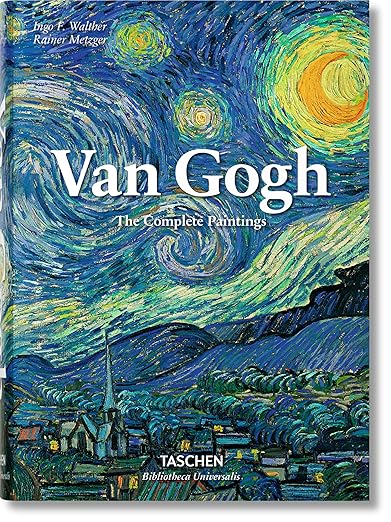
Van Gogh. The Complete Paintings by Ingo F. Walther and Rainer Metzger

Vincent van Gogh’s story is one of the most ironic in art history. Today, he is celebrated the world over as one of the most important painters of all time, recognized with sell-out shows, feted museums, and record prices of tens of millions of dollars at auction.

Yet as he was painting the canvases that would subsequently become these sell-out modern masterpieces, van Gogh was battling not only the disinterest of his contemporary audiences but also devastating bouts of mental illness, with episodes of depression and paralyzing anxiety which would eventually claim his life in 1890, when he committed suicide shortly after his 37th birthday. This comprehensive study of Vincent van Gogh (1853–1890) pairs a detailed monograph on his life and art with a complete catalogue of his 871 paintings.
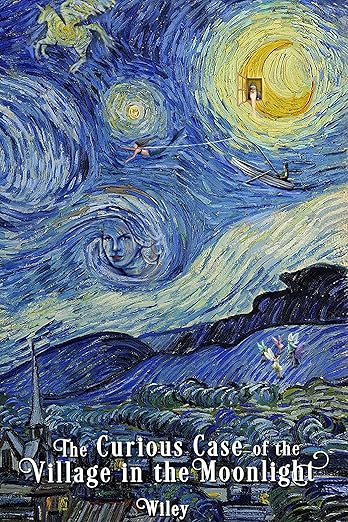
The Curious Case of the Village in the Moonlight by Steve Wiley.

Newly admitted patient Vincent Van Gogh watched as the first stars of what would become The Starry Night blinked to life over the sleepy village of Saint-Rémy.

In that village lived a lamplighter. That notorious starry night would be his last one on the job. The town was scheduled to be wired with a new and innovative technology called ‘electricity’ the following day. The lamplighter began his last night of work at the village tavern during green hour — an absinthe-drenched celebration in his honor. Green hour would transform the night from familiar to fantastical, with the village street lamps mysteriously vanishing. The lamplighter finds himself swept away on a wonderfully strange adventure to find and light the lost lamps, one that will take him from the depths of wish-filled rivers to the heights of the star-filled sky. Along the way, the lamplighter finds help from a curious cast of characters including the Man in the Moon, an ages-old cypress tree, and the wind itself. It will take all of them to find the lost lamps, and a lost love.
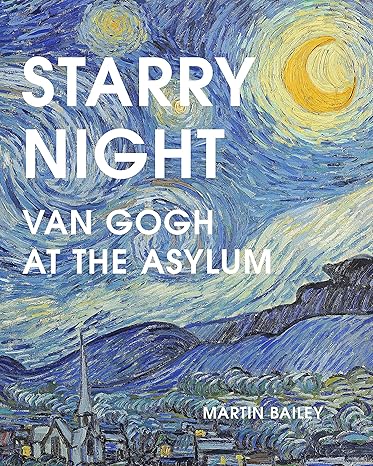
Starry Night: Van Gogh at the Asylum by Martin Bailey

Starry Night is a fascinating, fully illustrated account of Van Gogh’s time at the asylum in Saint-Remy, during which he created some of his most iconic pieces of art.

Despite the challenges of ill health and asylum life, Van Gogh continued to produce a series of masterpieces – cypresses, wheatfields, olive groves and sunsets during his time there. This fascinating and insightful work from arts journalist and Van Gogh specialist Martin Bailey examines his time there, from the struggles that sent him to the asylum, to the brilliant creative inspiration that he found during his time here.

He wrote very little about the asylum in letters to his brother Theo, so this book sets out to give an impression of daily life behind the walls of the asylum of Saint-Paul-de-Mausole and looks at Van Gogh through fresh eyes, with newly discovered material.

An essential insight into the mind of a flawed genius, Starry Night is indispensable for those who wish to understand the life of one of the most talented and brilliant artists to have put paintbrush to canvas.
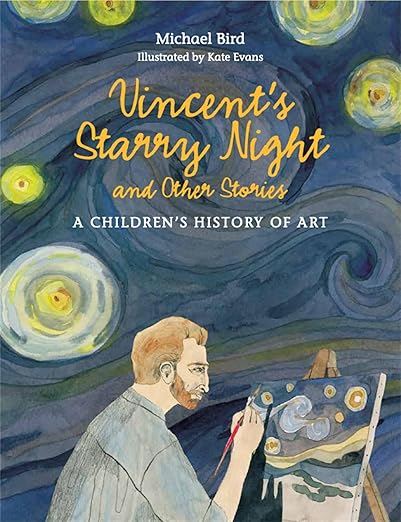
Vincent’s Starry Night and Other Stories: A Children’s History of Art by Michael Bird

An enthralling journey through 40,000 years of art, from prehistoric cave paintings right up to the present day. Discover artists and their art around the world, in exciting and imaginative tales about artists and the way they created their work.
Written by educator and art historian Michael Bird, and illustrated by Kate Evans, the book also features reproductions of the famous artworks discussed, a comprehensive timeline of events, and extra feature spreads on places connected with art.
This is a beautiful and engaging introduction to art for any home or school library.
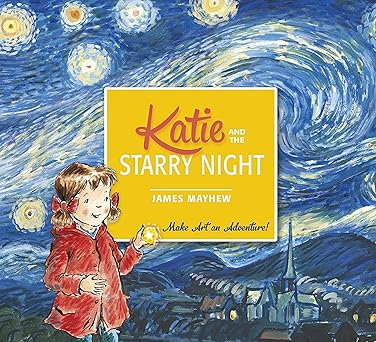
Katie and the Starry Night by James Mayhew

Join Katie as she steps into some of the most famous paintings in the world for an exciting art adventure!

The stars in Vincent van Gogh’s painting are so beautiful that Katie can’t resist reaching in and taking one. But what will she do when all the other stars come tumbling out of the painting, too? Will Katie be able to catch the stars before the gallery guard notices they’ve floated away?
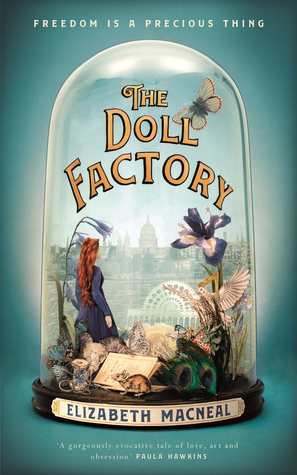
The Doll Factory by Elizabeth Macneal

An intoxicating story of art, obsession and possession

Doll Factory

Picador|2 May 2019|336 pages|Review e-book copy|5*

The Doll Factory by Elizabeth Macneal is one of the best books I read so far this year. It captivated me with its tale of Iris, the young woman who worked painting dolls in Mrs Salter’s Dolls Emporium, but who dreamed of being an artist. It tells of her involvement with the Pre-Raphaelite artists – in particular with Louis Frost (a fictional character) who attracted by her beauty and her red hair wants her to model for him. She agrees, despite the disapproval of her parents and twin sister Rose, on the condition that he teaches her to paint. Meanwhile Silas Reed, a taxidermist and a collector of curiosities, worships her from afar and fantasises that she returns his love.  

But it’s much more than my brief outline conveys. This is historical fiction that transports me back in time and place to the 1850s when the Great Exhibition is being constructed and then opened to the public, a time when the young artists who had recently formed the Pre-Raphaelite Brotherhood, first formed in the summer of 1848, are challenging the art world with their vivid paintings, at once both stylised and naturalistic. The descriptions take me straight into London of the early 1850s with all its sights and smells, its squalor and bustling crowds as people go about their daily lives.

There are some really memorable characters, such as ten year old Albie, who collects dead creatures for Silas. He lives with his sister, a prostitute, in a ramshackle house down a dead-end alley and with just one tooth he dreams of buying a set of false teeth. Rossetti, Millais and Holman Hunt also appear alongside the fictional characters and I loved all the details about their paintings, and their fascination with wombats. Rossetti owned two wombats – the inspiration for Louis’ wombat, Guinevere, who lives in his studio.

As I read on I began to feel a growing sense of menace and the tension between the characters rose almost to an unbearable peak as the book reached its conclusion. It’s full of atmosphere, dark and gothic towards the end as it reached its climax – and left me wanting more. It’s wonderful – historical fiction, art history, and a love story as well as a dark tale of obsession, pulsing with drama, intrigue and suspense.  I loved it!

About the Author

Elizabeth Macneal was born in Edinburgh and now lives in East London. She is a writer and potter and works from a small studio at the bottom of her garden. She read English Literature at Oxford University, before working in the City for several years. In 2017, she completed the Creative Writing MA at UEA in 2017 where she was awarded the Malcolm Bradbury scholarship.

The Doll Factory, Elizabeth’s debut novel, won the Caledonia Noel Award 2018. It will be published in twenty-eight languages and TV rights have sold to Buccaneer Media.

Many thanks to the publishers, Picador, for my review copy via NetGalley.

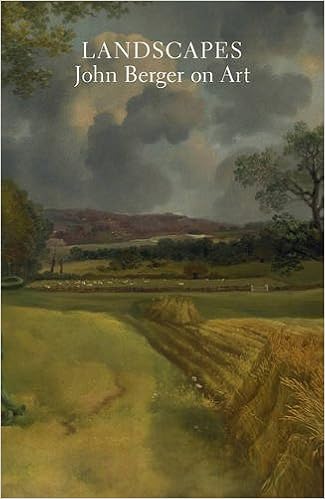
Landscapes: John Berger on Art

Landscapes : John Berger on Art, edited by Tom Overton is a collection of essays by art critic, novelist, poet, and artist John Berger written over the past 60 plus years. However both the title and the cover art – a painting of a landscape – led me to think it would discuss landscapes. But I should have taken more note of this sentence in the blurb-‘Landscapes offers a tour of the history of art, but not as you know it.‘ It is definitely not art as I know it but it is a “landscape” of Berger’s thoughts on his life, on people and ideas that have influenced him, artists and authors that he liked and disliked, with very little in it about landscapes. There are essays on his life, people, ideology, philosophy and on art history and theory about the nature and meaning of art.

Having said that there are sections that I liked and enjoyed, such as the chapters on The Ideal Critic and the Fighting Critic and on Cubism. Knowing next to nothing about cubism and not liking the cubist paintings I have seen, I think I now understand what the artists were attempting, moving away from art that imitated nature to their representation of reality on a two dimensional plane to portray a more complex image of reality.

I am obviously not the target audience for this book!

  • Format: Kindle Edition
  • File Size: 1131 KB
  • Print Length: 272 pages
  • Publisher: Verso (1 Nov. 2016)

I received a copy of this book from Netgalley.

ABC Wednesday: A is for The Artist’s House at Argenteuil

Another round of ABC Wednesday began today. Amazingly it’s been going for around 5 years and this is Round 11.

A is for The Artist’s House at Argenteuil by Claude Monet, one of my favourite Impressionist paintings. It’s oil on canvas painted in 1873, now held in the Art Institute of Chicago.

Monet moved to Argenteuil in 1871 and lived there until 1877. This was a prolific period for him – he was happy and well-off during that time. It was whilst he was living there that he developed a passion for gardening, influenced by fellow artist Gustave Caillebotte. This painting shows the first house he lived in at Argenteuil, with beds of red, white and blue flowers in front of the house, a creeper covering much of the wall and potted plants in large blue and white tubs on the gravel drive.

I especially like this painting because of the colours and also the figures adding personality – the little child with a hoop is Monet’s five-year old son, Jean, whilst his wife, Camille is seen in the doorway.

P is for Pissarro

L'Hermitage a Pontoise 1867, oil on canvas

 Camille Pissarro (1830 – 1903) was one of the French Impressionist painters. In 1866 he moved to Pontoise on the banks of the River Oise, on the outskirts of Paris and lived there until 1884. He loved the area and painted 300 or so paintings in that period. L’Hermitage à Pontoise, the painting above, is one of my favourites of his, painted in a realistic rather than an impressionist style, showing an idyllic village scene and the hills behind. I like all the detail and his use of light and shade drawing attention to the figures on the road and highlighting the houses.

Red Roofs, 1877, oil on canvas

Ten years later he painted Red Roofs showing a corner of the village in winter with the traditional 18th century houses viewed through the trees. I like the blend of colours with the differing tones of the red of the roofs, fields and earth in the foreground, contrasting with the green of the grass and the blue of the sky. The twisting forms of the trees with their vertical trunks contrast sharply with the geometric shapes of the houses.

An ABC Wednesday post.

R is for Renoir: La Loge

Pierre-Auguste Renoir (1841 – 1919), French Impressionist Artist

I’m spoilt for choice, but on reflection I think La Loge (1874) is my favourite painting by Renoir.

The ‘loge’ is a box at the theatre nearest the stage. This painting is my favourite Renoir because of its fine detail within an Impressionist painting. I love the precise depiction of the lady’s face and jewellery, the soft fabric of her dress, its flimsy lace bodice and cuffs and the splashes of red against the black and white. She is the focus of the painting with the gentleman behind her in the background, but my eyes are also drawn to him with the light glinting on his opera glasses.

This is a painting that draws our attention to where the people are looking – the gentleman is looking up at other people and the lady has put down her opera glasses and is maybe showing  herself to the audience. There is an ambiguity about this painting, which always has me wondering just what is going on.

There is a detailed description of this painting on The Courtauld Gallery’s website, where the painting is held. I was disappointed it wasn’t on display when I visited a couple of years ago.

An ABC Wednesday post.