20 Books of Summer

Cathy at 746 Books is hosting her 20 Books of Summer Challenge again this year. The challenge runs from June through August. There are options to read 10 or 15 books instead of the full 20. And you can swap a book, or change the list half way through if you want.

You can sign up here.

During previous summers I’ve taken part in this challenge and never managed to read the books I’ve listed, although I’ve read over 20 books during the summer months. It seems that listing books I want to read somehow takes away my desire to read them – or it maybe that other books demand to be read when the time comes. The solution seems to be don’t list the books – but that’s not the challenge!

For now these are 20 books I want to read this summer, subject to change. I’ll be pleased if I read 10 of them:

  1. Winter Garden by Beryl Bainbridge
  2. The Silence of the Girls by Pat Barker
  3. The Awakening by Kate Chopin
  4. In Too Deep by Bea Davenport
  5. The Riddle of the Third Mile by Colin Dexter
  6. Islands of Abandonment: Life in the Post-Human Landscape by Cal Flyn
  7. Strangers on a Train by Patricia Highsmith
  8. Killing the Lawyers by Reginald Hill
  9. A Tapping at My Door by David Jackson
  10. Death in Berlin by M M Kaye
  11. The Hiding Place by Simon Lelic
  12. The Children Act by Ian McEwan
  13. I’ll Never Be Young Again by Daphne du Maurier
  14. Undercurrent by Barney Norris
  15. Maigret and the Ghost by Georges Simenon
  16. Spoon-Fed by Tim Spector
  17. King Solomon’s Carpet by Barbara Vine
  18. The Key in the Lock by Beth Underdown
  19. The Invisible Man by H G Wells
  20. The Reason Why by Cecil Woodham-Smith

What will you be reading?
20 Books of Summer 2021

At the beginning of the summer I joined Cathy’s 20 Books of Summer Challenge which ended on September 1st, 2021.

I haven’t been reading as many books as usual this summer and I read 19 books in total. And just 13 of them were the books I’d originally chosen. I’ve reviewed 10 of them – linked to my blog posts:

  1. The Railway Children by E Nesbit
  2. A Line to Kill by Anthony Horowitz
  3. An Officer and a Spy by Robert Harris
  4. The Dressmaker by Beryl Bainbridge
  5. The Killing Kind by Jane Casey
  6. The Paris Library by Janet Skeslien Charles
  7. Coming Up for Air by Sarah Leipciger
  8. Moon Over Soho by Ben Aaronovitch
  9. The Yorkshire Shepherdess by Amanda Owen
  10. The Rose Code by Kate Quinn
  11. Enigma by Robert Harris
  12. Katheryn Howard, The Tainted Queen by Alison Weir
  13. The Old Man and the Sea by Ernest Hemingway

So, I still have 7 books of the 20 left to read. I’m currently reading A Corruption of Blood and I hope to read the rest before the end of this year:

  1. Three Men on the Bummel by Jerome K Jerome
  2. Picnic at Hanging Rock by Joan Lindsay
  3. The Girl Who Died by Ragnar Jónasson
  4. True Crime Story by Joseph Knox
  5. Just Like the Other Girls by Claire Douglas
  6. Loch Down Abbey by Beth Cowan-Erskine
  7. A Corruption of Blood by Ambrose Parry

A Line to Kill by Anthony Horowitz

Random House UK, Cornerstone Digital| 19 August 2021| 368 pages| Review copy| 4*

Synopsis:

There has never been a murder on Alderney.

It’s a tiny island, just three miles long and a mile and a half wide. The perfect location for a brand new literary festival. Private Investigator Daniel Hawthorne has been invited to talk about his new book. The writer, Anthony Horowitz, travels with him.

Very soon they discover that not all is as it should be. Alderney is in turmoil over a planned power line that will cut through it, desecrating a war cemetery and turning neighbour against neighbour.

The visiting authors – including a blind medium, a French performance poet and a celebrity chef – seem to be harbouring any number of unpleasant secrets. When the festival’s wealthy sponsor is found brutally killed, Alderney goes into lockdown and Hawthorne knows that he doesn’t have to look too far for suspects.

There’s no escape. The killer is still on the island. And there’s about to be a second death…

A Line to Kill is the third in Anthony Horowitz’s Hawthorne and Horowitz Mystery series. I have read the earlier books, The Word is Murder and The Sentence is Death and I think it really it best if you read these books in order to fully understand the main characters and their relationship. Daniel Hawthorne, an ex-policeman, is now a private investigator, who the police call in to help with their more complicated cases. Anthony Horowitz himself plays a major role as one of the main characters, recruited by Hawthorne to write a book about him and the cases he investigates and he’d agreed to a three-book contract with Hawthorne.

This third book is about the third case they investigate. I loved the setting on the island of Alderney where the literary festival is being held. I enjoyed the interplay between Hawthorne and the fictional Horowitz, a somewhat difficult relationship as Hawthorne is particularly secretive about his personal life and about the reason he left the police force. In a way he is a Sherlock Holmes type of character keeping Horowitz very much in the dark about what he thinks about the identity of the murder. He is not an easy person to like, single minded with a somewhat superior air about him, but he does get results.

Like the two earlier books this is a complicated murder mystery, with a type of ‘locked room’ puzzle to be solved. As you would expect it is full of red herrings and multiple twists and turns. I was soon totally immersed in this fascinating novel. The characters are fully formed, all with secrets they want to keep hidden and clues are all there, but so well hidden that I was once again totally bemused by it all.

The fictional Horowitz is by now, thoroughly intrigued by Hawthorne himself – just what is he keeping hidden about himself, why did he really leave the police force? Will the writer Horowitz reveal the secret is his next book – if there is to be one? I do hope so.

Thank you to Anthony Horowitz, Random House and NetGalley for an ARC of A Line to Kill.

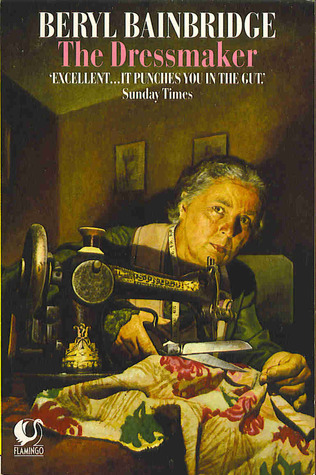
The Dressmaker by Beryl Bainbridge

This is another ‘catching-up’ post about a book I read a while ago. It’s one of my TBRs and also one of my 20 Books of Summer. It’s a novel with an under current of psychological suspense.

Description

Wartime Liverpool is a place of ration books and jobs in munitions factories. Rita, living with her two aunts Nellie and Margo, is emotionally naïve and withdrawn. When she meets Ira, a GI, at a neighbour’s party she falls in love as much with the idea of life as a GI bride as with the man himself. But Nellie and Margo are not so blind …

My thoughts:

I read The Dressmaker because I’ve enjoyed other books by Beryl Bainbridge. It’s a novella, really, as it’s only 160 pages. I love her style, clear, concise prose, with fully realised characters and descriptive settings. It was first published in 1973 – my copy is a Fontana edition published in 1985.

The Dressmaker was runner up for the 1973 Booker Prize and also for the Guardian Fiction Prize. The Sunday Times, is quoted on the back cover: ‘ Like the better Hitchcock films Miss Bainbridge suggests a claustrophobic horror … An impressive, haunting book.’

It’s a wartime story of life in Liverpool in 1944, where Rita, aged 17, is living with her two middle-aged aunts, Nellie (shown on the cover of my 1985 copy) and Margo, also called Marge. Her mother had died in childbirth, and she had lived with them as her father, their brother Jack, was unable to bring her up whilst single-handedly running his butcher’s shop. Rita, although she knows he is her father, calls him ‘Uncle Jack’. She is naive and innocent, and after meeting Ira she fantasises about being a GI bride, but her aunts are not taken in by him and view him in a very different light. She dreams about life in America as Ira’s wife:

After the war he would take her to the States, and they’d have a long black car and a grand piano with a bowl of flowers on the table. There’d be a house with a verandah and wooden steps, and she would run down them in a dress with lots of folds in the skirt and peep-toed shoes. Auntie Nellie would tell Mrs Mander how well-off they were, how Ira cared for her, the promotion he kept getting at work. (page 59)

The opening chapter signals with the word ‘afterwards‘ that something significant had happened, but with no indication of what it was. It left me wondering where this book was going. At first it seemed a rather mundane story of everyday life, but as the story played out I began to feel it was leading up to a tragedy – something terrible was coming towards this working class family.

And indeed it was – and it was shocking, particularly given the domestic setting. It’s only with the final denouement that the mystery hinted at in the opening chapter is revealed in a savage and violent climax. Even though I was expecting a tragedy the actual nature of it took me totally by surprise.

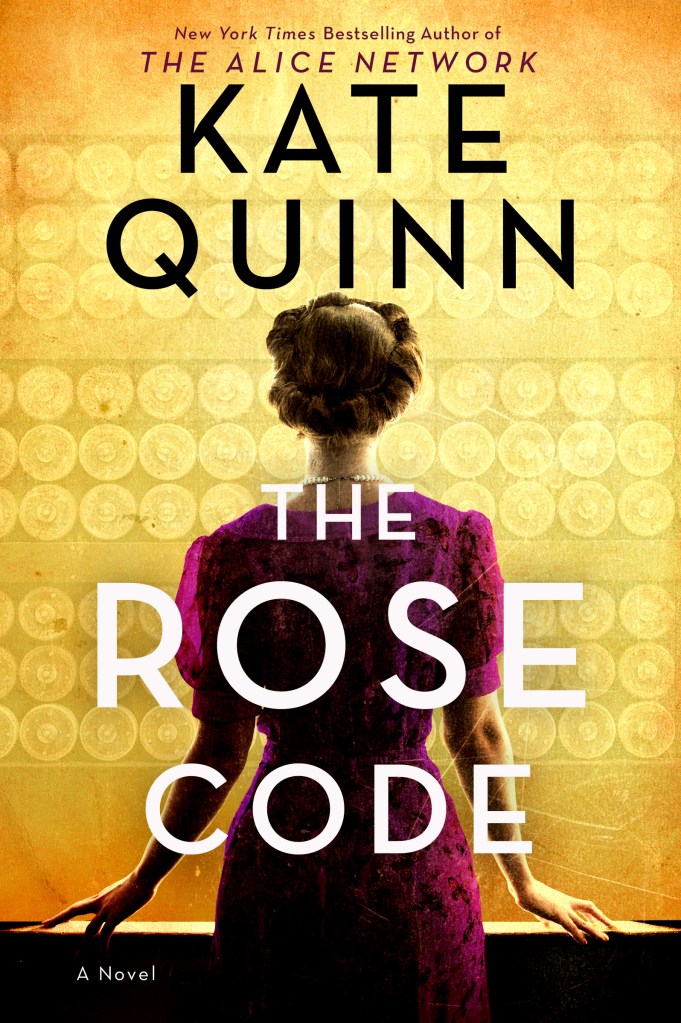
The Rose Code by Kate Quinn

Harper Collins| 18 March 2021| 645 pages| 3*

1940, Bletchley Park, Buckinghamshire.

Three very different women are recruited to the mysterious Bletchley Park, where the best minds in Britain train to break German military codes.

Vivacious debutante Osla has the dashing Prince Philip of Greece sending her roses – but she burns to prove herself as more than a society girl, working to translate decoded enemy secrets. Self-made Mab masters the legendary codebreaking machines as she conceals old wounds and the poverty of her East-End London upbringing. And shy local girl Beth is the outsider who trains as one of the Park’s few female cryptanalysts.

1947, London.

Seven years after they first meet, on the eve of the royal wedding between Princess Elizabeth and Prince Philip, disaster threatens. Osla, Mab and Beth are estranged, their friendship torn apart by secrets and betrayal. Yet now they must race against the clock to crack one final code together, before it’s too late, for them and for their country.

My Thoughts:

I have very mixed thoughts about The Rose Code. On the one hand it’s just the sort of book I love – historical fiction with a thrilling story and interesting characters that kept me wanting to read on and yet also made me want it to last as long as possible. On the other hand, it’s unevenly paced, with a slow start and a rushed ending that was somewhat of an anti-climax. My favourite character was Beth and I enjoyed reading how her character developed from a shy down trodden young woman into a brilliant cryptanalyst.

But when I first began reading it earlier this year I stopped after the opening pages and only picked it up again a couple of weeks or so ago. I initially stopped as the storyline involving Prince Philip made me very uncomfortable – Prince Philip was still alive when this book was written and when I first started to read it. He died in April this year.

The book begins in 1947 as Osla Kendall, a journalist working for the Tatler, is wondering what to wear for the Royal Wedding. She is in a ‘foul mood‘ as she wonders what to wear to the wedding of Princess Elizabeth and Lieutenant Philip Mountbatten.

Historical fiction mixes fact and fiction with both real and imaginary characters and I don’t have a problem with that. The character of Osla Kendall is based on a real person – in her Author’s Note Kate Quinn writes that she is ‘lightly fictionalized from the real-life Osla Benning, a beautiful, effervescent, Canadian-born heiress and Hut 4 translator who was Prince Philip’s long-term wartime girlfriend.‘ But by the time of the Royal Wedding Osla Benning was already married, not pining after Prince Philip. In writing their story Kate Quinn was not writing from facts but from her imagination as she put words in her characters’ mouths and described their emotions thoughts and feelings, which, of course, she could not have known.

However, I got over my dislike and read on – after all, this is fiction, not an accurate historical account. I like to know which is fact and which is fiction when I read historical fiction. So, after reading the review copy I received via NetGalley, I decided I needed to buy the published book and read the Author’s Note. And I’m glad did because I was relieved to find that Kate Quinn goes into a lot of detail to identify which characters are real and which fictional and how she has fictionalised them. She also reveals that she has also deviated from the historical records ‘to serve the story.’ I think this explains why I was uncomfortable with the book and why I don’t often read historical romances.

With thanks to NetGalley and to the publishers for my review copy.

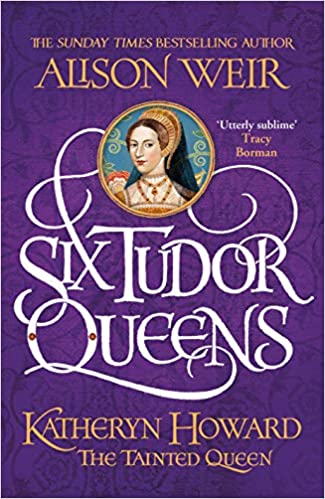
Six Queens: Katheryn Howard the Tainted Queen by Alison Weir

Headline Review| 20 August 2020| 479 pages| Review copy| 2*

I wanted to read this book because I knew very little about Henry VIII’s 5th wife, except that she was beheaded on the grounds that she had committed adultery and treason.

Description

A NAIVE YOUNG WOMAN AT THE MERCY OF HER AMBITIOUS FAMILY.

At just nineteen, Katheryn Howard is quick to trust and fall in love.

She comes to court. She sings, she dances. She captures the heart of the King.

But Henry knows nothing of Katheryn’s past – one that comes back increasingly to haunt her. For those who share her secrets are waiting in the shadows, whispering words of love… and blackmail.

Having read it, I don’t think I know much more, except that Katheryn Howard comes across as a very shallow character, obsessed with sex, with luxury in all its forms, naive and easily manipulated. Alison Weir excels in her descriptive writing, bringing the Tudor court to life in all of its settings, locations, clothes and jewellery.

It has glowing reviews on Amazon full of praise and it is based on extensive research. Clearly other people love this book, but I didn’t. For me it came across as a romance novel, primarily focused on Katheryn’s imagined thoughts, emotions, and sexual encounters. It is simply written, but with too many cliches and modernised text.

Alison Weir’s Author’s Note is much more interesting than her novel, in which she acknowledges her sources, including Dr. Nicola Tallis’ unpublished DPhil thesis, All the Queen’s Jewels, 1445 – 1548, and a number of biographies of Katheryn Howard. She refers to original sources she used as the basis of the book – contemporary writers and wills, portraits showing her rich clothes and jewellery – jewels that have been tentatively identified in Katheryn Howard’s inventory.

She used these sources for the narrative of the book, weaving them into the dialogue and modernising the speech ‘where Tudor English looks out of place in a modern text.’ She states that ‘apart from fictionalising the historical record’ she has invented very little.’ There is also a Dramatis Personae, usefully indicating which characters are fictional and a Timeline, which is also very useful.

I think the Author’s Note is the best part of the book. There is rather too much of ‘fictionalising the historical record’ for me in the novel. I don’t like writing about a book I didn’t enjoy when I know so much work has gone into it and clearly other people have loved it. But this is just my opinion, for what it is worth.

With thanks to NetGalley and to the publishers for my review copy.