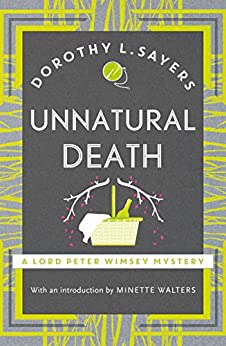
Unnatural Death by Dorothy L Sayers

From the back cover:

‘No sign of foul play,’ says Dr Carr after the post-mortem on Agatha Dawson. The case is closed. But Lord Peter Wimsey is not satisfied.

With no clues to work on, he begins is own investigation. No clues, that is, until the sudden, senseless murder of Agatha’s maid.

What is going on in the mysterious Mrs Forrest’s Mayfair flat? And can Wimsey catch a desperate murderer before he himself becomes one of the victims?

This is the third book in the Lord Peter Wimsey series by Dorothy L Sayers, first published in 1927. My copy was reprinted in 2016 and I bought it secondhand five years ago. I’ve been reading this series totally out of order – I’ve already read the first two and several of the later books too. I think they each read well on their own.

Miss Climpson makes her first appearance in Unnatural Death, helping Lord Peter, working undercover. She is an elderly spinster, who runs what Wimsey calls ‘My Cattery’, ostensibly a typing bureau, but actually an amateur detective/enquiry agency. As in the first two books he works with his friend, Inspector Charles Parker, who is a Scotland Yard detective. Bunter, his manservant, only has a very minor role in this book. I think it’s an interesting mystery, not so much about discovering who killed Agatha Dawson and her maid, Bertha, but more about how the murders were committed.

Uncertain Death is most definitely a book of its time – that is the early 20th century. There is much banter, wit and humour, and plenty of snobbery of all types, clearly showing the class distinctions between the working and upper classes. Racism is prevalent and also lesbianism, although that is not directly stated. It is a clever story, well told, with colourful characters. There is a biographical note at the end of the book that reveals much about Lord Peter’s background, about his early years, school and university, and his experiences during the First World War.
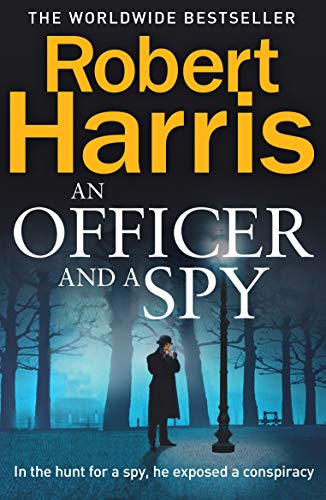
An Officer and a Spy by Robert Harris

I read An Officer and a Spy by Robert Harris in June, but as I was on a roll, reading but not reviewing books I’ve only just got round to writing about it. I loved it, one of my TBRS, a hardback book I bought in 2016. I’d heard of the Dreyfus affair but knew very little about it.

In his Author’s Note Harris writes that his aim in writing this novel was to ‘retell the true story of the Dreyfus affair‘, describing it as ‘perhaps the greatest political scandal and miscarriage of justice in history, which in the 1890s came to obsess France an ultimately the entire world‘. What follows is a chillingly dark, and realistic novel of conspiracy and espionage.

The book begins in Paris in 1895. Alfred Dreyfus, a young Jewish officer, has just been convicted of treason, sentenced to life imprisonment at Devil’s Island, and stripped of his rank in front of a baying crowd of twenty-thousand.

It’s narrated by Colonel George Picquart, Chief of the Statistical Section of the French Army, who became convinced that Dreyfus was innocent. But Picquart is told by his superiors to drop his investigation. Despite that he doesn’t and ends up losing his position and being relocated to North Africa, where he was assigned a dangerous mission. Eventually he was dismissed from the Army whilst Dreyfus remained imprisoned on Devil’s Island under the most appalling conditions. Dreyfus was released from prison in 1899 but was only exonerated in 1906.

What gives An Officer and a Spy such authenticity is that Harris has used transcripts of the various trials, inquiries and hearings, biographies, family letters as well as Dreyfus’s own writings in writing his novel. He goes into meticulous detail in staying accurate to the actual events, but even so this is a gripping book and I was completely absorbed by it from start to finish.

Robert Harris is one of my favourite writers and I have yet to read a book of his that disappointed me, but this book surpassed my expectations, and is one of his best in my opinion.

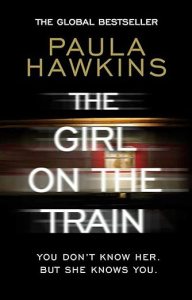
The Girl on the Train by Paula Hawkins

The Girl on the Train by Paula Hawkins has won a lot of awards and is a very popular book. It has good reviews, Stephen King for example describes it as a “Really great suspense novel. Kept me up most of the night. The alcoholic narrator is dead perfect.”

I thought it sounded good, so I decided to read it. But it didn’t live up to the hype for me. I wasn’t enthralled.
It began well with Rachel on the train each morning looking out at the houses on the road where she used to live before she was divorced. As the train stops at the same signal each day she enviously watches a young couple who are living the perfect life, or so she imagines. Then something happens that shocks her and everything changes and she begins to get involved in their lives, with disastrous results.

But I couldn’t easily distinguish between the three main characters, Rachel, Anna and Megan. Each one is an unreliable narrator and not very likeable. I had to keep referring to the chapter headings and dates to remind myself who was who and what happened when. I didn’t find it chilling or thrilling and any suspense rapidly disappeared with the repetition of Rachel being drunk, then being sorry, but unable to stop drinking. Then there are all the phone calls, text messages and emails that she sends when she is drunk. She has blackouts and can’t remember what happened, or what she said. Added to that she dreams and is unable to distinguish between them and reality. Overall it’s dreary and depressing.

So after a good start, the narrative lost impetus and dragged on to its conclusion, which by comparison seemed rushed, with a twist right at the end that took me by surprise. I suppose it is a ‘page-turner’ as I did want to know what what going to happen, but it left me feeling unsatisfied, irritated and rather out of sorts.

I’ve seen this book compared to Gone Girl, another book I have sitting waiting to be read. Now, I’m wondering if I’ll find that one disappointing as well. Do let me know your views on both or either of these books.

Reading challenges: Bev’s Mount TBR Reading Challenge 2016, 20 Books of Summer 2016 and although I didn’t find this book particularly perilous, Carl’s RIP XI (Readers Imbibing Peril), because plenty of other people have.

20 Books of Summer 2016

20 Bks of Summer 2106

I began the 20 Books of Summer really well, reading 7 books in June. It all went downhill after that, but I’ve read 10 of the books I listed, so not too bad. And if I had stuck to my list and not read other books instead I would have completed the challenge as over the period from 1 June to 5 September I read 22 books – but then I’ve found before that as soon as I list books in this way I want to read books that aren’t on my list!

I began reading The Woman Who Went to Bed for a Year by Sue Townsend, but wasn’t too impressed with the opening chapter. I may ‘abandon’ that book, but it might just have been the case of it being the wrong time for me to read it.

I really want to read Moon Tiger by Penelope Lively and Orlando by Virginia Woolf very soon and I hope to get round to the other books on the list before too long.

Here’s the list, with links to my posts on the books I read:

  1. The Other Side of the Bridge by Mary Lawson
  2. The Sex Life of My Aunt by Mavis Cheek
  3. Asta’s Book by Barbara Vine ‘“ finished 14 June 2016
  4. High Rising by Angela Thirkell ‘“ finished 7 June 2016
  5. The Child’s Child by Barbara Vine
  6. The Glass Room by Simon Mawer ‘“ finished 22 June 2016
  7. The Woman Who Went to Bed for a Year by Sue Townsend
  8. Small Wars by Sadie Jones
  9. The Girl on the Train by Paula Hawkins – finished 5 September 2016
  10. Wycliffe and the Quiet Virgin by W J Burley ‘“ finished 29 June 2016
  11. The Girl in the Cellar by Patricia Wentworth ‘“ finished 13 August 2016
  12. Moon Tiger by Penelope Lively
  13. A Shilling for Candles by Josephine Tey ‘“ finished 17 June 2016
  14. Hamlet, Revenge! by Michael Innes
  15. The Wench is Dead by Colin Dexter ‘“ finished 3 September 2016
  16. Heat Wave by Penelope Lively ‘“ finished 26 June 2016
  17. Orlando by Virginia Woolf
  18. A Moment of Silence by Anna Dean
  19. The Water Horse by Julia Gregson
  20. Talking to the Dead by Harry Bingham ‘“ finished 10 June 2016

Thanks to Cathy @ 746 Books for setting up the challenge.

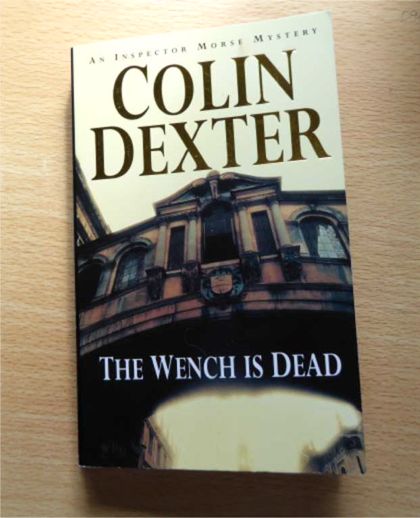
The Wench is Dead by Colin Dexter

An Inspector Morse book, The Wench is Dead is the 8th in the series, first published in 1989. This is a bit different from the other Morse books in that it is historical crime fiction – no current cases are investigated.

The wench is dead


Morse is in hospital being treated for a perforated ulcer. Whilst recovering he is given a book called Murder on the Oxford Canal by the wife of a recently deceased patient at the hospital. It’s an account of the investigation and trial that followed the death of Joanna Franks in 1859. She had been found at Duke’s Cut on the Oxford Canal. As he reads, Morse becomes convinced that the two boatmen hanged for her murder and a third man who had been transported to Australia were innocent.

Dexter based his book on an account of a Victorian murder in 1839, that of 37-year-old Christina Collins as she travelled the Trent and Mersey Canal atRugeley, Staffordshire, on the Staffordshire Knot en route to London. It reminded me of Josephine Tey’s novel, The Daughter of Time in which Inspector Alan Grant, also recovering in hospital, investigates the murder of the Princes in the Tower.

Morse enlists the help of Sergeant Lewis as well as that of Christine Greenaway, the beautiful daughter of one of the other patients. She works as a librarian at the Bodleian Library. So he is able to study original source material as well as the account in the published book. Morse finds it an absorbing puzzle, like a tricky cryptic crossword, and the more he read and thought about it the more questions came to his mind. He was not satisfied that the conclusions drawn at the trial about the forensic and pathological evidence were right. He felt uneasy about reported conversations between the various people involved:

… all of it was wrong somehow. Wrong if they were guilty. It was if some inexperienced playwright had been given a murder-plot, and then had proceeded to write page after page of inappropriate, misleading and occasionally contradictory dialogue. (page 133)

I thought it was ingenious and compelling reading, very well constructed and very clever. By the time he leaves the hospital Morse is convinced that he has solved the mystery. It’s a tale of  intrigue, lust and deception, with more than a few twists and turns.

Reading Challenges: Mount TBR Reading Challenge, 20 Books of Summer 2016 , Vintage Cover Silver Age Scavenger Hunt: in the category of a Building (not a house) – the front cover of my copy shows the Hertford Bridge, popularly known as the Bridge of Sighs, which joins two parts of Hertford College over New College Lane in Oxford.

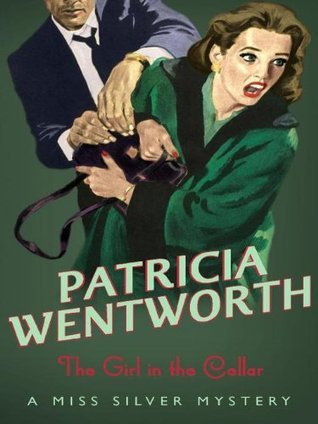
The Girl in the Cellar by Patricia Wentworth

I’m falling behind with reading for my 20 Books of Summer Challenge as I didn’t read any of them in July. I decided to read one of the shorter books to get back into the swing of the challenge and chose The Girl in the Cellar, a Miss Silver Mystery first published in 1961, by Patricia Wentworth (1878 – 1961). I wrote about the opening paragraph in this First Chapter, First Paragraph post.

It begins well as the main character finds herself in the dark in a cellar, not knowing who she is or how she got there. She is standing on the cellar steps and there is a dead girl lying at the bottom of the steps. She doesn’t recognise the dead girl either. She finds a bag beside her on the steps, which she doesn’t think is hers, but takes it with her as she escapes from the house and finds herself standing at the end of a road. She gets on a bus where she meets Miss Silver, who seeing how confused and frightened she is, takes her for a cup of tea and offers to help her. A letter in the handbag is addressed to Mrs James Fancourt and it seems that her name is Anne and she is to stay with her husband’s two aunts.

I think the opening of the book is the best part, setting up a scene of suspense and mystery. For most of the book Anne is suffering from amnesia but there is so much repetition of what little facts Anne knows that it became tedious reading, because it’s not just Anne who goes over and over what has happened but other characters too. I think the repetition lessened the sense of suspense, and overall, I thought the book was odd and not very convincing. There are too many coincidences, improbabilities, and loose ends.

This is the last of the Miss Silver Mysteries, published in the year Patricia Wentworth died. The first in the series was published in 1928. Miss Maud Silver is a retired governess who became a private investigator. She likes to help young lovers in distress – in The Girl on the Cellar, a ‘damsel in distress’ and she loves to knit and is a very sympathetic listener. I’ve only previously read one of the Miss Silver books, The Brading Collection, which is a much more convincing book.

As well as the 20 Books of Summer Challenge, this book qualifies for  Bev’s Vintage Mystery Cover Scavenger Hunt in the category, ‘Damsel in Distress’.