20 Books of Summer 2023

Cathy at 746 Books is hosting her 20 Books of Summer Challenge again this year. The challenge runs from 1 June to 1 September. There are options to read 10 or 15 books instead of the full 20. And you can swap a book, or change the list half way through if you want. And you can decide to drop your goal from 20 to 15 or 10 if you want to. This is a very flexible challenge!

You can sign up here.

During previous summers I’ve taken part in this challenge and never managed to read all the books I’ve listed, although I’ve read over 20 books during the summer months. It seems that listing books I want to read somehow takes away my desire to read them – or it may be that other books demand to be read when the time comes.

But I do enjoy compiling a list, so here are 20 books I’d like to read, subject to change, of course and as time goes on I may drop my goal to 15 or 10 … depending on circumstances.

  1. Moon Tiger by Penelope Lively
  2. A Sea of Troubles by Donna Leon
  3. Death is Now My Neighbout by Colin Dexter
  4. Islands of Abandonment: Life in the Post-Human Landscape by Cal Flyn
  5. The Bedlam Stacks by Natasha Pullen
  6. Recalled to Life by Reginald Hill
  7. The Hunt for Mount Everest by Craig Storti
  8. I’ll Never Be Young Again by Daphne du Maurier
  9. The Locked Room by Elly Griffiths
  10. The Midnight Hour by Elly Griffiths
  11. Neverwhere by Neil Gaiman
  12. Broadchurch by Erin Kelly
  13. The Virgin Blue by Tracy Chevalier
  14. The Hog’s Back Mystery by Freeman Willis Crofts
  15. Longbourn by Jo Baker
  16. Weyward by Emilia Hart
  17. The Cut by Christopher Brookmyre
  18. A Dirty Death by Rebecca Tope
  19. Broken Summer by J M Lee
  20. The Vanishing Tide by Hilary Taylor

What will you be reading?

Six Degrees of Separation from Hydra to See What I Have Done

It’s time again for Six Degrees of Separation, a monthly link-up hosted by Kate at Books Are My Favourite and Best. Each month a book is chosen as a starting point and linked to six other books to form a chain. A book doesn’t need to be connected to all the other books on the list, only to the one next to it in the chain.

The starting book this month is Hydra by Adriane Howell, a book on the Stella Prize 2023 shortlist and a book I haven’t read. This review in the Guardian describes it as an elegant debut, sinuous and strange – a slow-burn gothic thriller spiked with antiques and Freud, and partly set on the Mornington Peninsula. Adriane Howell is a Melbourne-based writer and arts worker and Hydra is her debut novel.

Here’s my chain:

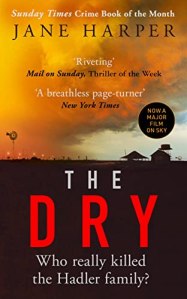
beginning with my first link which is to another Australian author’s debut novel The Dry by Jane Harper, a thriller set in a fictional town five hours west of Melbourne. A Federal Agent, Aaron Falk, returns to his old hometown to attend the funeral of his childhood best friend, Luke. Falk teams up with a local detective and tries to uncover the truth behind Luke’s sudden mysterious death, only to find more questions than answers. I loved this tense thriller.

My Second Link is another book with ‘dry‘ in the title – Dry Bones That Dream by Peter Robinson, the 7th book in the Inspector Banks series. Two masked gunmen tie up Alison Rothwell and her mother, take Keith Rothwell, a local accountant, to the garage of his isolated Yorkshire Dales farmhouse, and blow his head off with a shotgun. Why? This is the question Detective Chief Inspector Alan Banks has to ask as he sifts through Rothwell’s life.

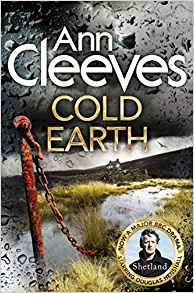
The 7th book in Ann Cleeves’ Shetland series is my Third Link. It is Cold Earth featuring DI Jimmy Perez. The body of a dark-haired woman wearing a red silk dress is found in a croft house after a landslide had smashed through the house.

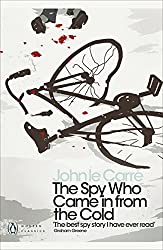
My Fourth Link is via the title of another book with the word ‘cold‘ in the title – The Spy Who Came in from the Cold by John Le Carre, first published in 1963. It’s the tale of a British agent who longs to end his career but undertakes one final, bone-chilling assignment. George Smiley appears as a supporting character.

My Fifth Link, The Clocks by Agatha Christie, was also published in 1963. A dead man is found in a room where there are five clocks, all of which, except for the cuckoo clock which announced the time as 3 o’clock, had stopped at 4.13. Poirot runs through what amounts to a potted history of crime fiction and the art of detection. He refers to real crimes, including that of Lizzie Borden and then to examples of fictional crime.

Lizzie Borden is my Sixth Link – See What I Have Done by Sarah Schmidt, a Melbourne librarian. It was her debut novel. Lizzie Borden was charged with the murders of her parents and was acquitted in June 1893. Speculation about the murders and whether Lizzie was guilty or not continues to the present day. It is based on true events using various resources.

My chain begins and ends with debut novels by Australian authors. In between are crime fiction novels and a spy thriller.

Next month (3 June 2023), we’ll start with Elizabeth Day’s exploration of friendship, Friendaholic.

Mini Reviews

This year has been a good time for reading books, but not a good time as far as writing reviews goes and I am way behind. This is the second set of mini reviews in an attempt to catch up with the backlog.

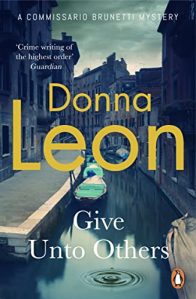
Give Unto Others by Donna Leon 3*

I read this because I’ve read just a few of the Commissario Guido Brunetti crime fiction novels and enjoyed them. This one is described on Goodreads as follows:

The gifted Venetian detective returns in his 31st case – this time, investigating the Janus-faced nature of yet another Italian institution. Brunetti will have to once again face the blurred line that runs between the criminal and the non-criminal, bending police rules, and his own character, to help an acquaintance in danger.

This is an unusual mystery, slow to begin with then gradually gathering pace, as Brunetti unofficially agrees to do Elisabetta Foscarini, an ex-neighbour a favour. She is worried about her daughter’s husband, Enrico Fenzo an accountant, who she fears is in danger. Brunetti enlists the help of his colleagues Griffoni, Vianello, and Signorina Elettra with his investigations. What they uncover is a tangled web surrounding a South American charity that Fenzo had helped Elisabetta’s husband set up, the Belize nel Cuore, providing a hospital and medical services to the poor.

It was entertaining and I enjoyed the descriptions of Venice, just opening up to tourists again after the pandemic. I thought it would have been better as an official police investigation. But it does give an insight into the way charities are set up and can be misused. And there’s a particularly disturbing picture of what dementia can do to a person.

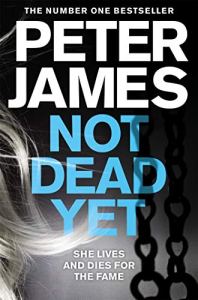
Not Dead Yet by Peter James 4*

I really enjoyed this book, the 8th Roy Grace book. If you’ve been watching the TV adaptation this story was the last one they produced, as usual with adaptations, with several differences from the book. As I’ve said before I prefer the books and this one was very good. This is the summary from Amazon:

The return of a Brighton girl turned movie star spells nothing but trouble for Detective Superintendent Roy Grace in the gripping crime novel Not Dead Yet, by award winning author Peter James.

Gaia Lafayette has a movie to shoot back home and Grace is in charge of her security. Yet when a vicious gangster is released from prison and an unidentifiable headless torso is found, a nightmare unfolds before Grace’s eyes.

An obsessed stalker is after Gaia – and Grace knows that they may be at large in his city, waiting, watching, planning . . .

It’s fast paced, complicated and totally gripping. I loved all the details of the scenes of the filming in Brighton’s Royal Pavilion and also the ongoing story of Roy’s missing wife. Now I’m looking forward to reading the 9th book in the series, Dead Man’s Time.

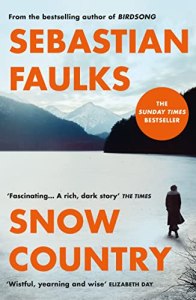
Snow Country by Sebastian Faulks 2*

This is the synopsis on Goodreads:

1914: Young Anton Heideck has arrived in Vienna, eager to make his name as a journalist. While working part-time as a private tutor, he encounters Delphine, a woman who mixes startling candour with deep reserve. Entranced by the light of first love, Anton feels himself blessed. Until his country declares war on hers.

1927: For Lena, life with a drunken mother in a small town has been impoverished and cold. She is convinced she can amount to nothing until a young lawyer, Rudolf Plischke, spirits her away to Vienna. But the capital proves unforgiving. Lena leaves her metropolitan dream behind to take a menial job at the snow-bound sanatorium, the Schloss Seeblick.

1933: Still struggling to come terms with the loss of so many friends on the Eastern Front, Anton, now an established writer, is commissioned by a magazine to visit the mysterious Schloss Seeblick. In this place of healing, on the banks of a silvery lake, where the depths of human suffering and the chances of redemption are explored, two people will see each other as if for the first time.

Sweeping across Europe as it recovers from one war and hides its face from the coming of another, SNOW COUNTRY is a landmark novel of exquisite yearnings, dreams of youth and the sanctity of hope. In elegant, shimmering prose, Sebastian Faulks has produced a work of timeless resonance.

My thoughts:

I was disappointed by this novel, mainly because I found it quite dull in places, which I hadn’t expected from the synopsis or the 5 and 4 star reviews on both Amazon and Goodreads. The best defined character is Lena, but the others seem rather flat – one dimensional and hard to distinguish. This may, of course, be down to me as I found it rather muddled and I had to keep recapping just to clarify who they were. So, I struggled to read it and eventually lost interest. But I did finish it.

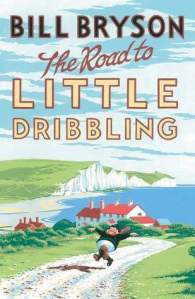
The Road to Little Dribbling by Bill Bryson

Rating: 3.5 out of 5.

Over twenty years ago, Bill Bryson went on a trip around Britain to celebrate the green and kindly island that had become his home. The hilarious book he wrote about that journey, Notes from a Small Island, became one of the most loved books of recent decades, and was voted in a BBC poll as the book that best represents Britain. Now, for his first travel book in fifteen years, Bryson sets out again, on a long-awaited, brand-new journey around the UK. (Goodreads)

Years ago I read Bryson’s Notes From a Small Island about his trip around Britain in 1995, and since then I’ve also read A Walk in the Woods about his hike along the Appalachian Trail, the longest continuous footpath in the world, both of which fascinated me. So I was keen to read The Road to Little Dribbling:More Notes from a Small Island, which was first published in 2015, 20 years after his first trip.

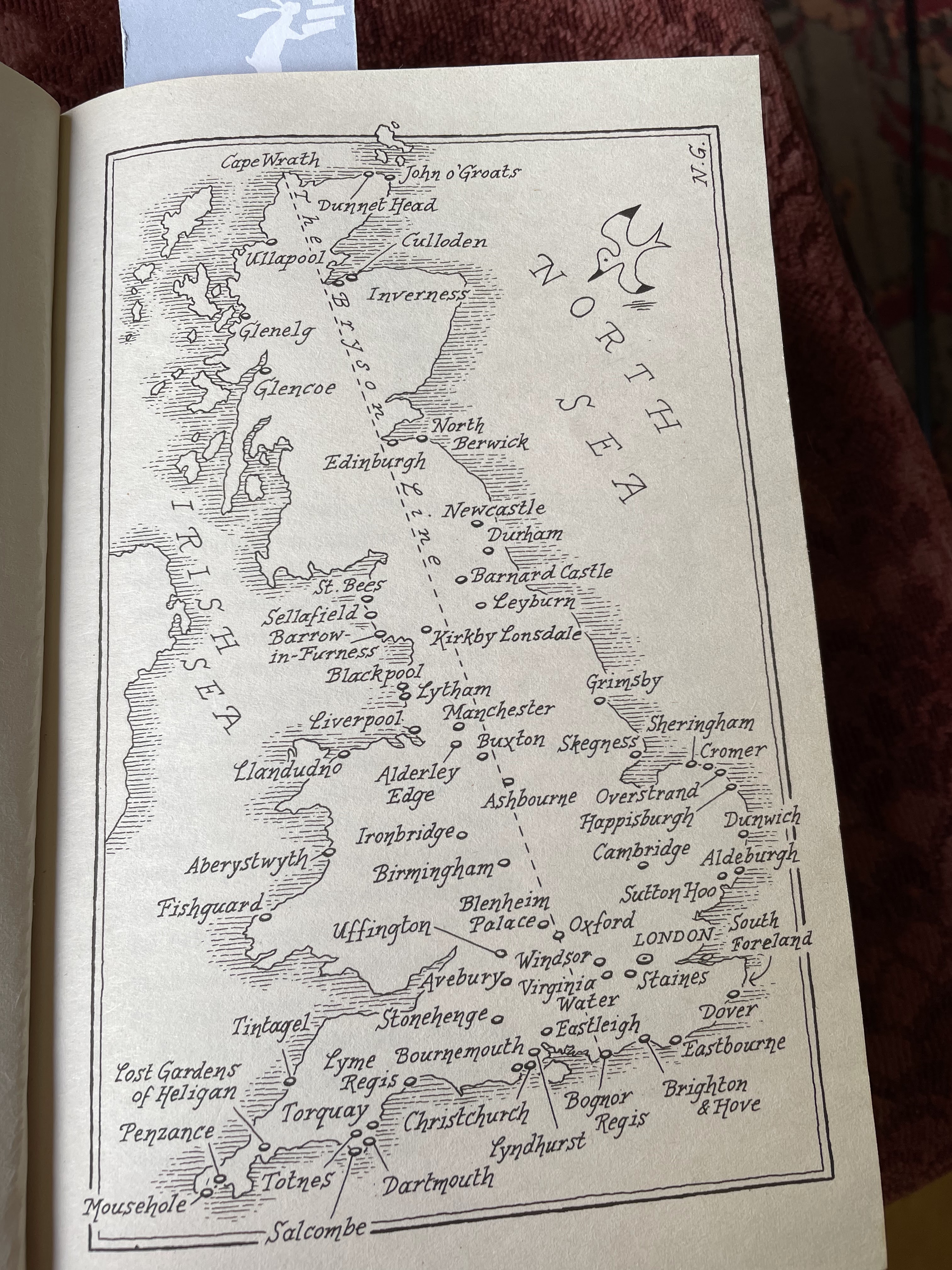
He decided to start at Bognor Regis in West Sussex on the south coast of England. He decided to try to follow the longest distance you can travel in a straight line, roughly from Bognor Regis to Cape Wrath. But he realised it wouldn’t be practical to follow it precisely, so he just started and ended at its terminal points and then meandered from place to place as his fancy took him. Click on the photo below to enlarge.

The result is he mainly visited places in the south of England, with only a few pages covering the rest of Britain. It really could have done with an index and I toyed briefly with the idea of compiling one myself. It’s an amusing book, rather than laugh out loud funny, but I got tired of his grumpiness and of his descriptions of places that were run-down and depressing and not as he remembered them – cafes that had closed, and town centres that were empty where once they had been busy and thriving. Of course any travel book is a snapshot in time, in this book that is 2015, and over time everywhere changes for better or worse.

Bryson writes in a chatty style and goes off at various tangents, talking about the history of places and telling anecdotes, which I found very interesting. Whilst he was disappointed by some towns and cities he didn’t hold back on praising the landscape – beautiful countryside, and coastal locations. I don’t think it lives up to Notes from a Small Island but it certainly gives an insight into the best and worst about Britain in 2015.

And I never found out why it’s called The Road to Little Dribbling! Any ideas, anyone?

Top Ten Tuesday: Ten Random Books from My Shelves

Top Ten Tuesday is a weekly meme created by The Broke and the Bookish and now hosted by Jana at That Artsy Reader Girl. For the rules see her blog. The topic this week is The First 10 Books I Randomly Grabbed from My Shelf (And tell us what you thought if you’ve read them!) It was difficult to be random as my bookshelves are mostly double stacked and in different rooms in the house but these are the ones I sort of picked randomly from my bookshelves. I’ve read some of them – see those marked with an * for my thoughts about them:

 * The Murder of Roger Ackroyd by Agatha Christie, one of my favourite of her books. Set in the village of King’s Abbot, the story begins with the death of Mrs Ferrars, a wealthy widow. The local doctor, Dr Sheppard suspects it is suicide. The following evening Roger Ackroyd, a wealthy widower who it was rumoured would marry Mrs Ferrars, is found murdered in his study. Poirot is asked to investigate the murder and he enlists Dr Sheppard, who lives next door with his sister Caroline, to help him.

Completely Unexpected Tales by Roald Dahl, described on the back cover as a collection of macabre tales of vengeance, surprise and dark delights. I used to enjoy these tales in the TV series, Tales of the Unexpected, years ago. I’ve read some of these.

*The Saints of the Shadow Bible by Ian Rankin, one of his best Rebus books– a realistic and completely baffling mystery, a complex, multi-layered case, linking back to one of Rebus’s early cases on the force as a young Detective Constable. There are suspicions that Rebus and his colleagues, who called themselves ‘The Saints of the Shadow Bible’ were involved in covering up a crime, allowing a murderer to go free.

*The Way Through the Woods by Colin Dexter. Morse and Sergeant Lewis investigate the case of a beautiful young Swedish tourist who had disappeared on a hot summer’s day somewhere near Oxford twelve months earlier. After unsuccessfully searching the woods of the nearby Blenheim Estate the case was unsolved, and Karin Eriksson had been recorded as a missing person. A year later more evidence comes to light and Morse re-opens the case.

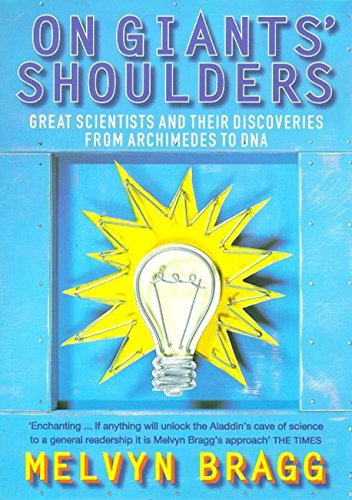
*On Giants’ Shoulders: Great Scientists and Their Discoveries From Archimedes to DNA: by Melvyn Bragg. An excellent book for a non scientist like me. I read it years ago long before I had a blog, so no review. It focuses on 12 scientists and is compiled from a series of interviews with leading scientists and historians in each field, on BBC Radio 4 in 1998.

*Howards End is on the Landing by Susan Hill, an interesting little book which takes a look at some of the books in Susan’s three storey country house in Gloucestershire. She had decided to take a year off  from buying new books and to read or re-read books from her own collection. It’s full of lots of references to books and authors, some known to me and others not and Susan’s personal anecdotes.

Never Mind the Quantocks:How Country Walking Can Change Your Life by Stuart Maconie, a collection of essays from his monthly column in Country Walking, full of the beautiful places, magical moments and wonderful characters he has encountered on his travels. I haven’t read this yet. It covers a variety of topics – The Walking Bug, The Right to Roam, Oases of Calm and Sea Fever, to name but a few.

The Wood Beyond by Reginald Hill, another book I haven’t read yet. When animal-rights activists uncover a long-dead uniformed body in the grounds of Wanwood House, a research facility, Dalziel is presented with a seemingly insoluble mystery. And he is further perplexed when he’s attracted to one of the campaigners – now implicated in a murderous assault. Meanwhile, the death of his grandmother has led Peter Pascoe to the battlefields of World War 1 and the enigma of who his grandfather was – and why he had to die.

*Life After Life by Kate Atkinson. I wasn’t at all sure that I would like this book as I began reading it soon after I bought it (in 2013) and didn’t get very far before I decided to put it to one side for a while. A ‘while’ became years – and then at the end of 2016 I read A God in Ruins about Ursula’s brother Teddy, and loved it and decided to try Life After Life again and this time I loved it. During the book Ursula dies many deaths and there are several different versions that her life takes over the course of the twentieth century.

*Freedom in Exile the Autobiography by The Dalai Lama. He tells his story in English. He fled Tibet in 1959 and since then has lived in exile. This is another book I read years ago, long before I had a blog, so no review. He writes about his childhood, describing what it was like to grow up revered as a deity, and about his escape into India across the Himalayas along with the sense of loss in leaving his country behind.

Book Beginnings & The Friday 56: In The Heart of the Sea by Nathaniel Philbrick

Every Friday Book Beginnings on Friday is hosted by Gillion at Rose City Reader where you can share the first sentence (or so) of the book you are reading. You can also share from a book you want to highlight just because it caught your fancy.

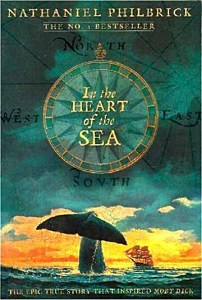
One of the books I think I’ll read soon is In the Heart of the Sea The Epic True Story That Inspired Moby Dick by Nathaniel Philbrick. I haven’t read Moby Dick. I think it might be easier to read than Moby Dick – at 238 pages it is certainly shorter. It has lots of 5 and 4 star ratings on Goodreads.


Preface February 23, 1821

Like a giant bird of prey, the whaleship moved lazily up the western coast of South America, zigging and zagging across a sea of oil. for this was the Pacific Ocean in 1821, a vast field of warm-blooded oil deposits known as sperm whales.

Also every Friday there is The Friday 56, hosted by Freda at Freda’s Voice, where you grab a book and turn to page 56 (or 56% of an eBook), find one or more interesting sentences (no spoilers), and post them.

Page 56:

Before cutting loose the whale’s mutilated corpse, the mates probed its intestinal tract with a lance searching for an opaque, ash-colored substance called ambergris. Thought to be the result of indigestion or constipation on the part of the whale, ambergris is a fatty substance used to make perfume and was worth more than its weight in gold.

Description from Goodreads:

In the Heart of the Sea brings to new life the incredible story of the wreck of the whaleship Essex – an event as mythic in its own century as the Titanic disaster in ours, and the inspiration for the climax of Moby-Dick. In a harrowing page-turner, Nathaniel Philbrick restores this epic story to its rightful place in American history.

In 1820, the 240-ton Essex set sail from Nantucket on a routine voyage for whales. Fifteen months later, in the farthest reaches of the South Pacific, it was repeatedly rammed and sunk by an eighty-ton bull sperm whale. Its twenty-man crew, fearing cannibals on the islands to the west, made for the 3,000-mile-distant coast of South America in three tiny boats. During ninety days at sea under horrendous conditions, the survivors clung to life as one by one, they succumbed to hunger, thirst, disease, and fear.

Philbrick interweaves his account of this extraordinary ordeal of ordinary men with a wealth of whale lore and with a brilliantly detailed portrait of the lost, unique community of Nantucket whalers. Impeccably researched and beautifully told, the book delivers the ultimate portrait of man against nature, drawing on a remarkable range of archival and modern sources, including a long-lost account by the ship’s cabin boy.

At once a literary companion and a page-turner that speaks to the same issues of class, race, and man’s relationship to nature that permeate the works of Melville, In the Heart of the Sea will endure as a vital work of American history.

~~~

What do you think, does it appeal to you? What are you currently reading?