The Classics Club Spin Result

The spin number in The Classics Club Spin is number …

2

which for me is Fair Stood the Wind for France by H E Bates. The rules of the Spin are that this is the book for me to read by Sunday the 3rd December 2023.

Synopsis from Amazon

When John Franklin brings his plane down into Occupied France at the height of the Second World war, there are two things in his mind – the safety of his crew and his own badly injured arm. It is a stroke of unbelievable luck when the family of a French farmer risk their lives to offer the airmen protection. During the hot summer weeks that follow, the English officer and the daughter of the house are drawn inexorably to each other.

I’m looking forward to reading it.

Did you take part in the Classics Spin? What will you be reading?

Classics Club Spin

It’s time for another Classics Club Spin.

Before next Sunday, 15 October 2023, create a post that lists twenty books of your choice that remain “to be read” on your Classics Club list. On that day the Classics Club will post a number from 1 through 20. The challenge is to read whatever book falls under that number on your Spin List by 3rd December, 2023.

Here’s my list:

  1. Sense and Sensibility by Jane Austen
  2. Fair Stood the Wind for France by H E Bates
  3. In Cold Blood by Truman Capote
  4. The Case of the Gilded Fly by Edmund Crispin
  5. The Stars Look Down by A J Cronin
  6. Dombey and Son by Charles Dickens
  7. Dickens at Christmas by Charles Dickens
  8. The Lost World by Arthur Conan Doyle
  9. The Black Tulip by Alexandre Dumas
  10. The Birds and other short stories by Daphne du Maurier
  11. The Great Fire by Shirley Hazzard
  12. Strangers on a Train by Patricia Highsmith
  13. Brave New World by Aldous Huxley
  14. Daisy Miller by Henry James
  15. Go Set a Watchman by Harper Lee
  16. How Green Was My Valley by Richard Llewellyn
  17. Friends and Heroes by Olivia Manning
  18. Fire from Heaven by Mary Renault
  19. The Invisible Man by H G Wells
  20. Between the Acts by Virginia Woolf

I can’t decide which one I’d like to come up in the Spin! But which one/s would you recommend?

Spell the Month in Books – October 2023

Spell the Month in Books is a linkup hosted by Jana on Reviews From the Stacks on the first Saturday of each month. The goal is to spell the current month with the first letter of book titles, excluding articles such as ‘the’ and ‘a’ as needed. That’s all there is to it! Some months there are optional theme challenges, such as “books with an orange cover” or books of a particular genre, but for the most part, any book you want to use is fair game!

The theme this month is Title contains a number or colour – I’ve chosen a mix of numbers and colours.

The links in the titles of each book go to my posts on the books – where they exist.

O is for One Two Buckle My Shoe by Agatha Christie

Hercule Poirot and Inspector Japp investigate the apparent suicide of Mr Morley, Poirot’s Harley Street dentist, who was found dead in his surgery, shot through the head and with a pistol in his hand. This really is a most complicated plot, and even though the facts are clearly presented and I was on the lookout for clues, Agatha Christie, once again fooled me. Not all the characters are who they purport to be and the involvement of international politics and intrigue doesn’t help in unravelling the puzzle.

Written in 1939, this book reflects the economic and political conditions of the time, with  a definite pre-war atmosphere of a world on the brink of war. But Poirot is concerned with the truth, with the importance of the lives of each individual, no matter how ordinary or insignificant they may seem.

C is for The Crimson Rooms by Katharine McMahon

Historical fiction set in London in 1924, with Britain still coming to terms with the aftermath of the First World War. Evelyn Gifford, one of the few pioneer female lawyers, lives at home with her mother, aunt and grandmother, still mourning the death of her brother James in the trenches. Evelyn is woken in the early hours one morning to find Meredith and her child, Edmund, aged 6 on the doorstep, claiming that Edmund is James’s son. Evelyn and the other women are thrown into confusion as Meredith upsets their memories of James.

T is for Thirteen Hours by Deon Meyer

Moving at a fast pace the book follows the events during the thirteen hours from 05:36 when Rachel, a young American girl is running for her life up the steep slope of Lion’s Head in Capetown.  The body of another American girl is found outside the Lutheran church in Long Street. Her throat slit had been slit. An hour or so later Alexandra Barnard, a former singing star and an alcoholic, wakes from a drunken stupor to find the dead body of her husband, a record producer, lying on the floor opposite her and his pistol lying next to her.DI Benny Griessel is mentoring two inexperienced detectives who are investigating these crimes.

The two cases move along parallel to each other, keeping me desperate to know what happened next in both. The book also reflects the racial tension in the ‘new South Africa’ with its mix of white, coloured and black South Africans. There is a strong sense of location, not just from the cultural aspect but also geographical because although I know nothing about Capetown I had no difficulty in visualising the scenes from Meyer’s descriptions.

O is for One Fine Day by Mollie Panter-Downes

This is a beautiful, poetic novel about England in 1946 after the Second World War had ended. It was written in 1946 and published in 1947 and although it recalls an England that had disappeared with the war it also looks forward with optimism to the future. It’s a novel vividly evoking life in the post-war period. I was fascinated and drawn into this book right from the start. Part of my fascination was because it made me think of what life was like for my parents, picking up their lives together after the war and part was because of the wonderful imagery and sense of time and place.

B is for The Black Book by Ian Rankin, the fifth Inspector Rebus novel.

When a close colleague is brutally attacked, Inspector John Rebus is drawn into a case involving a hotel fire, an unidentified body, and a long forgotten night of terror and murder.

Pursued by dangerous ghosts and tormented by the coded secrets of his colleague’s notebook, Rebus must piece together the most complex and confusing of jigsaws.

But not everyone wants the puzzle solved – perhaps not even Rebus himself…

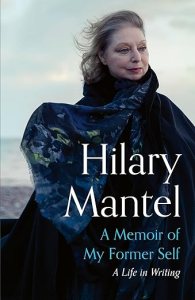
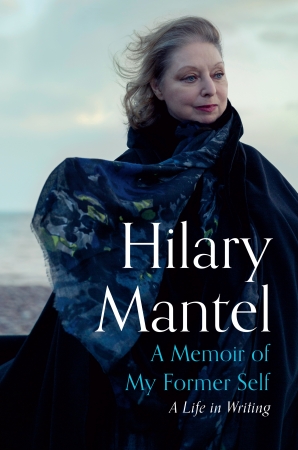
E is for Eight Months on Ghazzah Street by Hilary Mantel

Life in Saudi Arabia seen through the eyes of Frances, the wife of an ex-pat British engineer. The streets are not a woman’s territory; confined in her flat, she finds her sense of self begins to dissolve. This was her fourth novel, inspired by the four years she lived in Jeddah.

The regime is corrupt and harsh, the expatriates are hard-drinking money-grubbers, and her Muslim neighbours are secretive, watchful. The streets are not a woman’s territory; confined in her flat, she finds her sense of self begin to dissolve. She hears whispers, sounds of distress from the ’empty’ flat above her head. She has only rumours, no facts to hang on to, and no one with whom to share her creeping unease. As her days empty of certainty and purpose, her life becomes a blank – waiting to be filled by violence and disaster.

R is for Death of a Red Heroine by Qiu Xiaolong, the first book featuring Chief Inspector Chen.

Chen is a reluctant policeman, he has a degree in  English literature and is a published poet and translator. This is as much historical fiction as it is crime fiction. There is so much in it about China, its culture and its history before 1990 – the Communist regime and then the Cultural Revolution in the 1960s – as well as the changes brought about in the 1990s after the massacre of Tiananmen Square.

It’s a fascinating book on several levels and one I enjoyed reading. I liked the characterisation, Chen and Yu in particular are clearly drawn, distinctive characters, and the setting is superb. I also liked the many descriptions of food.

The next link up will be on November 4, 2023 with the theme: Books about music/musicians.

Six Degrees of Separation from I Capture the Castle to The Secret Garden

It’s time again for Six Degrees of Separation, a monthly link-up hosted by Kate at Books Are My Favourite and Best. Each month a book is chosen as a starting point and linked to six other books to form a chain. A book doesn’t need to be connected to all the other books on the list, only to the one next to it in the chain.

The starting book this month is I Capture the Castle by Dodie Smith. It’s written in such a seemingly simple style, but it captures so well the innocence and naivety of youth and hope for the future. It’s just, well, so English. I first read it as a teenager and it didn’t fail to live up to my memories of it when I reread it years later.

My first link is via castle to Titus Groan by Mervyn Peake, and the fabulous Gormenghast Castle, another book I first read in my teens. The novel is poetic,  rich in imagination, description and characters. It all came alive as I reread it, and the same magic I felt the first time was still there.

My second link is via another castle – Corfe Castle, in Dorset, in The Gloriet Tower by Eileen Meyler. Another book I read as a child. It’s set in Corfe Castle a few years before the beginning of the Hundred Years War, but it is mainly fiction. As far as I remember I chose this book because of its historical setting in a castle – I loved castles (and still do).  

My third link is Corfe as it is also the setting in Enid Blyton’s Five on a Treasure Island, the first book in The Famous Five series, and possibly the first one I read as a child. Staying at Kirrin Cottage the five children visit Kirrin Island and explore the ruins of Kirrin Castle (Corfe Castle).

My fourth link is via Treasure to Silver: Return to Treasure Island by Andrew Motion, a sequel to Treasure Island. The children of Jim and Long John Silver return to the island. One of the crew is a certain Mr Stevenson – ‘a Scotsman and a wisp of a fellow, whose place was generally in the crow’s nest, where he acted as our lookout.’ (page 115)

My fifth link is via Stevenson, that is Robert Louis Stevenson and the first book of his I read A Child’s Garden of Verses. My Great Aunty Sally, who was my mother’s aunt, gave me this book for my birthday one year and I loved reciting the poems out loud.

My final link is via garden to The Secret Garden by Frances Hodgson Burnett. I read this several times as a child and the story has stayed with me ever since. For years my picture of the ideal garden has been a walled garden, just like the secret garden. Rereading it as an adult I realised it is full of symbolism using nature, the Bible and myths, that I never noticed as a child. 

Apart from the first one my links are all children’s fiction, which I didn’t set out to do – all my chains just grow of their own accord. I’ve read all six books.

Next month (November 4 , 2023), we’ll start with Western Lane by Chetna Maroo, a novella that is part of the read-along for Novella November 2023 (and it also made the Booker Prize 2023 shortlist!).

Top Ten Tuesday: Secondary/Minor Characters Who Deserve Their Own Book.

Top Ten Tuesday is a weekly meme created by The Broke and the Bookish and now hosted by Jana at That Artsy Reader Girl. For the rules see her blog.

The topic this week is Secondary/Minor Characters Who Deserve Their Own Book. This is just a quick run through of some of the characters in a few of Agatha Christie’s crime novels as I’m still not feeling up to writing much just yet, although the side effects of the chemotherapy aren’t quite so bad today.
  1. Captain Hastings, a close friend, but he only appears in only eight of the thirty-three Poirot novels – he is the narrator in those books. He appears in the first Poirot novel, The Mysterious Affair at Styles.
  2. Ariadne Oliver, a writer of detective fiction who assists Poirot. I think Agatha Christie enjoyed writing about her, using her to express her own thoughts about writing, about Poirot and playwrights adapting her plays. Probably my favourite Ariadne Oliver book is Mrs McGinty’s Dead.
  3. Inspector Japp appears in several short stories and novels. Although he is a minor character in most of them, like Hastings he has a big part in three of the novels, including Death in the Clouds.
  4. Raymond West, Miss Marple’s nephew in a few books including A Caribbean Mystery, in which she is on holiday that he arranged for her after her doctor had prescribed sunshine. 
  5. Lucy Eyelesbarrow appears in just one book, 4.50 to Paddington. Miss Marple enlists her help in investigating a murder that was seen on a train but there was no trace of a body and no one was reported missing.
  6. Mr Satterthwaite, an observer rather than an investigator, who was in his sixties, a little man, with an elf-like face, is Mr Quin’s friend. One of my favourite stories he is in is The Man From The Sea in The Mysterious Mr Quin, a collection of short stories.
  7. Harley Quin always appears unexpectedly and suddenly, and then just as suddenly disappears. He is, without doubt, the most mysterious and unusual character in all of Agatha Christie’s books. She describes him as a figure invisible except when he chose, not quite human, yet concerned with the affairs of human beings and particularly of lovers. He is also the advocate for the dead.
  8. Colonel Race, who appears in four of the books. The first one is The Man in the Brown Suit, one of her earlier books and a thriller rather than a detective story.
  9. Luke Fitzwilliam, a policeman who had returned to England from abroad. He investigates the murders in Wychwood-under-Ash, a picturesque village, in Murder is Easy.
  10. Victoria Jones in They Came to Baghdad, a story about international espionage and conspiracy. I grew very fond of the amazing Victoria Jones!

Why I haven’t been writing many book reviews

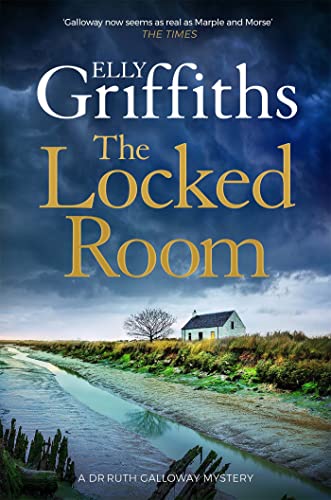
I am so behind with writing about what I’ve been reading this summer.

Here’s the reason –

This is something I’ve been thinking about writing about for a while now, but now seems the right time, because in June I spent three weeks in hospital for major surgery and currently I’m having chemotherapy as a precautionary measure. Today I started my second session out of four, beginning with an IV drip over 3 hours. One of the side effects is that I have bad pins and needles in the hand where the cannula went and also up my arm. I can’t touch cold things or metal – the fridge, our door handles etc, including my laptop. I’m using a heat pad to alleviate the pain and that means using the other hand on the laptop and that is difficult ! It will gradually go away, but until it does I’m sorry but I won’t be posting very much.