 I read A Time of Gifts by Patrick Leigh Fermor a few weeks ago and have been mulling it over ever since. It began so well and I thought it was one of those books I was going to love. And then there are later passages which are so tedious and hard work to read, so full of dry facts and arcane words that I began to wonder why I was reading any further. But I did and then the writing swept me away and I became engrossed in the book again.
My reaction, I think, is to the two sides of this book, in which Patrick Leigh Fermor describes his travels on foot in 1933 from the Hook of Holland through Germany, to Austria, Slovakia and Hungary, on his way to Constantinople. (He continued his journey in Between the Woods and the Water, which describes his experiences up to the Iron Gates border between Rumania and Bulgaria.) The two sides are because he wrote this book in later life so his direct experiences and reactions are intermingled with the results of his later research and with the benefit of hindsight. I prefer the immediacy of his earlier writings taken from the diaries he kept along the way, bringing the countryside to life and recounting his encounters with the local people.
There are passages like the one below where he linked his journey to painting:
When no buildings were in sight, I was back in the Dark Ages. But the moment a farmhouse, or a village impinged, I was in the world of Peter Brueghel. The white flakes falling beside the Waal – or the Rhine or the Neckar or the Danube – and the zigzag gables and the muffled roofs, were all his. The icicles, too, and the trampled snow, the logs piled on the sledges and the peasants stooped double under loads of faggots. … When the wintry light crept dimly from slits close to the horizon or an orange sun was setting through the branches of a frozen osier-bed, the identity was complete.
In the end I scan read page after page of detailed descriptions of churches, of sociological, political or historical people and places. I was too impatient to read all those details and I was reading the book too quickly. It’s a book to take your time with, to read a section, put the book down and come back to it later – and I didn’t do that, I swallowed it down with the result that parts were indigestible.
In a way his journey was a gilded experience as he had introductions to people in different places – people who gave him a bed for the night, or longer stays. There were also people who didn’t know him who welcomed him into their homes as a guest – as the title says it was a time of gifts. It was the period when Hitler came to power in Germany:
Appalling things had happened since Hitler had come into power ten months earlier: but the range of horror was not yet fully unfolded. In the country the prevailing mood was a bewildered acquiescence. Occasionally it rose to fanaticism.
But whereas not everyone liked the English there were some who did:
I answered many earnest questions about England: how lucky and enviable I was, they said, to belong to that fortunate kingdom where all was so just and sensible. The allied occupation of the Rhineland had come to an end less than ten years before, and the British, she said, had left an excellent impression.
Overall, I did enjoy this book. There are many passages so vividly described that I can remember them now weeks later – the vision of this young man, nearly nineteen years old striding through the German countryside reciting Shakespeare, in a loud voice and accompanied with gestures, sword thrusts, a staggering gait and with his arms upflung, looking as though he was drunk, or a lunatic. Then there was the time in Vienna when the money he was expecting hadn’t arrived and Konrad, a Don Quixote type character, took him round to a block of flats and encouraged him to knock on doors asking if the occupants wanted to pay him for a sketch of themselves.
In fact even with the dull passages, I liked this book well enough to buy the second book by Fermor Leigh, Between the Woods and the Water and I see that a third book is to be published later this year – The Broken Road, completing the account of his journey to Constantinople.
Following his walk across Europe, Patrick Leigh Fermor (1915-2011) lived and travelled in the Balkans and Greek Archipelago. He joined the Irish Guards and during the occupation of Crete led the party that captured the German commander. He was awarded the DSO and OBE.
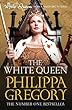 tonight on BBC1, maybe I should read it in tandem, or leave it for later? It’s the story of Elizabeth Woodville, the White Queen. A woman who won the love of a king and ascended to royalty by virtue of her beauty, Elizabeth fought tenaciously for the success of her family — her daughter who would one day unite the warring dynasties, and her two sons whose eventual fate has confounded historians for centuries: the Princes in the Tower.
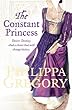 born Catalina, the Spanish Infanta, to parents who are both rulers and warriors. Aged four, she is betrothed to Arthur, Prince of Wales, and is raised to be Queen of England. She is never in doubt that it is her destiny to rule that far-off, wet, cold land.
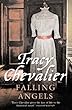 Queen Victoria’s death: two families visit neighbouring graves in a fashionable London cemetery. One is decorated with a sentimental angel, the other an elaborate urn. The Waterhouses revere the late Queen and cling to Victorian traditions; the Colemans look forward to a more modern society. To their mutual distaste, the families are inextricably linked when their daughters become friends behind the tombstones. And worse, befriend the gravedigger’s son.
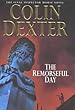 Thames Valley CID baffled. A year after the dreadful crime they are still no nearer to making an arrest. But one man has yet to tackle the case €“ and it is just the sort of puzzle at which Chief Inspector Morse excels. The final Morse book, which I bought after watching the TV version. I’ve just checked and this was way back in 2000! I decided at the time that I would read it later – I never meant it to be 12 years later!
  meaning to read them before now. I see from a bookmark that I did start
  double shelve books that I forget I’ve got them. If I thought 12 years was a long time to have owned and not read a book, then I was astonished when I checked this book to find that I’ve had it since 1992! No!! It’s another book I bought after watching the TV version, which was broadcast in November 1992. I did start it – there’s a bookmark at the start of Chapter 6. I see from Amazon that the book has been reprinted several times since I bought my copy. The blurb is: The fifteenth book to feature the classic crime-solving detective, Chief Inspector Wexford. The thirteenth of May is famously the unluckiest day of the year. Sergeant Caleb Martin of Kingsmarkham CID had no idea just how terminally unlucky it would prove, as he embarked upon his last day on earth… Ten months later, Wexford is confronted with a murder scene of horrific brutality. At first the bloodbath at Tancred House looks like the desperate work of a burglar panicked into murder. The sole survivor of the massacre, seventeen-year-old Daisy Flory, remembers the events imperfectly, and her confused account of the fatal night seems to confirm this theory. But more and more, Chief Inspector Wexford is convinced that the crime lies closer to home, and that it has sinister links to the murder of Sergeant Martin…


 Reading
  BooksPlease