10 Books of Summer

10 books of summerThe 20/10 Books of Summer Challenge hosted by Cathy  at 746 Books ended today. I did the 10 book version and didn’t do too badly, reading 6 books.

I read:

  1. The Remorseful Day by Colin Dexter ‘“ the last Morse book. I loved it. The plot is detailed, complex and as usual with Morse a puzzle type murder mystery with plenty of challenging clues.
  2. Sad Cypress by Agatha Christie ‘“ a most satisfying mystery, in which Hercule Poirot discovers that almost everyone he talks to is lying. It has a clever and most complicated plot and it kept me guessing right to the end.
  3. Zen there was Murder by H R F Keating ‘“ murder on a Zen Buddhism course. This book has a surreal feel about it and for most of the time I was completely bamboozled – not a great success.
  4. The Day of the Lie by William Brodrick ‘“ a Father Anselm book.  A meaty layered book that made me think. Nothing is straight forward as it delved into the past, uncovering secrets and revealing crimes.  I did enjoy it, but it was hard work in parts.
  5. A Medal for Murder by Frances Brody ‘“ the second Kate Shackleton mystery, set in the 1920s.  It was easy to read but I just couldn’t see who could be the murderer. I had several suspects, all of whom turned out to be innocent of the crime. I liked the historical setting and the characters rang true.
  6. The Man in the Wooden Hat by Jane Gardam ‘“ the second book in the Old Filth trilogy. I also read the third book, Last Friends.  Both books follow the lives of Old Filth, his wife and friends  over 50 years, told from the different characters’ points of view,  forming a memorable trilogy, of love and life, humour and heartbreak in colonial Hong Kong and the contrasting setting of the English countryside.

So actually I read 7!

And these are the ones I didn’t get round to reading:

  1. Poirot Investigates by Agatha Christie ‘“ an early collection of short stories.
  2. Silas Marner by George Eliot ‘“ a short classic.
  3. Great Escape Stories by Eric Williams ‘“ it comprises twelve true-life escape and evasion stories from the Second World War and one from the Korean War.
  4. How the Girl Guides Won the War by Janie Hampton.

If you did this challenge – or the 20 books challenge – how did you get on?

Five of the Best: August 2011 – August 2015

This was originally Cleo’s idea (Cleopatra Loves Books). It’s to look back over your reviews of the past five years and pick out your favourite books for each month from 2011 ‘“ 2015. I like it so much it inspired me to do the same .

I really enjoy looking back over the books I’ve loved reading. These are some of my favourite books for each August from 2011 to 2015 (click on the titles/covers to see my original reviews).

2011

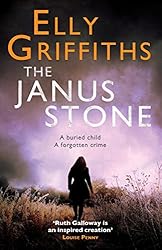
The Janus Stone by Elly Griffiths – this is the second in the Ruth Galloway investigation series. Ruth is a forensic archaeologist. In this book she is called in to investigate when builders, demolishing a large old house in Norwich, uncover the skeleton of a child ‘“ minus the skull ‘“ beneath a doorway. Is it some ritual sacrifice of just plain straightforward murder? Ruth is pregnant, but she’s not sure she wants the father to know.

I like the mix of archaeology, mystery and crime fiction in Elly Griffiths’s books. This one has a double dose, with mythology and Catholicism running through the narrative as well as the police procedures.  Ruth is an interesting character, not your usual detective, she’s overweight, self-reliant but also feisty and tough. She has to be with everything that’s thrown at her and as her investigations lead her into great danger.

2012

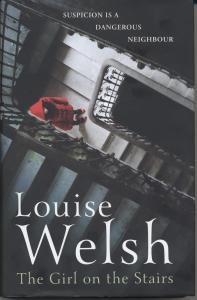
The Girl on the Stairs by Louise Welsh is a dark, psychological thriller, full of atmosphere and claustrophobic tension. I really enjoyed it.  It’s a book that once I started reading it I just had to finish it. It’s full of suspense and increasing tension as Jane moves to an apartment in Berlin to join her partner, Petra. Everything is new to her, she only speaks a little German, she doesn’t know the area and has no friends there. And she’s pregnant.

For most of the time Jane is alone in the flat and her sense of isolation grows. She hears their neighbour Dr Mann and his daughter Anna ‘“ the girl on the stairs arguing – and fears Dr Mann is abusing Anna. She ventures out at 3.00am one dark morning drawn by a flickering light in the derelict house at the back, worried that Anna was hiding in there. And as more secrets are revealed I began to wonder just how paranoid Jane was and how much was down to her imagination. Are Jane’s fears justified or is she delusional?

2013

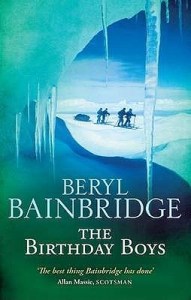
The Birthday Boys by Beryl Bainbridge – an absolutely fascinating novel about Captain Scott’s last Antarctic Expedition. It gets inside each man’s mind, it seemed to me, vividly describing the events as they progressed to the South Pole and the terrible conditions they had to endure. Beryl Bainbridge’s imagination and research combined make this a dramatic heroic story and an emotional roller-coaster set in the beautiful but deadly dangerous frozen landscape of the Antarctic.

At times I had to remind myself that I was reading a novel, but then again there were passages where I had to remind myself that these events really did take place as they seemed so fantastical. Beryl Bainbridge has written a most remarkable book, full of facts seamlessly woven into the narrative, and full of emotion and feeling. It was not only my favourite book of the month but also one of the best books I read in 2013.

2014

All Change by Elizabeth Jane Howard, the  fifth book in her Cazalet Chronicles. I’d read the first four books years ago and loved them, so I was keen to read this last one. It’s the story of the Cazalet family, a very large family by the time of this novel ‘“ 1956 ‘“ 1958, a lovely warm, old fashioned family saga, with both happy and sad events as the Cazalets move forward, and not successfully for all of them, in post-war England. It was a great treat!

2015

This August it was extremely difficult to choose which book I’ve enjoyed the most – see this post. It didn’t help that I gave three books five stars on Goodreads and two more would have been 4.5 if half stars were allowed on Goodreads. The three are all different genres so that made it practically impossible to choose one. In the end and for this post I’m highlighting:

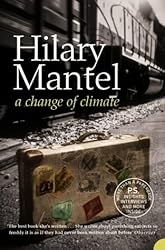
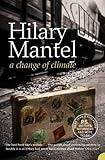
A Change of Climate by Hilary Mantel –  one of Hilary Mantel’s early books, first published in 1994 and  described on the back cover as ‘˜a literary family saga’ and ‘˜a first rate thriller’. It’s a book with an ‘enormous destructive secret‘ at its heart.  A book about family, trust, disillusionment and tragedy, about bereavement and loss of faith. A great book on all counts, characters and locations beautifully described and a well constructed and convincing plot, powerful and challenging on several levels.

R.I.P. X

For the last 10 years R.eaders I.mbibing in P.eril  has been hosted by Carl of Stainless Steel Droppings but this year (the 10th anniversary) it is being hosted by Andi and Heather of The Estella Society. It runs from September 1st to October 31st.

Banner by Abigail Larson

The idea is that you read books that fit into one or more of the following categories:

Mystery
Suspense
Thriller
Dark Fantasy
Gothic
Horror
Supernatural

There are different levels of participation to choose from, but I am signing up for this one:

ripnineperilthird


Peril the Third: Read just one book, that you feel fit s(the very broad definitions) of R.I.P. literature. It could be King or Conan Doyle, Penny or Poe, Chandler or Collins, Lovecraft or Leroux’¦or anyone in between.

Peril the Third:

I have several chunkster books in my waiting to-be-read pile for September and October so for the time being I’m just aiming to read one book! Here are some of the books I have to choose from:

  • The Wasp Factory by Iain Banks
  • A Song of Stone by Iain Banks
  • Poirot Investigates by Agatha Christie
  • Northanger Abbey by Jane Austen ‘“ I read this so many years ago that it will be like reading it for the first time. It was one of the set books at school and I don’t think I appreciated it then.
  • Dead Scared by Sharon Bolton
  • Like This, For Ever by Sharon Bolton
  • Talking to the Dead by Harry Bingham
  • The Rottweiler by Ruth Rendell

But now I’ve made this list I think maybe I should be aiming at Peril the First, which is to read four books!

ripnineperilfirst

August Books 2015

I read 9 books in August.  Here they are, in the order I read them with links are to my posts, where I’ve written them:

  • Product DetailsThin Air by Ann Cleeves – I didn’t get round to writing about this book, although I loved it. It’s the latest in the Shetland series in which Detectives Jimmy Perez and Willow Reeves are on Unst investigating the murder of Eleanor, a guest at her friend’s wedding. Before she went missing Eleanor claimed to have seen the ghost of a local child who drowned in the 1920s. Her interest in the legend of the ghost had seemed unhealthy – obsessive, even – to her friends: an indication of a troubled mind. So was her death suicide or was she murdered? Written with a wonderful sense of place, the plot twists had me in suspense and I almost couldn’t wait to find out.
  • A Change of Climate by Hilary Mantel  –  one of Hilary Mantel’s early books, first published in 1994 and  described on the back cover as ‘˜a literary family saga’ and ‘˜a first rate thriller’. A great book on all counts, characters and locations beautifully described and a well constructed and convincing plot, powerful and challenging on several levels.
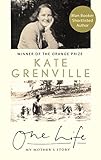
  • One Life: My Mother’s Story by Kate Grenville –  a beautiful biography of her mother Nance Russell. A book that casts light not only on Nance’s life but also on life in Australia for most of the 20th century.  It brings to life both the good times and the bad times, as she writes about her mother’s heartache, worries, joys and sorrows, of the hard times during the economic depression, all of it as a whole making a rich and fulfilled life.
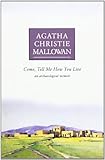
  • Come, Tell Me How You Live:an archaeological memoir by Agatha Christie Mallowan, in which she wrote about her life accompanying her husband Max on his excavations in Syria and Iraq in the 1930s. The emphasis in the book is on the everyday life on a dig, about people and her insights into their beliefs  written with love and humour. I loved it.
  • Appointment with Death by Agatha Christie, a Poirot mystery set in the Middle East in which he investigates the death of Mrs Boynton, a malignant and malicious tyrant who enjoyed exercising power over her family. This is a quick, easy read, with a lot of dialogue in a relatively short book (less than 200 pages). I enjoyed it, although it’s not one of my favourite Agatha Christie books.
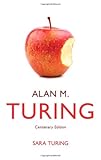
  • Alan M Turing by Sara Turing, a biography by his mother, with an added chapter by his brother. I’d recently watched The Imitation Game and wanted to know a bit more about Turing. This is not the right book for that – his mother’s account is hopelessly biased and his brother’s left a sour taste in my mouth. I think I should maybe read the biography by Alan Hodges Alan Turing: The Enigma, the book on which the film is based.
  • A Medal for Murder by Frances Brody – the second Kate Shackleton mystery.  It is 1922 and Kate is investigating a pawn shop robbery, when she discovers the body of Lawrence Milner, outside a Harrogate theatre. She is also asked to find Lucy, Captain Wolfendale’s granddaughter who has gone missing and he has received a ransom note. This is a detailed, complex plot which kept me guessing almost to the end about the identity of the murderer.
  • Fresh from the countryFresh from the Country by Miss Read, set in the 1950s, this is a stand-alone novel telling the story of Anna Lacey, a newly qualified teacher, as she spends her first year teaching in Elm Hill, a new suburb in London. It highlights the differences between life in the country and the suburbs and overall the comparisons became too repetitive. But I did like this book, which transported me back to the 1950s, when children were taught in large classes and the pace of life was slower than today.
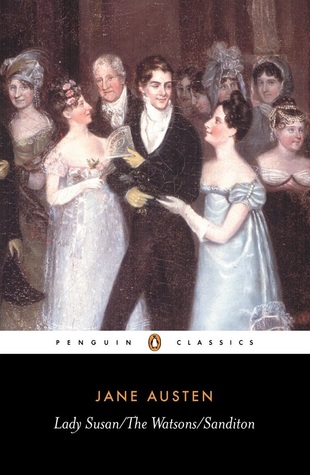
  • Lady Susan, The Watsons and Sanditon by Jane Austen – none of these were published in her lifetime. Told in a series of letters (reminiscent of Laclos’s Les Liaisons Dangereuses), Lady Susan is the  story of an unscrupulous widow who plans to force her daughter into a marriage against her wishes. The Watsons is a fragment in which the main character, Emma Watson returns to her father’s house after fourteen years of absence, having been brought up by a wealthy aunt. She joins her three unmarried sisters, living with their invalid father  and looking for husbands whilst struggling for money. Sanditon is also an unfinished fragment, in which the the old world is contrasted with the new upcoming world as two landowners plan to develop Sanditon into a fashionable bathing place.  A real treat to read.

For most of the month I read new-to-me or library books, finishing with a flourish of three of my own to-be-read books (and I’m currently reading another TBR), and for once there are only two crime fiction books.

Once again it is so difficult picking which one I enjoyed the most – nearly all of them are such good reads and it’s impossible to decide between such very different and such very enjoyable books.

Lady Susan, The Watsons and Sanditon by Jane Austen

Adam at Roof Beam Reader’s Austen in August event reminded me to read Lady Susan, The Watsons and Sanditon.

Jane Austen has long been one of my favourite authors, ever since I read my mother’s copy of Pride and Prejudice and since then I have re-read it several times and her other full length novels too. But I’ve never read Lady Susan, The Watsons and Sanditon before. In fact it was only reading Carol Shields’ biography of Jane Austen quite some years ago now that I discovered that she had written these books, none of which were published in her lifetime. Lady Susan is a finished novella, whereas The Watsons and Sanditon are two unfinished fragments. Lady Susan and The Watsons were first published in 1871 by her nephew, James Edward Austen-Leigh in his Memoir of Jane Austen, including an account of  Sanditon . The full text of Sanditon wasn’t published until 1925.

Lady Susan

According to Margaret Drabble’s introduction to my Penguin Classics edition there is some evidence that Lady Susan was probably written between 1793-4, when Jane Austen was about 20 years old. Drabble thinks this is the least satisfactory of the three stories, but I can’t agree with her view. I was completely taken with it.

Told in a series of letters, Lady Susan is the  story of an unscrupulous widow who plans to force her daughter into a marriage against her wishes. Lady Susan is an attractive and entertaining and totally wicked character, who nevertheless almost manages to fool people for some of the time at least. She is also trying to captivate her sister-in-law’s brother, whilst still holding on to the affections of a previous lover.

As I was reading Lady Susan it reminded of Laclos’s Les Liaisons Dangereuses, not just because both are epistolary but also the content – manipulative and evil characters without any moral scruples, who delight in their power to seduce others. I wondered if it was possible that Jane Austen had known of this book. It was published in 1782, so it is possible that she knew of it, even if she had not actually read it.

To my mind Lady Susan is unique in Jane Austen’s works and I was delighted to read it. It’s written with style, confidence and humour convincingly illustrating 18th century morals and manners.

The Watsons

Jane Austen began writing this in 1804, her father died in 1805 and she never finished it. Its main character is Emma Watson who after fourteen years of absence returns to her father’s house after being brought up by a wealthy aunt. She had grown up in an affluent household and until her aunt had remarried she’d had expectations of an inheritance. She joins her three unmarried sisters, living with their invalid father  and looking for husbands whilst struggling for money. Mr Watson is a clergyman, so on his death they will lose their home. Maybe it was the parallel with Jane and Cassandra Austen’s own situation that caused Jane to abandon the novel when her own father died.

In some ways it is a little like Pride and Prejudice with its account of a ball and Emma Watson has a spirited nature similar to Elizabeth Bennet’s.  Women without money were often obliged to marry for money, but Emma doesn’t want to. Her sister Elizabeth points out that it is ‘very bad to grow old and be poor and laughed at‘, whereas Emma thinks she would ‘rather be a teacher at a school (and I can think of nothing worse) than marry a man I did not like.’

I liked The Watsons but with just this fragment to go off it is a bit basic and does seem rather similar to Pride and Prejudice. I wished she had finished it.

Sanditon

I thoroughly enjoyed Sanditon, even in its unfinished state. It’s the last fiction that Jane Austen wrote, beginning it in January 1817, the year she died. She was ill and the subject of health is one of its themes, but not in a serious or gloomy way. It has a lively, bright and humorous tone, with three of the characters being hypochondriacs, wonderfully satirised by Jane Austen.

The other theme is change in the form of the development of a seaside resort at Sanditon. It conveys the spirit of change of the times as  Sanditon is developed by two of the landowners, Mr Parker and Lady Denham from ‘a quiet village of no pretensions‘ into ‘a fashionable bathing place‘. The two of them, realising its potential of becoming profitable ‘had engaged in it, and planned and built, and praised and puffed, and raised it to a something of young renown – and Mr Parker could think of nothing else.

It extols the benefits of sea air and sea bathing, Lady Denham decries the need for a doctor saying it would only encourage the servants and the poor to imagine they were ill – and pronouncing that  if her husband had never seen a doctor he would still have been alive, ‘Ten fees, one after the other, did the man take who sent him out of the world. – I beseech you Mr Parker, no doctors here.

Sanditon contrasts the old world with the new upcoming world. Mr Parker has moved from his old comfortable family house set in a sheltered dip two miles from the sea to a new elegant house, which he has named Trafalgar House, not far from a cliff  from which there is a descent to the sea and the bathing machines. Granted it has all the ‘grandeur of storms’, which rocked their bed whilst the wind rages around the house.

There is so much more in these stories than I can write about here (this post is far too long anyway).  I shall enjoy re-reading them in the future. They are so different from each other, probably reflecting the different periods of her life when they were written. And I can’t decide between Lady Susan and Sanditon which one I like best.

This Week in Books: 26 August 2015

This Week in Books is a weekly round-up hosted by Lypsyy Lost & Found, about what I’ve been reading Now, Then & Next. A similar meme, WWW Wednesdays is hosted by Sam at Taking on a World of Words.

Now – Yesterday I began reading The Robber Bride by Margaret Atwood. I was amazed when I realised that this book has been on my TBR shelves for almost 6 years! It’s certainly time I read it.

Blurb:

Margaret Atwood’s The Robber Bride is inspired by “The Robber Bridegroom,” a wonderfully grisly tale from the Brothers Grimm in which an evil groom lures three maidens into his lair and devours them, one by one. But in her version, Atwood brilliantly recasts the monster as Zenia, a villainess of demonic proportions, and sets her loose in the lives of three friends, Tony,Charis, and Roz. All three “have lost men, spirit, money, and time to their old college acquaintance, Zenia. At various times, and in various emotional disguises, Zenia has insinuated her way into their lives and practically demolished them.

Then: The last book I finished is Lady Susan, The Watsons and Sanditon by Jane Austen.  I loved it.

Blurb:

These three short works show Austen experimenting with a variety of different literary styles, from melodrama to satire, and exploring a range of social classes and settings. The early epistolary novel Lady Susan depicts an unscrupulous coquette, toying with the affections of several men. In contrast, The Watsons is a delightful fragment, whose spirited heroine Emma Watson finds her marriage opportunities restricted by poverty and pride. Written in the last months of Austen’s life, the uncompleted novelSanditon is set in a newly established seaside resort, with a glorious cast of hypochondriacs and speculators,and shows the author contemplating a changing society with a mixture of scepticism and amusement.

My review will follow shortly.

Next – I’m never really sure which book I’ll be reading next. It should probably be Adam Bede by George Eliot, but at the moment I’m feeling reluctant, so it is more likely to be The Paying Guests by Sarah Waters, which I’ve borrowed from the library.

Blurb:

‘There came the splash of water and the rub of heels as Mrs Barber stepped into the tub. After that there was a silence, broken only by the occasional echoey plink of drips from the tap…

‘Frances had been picturing her lodgers in purely mercenary terms – as something like two great waddling shillings. But this, she thought, was what it really meant to have paying guests: this odd, unintimate proximity, this rather peeled-back moment, where the only thing between herself and a naked Mrs Barber was a few feet of kitchen and a thin scullery door. An image sprang into her head: that round flesh, crimsoning in the heat.’

What are you reading this week?