This was originally Cleo’s idea (Cleopatra Loves Books). It’s to look back over your reviews of the past five years and pick out your favourite books for each month from 2011 ‘“ 2015. I like it so much it inspired me to do the same.
I really enjoy looking back over the books I’ve loved reading. These are some of my favourite books for each September from 2011 to 2015 (click on the titles/covers to see my original reviews). These are all crime fiction, mostly dark scary books, because each September and October I take part in the R.I.P. Challenge, that is hosted this year by The Estella Society.
2011
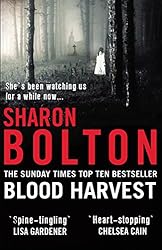 Blood Harvest by Sharon Bolton. I can’t quite believe that it’s four years ago that I read this book as I can still remember the tension, terror and suspense within its pages. It’s a dark, scary book, set in the fictional town of Heptonclough in Lancashire.There are two churches, the ancient ruined Abbey Church and standing next to it the ‘˜new’ church of St Barnabas. The Fletchers have just moved into a new house built on the land right next to the boundary wall of the churchyard. But this is not a safe place for children, three little girls have died over the past ten years, and when the Fletcher children start to hear voices in the graveyard more disturbing events unfold.
2012
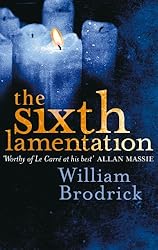 The Sixth Lamentation by William Brodrick, the first Father Anselm book. This is historical fiction and it’s also a mystery. It looks back to the Second World War in occupied France, telling a dramatic tale of love and betrayal, full of suspense, and interwoven stories, with accurate details of life in Paris during the Occupation and the subsequent war trials. William Brodrick has also drawn on his own personal experience. He was formerly in religious life but left before his final vows.
2013
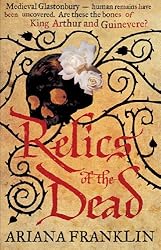 Relics of the Dead by Ariana Franklin, the third book in her Mistress of the Art of Death series. The date is 1176, the setting is Glastonbury where the monks, after a fire had destroyed their monastery, discovered two skeletons buried in their graveyard. The question is ‘“ are these the remains of King Arthur and Queen Guinevere? Henry II needs evidence that they are not and sends Adelia Aguilar, the anatomist, to examine the bones for evidence. I’ve always liked the stories about King Arthur, about his life and death, about Excalibur (which does feature in this book), about Guinevere’s affair with Lancelot, and the Holy Grail (which do not).
2014
The Brimstone Wedding by Barbara Vine. This is one of the best of Barbara Vine’s books that I’ve read ‘“ nearly as good as A Dark-Adapted Eye and writing under her real name, Ruth Rendell, A Judgement in Stone. it’s not horrific in the overblown graphic sense, but in a sinister, psychological way that really is ‘˜chilling’ and inexpressibly sad. The atmosphere is mysterious, a house isolated in the fens, seems to hold the key to the past. Stella, who is dying of lung cancer, never mentions her husband or her past life, but gradually she confides in Jenny, a carer at the retirement home where Stella lives, telling her things she has never said to her son and daughter ‘“ things about her life she doesn’t want them to know.
2015
 This September I’m spoilt for choice as I read several excellent books – The Ghosts of Altona by Craig Russell is just one of them. This is his 7th book featuring Jan Fabel, the head of Hamburg’s Murder Commission, a very cleverly plotted book, multi-layered and complex and I loved it.
A murder mystery combining a cold case and present day murders combined with great storytelling, rich descriptions, interwoven with details of near-death experiences, the Gothic, mental and personality disorders makes this most definitely one of the best books I’ve read this year.
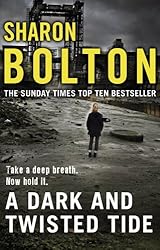
I must also mention three of Sharon Bolton’s Lacey Flint books that I read this September – all excellent books.

 Watching War Films with My Dad: a Memoir by Al Murray (NF, TBR) – no review. I liked this book which begins with Al talking about how his Dad pointed out all the things that are inaccurate/just plain wrong in the war films they watched together, which is very funny. Growing up in the 70s he became fascinated with the history of war – in particular World War Two. He writes about Action Man, Airfix and model making, paintballing as well as philosophising about history and war. Al Murray is a history graduate as well as a comedian and both strands are evident in his book, but he does ramble on at times.
 The Robber Bride
 Three Lacey Flint books by Sharon Bolton
  Alan Turing: Unlocking the Enigma by David Boyle (NF) – no review of this short biography (112 pages) – a good introduction to his life and work. At some time I think I’d like to read Alan Turing: The Enigma by Andrew Hodges, a much more detailed (and longer!) book used as the basis for the film The Imitation Game.
  The Buried Giant
 Adam Bede by George Eliot (TBR) – a long and slow-moving novel set in rural England in 1799 about love, seduction, remorse, crime and religion.
 Last Seen in Massilia
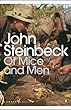 Of Mice and Men by John Steinbeck* (LB) – I really liked this short book about commitment, loneliness, hope and loss, the story of two drifters, George and his simple-minded friend Lennie looking for work and dreaming of having some land of their own.Their hopes are doomed as Lennie – struggling against extreme cruelty, misunderstanding and feelings of jealousy – becomes a victim of his own strength.
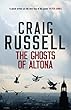 The Ghosts of Altona
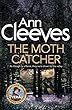 The Moth Catcher by Ann Cleeves – the 7th and latest Vera Stanhope book, in which Vera investigates two murders at Valley Farm, a quiet community in Northumberland. With a complex plot, convincing characters and a seemingly effortless style of writing I loved this book. I may eventually get round to writing a proper post about it.

 BooksPlease