Short Stories on Sunday

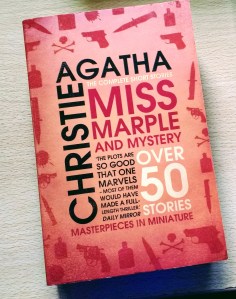
Today I’ve read one of the short stories from Agatha Christie’s collection Miss Marple and Mystery .
IMG_20180513_095855842.jpg

This collection contains 55 stories, 20 of them featuring Miss Marple. I’ve read some of these in other short story collections but there are still many I haven’t read. There is an Short Story Chronology in the Appendix with a table aiming to present all Agatha Christie’s short stories published between 1923 and 1971, listed in order of traced first publication date.

Counting how many there are in total is a difficult task – some stories that first appeared in weekly or monthly magazines were later  re-worked and became chapters in a larger work, some in Partners in Crime were sub-divided into smaller chapters, 13 were re-worked into the episodic novel, The Big Four, and some were rewritten so substantially that they appear separately in different books!

Manx Gold has also been published as an e-book. It was first published in the Manchester Daily Dispatch between 23-28 May 1930, and as a booklet distributed throughout the island, as a treasure hunt to promote tourism in the Isle of Man. She received a fee of £65 (in today’s money over £4,000!)

Cousins, who are engaged, Fenella and Juan are left an intriguing puzzle by their uncle who lived in the Isle of Man – to find four ‘ treasure chests’, not gold ingots or coins, but actually snuff boxes. In addition there are two more relatives also search for the ‘gold’.

I thought it sounded good, but I have to say that I was rather disappointed by the slightness of this short story. Their uncle has left cryptic clues leading to the ‘chests’ and a couple of sketch maps to guide them to the treasure. But I had no idea what the clues mean and could only read Fenella’s exclamations when they work it out and find the little snuff boxes. Oh, there is also a murder – one of the other relatives is bashed on the head by the other one and left to die.

It’s quite an entertaining little story, but I much prefer Agatha Christie’s full length books.

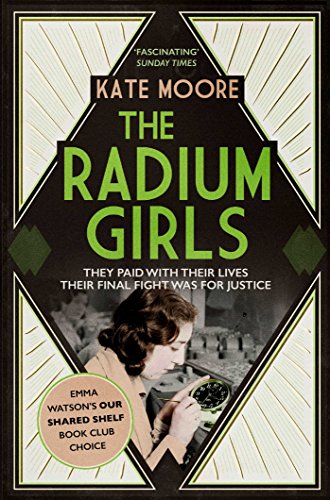
My Friday Post: The Radium Girls by Kate Moore

On Fridays I often join in with two book memes:

Book Beginnings on Fridays hosted by Rose City Reader, where bloggers share the first sentence or more of a current read, as well as initial thoughts about the sentence(s), impressions of the book, or anything else that the opening inspires. 

This week I’m featuring The Radium Girls: They paid with their lives. Their final fight was for justice by Kate Moore, one of my TBRs. It’s the true story about dial-painters, girls and women who painted the numbers on clocks, watches and other instruments using radium-infused luminous paint in the 1920s and 1930s. The girls shone brightly in the dark, covered head to toe in dust from the paint. 

The scientist had forgotten all about the radium. It was tucked discreetly within the folds of his waistcoat pocket, enclosed in a slim glass tube in such a small quantity that he could not feel its weight.

Also on a Friday The Friday 56 is hosted by Freda’s Voice, where you grab a book and turn to page 56 (or 56% of an eBook), find one or more interesting sentences (no spoilers), and post them.

56%:

‘Every week there seemed to be some emergency order that required an extra pair of hands. Then Catherine would slip her brush between her lips, dip it in the powder and paint; the girls all still did it that way at Radium Dial, for their instructions were never changed.

Books from the Mobile Library

The mobile library came here this week and for the first time since the first lockdown we could go on board the van! I borrowed just three books this time.

The Seal King Murders by Alanna Knight – an Inspector Faro Mystery. Set in 1861 in Orkney, this is the second casebook of Constable Faro, looking back to his earlier career. A champion swimmer, has drowned in mysterious circumstances and Faro is met with rumours of missing artifacts, the myth of the seal king, a dead body under the floor of Scarthbreck, his first love, and a mother who is determined to find him a wife. 

Faro later had an illustrious career as Chief Inspector in the Edinburgh City Police and personal detective to Her Majesty Queen Victoria at Balmoral. I haven’t read any of the Inspector Faro mysteries, so I think this could be a good place to start.

Alanna Knight had more than seventy books published in an impressive writing career spanning over fifty years. She was a founding member and Honorary Vice President of the Scottish Association of Writers, Honorary President of the Edinburgh Writers’ Club and member of the Scottish Chapter of the Crime Writers’ Association. Alanna was awarded an MBE in 2014 for services to literature. Born and educated in Tyneside, she lived in Edinburgh until she passed away in 2020.

The Invisible Library by Genevieve Cogman. Irene is a professional spy for the mysterious Library, which harvests fiction from different realities. And along with her enigmatic assistant Kai, she’s posted to an alternative London. Their mission – to retrieve a dangerous book. This is fantasy in a world that is chaos-infested – the laws of nature bent to allow supernatural creatures and unpredictable magic. It is the first of 8 books in the Invisible Library series.

Genevieve Cogman got started on Tolkien and Sherlock Holmes at an early age, and has never looked back. But on a perhaps more prosaic note, she has an MSC in Statistics with Medical Applications and has wielded this in an assortment of jobs: clinical coder, data analyst and classifications specialist. Although The Invisible Library is her debut novel, she has also previously worked as a freelance roleplaying game writer. Genevieve Cogman’s hobbies include patchwork, beading, knitting and gaming, and she lives in the north of England.

A Bespoke Murder by Edward Marston, book 1 in the Home Front Detective series. Set in 1915 with thousands of Britons away in the trenches, a severely depleted police force remains behind to keep the Home Front safe and continue the fight against crime, espionage, and military desertion. Detective Inspector Harvey Marmion and Sergeant Joe Keedy investigate the murder of Jacob Stein, a Jewish tailor, a victim of anti-German riots after the sinking of the Lusitania. His shop is set ablaze, his daughter is raped and he is murdered

Edward Marston is a pseudonym used by Keith Miles, an English author, who writes under his own name and also historical fiction and mystery novels under the pseudonym Edward Marston. He is known for his mysteries set in the world of Elizabethan theatre. He has also written a series of novels based on events in the Domesday Book, a series of The Railway Detective and a series of The Home Front Detective.

I’ve read one of Alanna Knight’s books and one by Edward Marston, but none of Genevieve Cogman’s. Have you read any of these books? Are you tempted?

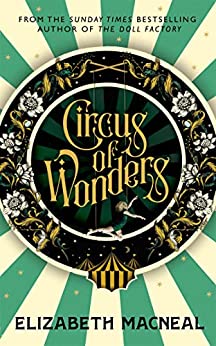
Circus of Wonders by Elizabeth Macneal

Picador| 13 May 2021| 384 pages|Review copy| 4*

Description

1866. In a coastal village in southern England, Nell picks violets for a living. Set apart by her community because of the birthmarks that speckle her skin, Nell’s world is her beloved brother and devotion to the sea.

But when Jasper Jupiter’s Circus of Wonders arrives in the village, Nell is kidnapped. Her father has sold her, promising Jasper Jupiter his very own leopard girl. It is the greatest betrayal of Nell’s life, but as her fame grows, and she finds friendship with the other performers and Jasper’s gentle brother Toby, she begins to wonder if joining the show is the best thing that has ever happened to her.

In London, newspapers describe Nell as the eighth wonder of the world. Figurines are cast in her image, and crowds rush to watch her soar through the air. But who gets to tell Nell’s story? What happens when her fame threatens to eclipse that of the showman who bought her? And as she falls in love with Toby, can he detach himself from his past and the terrible secret that binds him to his brother.

Moving from the pleasure gardens of Victorian London to the battle-scarred plains of the Crimea, Circus of Wonders is an astonishing story about power and ownership, fame and the threat of invisibility.

I loved Elizabeth Macneal’s first book, The Doll Factory, so I was keen to read her second, Circus of Wonders, set in 1866. I liked the circus setting and the variety of characters. The main character is Nell, the ‘leopard girl’, who is both shunned and ridiculed by the people in her village because of the birthmarks on her face and all over her body. When the travelling circus visits the village her father sells her to Jasper Jupiter’s ‘Circus of Wonders‘ as it includes a ‘freak show’, highlighting the very different attitudes of the times from those of the present day. This makes for uncomfortable reading at times, as Stella, the bearded lady, Brunette, the Welsh Giantess, and Peggy the dwarf who drives a miniature carriage are treated as objects of curiosities, acts to be bought and sold, just as Nell was sold.

It’s narrated from the perspectives of the three main characters, Nell, who became a star as ‘Nellie Moon’ flying high above the circus ring suspended beneath a balloon, Jasper, the ambitious circus owner and Toby his younger, gentler brother. Jasper is the driving force as he is forever looking for new acts to draw the crowds. His ambition is to gain a pitch in London, hoping the Queen might hear of him and want to see his show. He knows that the queen is the ‘freak-fancier par excellence, who has summoned Aztecs, pinheaded people and dwarves to her Palace’.

The brothers had both taken part in the Crimean War, Jasper as a soldier and Toby as a photographer. Toby is haunted by memories of the war and in particular of what happened to Dash, Jasper’s friend, during the siege of Sevastopol. The horror of the war has never left him. Although the circus is the main focus of the novel, it is the mystery of what happened in the Crimea and the relationships between Jasper, Toby and Dash that interested me the most and made me want to read on.

This is a novel that transported me back to the Victorian period, full of the atmosphere of both the circus and of war. It reveals the insecurities, fears and isolation that the characters suffer. It emphasises the exploitation of ‘freaks of nature’, who draw the crowds and the power of illusions. I like the mix of fact and fiction and the way that Macneal interweaves the details of the Crimean War with the circus narrative. However, I don’t think it’s quite as good as The Doll Factory, which totally captivated me with its dark tale of obsession, pulsing with drama, intrigue and suspense.

With thanks to NetGalley and especially to Pan McMillan, Picador for my review copy.

Top Ten Tuesday: Book Titles That Are Complete Sentences

Top Ten Tuesday is a weekly meme created by The Broke and the Bookish and now hosted by Jana at That Artsy Reader Girl. For the rules see her blog. The topic this week is Book Titles That Are Complete Sentences.

These are all books I’ve read.

All the Light We Cannot See by Anthony Doerr – about a blind French girl and a German boy whose paths collide in occupied France as both try to survive the devastation of World War II.

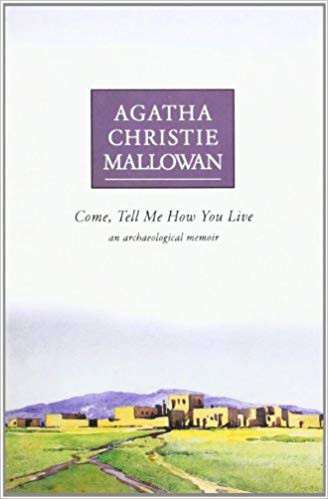
Come Tell Me How You Live by Agatha Christie – a memoir about what life was like when she accompanied her husband Max Malloran on his excavations in Syria and Iraq in the 1930s.

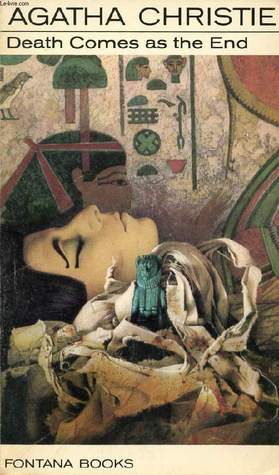
Death Comes as the End by Agatha Christie – a detective story set in on the West bank of the Nile at Thebes in about 2000 BC. 

Death Comes to Pemberley by P D James, a sequel to Pride and Prejudice set in 1803, when Elizabeth and Darcy have been married for six years. 

Did You See Melody? by Sophie Hannah – Melody was seven when she disappeared and although her body had not been discovered her parents were tried and found guilty of murdering her. What really happened to her?

Elizabeth is Missing by Emma Healey – Maud has dementia – but she knows her friend Elizabeth is missing. I enjoyed the TV adaption with Glenda Jackson as Maud much more than the book.

Jacob’s End is on the Landing by Susan Hill – describing the books she read, reread, or returned to the shelves over the course of a year, as well as her thoughts on a whole variety of topics. It’s fascinating, rambling and chatty.

The Spy Who Came in from the Cold by John le Carré – a story of love and betrayal at the height of the Cold War. Back from Berlin where he had seen his last agent killed whilst trying to cross the Berlin Wall, Leamas is apparently no longer useful. 

They Came to Baghdad by Agatha Christie – set in 1950 this is a story about international espionage and conspiracy. The heads of the ‘great powers‘ are secretly meeting in Baghdad.

 When Will There Be Good News? by Kate Atkinson. The 3rd Jackson Brodie book – in a quiet corner of rural Devon, a six-year-old girl witnesses an appalling crime. Thirty years later the man convicted of the crime is released from prison.

20 Books of Summer

Cathy at 746 Books is hosting her 20 Books of Summer Challenge again this year. The challenge runs from June through August. There are options to read 10 or 15 books instead of the full 20. You can sign up here.

During previous summers I’ve taken part in this challenge and never managed to read the books I’ve listed, although I’ve read over 20 books during the summer months. It seems that listing books I want to read somehow takes away my desire to read them – or it maybe that other books demand to be read when the time comes. The solution seems to be don’t list the books – but that’s not the challenge!

So here are 20 books that I might read this summer. They’re a mix of NetGalley books, books for various other challenges I’m doing and books from my TBRs that came to mind as I made the list.

I’ve included The Killing Kind by Jane Casey, but maybe I shouldn’t count this one as after I made the list I started reading it – I made the mistake of ‘just looking’ and couldn’t stop reading on. So I’ve listed 21 books.

  1. The Railway Children by E Nesbit
  2. Black Beauty by Anna Sewell.
  3. Three Men on the Bummel by Jerome K Jerome
  4. Gulliver’s Travels by Jonathan Swift.
  5. Sing, Jess, Sing by Tricia Coxon
  6. Blue Moon by Lee Child
  7. Black Water Lilies by Michel Bussi
  8. The Dressmaker by Beryl Bainbridge
  9. Picnic at Hanging Rock by Joan Lindsay
  10. The Killing Kind by Jane Casey
  11. The Girl Who Died by Ragnar Jónasson
  12. True Crime Story by Joseph Knox
  13. Just Like the Other Girls by Claire Douglas
  14. The Paris Library by Janet Skeslien Charles
  15. Coming Up for Air by Sarah Leipciger
  16. The Paris Library by Janet Skeslien Charles
  17. Loch Down Abbey by Beth Cowan-Erskine
  18. A Corruption of Blood by Ambrose Parry
  19. The Rose Code by Kate Quinn
  20. : Katheryn Howard, The Tainted Queen by Alison Weir
  21. The Old Man and the Sea by Ernest Hemingway

Wish me luck!