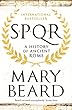
SPQR: A History of Ancient Rome by Mary Beard

Mary Beard is a Professor of Classics at Newnham College, Cambridge and is the Classics editor of the TLS. She is a fellow of the British Academy and a member of the American Academy of Arts and Sciences. And she writes a blog – A Don’s Life, which appears in The Times. I’ve enjoyed watching her TV programmes and so it doesn’t surprise me at all  that SPQR is just as entertaining and informative as the programmes – and very readable, even for someone, like me, who only has a smattering of knowledge about Roman history.

I took my time reading SPQR; some of it covered familiar ground and some was new to me. It’s a fascinating account of how Rome grew and sustained its position for so long, covering the period from the fourth century BCE when Rome was expanding from a small village, up to the moment in 212 CE when the emperor Caracalla made every free inhabitant of the Roman Empire a full Roman citizen.

The title, SPQR, is taken from the Roman catchphrase, Senatus Populusque Romanus meaning the Senate and People of Rome and it is on these two elements – the Senate and the People that Mary Beard concentrates, focussing on the city of Rome, on Roman Italy and also looking at Rome from the outside, from the point of view of those living in the wider territories of the Roman empire.

The book is not strictly chronological and begins with an event I know a bit about through reading Robert Harris’ Lustrum. It’s the Catiline conspiracy in 63 BC, which concerned a plot, or so it was rumoured to overthrow the Roman Empire and Cicero’s part in uncovering the plot and saving the state. Mary Beard begins with this event, because:

it is only in the first century BCE that we can start to explore Rome, close up and in vivid detail through contemporary eyes. An extraordinary wealth of words survives from this period: from private letters to public speeches, from philosophy to poetry – epic and erotic, scholarly and straight from the street.’ (location 143)

She highlights the effect Cicero had, not just on the politics of his own time but also on the language of modern politics. And it is from Cicero’s speeches, essays, letters, jokes and poetry and other Roman writers that we see the Roman world not just in 63 BCE but throughout the city’s history.

For the earlier period however, there are no contemporary accounts and so the early years of the city and of the earliest Romans has to be reconstructed  from individual pieces of evidence from fragments of pottery or letters inscribed on stone.

There are also, of course the myths and stories as well and Beard refers to these, such as the story of Romulus and Remus, who are said to have founded the city, told by Livy and several other Roman writers. Tradition has it that Romulus and his tiny community fought against their neighbours, the Sabines, and erected a temple on the site of the battle, which later became the Forum, but there is no archaeological evidence to identify the remains of this temple. Archaeology, in fact, only sketches what Rome in the earliest period was like and it is very different from the myths. Later Roman writers and modern historians alike have debated intensely the stories of Romulus and Remus, raising the questions of what it was to be Roman. And Beard states:

There is often a fuzzy boundary between myth and history … and … Rome is one of those cultures where the boundary is particularly blurred. … For a start there was almost certainly no such thing as a founding moment of the city of Rome. … Although Romans usually assumed that he [Romulus] had lent his name to his newly established city, we are now fairly confident that the opposite was the case: ‘Romulus’ was an imaginative construction out of ‘Roma’. ‘Romulus was the archetypal ‘Mr Rome.’ (locations 844 – 850)

From that point Beard goes on to discuss the basics of Roman culture, including the nature of Roman marriage, Roman slaves, the Republican system, the principle of freedom, or ‘libertas’, the changing definition of what it meant to be ‘Roman’, Roman domination of the Mediterranean, dictatorship, civil war, taxation, the modern Western system of timekeeping, the emperors and their imperial successes and military victories and the army – and so much more!

SPQR is an immense  achievement, covering 1,000 years of the history of Ancient Rome, and not only the history but also explaining Roman values, what they thought about themselves, and the way of life of both the People and the Senate.

  • Format: Kindle Edition
  • File Size: 22379 KB
  • Print Length: 608 pages
  • Publisher: Profile Books; Main edition (20 Oct. 2015)
  • Source: I bought it

Reading Challenges: Mount TBR 2016 – an e-book I’ve owned since November 2015

Reading Challenges 2106: Quarterly Update

Writing my last post on the Mount TBR Reading Challenge: Check Point made me think it would be a good time to see where I’m up to with the other reading challenges I’m doing. They are:

Mount TBR 2016Mount TBR 2016 – target: to read as many of my own books as I can. There are eight levels and I’m aiming first of all for Mt Ararat, which is 48 books. Progress – I’ve read 15 books, taking me on to the second level, Mont Blanc (24 books) so well on track to meet my target and hopefully go beyond it – maybe even to Mt Kilimanjaro (60 books).

Read Scotland 2016Read Scotland 2016 – target: to read and review Scottish books ‘“ any genre, any form ‘“ written by a Scottish author (by birth or immigration) or about or set in Scotland. There are 5 levels, the last being 21+ books.  I didn’t set myself a specific target and so far I’ve read 5 books, completing the first level.

Whats in a name16What’s in a Name? 2016 Challenge – target: to read books with titles that match six  different categories. Progress: two categories completed

  • A country
  • An item of clothing
  • An item of furniture
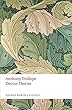
  • A profession: Doctor Thorne by Anthony Trollope
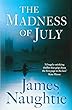
  • A month of the year: The Madness of July by James Naughtie
  • A title with the word ‘˜tree’ in it

Vintage coversVintage Mystery Cover Scavenger Hunt – I’m taking part in both the Golden and the Silver Age Vintage Mystery Scavenger Hunts. The aim: to find as many objects on the Scavenger Hunt list as possible on the covers of the mystery books you read. The minimum number of items to complete the challenge is six items from the covers of books read from a single Vintage Mystery Era. The Golden Age Vintage Mysteries must have been first published before 1960 and the Silver Age any time from 1960 to 1989 (inclusive).

My Progress: Five books read from the Golden Age and one from the Silver Age.

agatha_christie_rcAgatha Christie Reading Challenge: an ongoing challenge – to read Agatha Christie’s books. I have read all 66 of her books, but still have three to review and many of her short stories to read. And there are also the books she wrote under the pen name, Mary Westmacott.

Virginia WoolfI haven’t even started on Heavenali’s Virginia Woolf read-a-long but I would like to read some of Virginia Woolf’s short stories/essays and The Voyage Out, her first novel.

Mount TBR Check Point#1

Mount TBR 2016It’s time for the first quarterly check-in post for Bev’s Mount TBR Reading Challenge and she has asked the following questions:

How many miles have you made it up your mountain (# of books read)? I’ve read 15 books, so have made it to the top of Pike’s Peak (12 books) and am part way up Mont Blanc. My target is Mt Ararat (48 books) but at this rate of reading maybe I could make it to the top of Mt Kilimanjaro (60 books) by the end of the year.

Post a picture of your favourite cover so far. Mine is the cover of A Month in the Country by J L Carr, the 2000 edition published by Penguin Books.

Who has been your favourite character so far? Miss Dunstable in Doctor Thorne, the wealthy heiress Frank’s relatives are insisting he must marry. She is down-to-earth, with a great sense of humour and intelligence. she knows that she is being courted for her money and having realised that Frank is in love with Mary Thorne, she encourages him to stay loyal to her.

Have any of the books surprised you? If so, in what way? The book that surprised me was Lustrum by Robert Harris, the second in his Cicero Trilogy, because it was even better than the first book. I think it’s historical fiction at its best.

Title Scrabble: Spell a word using the first letter of the first word in the titles of some/all of the books you have read so far. Feel free to consider ‘A’, ‘An’, or ‘The’as the first word if it helps you with your word hunt.

My word is Waists:

  • Wycliffe and the Tangled Web by W J Burley
  • A Month in the Country by J L Carr
  • In Bitter Chill by Sarah Ward
  • Sparkling Cyanide by Agatha Christie
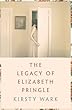
  • The Legacy of Elizabeth Pringle by Kirsty Wark
  • SPQR: a History of Ancient Rome by Mary Beard

Stacking the Shelves: 2 April 2016

STSmall

Stacking The Shelves is all about sharing the books you are adding to your shelves. This means you can include ‘˜real’ and ‘˜virtual’ books (ie physical and ebooks) you’ve bought, books you’ve borrowed from friends or the library, review books, and gifts.

I bought three books this week.

I loved watching The Night Manager, adapted from John le Carré’s novel, so when I went to Main Street Trading on Tuesday I hoped they would have a copy. They didn’t – but they did have Tinker Tailor Soldier Spy, a book I’ve wanted to read ever since I watched the BBC adaptation many years ago (Alec Guinness was George Smiley).

Blurb:

George Smiley, who is a troubled man of infinite compassion, is also a single-mindedly ruthless adversary as a spy.

The scene which he enters is a Cold War landscape of moles and lamplighters, scalp-hunters and pavement artists, where men are turned, burned or bought for stock. Smiley’s mission is to catch a Moscow Centre mole burrowed thirty years deep into the Circus itself.

Yesterday I went shopping and passing Berrydin in Books I had to go in and, of course, I had to buy a book – well two actually. First another book that I was prompted to read by a TV adaptation in 2012 – Birdsong by Sebastian Foulks.

Blurb:

A novel of overwhelming emotional power, Birdsong is a story of love, death, sex and survival. Stephen Wraysford, a young Englishman, arrives in Amiens in northern France in 1910 to stay with the Azaire family, and falls in love with unhappily married Isabelle. But, with the world on the brink of war, the relationship falters, and Stephen volunteers to fight on the Western Front. His love for Isabelle forever engraved on his heart, he experiences the unprecedented horrors of that conflict – from which neither he nor any reader of this book can emerge unchanged.

And also Citadel by Kate Mosse, because I like time-slip books. The main story is set in 1942-44 in Nazi-occupied  Carcassonne in France and moves back in time to 342, with a monk, Arinus trying to find a hiding place for a forbidden Codex.

Blurb:

1942, Nazi-occupied France. Sandrine, a spirited and courageous nineteen-year-old, finds herself drawn into a Resistance group in Carcassonne – codenamed ‘Citadel’ – made up of ordinary women who are prepared to risk everything for what is right.

And when she meets Raoul, they discover a shared passion for the cause, for their homeland, and for each other.

But in a world where the enemy now lies in every shadow – where neighbour informs on neighbour; where friends disappear without warning and often without trace – love can demand the highest price of all…

As soon as I read some of my TBR books (6 in March) it seems I just have to find more – at least it’s only three this time.

Books Read in March 2016

I finished reading seven books in March, six of them from my TBR shelves, and all except one are fiction. I enjoyed all of them. I’ve included extracts from my posts on the books:

  1. Doctor Thorne by Anthony Trollope (TBR) – a book about mid nineteenth-century prosperous country life and the traditional attitudes towards the accepted codes of conduct, of the importance of birth, of wealth and above all about money, class and power. I enjoyed this much more than the recent TV adaptation.
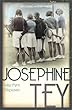
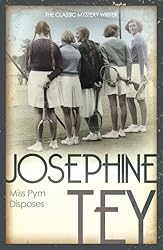
  2. Miss Pym Disposes by Josephine Tey (TBR) – not a conventional crime fiction novel. It’s a psychological study focussing on the characters, their motivation and analysis of facial characteristics. I thoroughly enjoyed this book, such a delight to read, a book that is beautifully written.
  3. The Madness of July by James Naughtie – a political thriller set in London in the mid 1970s one sweltering July. It’s the Cold War period, a world of espionage, of deception, manipulation and diplomacy. I loved it. Naughtie uses beautiful imagery and the characters are vividly drawn.
  4. The Legacy of Elizabeth Pringle by Kirsty Wark (TBR) – a story centred on the lives of two women ‘“ Elizabeth Pringle and Martha Morrison. I was captivated by this story about family, relationships, especially mother/daughter/sister relationships, about happiness, love and heartbreak, old age, memories and the contrast between life in the early part of the twentieth century and the present.
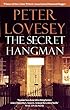
  5. The Secret Hangman by Peter Lovesey (TBR) – the 9th in the Peter Diamond crime fiction series. Diamond is not a brilliant detective. He is rather old-school, not above a bit of threatening behaviour (and more) to suspects, not bothered about upsetting his boss, nor is he comfortable with technology. But he is determined and thorough.
  6. SPQR: a History of Ancient Rome by Mary Beard (NF, TBR) It has taken me nearly two months to read this comprehensive – and long – book. It is full of facts and written in a readable (ie not textbook) style. My review will follow.
  7. Wycliffe and the Tangled Web by W J Burley (TBR) – the 15th theWycliffe series set in a Cornish village. It really is a tangled web that Wycliffe is faced with when schoolgirl Hilda Clemo disappears.

With so many enjoyable books to choose from, the one that stands out the most is Miss Pym Disposes by Josephine Tey,

followed closely by The Madness of July by James Naughtie.