Torrential rain yesterday here – filling the burn to overflowing as the water streamed down the field behind and from the next door garden. It’s still raining today, and threatening to snow.
Month: March 2010
Wordless Wednesday – One from the Photo Album

- Little Lucy

For more Wordless Wednesday photos click here.
Teaser Tuesdays – Hearts and Minds
 Teaser Tuesdays is a weekly bookish meme, hosted by MizB of Should Be Reading.
Share a couple or more sentences from the book you’re currently reading. You also need to share the title of the book that you’re getting your ‘teaser’ from €¦ that way people can have some great book recommendations if they like the teaser you’ve given!
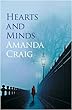 I’ve just started to read Hearts and Minds by Amanda Craig. I bought this book last year, attracted by the description on the back cover which describes it a contemporary novel which is entertaining and asking questions about the way we live. It’s about five people, all immigrants living in London, an illegal mini-cab driver from Zimbabwe, an idealistic supply teacher, from South Africa, a miserable dogsbody at a political magazine, from New York and a teenager trafficked into sexual slavery.
I remembered it when I saw that it’s on the Orange Prize for Fiction longlist and thought it was time I read it.
My teaser is from page 7.
Polly thinks gratefully of Iryna overhead. Bill has teased her about the way her life is dependent on cheap foreign labour, and she is conscious of the irony that, while her professional life often consists of helping refugees and illegal immigrants, her ability to do so depends upon exploiting them.
More teasers can be found here.
Crime Fiction Alphabet – X is for A Loyal Character Dancer by Qiu Xiaolong
Qiu Xiaolong was born in Shanghai and was a member of the Chinese Writers’ Association, publishing poetry, translations and criticism in China. Since 1989 he has lived in the United States, his work being published in many literary magazines and anthologies. His first crime novel, Death of Red Heroine, won the Anthony Award for Best First Crime Novel. A Loyal Character Dancer is his second book featuring Chief Inspector Chen Cao, of the Shanghai Police Bureau.
Like Qiu Xiaolong, Chen is a member of the Chinese Writers’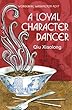 association and he writes poetry (reminding me of PD James’s Adam Dalgleish). It was not his desire to become a policeman. He is also a gourmet and the book contains many tantalising descriptions of Chinese food – for example:
He ordered a South Sea bird’s nest soup with tree ears, oysters fried in spiced egg batter, a duck stuffed with a mixture of sticky rice, dates, and lotus seed, a fish steamed live with fresh ginger, green onions, and dried pepper, … (page 120-121).
In this book he has two crimes to deal with – the murder of an unknown man found in Bund Park, a park celebrated for “its promenade of multi-colored flagstones, a long curved walkway raised above the shimmering expans of water which joined the Huangpu and Suzhou rivers.” The man was in his forties, dressed in silk pajamas and he had been hacked more than a dozen times with a sharp, heavy weapon.
His second case is to investigate the disappearance of Wen Liping, the wife of Feng Dexiang, a crucial witness in an illegal immigrant case in Washington. The American and Chinese governments have agreed to a joint investigation to find Wen and Chen is assigned to work with Inspector Catherine Rohn, of the US Marshall’s Office.
I loved this book. There is a lot in it about life in China, the impact of the Cultural Revolution and the country itself. There is a very strong sense of place and this had me reaching for my sister’s books on China (she visited a few years ago before she died) to see photos of the locations and read more about life in China.
Having to explain things to Catherine made it easy for Qiu to pack in lots of information that otherwise could have seemed intrusive. For example as well as quoting poetry he also quotes from Confucius and explains literary references. Wen was a beautiful young woman, forced to leave her home to be “re-educated” when she was only sixteen during the Cultural Revolution. She had become a Red Guard cadre and a member of the song-and-dance ensemble, dancing the loyal character dance (hence the title of the book). Chen explains to Catherine that although dancing was not then allowed in China, this was particular form of dancing was allowed :
… dancing with a paper-cut out of the Chinese character of Loyalty or with a red paper heart bearing the character, while making every imaginable gesture of loyalty to Chairman Mao. (page 84)
Chen is an enigmatic man, skilled at working the system. As a chief inspector he is also responsible for preserving Shanghai’s image. Keeping and saving face is very important. His boss, Li, the Party Secretary is more concerned with making sure that Catherine has a satisfactory stay in China, seeing only the good things than with carrying out the investigation into Wen’s disappearance. He does not like it when Chen and Catherine discuss the living conditions of the poor, China’s birth control policy and the question of illegal immigrants to the US. However, Chen and Catherine make a good partnership and with the help of Chen’s assistant, Dectective Yu get to the bottom of the mysteries of the murder and Wen’s disappearance, despite the activity of rival triad gangs.
The Little Stranger by Sarah Waters: Book Review
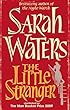 The Little Stranger is the only book I’ve read by Sarah Waters. I saw the TV version of Tipping the Velvet and wasn’t impressed. It didn’t make me want to read any of her books. But, so many other bloggers have praised them that I was interested enough to borrow The Little Stranger when I saw it in the library. That’s the influence book bloggers have.
It begins very well – an old dilapidated house, Hundreds Hall, just after the end of the Second World War, a family struggling to come to terms with post-war life and lack of money, and the hint of something supernatural lurking in the background. The Hall has a major part in this book. This is how it is seen through the eyes of the narrator Dr Faraday, who had known it thirty years earlier when his mother had been a nursery maid there.
I remembered a long approach to the house through neat rhododendron and laurel, but the park was now so overgrown and untended, my small car had to fight its way down the drive. When I broke free of the bushes at last and found myself on a sweep of lumpy gravel with the Hall directly ahead of me, I put on the brake, and gasped in dismay. The house was smaller than in memory, of course – not quite the mansion I’d been recalling – but I’d been expecting that. What horrified me were the signs of decay. Sections of the lovely weathered edgings seemed to have fallen completely away, so that the house’s uncertain Georgian outline was even more tentative than before. Ivy had spread, then patchily died, and hung like rat’s-tail hair. The steps leading up to the broad front door were cracked, with weeds growing lushly up through the seams. (page 5)
Reminiscent of Rebecca, I thought. It’s not just the house that is decaying, the family too is cracking up. Dr Faraday remembered it in it’s prime – now there are just Mrs Ayres, Caroline her daughter and Roderick, her son left, living on their own in the house with help from one servant, a maid – Betty, a fourteen year old girl. Roderick was injured in the war, and Caroline is a plain young woman over-tall for a woman with thickish ankles and legs, but a ‘clever’ girl. Their mother still has a good figure, with a heart-shaped face and handsome dark eyes. As the book progresses she declines rapidly, overcome by events and it is soon revealed that she has never got over the death of her first child, Susan who was ‘her one true love’.
It begins with Dr Faraday called out to see Betty who tells him there is something bad in the house that makes wicked things happen. What follows is a sequence of terrible events. Dr Faraday is a very tedious character, dismissing all thoughts that things that are moved from one place to another and much worse events are in any way supernatural, believing there is either a rational or pscyhological explanation for it all. He is reinforced in his beliefs when he talks to another doctor, Dr Seeley who says:
The subliminal mind has many dark corners, after all. Imagine something loosening itself from one of those corners. Let’s call it a – a germ. And let’s say conditions prove right for that germ to devlop – to grow like a child in the womb. What would this little stranger grow into? A sort of shadow-self, perhaps: a Caliban, a Mr Hyde. A creature motivated by all the nasty impulses and hungers the conscious mind had hoped to keep hidden away: things like envy, malice, and frustration … (page 380)
I got very tired of Dr Faraday and his persistence. It is all very drawn-out, no doubt to increase suspense but I felt that all the tension and spookiness that had initially been built up just drained away in the middle of the book. It did pick up towards the end with several dramatic scenes, but I think it would have been better if the book had been shorter. However, I did enjoy it – the descriptions of the house and park are vivid and I liked the social commentary. The post-war period is well defined, indicating the attitude of the upper classes towards the working classes, the coming introduction of the National Health Service and the breaking up of landed estates to build Council estates – new houses for the workers .
So, just what is the ‘ravenous frustrated energy’ at the heart of the matter? All the characters are built up as suspects and it was only towards the end that I realised what (or who) was responsible.
The Little Stranger has been shortlisted for the Orange Prize for Fiction. Will it win? Maybe not, there are some other very good books on the list, which I suspect may over shadow this one.
Friday Finds

Books I’ve come across recently that I’d like to read, from three favourite authors:
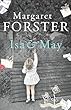 Isa and May by Margaret Forster.
Amazon: The curiously named Isamay, a would-be academic, is trying to write a coherent thesis about grandmothers in history – from Sarah Bernhardt and George Sand to the matriarchal Queen Victoria and other influential grannies – while constantly ambushed by the secrets her own family has been keeping. An only child, she is named after her grandmothers, Isa and May, who were there at her birth and who have formed and influenced her in very different ways. Jealous of each other, they both want to be first in their granddaughter’s affections. … this is an unusual story about grandmothers and their potentially powerful role in family life, about nature vs nurture, bloodlines and bridges across generations.
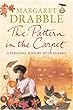 The Pattern in the Carpet by Margaret Drabble.
Amazon: This is a beautifully written and deeply personal book on the jigsaw puzzle and the part it plays in the puzzle of its distinguished author’s life. It is a mix of memoir, jigsaw history and the strange delights of puzzling. … In “The Pattern in the Carpet”, she describes the history of this uniquely British form of meditation, from its earliest incarnation as a dissected map, used as a teaching tool in the late eighteenth century, to the other cut-outs and mosaics that have amused children and adults from Roman times until today. … an original and moving personal history about ageing and the authenticity of memory; about the importance of childhood play; and, how we rearrange objects into new patterns to make sense of our past and ornament our present.
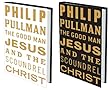 The Good Man Jesus and the Scoundrel Christ Myths by Phillip Pullman.
Amazon: In this ingenious and spell-binding retelling of the life of Jesus, Philip Pullman revisits the most influential story ever told. Charged with mystery, compassion and enormous power, The Good Man Jesus and the Scoundrel Christ throws fresh light on who Jesus was and asks the reader questions that will continue to resonate long after the final page is turned. For, above all, this book is about how stories become stories.
Friday Finds is hosted by MizB at You Should Be Reading.
 BooksPlease