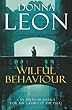
Wilful Behaviour begins with an explosion …
The explosion came at breakfast. Brunetti’s position as a commissario of police, though it made for the possibility of explosion more likely than it would be for the average citizen, did not make the setting any less strange. The location, however, was related to Brunetti’s personal situation as the husband of a woman of incandescent, if inconsistent, views and politics, not to his profession.
‘Why do we bother to read this disgusting piece of garbage?’ Paola exploded, slamming a folded copy of the day’s Gazzettino angrily onto the breakfast table, where it upset the sugar bowl. (page 1)
Wilful Behaviour
- Paperback: 368 pages
- Publisher: Arrow; First Thus edition (26 Feb 2009)
- Language English
- ISBN-10: 0099536625
- ISBN-13: 978-0099536628
- Source: Library Book
Brief Description
My view
I’ve been reading Donna Leon’s Commissario Brunetti’s books set in Venice, completely out of order of their publication. It doesn’t matter at all to me. Her books are crime fiction, but also discuss various social and cultural issues and Wilful Behaviour is no exception. The effects of the Second World War feature largely in this book, the different attitudes Italians had during the war – secrets of collaboration, resistance fighters, the exploitation of Italian Jews – and the way modern day Italians view the past.
I read the book quickly keen to discover who had killed Claudia and why, following the intricacies of Italian bureaucracy with interest, the planning process for example. The question of honour is also uppermost, with Paola, who had been lecturing her university students ‘on the theme of honour and honourable behaviour and the way it was central to [Edith]Wharton’s three great novels,‘ wondering ‘whether it still had the same meaning for her students; indeed whether it had any meaning for her students.’
Brunetti consults his father-in-law, Count Falier, who with his myriad connections is a source of information on the people and workings of Venice. Through him he learns more about Luca Guzzardi, Claudia’s grandfather who had been convicted of war crimes after the war. Guzzardi was ‘one of the people appointed to decide which pieces of decadent art should be disposed of by galleries and museums.’ And it is these works of art and their current whereabouts that provide the clue to why Claudia was murdered, but don’t point exactly to the culprit.
Wilful Behaviour has an intricate plot, with characters who are fallible and so believable. I like the way Brunetti works, gathering information from various sources including the ever-resourceful Signorina Elettra and the interactions with his family. The ending is not in line with the ideal of justice being seen to be done and Brunetti has to admit to himself that he is ‘helpless to effect any change in the way things would play themselves out.’ It reminds Paola of ‘Jarndyce vs Jarndyce.’
 BooksPlease