Top Five Tuesday:Top 5 books with a place in the title

Top 5 Tuesday was created by Shanah at Bionic Book Worm, and it is now being hosted by Meeghan at Meeghan Reads. For details of all of the latest prompts for January to March, see Meeghan’s post here.

Today the topic is Top 5 books with a place in the title – any location or place in a title is fine. I decided to feature books in different countries than my own (UK) – namely Italy, Japan, Greece, Russia and France.

These are all books I’ve read with links to my reviews.
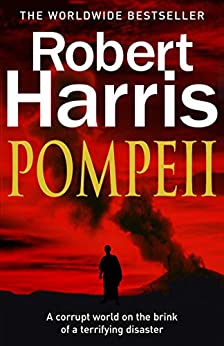
Pompeii by Robert Harris – one of my favourite books. Vesuvius erupts destroying the town of Pompeii and killing its inhabitants as they tried to flee the pumice, ash, searing heat and flames. The story begins just two days before the eruption of Mount Vesuvius and builds up to a climax. 

Nagasaki : Life After Nuclear War by Susan Southard, nonfiction, an amazing, heart-wrenching book. On August 9th 1945, two days after the atomic bombing of Hiroshima, a five-ton plutonium bomb was dropped on the small coastal town of Nagasaki. The effects were cataclysmic. It follows the lives of five of the survivors from then to the present day. 

This must be one of the most devastatingly sad and depressing books I’ve read and yet also one of the most uplifting, detailing the dropping of the bomb, which killed 74,000 people and injured another 75,000. 

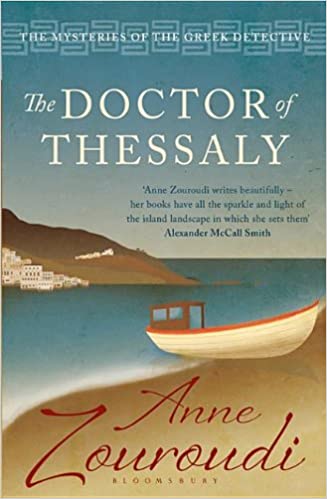
The Doctor of Thessaly by Anne Zouroudi, the third in the series of her Mysteries of the Greek Detective, about Hermes Diaktoros, a mysterious fat man. I was never sure who he worked for, or how he knew of the mystery to solve. Each of the books in the series features one of the Seven Deadly Sins – in this one it is envy, a tale of revenge and retribution.

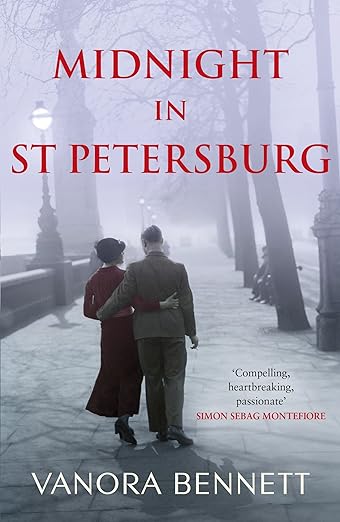
Midnight in St Petersburg by Vanora Bennett. It begins in 1911 in pre-revolutionary Russia with Inna Feldman travelling by train to St Petersburg to escape the pogroms in Kiev hoping to stay with her distant cousin, Yasha Kagan. The book is split into three sections – September – December 1911, 1916-17 and 1918-19 as Russia enters the First World War and is plunged into Revolution and life becomes increasingly dangerous for them all.

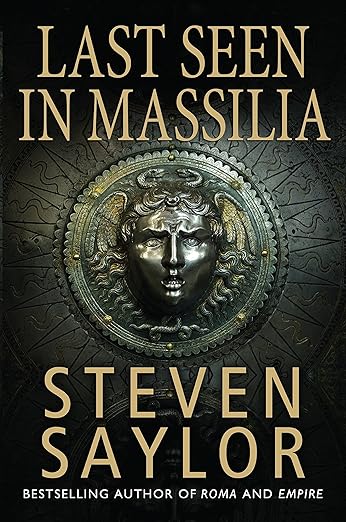
Last Seen in Massilia by Steven Saylor, historical crime fiction set in in Massilia – modern day Marseilles. It’s 49BC during Caesar’s siege of the city., featuring an investigator called Gordianus the Finder. I really liked all the details about Massilia – how it was governed – the hierarchy of the Timouchoi its ruling officials, its relationship to Rome, its traditions and customs. This is the 8th book in Saylor’s Roma Sub Rosa series set in ancient Rome.
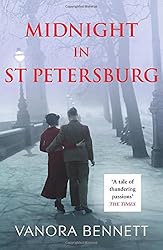
Midnight in St Petersburg by Vanora Bennett

Sometimes I get requests from authors/publishers to review books and occasionally a book just turns up in the post unannounced. Over a year ago now I unexpectedly received a copy of Midnight in St Petersburg by Vanora Bennett and although it appealed to me I put it to one side whilst I finished other books. It has taken me until now to get round to actually reading it.

And I’m glad I did as it is an interesting book – historical fiction beginning in 1911 in pre-revolutionary Russia with Inna Feldman travelling by train to St Petersburg to escape the pogroms in Kiev hoping to stay with her distant cousin, Yasha Kagan. She is welcomed into the Leman family where she and Yasha are apprentices in their violin-making workshop. Inna is a talented, albeit shy, violinist and she falls in love with Yasha through their shared love of music.

The book is split into three sections – September – December 1911, 1916-17 and 1918-19 as Russia enters the First World War and is plunged into Revolution and life becomes increasingly dangerous for them all. Inna is torn between her love for Yasha, wildly rebellious and an activist in the revolution, and the older and more secure Englishman, Horace Wallick who works for the jeweller, Faberge, painting miniatures. It’s a story of survival under extreme conditions.

I liked the way Vanora Bennett intermingled Inna’s personal story with the historical characters of the time, including Father Grigory, Prince Youssoupoff and Lenin. I particularly liked the Father Grigory sections. Inna first met him on the train to St Petersburg when he helped her and I had my suspicions about who he really was, although it was a while before Inna discovered his identity. I also thought the details of violin-making were fascinating and I really liked the sections about Horace and his work for Faberge. What is perhaps even more fascinating is that Horace Wallick was a real person, Vanora Bennett’s great-great-uncle who really did work for Faberge from 1910 to 1919, which makes the story all the more authentic.

However, I thought the pace of the novel wasn’t very well structured as after an attention grabbing opening I thought it dragged a bit in the middle and that it was drawn to a too hasty conclusion. Overall, though I thought this portrayal of the Russian Revolution and the effect it had on ordinary people was well done and I did enjoy it.

This is the second of Vanora Bennett’s books I’ve read – the first was Portrait of an Ordinary Woman the story of Sir Thomas More’s fall from Henry VIII’s favour and that of his adopted daughter Meg Giggs. I shall look out for more of her books.

Portrait of an Unknown Woman by Vanora Bennett: Book Review

I didn’t write about Portrait of an Unknown Woman by Vanora Bennett as soon as I’d finished reading it, which is a pity because I only made a few notes whilst reading and now my memory of it is fading fast. It took me some time to get really involved in the story, which is a mixture of fiction and history. I liked the historical elements very much. The fictional side mixed in quite well but I found some of it a bit too sentimental and somewhat contrived.

It’s the story of Sir Thomas More’s fall from Henry VIII’s favour and that of his adopted daughter Meg Giggs and her love for two men – John Clements, the family’s former tutor, and the painter, Hans Holbein. Bennett puts forward a theory about John Clements’ true identity drawn from an analysis and an interpretation of two paintings by Hans Holbein of the More family and also his painting, The Ambassadors. I was fascinated by this and the detail in the paintings, enhanced by the inclusion in the book of a reproduction of the plan for Holbein’s first portrait of the More Family painted in 1527 -28 and a colour reproduction of  a second portrait of the family attributed to Holbein, even though it is signed ‘Rowlandas Lockey’.

I liked the way Bennett portrayed different aspects of Sir Thomas More’s character; in his early life he was a humanist and friend of Erasmus, later a courtier and Henry VIII’s Catholic chancellor, who persecuted Protestant heretics. This contrasts with his family life, where he is relaxed, generous and gentle and Meg cannot reconcile her knowledge of him as a father with his cruel and fanatical persecution of the heretics.

It combines a love story, art history and historical fiction providing an insight into the Tudor period at a time of great social and religious change.